Skip to Content Facebook Feature Image

Pandemic knocks out large sections of Hawaii's economy

ENT

Pandemic knocks out large sections of Hawaii's economy
ENT

ENT

Pandemic knocks out large sections of Hawaii's economy

2020-05-20 22:02 Last Updated At:22:10

In normal times, Roland Chang and his three sons start their day at dawn, picking up tourists in Waikiki and driving them to the ocean for a boat ride to see dolphins and turtles swimming in clear blue waters. Four nights a week, the family’s band performs Hawaiian music and popular songs at a hotel.

Their friends call them workaholics. To them, it’s a routine. Or was until the coronavirus pandemic landed in Hawaii.

More Images
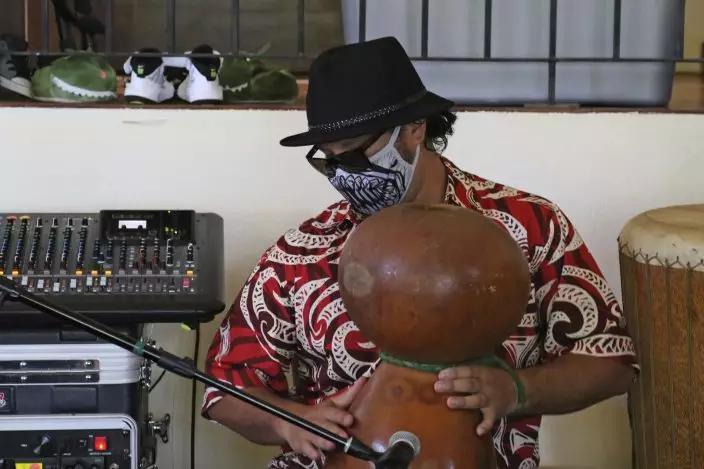
This May 5, 2020, photo shows Justin Chang playing a gourd during a livestream performance of his family's band, Kanilau, from the living room of his father Roland Chang's home in Honolulu. The coronavirus pandemic has taken out large sections of Hawaii's tourism-based economy, including the Chang family's turtle and dolphin snorkel tour business and their regular music gig in Waikiki. (AP PhotoAudrey McAvoy)
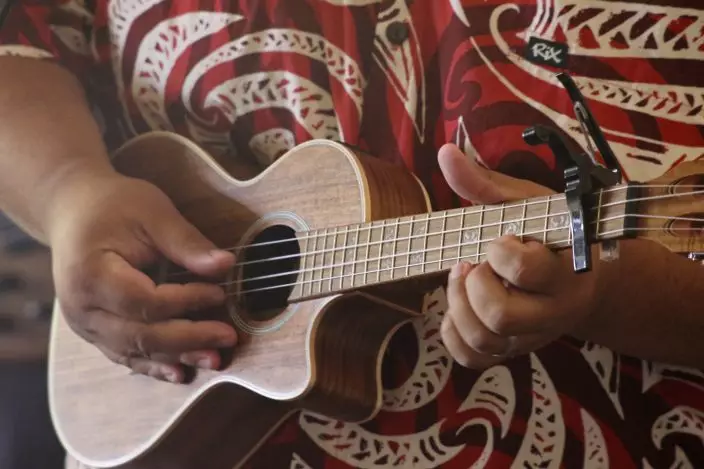
This May 5, 2020, photo shows Justin Chang playing a gourd during a livestream performance of his family's band, Kanilau, from the living room of his father Roland Chang's home in Honolulu. The coronavirus pandemic has taken out large sections of Hawaii's tourism-based economy, including the Chang family's turtle and dolphin snorkel tour business and their regular music gig in Waikiki. (AP PhotoAudrey McAvoy)
This May 5, 2020, photo shows Lance Chang playing a ukulele during a livestream performance of his family's band, Kanilau, from the living room of his father Roland Chang's home in Honolulu. The coronavirus pandemic has taken out large sections of Hawaii's tourism-based economy, including the Chang family's turtle and dolphin snorkel tour business and their regular music gig in Waikiki. (AP PhotoAudrey McAvoy)
This May 5, 2020, photo shows Lance Chang playing a ukulele during a livestream performance of his family's band, Kanilau, from the living room of his father Roland Chang's home in Honolulu. The coronavirus pandemic has taken out large sections of Hawaii's tourism-based economy, including the Chang family's turtle and dolphin snorkel tour business and their regular music gig in Waikiki. (AP PhotoAudrey McAvoy)
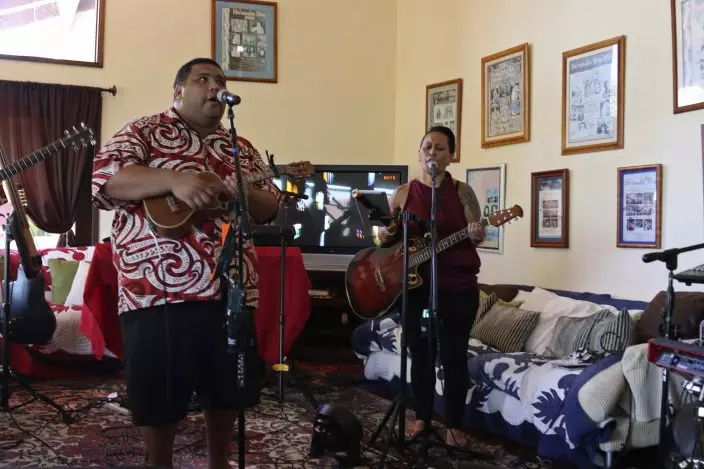
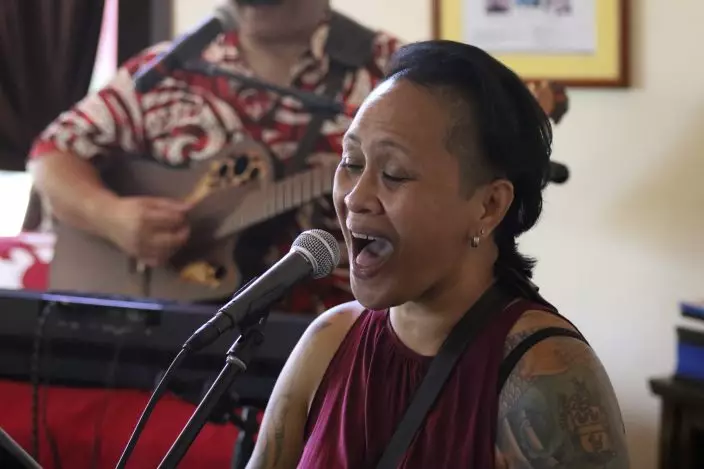
This May 5, 2020, photo shows NJ Chang singing during a livestream performance of her family's band, Kanilau, from the living room of her brother Roland Chang's home in Honolulu. The coronavirus pandemic has taken out large sections of Hawaii's tourism-based economy, including the Chang family's turtle and dolphin snorkel tour business and their regular music gig in Waikiki. (AP PhotoAudrey McAvoy)
This May 5, 2020, photo shows NJ Chang singing during a livestream performance of her family's band, Kanilau, from the living room of her brother Roland Chang's home in Honolulu. The coronavirus pandemic has taken out large sections of Hawaii's tourism-based economy, including the Chang family's turtle and dolphin snorkel tour business and their regular music gig in Waikiki. (AP PhotoAudrey McAvoy)

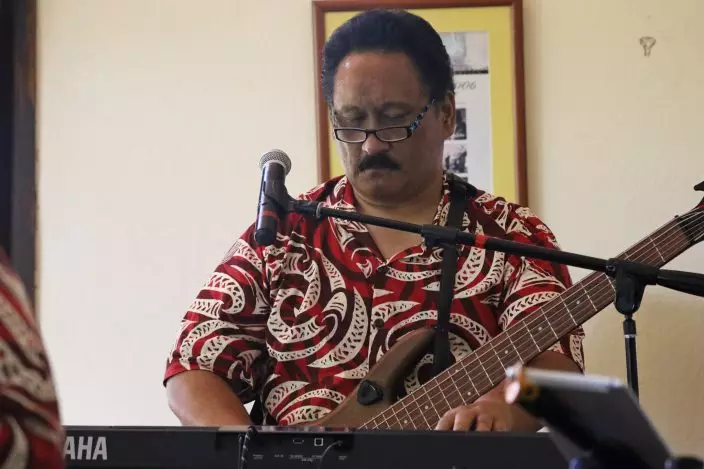
This May 5, 2020 photo shows Roland Chang playing keyboard during a livestream performance of his family's band, Kanilau, from the living room of his home in Honolulu. The coronavirus pandemic has taken out large sections of Hawaii's tourism-based economy, including the Chang family's turtle and dolphin snorkel tour business and their regular music gig in Waikiki. (AP PhotoAudrey McAvoy)

This May 5, 2020 photo shows Roland Chang playing keyboard during a livestream performance of his family's band, Kanilau, from the living room of his home in Honolulu. The coronavirus pandemic has taken out large sections of Hawaii's tourism-based economy, including the Chang family's turtle and dolphin snorkel tour business and their regular music gig in Waikiki. (AP PhotoAudrey McAvoy)

This May 5, 2020, photo shows Lance Chang, left, singing and playing ukulele with his aunt NJ Chang, right, singing and playing guitar during a livestream performance of their family's band, Kanilau, from the living room of Lance's father home in Honolulu. The coronavirus pandemic has taken out large sections of Hawaii's tourism-based economy, including the Chang family's turtle and dolphin snorkel tour business and their regular music gig in Waikiki. (AP PhotoAudrey McAvoy)

This May 5, 2020, photo shows Lance Chang, left, singing and playing ukulele with his aunt NJ Chang, right, singing and playing guitar during a livestream performance of their family's band, Kanilau, from the living room of Lance's father home in Honolulu. The coronavirus pandemic has taken out large sections of Hawaii's tourism-based economy, including the Chang family's turtle and dolphin snorkel tour business and their regular music gig in Waikiki. (AP PhotoAudrey McAvoy)

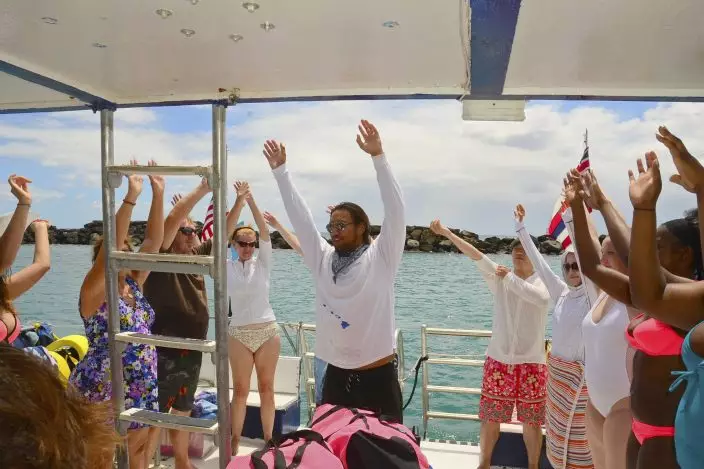
This undated photo provided by EO Waianae Tours shows Justin Chang teaching hula to passengers on board a tour boat in Waianae, Hawaii. The coronavirus pandemic has taken out large sections of Hawaii's tourism-based economy, including the EO Waianae Tours dolphin and turtle snorkel tour business run by the Chang family and the family's regular music gig in Waikiki. (Landon ChangEO Waianae Tours via AP)
This undated photo provided by EO Waianae Tours shows Justin Chang teaching hula to passengers on board a tour boat in Waianae, Hawaii. The coronavirus pandemic has taken out large sections of Hawaii's tourism-based economy, including the EO Waianae Tours dolphin and turtle snorkel tour business run by the Chang family and the family's regular music gig in Waikiki. (Landon ChangEO Waianae Tours via AP)

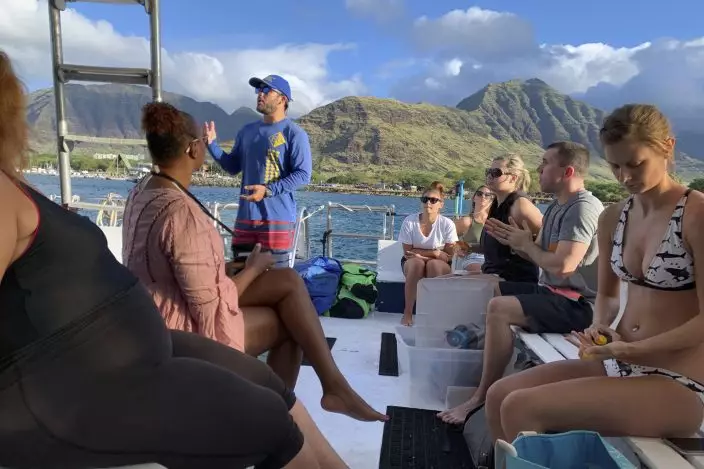
This undated photo provided by EO Waianae Tours shows Bryce Hunter talking to passengers on board a tour boat in Waianae, Hawaii. The coronavirus pandemic has taken out large sections of Hawaii's tourism-based economy, including the EO Waianae Tours dolphin and turtle snorkel tour business run by the Chang family and the family's regular music gig in Waikiki. (Ashlee JankanishEO Waianae Tours via AP)

This undated photo provided by EO Waianae Tours shows Bryce Hunter talking to passengers on board a tour boat in Waianae, Hawaii. The coronavirus pandemic has taken out large sections of Hawaii's tourism-based economy, including the EO Waianae Tours dolphin and turtle snorkel tour business run by the Chang family and the family's regular music gig in Waikiki. (Ashlee JankanishEO Waianae Tours via AP)

This May 5, 2020, photo shows Justin Chang playing a gourd during a livestream performance of his family's band, Kanilau, from the living room of his father Roland Chang's home in Honolulu. The coronavirus pandemic has taken out large sections of Hawaii's tourism-based economy, including the Chang family's turtle and dolphin snorkel tour business and their regular music gig in Waikiki. (AP PhotoAudrey McAvoy)

This May 5, 2020, photo shows Justin Chang playing a gourd during a livestream performance of his family's band, Kanilau, from the living room of his father Roland Chang's home in Honolulu. The coronavirus pandemic has taken out large sections of Hawaii's tourism-based economy, including the Chang family's turtle and dolphin snorkel tour business and their regular music gig in Waikiki. (AP PhotoAudrey McAvoy)

Like many businesses in tourism-dependent Hawaii, the Changs’ company has had no income for two months. And they don’t know if it will survive to see a post-COVID-19 world. But they agree with the restrictions imposed in the name of public health. And the family, who is Native Hawaiian, believes there will be rebirth afterward. Roland Chang’s sister NJ compared the wreckage to the way the fire goddess lays waste when a volcano erupts and lava flows across the land.

“Madam Pele has always cleaned out. I think that’s what we’re going through,” said NJ Chang, a school teacher and band vocalist and guitar player. “This is a cleaning out process, I believe, for us to all heal.”

Much healing will be required.

This May 5, 2020, photo shows Lance Chang playing a ukulele during a livestream performance of his family's band, Kanilau, from the living room of his father Roland Chang's home in Honolulu. The coronavirus pandemic has taken out large sections of Hawaii's tourism-based economy, including the Chang family's turtle and dolphin snorkel tour business and their regular music gig in Waikiki. (AP PhotoAudrey McAvoy)

This May 5, 2020, photo shows Lance Chang playing a ukulele during a livestream performance of his family's band, Kanilau, from the living room of his father Roland Chang's home in Honolulu. The coronavirus pandemic has taken out large sections of Hawaii's tourism-based economy, including the Chang family's turtle and dolphin snorkel tour business and their regular music gig in Waikiki. (AP PhotoAudrey McAvoy)

A University of Hawaii survey of 623 businesses conducted with the Chamber of Commerce Hawaii showed 34% had no revenue last month. In Maui County — which is even more heavily reliant on tourism than the rest of the state — that number was 61%.

Among arts, entertainment and recreation companies — which include tours like the Changs’ — employment has declined 82% compared to January. Revenues in 2020 are forecast to sink 65% from last year.

The numbers are similarly ugly for hotels and almost as bad for restaurants and retailers. Statewide, the unemployment rate is estimated to be between 25% and 35%. Food distribution events run by the Salvation Army and other nonprofits draw lines of cars that stretch for miles.

This May 5, 2020, photo shows NJ Chang singing during a livestream performance of her family's band, Kanilau, from the living room of her brother Roland Chang's home in Honolulu. The coronavirus pandemic has taken out large sections of Hawaii's tourism-based economy, including the Chang family's turtle and dolphin snorkel tour business and their regular music gig in Waikiki. (AP PhotoAudrey McAvoy)

This May 5, 2020, photo shows NJ Chang singing during a livestream performance of her family's band, Kanilau, from the living room of her brother Roland Chang's home in Honolulu. The coronavirus pandemic has taken out large sections of Hawaii's tourism-based economy, including the Chang family's turtle and dolphin snorkel tour business and their regular music gig in Waikiki. (AP PhotoAudrey McAvoy)

The Changs are living on savings. Their company, EO Waianae Tours, which has four full-time employees, applied for a Paycheck Protection Program loan for small businesses to help them get through the crisis. They're not applying for unemployment benefits.

They have some investment funds they were thinking about using to expand their business but they may now hold off because the future is so uncertain. Their tour business may even have to close.

“I think there are a lot more questions than answers,” Roland Chang said. “I’ve got to guarantee that everyone on my boat won’t get the virus. How do I protect them?”

This May 5, 2020 photo shows Roland Chang playing keyboard during a livestream performance of his family's band, Kanilau, from the living room of his home in Honolulu. The coronavirus pandemic has taken out large sections of Hawaii's tourism-based economy, including the Chang family's turtle and dolphin snorkel tour business and their regular music gig in Waikiki. (AP PhotoAudrey McAvoy)

This May 5, 2020 photo shows Roland Chang playing keyboard during a livestream performance of his family's band, Kanilau, from the living room of his home in Honolulu. The coronavirus pandemic has taken out large sections of Hawaii's tourism-based economy, including the Chang family's turtle and dolphin snorkel tour business and their regular music gig in Waikiki. (AP PhotoAudrey McAvoy)

Among the unknowns: Do they reduce the number of people on their boat (it can hold up to 26 passengers and four crew) so everyone can practice social distancing? Will they have to raise their tour rates to break even as a result? Will they need disposable snorkel gear for clients instead of lending them gear as in the past? Will travelers even come?

“On the totem pole of life right now, people are just trying to put food on the table. Until that gets rectified, it’s going to be hard to say how many people are going to actively, consistently keep the tour business open,” he said.

To slow the spread of the virus, Hawaii Gov. David Ige issued a stay-at-home order in late March and mandated that all travelers adhere to a strict 14-day quarantine when they arrive in the islands. The number of tourists has slowed to a trickle of about 200 per day, down from 30,000 before the pandemic.

This May 5, 2020, photo shows Lance Chang, left, singing and playing ukulele with his aunt NJ Chang, right, singing and playing guitar during a livestream performance of their family's band, Kanilau, from the living room of Lance's father home in Honolulu. The coronavirus pandemic has taken out large sections of Hawaii's tourism-based economy, including the Chang family's turtle and dolphin snorkel tour business and their regular music gig in Waikiki. (AP PhotoAudrey McAvoy)

This May 5, 2020, photo shows Lance Chang, left, singing and playing ukulele with his aunt NJ Chang, right, singing and playing guitar during a livestream performance of their family's band, Kanilau, from the living room of Lance's father home in Honolulu. The coronavirus pandemic has taken out large sections of Hawaii's tourism-based economy, including the Chang family's turtle and dolphin snorkel tour business and their regular music gig in Waikiki. (AP PhotoAudrey McAvoy)

Roland Chang said he supports these moves, given they are so important to protect the elderly who are more vulnerable to the disease.

“They’re at the higher risk level. Without them, we don’t have a future. So let’s keep them going. Tourism will heal itself,” he said.

Just like the plants that sprout from lava fields years after molten rock covers the land, he said.

This undated photo provided by EO Waianae Tours shows Justin Chang teaching hula to passengers on board a tour boat in Waianae, Hawaii. The coronavirus pandemic has taken out large sections of Hawaii's tourism-based economy, including the EO Waianae Tours dolphin and turtle snorkel tour business run by the Chang family and the family's regular music gig in Waikiki. (Landon ChangEO Waianae Tours via AP)

This undated photo provided by EO Waianae Tours shows Justin Chang teaching hula to passengers on board a tour boat in Waianae, Hawaii. The coronavirus pandemic has taken out large sections of Hawaii's tourism-based economy, including the EO Waianae Tours dolphin and turtle snorkel tour business run by the Chang family and the family's regular music gig in Waikiki. (Landon ChangEO Waianae Tours via AP)

For most people, the new coronavirus causes mild or moderate symptoms, such as fever and cough that clear up in two to three weeks. For some, especially older adults and people with existing health problems, it can cause more severe illness, including pneumonia, and death.

For now, the family's band, Kanilau, streams an hour-long show on Facebook from Roland’s living room once a week. The hotel they normally would be performing at — Embassy Suites in Waikiki, has been closed since late March but it posts the session on its Facebook page. Repeat guests who have listened to them for years leave comments like “Aloha from Minnesota!” and “Canada loves you guys.”

They don’t get paid for their livestream. But the songs keep them going emotionally. Even if the tour business doesn’t survive, they vow the band will.

This undated photo provided by EO Waianae Tours shows Bryce Hunter talking to passengers on board a tour boat in Waianae, Hawaii. The coronavirus pandemic has taken out large sections of Hawaii's tourism-based economy, including the EO Waianae Tours dolphin and turtle snorkel tour business run by the Chang family and the family's regular music gig in Waikiki. (Ashlee JankanishEO Waianae Tours via AP)

This undated photo provided by EO Waianae Tours shows Bryce Hunter talking to passengers on board a tour boat in Waianae, Hawaii. The coronavirus pandemic has taken out large sections of Hawaii's tourism-based economy, including the EO Waianae Tours dolphin and turtle snorkel tour business run by the Chang family and the family's regular music gig in Waikiki. (Ashlee JankanishEO Waianae Tours via AP)

“It’s in our DNA,” NJ Chang said.
LOS ANGELES (AP) — The day after the Oscars, executive producer and showrunner Raj Kapoor is feeling a bit exhausted. After preparing for Hollywood’s biggest night for months and months, it can feel a little surreal to realize that it’s over. But he’s also feeling good about what he and hundreds of others put together, not just for the nominees and winners but for the millions watching around the world.

“I feel really good,” Kapoor told The Associated Press on Monday. “It is one of those things where you work so hard on putting something together and the next day you’re absolutely exhausted and can barely talk. But it’s still kind of an amazing feeling.”

And no matter how much they planned, the thing that Kapoor, who won an Emmy for the 96th Oscars two years ago, and fellow producer Katy Mullan know is that there’s only so much control one has when producing a live television show. And they are always expecting the unexpected.

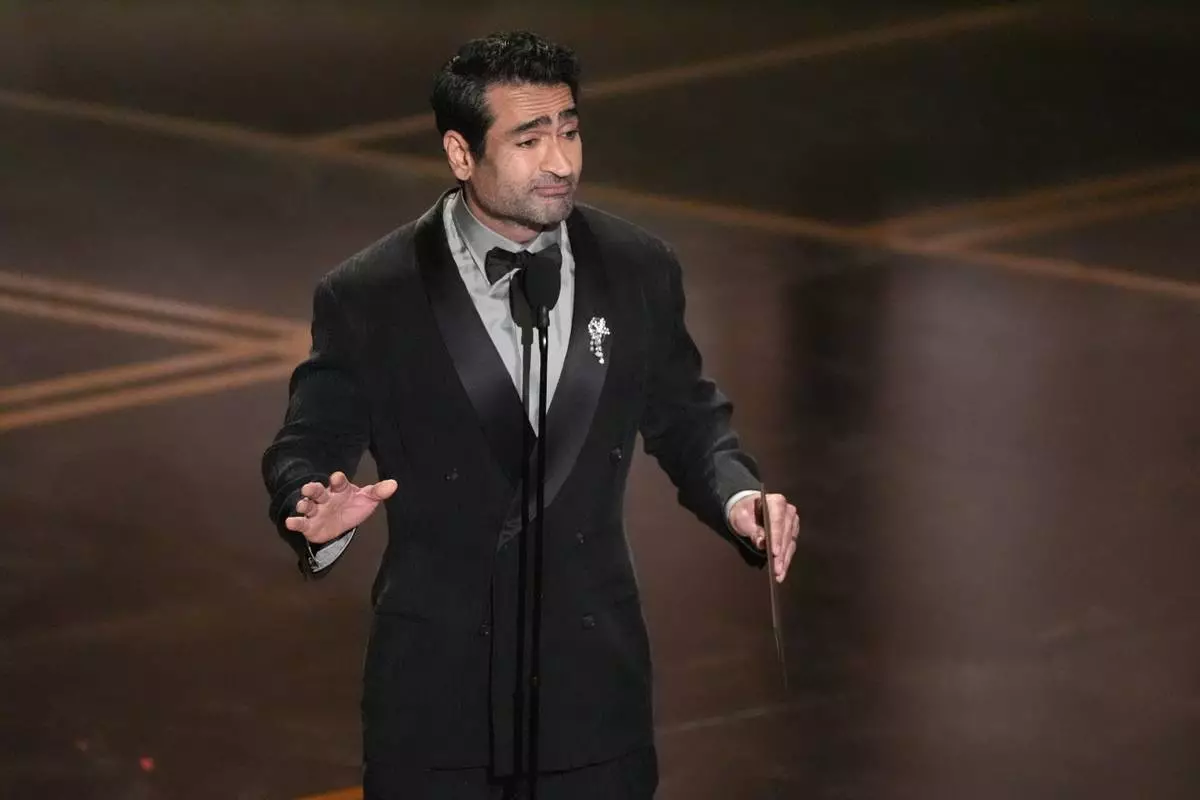
Perhaps the most surprising part of the night was when Kumail Nanjiani opened the envelope for best live-action short and announced that there was a tie. “I’m not joking,” he said from the stage.

Kapoor said that Nanjiani was given a heads up from Oscar accountants PricewaterhouseCoopers that it was a tie moments before he walked onstage. No one coached him about what to do. And Nanjiani handled the unusual situation calmly and deftly, saying he would announce the winners one at a time, giving both their moment onstage.

“He was kind of like the perfect person to do that at that time,” Kapoor said. “I was so impressed with just how he handled it, how our team handled it. It’s a very fast moving show and it’s really complex from automation to stage cues to our trophy presenters and it is a whole night of choreography. So anytime something unusual happens I just have to give full credit to our full production team of just how aware they are to make those pivots and changes at the last minute.”

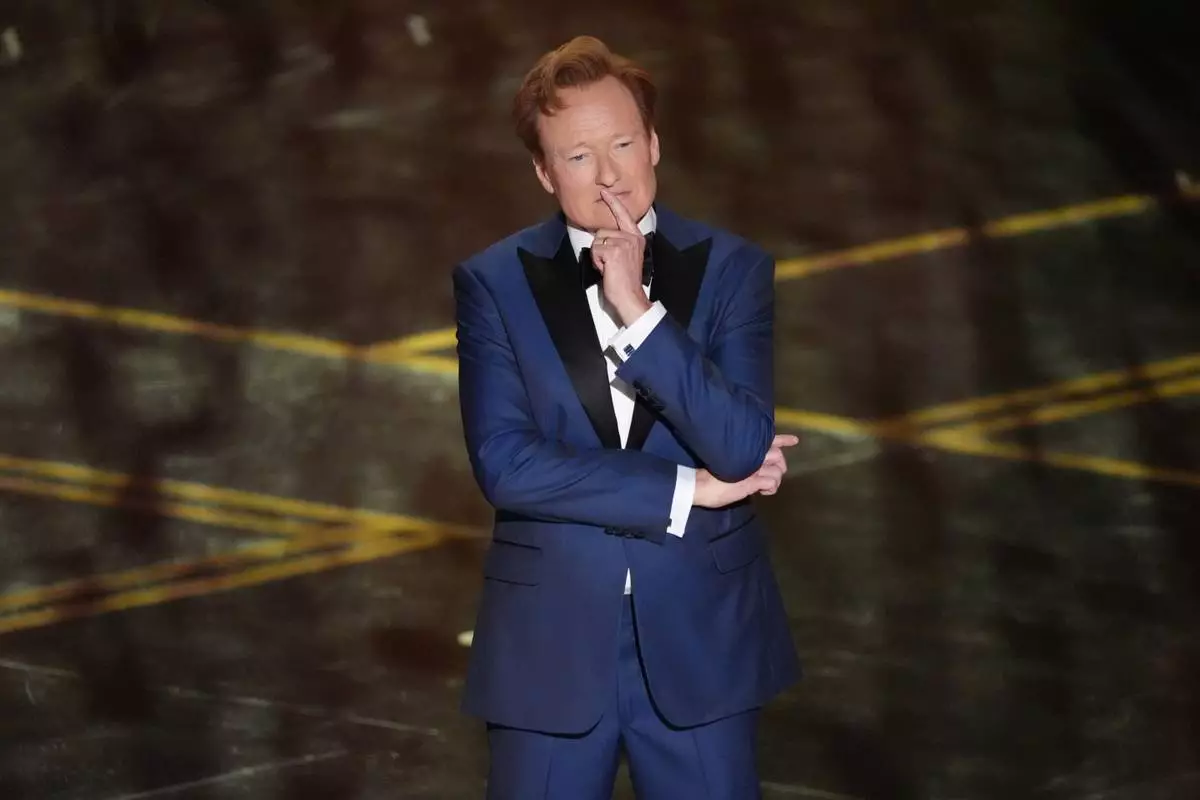
Some viewers watching from home wondered whether returning host Conan O’Brien always knew when he was on camera. There were moments when it seemed like he had been caught in a private moment, reacting to what was happening onstage, like during the live-action short speech that was almost cut short.

Kapoor said he can’t speak to that moment because even he’s not sure whether the host was caught off guard.

“Conan is the master of improv and he’s the master of reaction. And sometimes, you know, I, like, I honestly could not tell,” he said. “I heard the cue go out. But the way that Conan played that bit, it could have been a Conan bit. He is one of those people that are so talented. And sometimes you really don’t know what he has planned.”

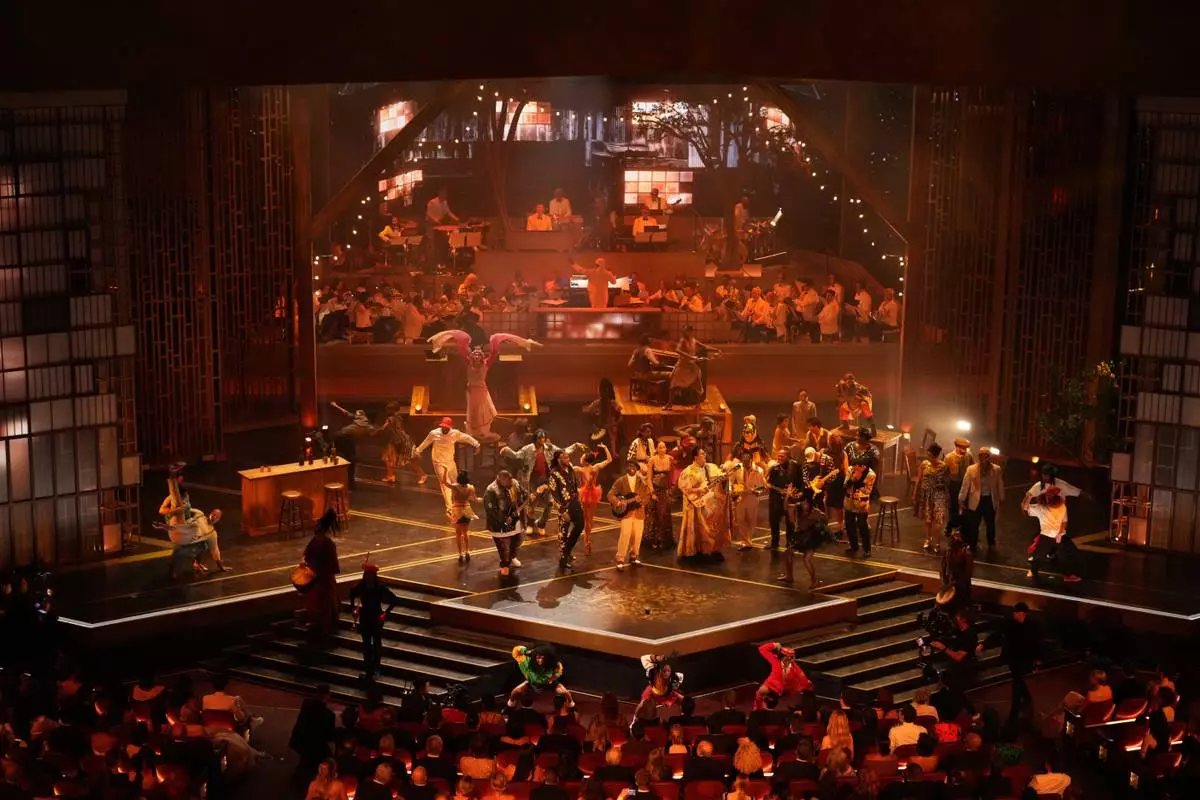
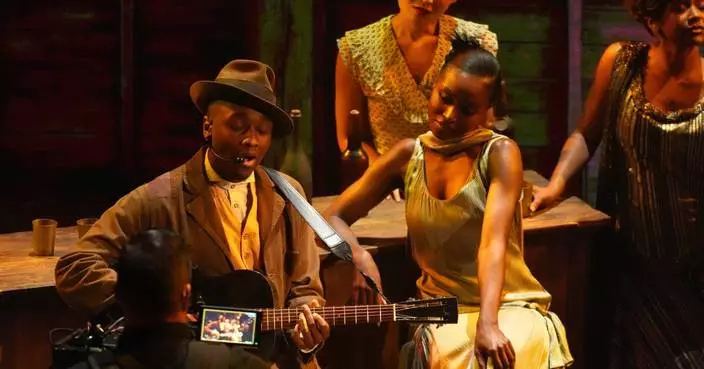
Those in the audience knew that the “Sinners” performance carried on after the broadcast cut to commercial. Kapoor said they did always have a reprise planned for the juke joint recreation.

“There were so many talented musicians in that segment and I think they were just really living in that moment and wanting to have the party continue because I think the energy in the room felt electric and I really think between the audience and the performers onstage, nobody really wanted it to end,” Kapoor said. “Unfortunately, we had to change over our stage, otherwise we would have left them there a little longer.”

The producers are constantly monitoring the show’s timing, and while they have a little bit of wiggle room with Disney and ABC, they are always trying to come in at 3 ½ hours or under.

“It’s our responsibility to keep the train on its tracks,” he said. “But really more than halfway during the show is when more crucial decisions have to be made. If we are continually stretching and adding more time, we have to start reining it in.”

One of those tough decisions happened when “Golden” won best original song, and they made the call to cut the speech at the designated time. It wasn’t a slow fade either, but a definitive cut microphone and a full volume orchestra.

“All the nominees are given guidelines of how long they have to speak and ultimately, in a lot of categories where there’s multiple nominees, we’ve asked for them to designate somebody to speak on behalf of everybody that’s nominated in that category,” Kapoor said. “It’s that moment where somebody feels like they’re done and the music has already been called to play. So at that point, the orchestra is playing, we are now moving on to the next segment. But ultimately, at that time in the show, we are now very, very extremely conscious of time. And want to be fair to all the nominees, so that ends up being a tough decision to make.”

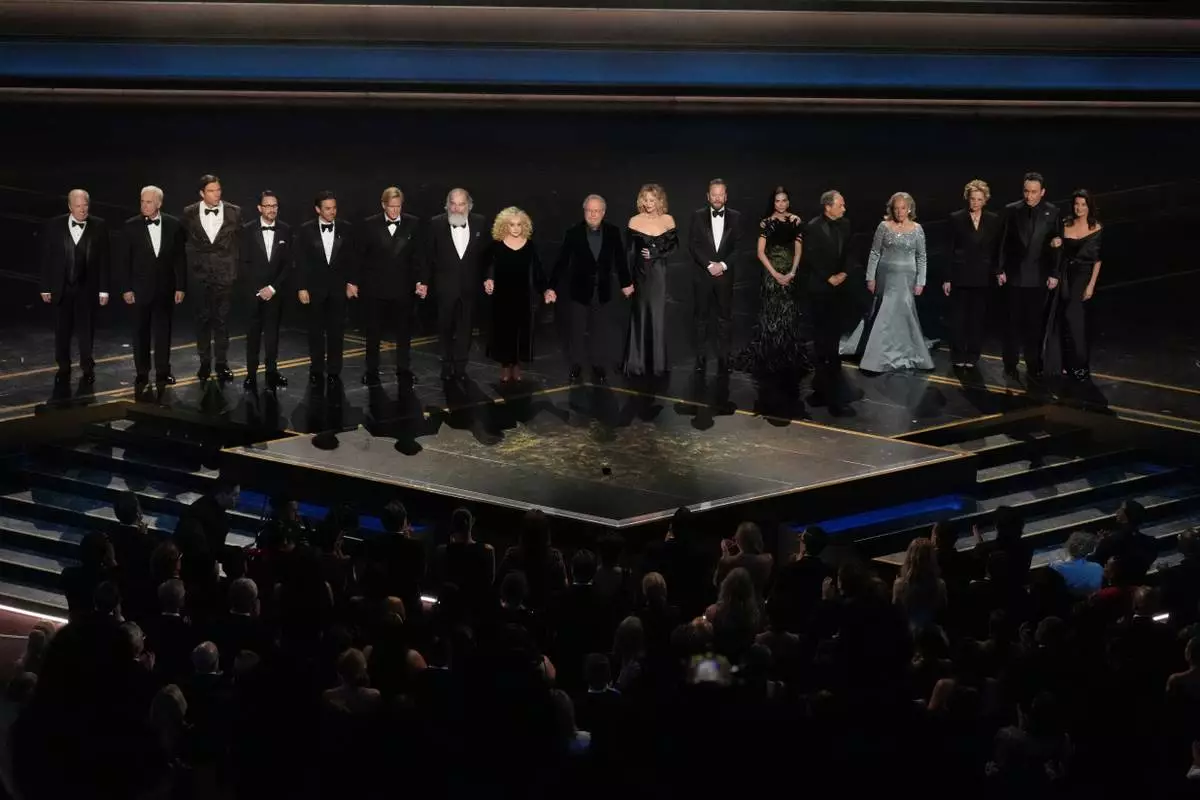
One of their proudest, and most delicately planned, moments was the in memoriam, which included gathering a slew of stars to celebrate Rob and Michele Reiner, as well as Barbra Streisand for Robert Redford.

“The in memoriam this year was really, really special for us,” he said. “It’s one of the most delicate and thought through pieces of the show, because we know how much it means to people. Between our filmmakers, between our orchestrations, between the presenters that actually came on stage. It’s just, yeah, it’s something that we hold very dear and we want to make sure that resonates with not only people in the room, but people at home.”

He added: “Ultimately, if it brings a little tear to your eye that’s kind of us all feeling like we’ve all done a good job to make something memorable happen.”

One thing producers know they definitely don’t have control over is the content of speeches. But last night, Kapoor said, “all the winners really delivered some exceptional speeches,” noting lead acting winners Michael B. Jordan and Jessie Buckley specifically.

“I think they spoke to so many different people around the world from ‘Sentimental Value’ to ‘KPop’ to, you know, thanking mothers,” Kapoor said. “It just shows you that even though we are celebrating film there’s probably a message for almost everybody around the word to celebrate and to feel connected and to come together.”

Kapoor wanted especially to recognize the over 700 people who worked on the show behind the scenes, from editors, to caterers, to makeup artists, to costume designers.

“This particular show really employs so many people in Los Angeles,” he said. “It’s so great for the city of Los Angeles, it’s so great for the film community, it’s so great for television. Katy and myself are honored to work with the academy, with Conan and to be able to produce a show that still means so much to people around the world.”

Well, we’ll just have to wait and see. As Kapoor said, it’s the day after the Oscars and “I don’t think Conan is taking anybody’s calls.”

But he and Mullan loved working with him again.

“We have been so blessed to work with him these past two years, him and his team, and it’s just a really lovely relationship, and I could not ask for anything better,” Kapoor said.

Michael McKean, from left, Christopher Guest, Jerry O'Connell, Will Wheaton, Fred Savage, Cary Elwes, Mandy Patinkin, Carol Kane, Billy Crystal, Meg Ryan, Kiefer Sutherland, Demi Moore, Kevin Pollak, Kathy Bates, Annette Bening, John Cusack, and Daphne Zuniga stand in tribute to Rob Reiner during the Oscars on Sunday, March 15, 2026, at the Dolby Theatre in Los Angeles. (AP Photo/Chris Pizzello)

Michael McKean, from left, Christopher Guest, Jerry O'Connell, Will Wheaton, Fred Savage, Cary Elwes, Mandy Patinkin, Carol Kane, Billy Crystal, Meg Ryan, Kiefer Sutherland, Demi Moore, Kevin Pollak, Kathy Bates, Annette Bening, John Cusack, and Daphne Zuniga stand in tribute to Rob Reiner during the Oscars on Sunday, March 15, 2026, at the Dolby Theatre in Los Angeles. (AP Photo/Chris Pizzello)

Christone "Kingfish" Ingram, from left, Shaboozey, Miles Caton, Brittany Howard, and Raphael Saadiq perform a tribute to "Sinners" during the Oscars on Sunday, March 15, 2026, at the Dolby Theatre in Los Angeles. (AP Photo/Chris Pizzello)

Christone "Kingfish" Ingram, from left, Shaboozey, Miles Caton, Brittany Howard, and Raphael Saadiq perform a tribute to "Sinners" during the Oscars on Sunday, March 15, 2026, at the Dolby Theatre in Los Angeles. (AP Photo/Chris Pizzello)

Michael B. Jordan accepts the award for actor in a leading role for "Sinners" during the Oscars on Sunday, March 15, 2026, at the Dolby Theatre in Los Angeles. (AP Photo/Chris Pizzello)

Michael B. Jordan accepts the award for actor in a leading role for "Sinners" during the Oscars on Sunday, March 15, 2026, at the Dolby Theatre in Los Angeles. (AP Photo/Chris Pizzello)

Kumail Nanjiani presents the award for best live action short film during the Oscars on Sunday, March 15, 2026, at the Dolby Theatre in Los Angeles. (AP Photo/Chris Pizzello)

Kumail Nanjiani presents the award for best live action short film during the Oscars on Sunday, March 15, 2026, at the Dolby Theatre in Los Angeles. (AP Photo/Chris Pizzello)

Host Conan O'Brien appears during the Oscars on Sunday, March 15, 2026, at the Dolby Theatre in Los Angeles. (AP Photo/Chris Pizzello)

Host Conan O'Brien appears during the Oscars on Sunday, March 15, 2026, at the Dolby Theatre in Los Angeles. (AP Photo/Chris Pizzello)

Recommended Articles