Skip to Content Facebook Feature Image

Pandemic knocks out large sections of Hawaii's economy

ENT

Pandemic knocks out large sections of Hawaii's economy
ENT

ENT

Pandemic knocks out large sections of Hawaii's economy

2020-05-20 22:02 Last Updated At:22:10

In normal times, Roland Chang and his three sons start their day at dawn, picking up tourists in Waikiki and driving them to the ocean for a boat ride to see dolphins and turtles swimming in clear blue waters. Four nights a week, the family’s band performs Hawaiian music and popular songs at a hotel.

Their friends call them workaholics. To them, it’s a routine. Or was until the coronavirus pandemic landed in Hawaii.

More Images
This May 5, 2020, photo shows Justin Chang playing a gourd during a livestream performance of his family's band, Kanilau, from the living room of his father Roland Chang's home in Honolulu. The coronavirus pandemic has taken out large sections of Hawaii's tourism-based economy, including the Chang family's turtle and dolphin snorkel tour business and their regular music gig in Waikiki. (AP PhotoAudrey McAvoy)
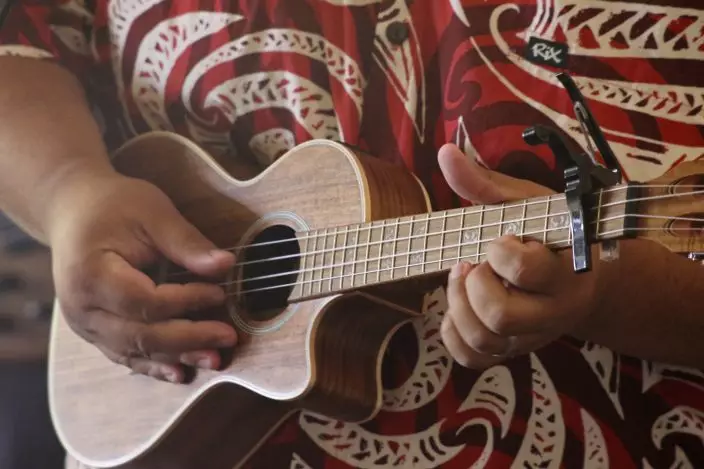
This May 5, 2020, photo shows Justin Chang playing a gourd during a livestream performance of his family's band, Kanilau, from the living room of his father Roland Chang's home in Honolulu. The coronavirus pandemic has taken out large sections of Hawaii's tourism-based economy, including the Chang family's turtle and dolphin snorkel tour business and their regular music gig in Waikiki. (AP PhotoAudrey McAvoy)
This May 5, 2020, photo shows Lance Chang playing a ukulele during a livestream performance of his family's band, Kanilau, from the living room of his father Roland Chang's home in Honolulu. The coronavirus pandemic has taken out large sections of Hawaii's tourism-based economy, including the Chang family's turtle and dolphin snorkel tour business and their regular music gig in Waikiki. (AP PhotoAudrey McAvoy)
This May 5, 2020, photo shows Lance Chang playing a ukulele during a livestream performance of his family's band, Kanilau, from the living room of his father Roland Chang's home in Honolulu. The coronavirus pandemic has taken out large sections of Hawaii's tourism-based economy, including the Chang family's turtle and dolphin snorkel tour business and their regular music gig in Waikiki. (AP PhotoAudrey McAvoy)
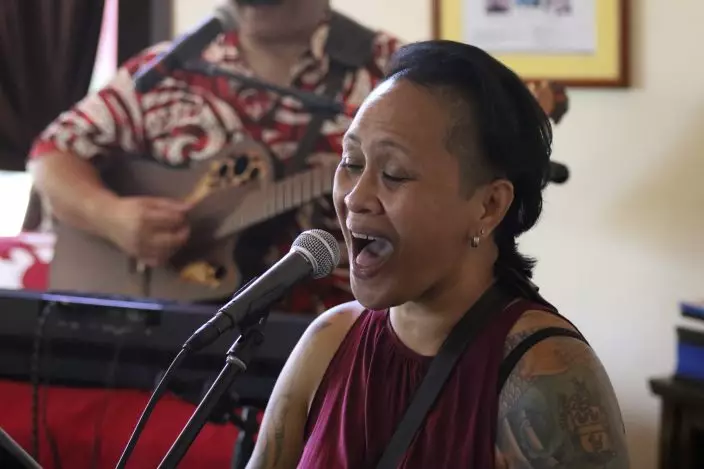
This May 5, 2020, photo shows NJ Chang singing during a livestream performance of her family's band, Kanilau, from the living room of her brother Roland Chang's home in Honolulu. The coronavirus pandemic has taken out large sections of Hawaii's tourism-based economy, including the Chang family's turtle and dolphin snorkel tour business and their regular music gig in Waikiki. (AP PhotoAudrey McAvoy)
This May 5, 2020, photo shows NJ Chang singing during a livestream performance of her family's band, Kanilau, from the living room of her brother Roland Chang's home in Honolulu. The coronavirus pandemic has taken out large sections of Hawaii's tourism-based economy, including the Chang family's turtle and dolphin snorkel tour business and their regular music gig in Waikiki. (AP PhotoAudrey McAvoy)

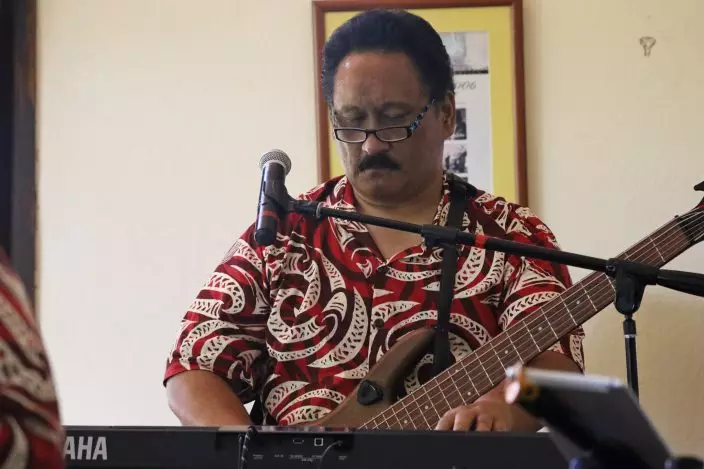
This May 5, 2020 photo shows Roland Chang playing keyboard during a livestream performance of his family's band, Kanilau, from the living room of his home in Honolulu. The coronavirus pandemic has taken out large sections of Hawaii's tourism-based economy, including the Chang family's turtle and dolphin snorkel tour business and their regular music gig in Waikiki. (AP PhotoAudrey McAvoy)

This May 5, 2020 photo shows Roland Chang playing keyboard during a livestream performance of his family's band, Kanilau, from the living room of his home in Honolulu. The coronavirus pandemic has taken out large sections of Hawaii's tourism-based economy, including the Chang family's turtle and dolphin snorkel tour business and their regular music gig in Waikiki. (AP PhotoAudrey McAvoy)

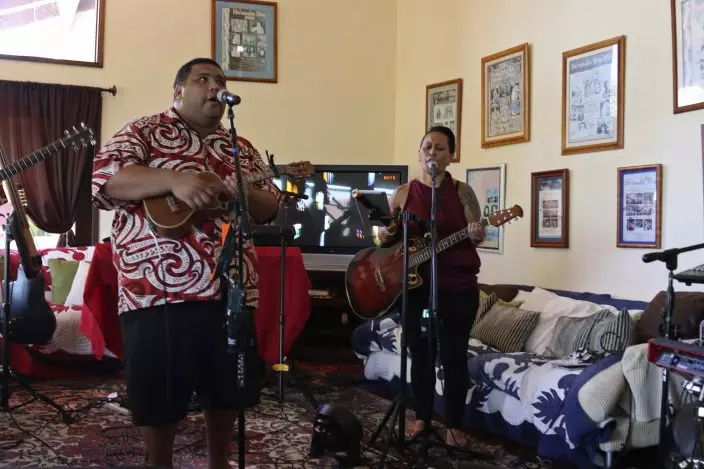
This May 5, 2020, photo shows Lance Chang, left, singing and playing ukulele with his aunt NJ Chang, right, singing and playing guitar during a livestream performance of their family's band, Kanilau, from the living room of Lance's father home in Honolulu. The coronavirus pandemic has taken out large sections of Hawaii's tourism-based economy, including the Chang family's turtle and dolphin snorkel tour business and their regular music gig in Waikiki. (AP PhotoAudrey McAvoy)

This May 5, 2020, photo shows Lance Chang, left, singing and playing ukulele with his aunt NJ Chang, right, singing and playing guitar during a livestream performance of their family's band, Kanilau, from the living room of Lance's father home in Honolulu. The coronavirus pandemic has taken out large sections of Hawaii's tourism-based economy, including the Chang family's turtle and dolphin snorkel tour business and their regular music gig in Waikiki. (AP PhotoAudrey McAvoy)

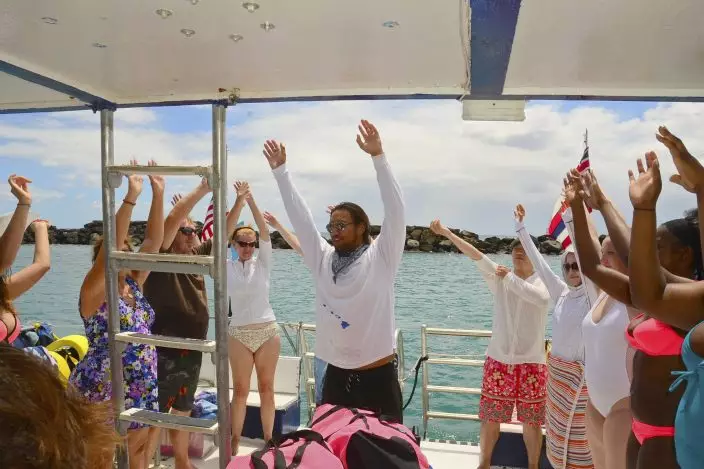
This undated photo provided by EO Waianae Tours shows Justin Chang teaching hula to passengers on board a tour boat in Waianae, Hawaii. The coronavirus pandemic has taken out large sections of Hawaii's tourism-based economy, including the EO Waianae Tours dolphin and turtle snorkel tour business run by the Chang family and the family's regular music gig in Waikiki. (Landon ChangEO Waianae Tours via AP)
This undated photo provided by EO Waianae Tours shows Justin Chang teaching hula to passengers on board a tour boat in Waianae, Hawaii. The coronavirus pandemic has taken out large sections of Hawaii's tourism-based economy, including the EO Waianae Tours dolphin and turtle snorkel tour business run by the Chang family and the family's regular music gig in Waikiki. (Landon ChangEO Waianae Tours via AP)

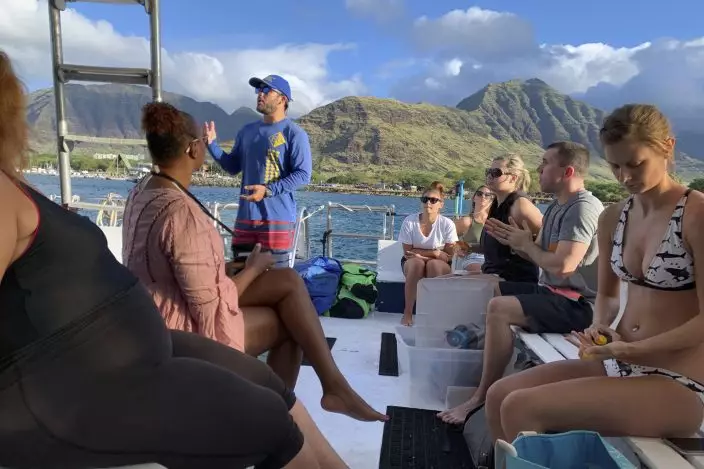
This undated photo provided by EO Waianae Tours shows Bryce Hunter talking to passengers on board a tour boat in Waianae, Hawaii. The coronavirus pandemic has taken out large sections of Hawaii's tourism-based economy, including the EO Waianae Tours dolphin and turtle snorkel tour business run by the Chang family and the family's regular music gig in Waikiki. (Ashlee JankanishEO Waianae Tours via AP)

This undated photo provided by EO Waianae Tours shows Bryce Hunter talking to passengers on board a tour boat in Waianae, Hawaii. The coronavirus pandemic has taken out large sections of Hawaii's tourism-based economy, including the EO Waianae Tours dolphin and turtle snorkel tour business run by the Chang family and the family's regular music gig in Waikiki. (Ashlee JankanishEO Waianae Tours via AP)

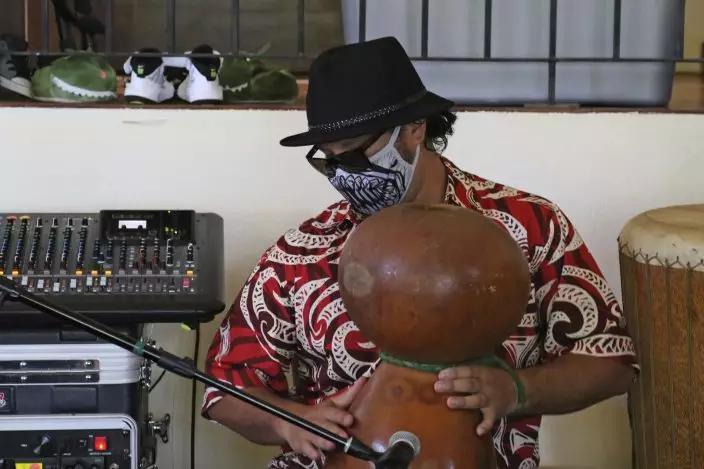
This May 5, 2020, photo shows Justin Chang playing a gourd during a livestream performance of his family's band, Kanilau, from the living room of his father Roland Chang's home in Honolulu. The coronavirus pandemic has taken out large sections of Hawaii's tourism-based economy, including the Chang family's turtle and dolphin snorkel tour business and their regular music gig in Waikiki. (AP PhotoAudrey McAvoy)

This May 5, 2020, photo shows Justin Chang playing a gourd during a livestream performance of his family's band, Kanilau, from the living room of his father Roland Chang's home in Honolulu. The coronavirus pandemic has taken out large sections of Hawaii's tourism-based economy, including the Chang family's turtle and dolphin snorkel tour business and their regular music gig in Waikiki. (AP PhotoAudrey McAvoy)

Like many businesses in tourism-dependent Hawaii, the Changs’ company has had no income for two months. And they don’t know if it will survive to see a post-COVID-19 world. But they agree with the restrictions imposed in the name of public health. And the family, who is Native Hawaiian, believes there will be rebirth afterward. Roland Chang’s sister NJ compared the wreckage to the way the fire goddess lays waste when a volcano erupts and lava flows across the land.

“Madam Pele has always cleaned out. I think that’s what we’re going through,” said NJ Chang, a school teacher and band vocalist and guitar player. “This is a cleaning out process, I believe, for us to all heal.”

Much healing will be required.

This May 5, 2020, photo shows Lance Chang playing a ukulele during a livestream performance of his family's band, Kanilau, from the living room of his father Roland Chang's home in Honolulu. The coronavirus pandemic has taken out large sections of Hawaii's tourism-based economy, including the Chang family's turtle and dolphin snorkel tour business and their regular music gig in Waikiki. (AP PhotoAudrey McAvoy)

This May 5, 2020, photo shows Lance Chang playing a ukulele during a livestream performance of his family's band, Kanilau, from the living room of his father Roland Chang's home in Honolulu. The coronavirus pandemic has taken out large sections of Hawaii's tourism-based economy, including the Chang family's turtle and dolphin snorkel tour business and their regular music gig in Waikiki. (AP PhotoAudrey McAvoy)

A University of Hawaii survey of 623 businesses conducted with the Chamber of Commerce Hawaii showed 34% had no revenue last month. In Maui County — which is even more heavily reliant on tourism than the rest of the state — that number was 61%.

Among arts, entertainment and recreation companies — which include tours like the Changs’ — employment has declined 82% compared to January. Revenues in 2020 are forecast to sink 65% from last year.

The numbers are similarly ugly for hotels and almost as bad for restaurants and retailers. Statewide, the unemployment rate is estimated to be between 25% and 35%. Food distribution events run by the Salvation Army and other nonprofits draw lines of cars that stretch for miles.

This May 5, 2020, photo shows NJ Chang singing during a livestream performance of her family's band, Kanilau, from the living room of her brother Roland Chang's home in Honolulu. The coronavirus pandemic has taken out large sections of Hawaii's tourism-based economy, including the Chang family's turtle and dolphin snorkel tour business and their regular music gig in Waikiki. (AP PhotoAudrey McAvoy)

This May 5, 2020, photo shows NJ Chang singing during a livestream performance of her family's band, Kanilau, from the living room of her brother Roland Chang's home in Honolulu. The coronavirus pandemic has taken out large sections of Hawaii's tourism-based economy, including the Chang family's turtle and dolphin snorkel tour business and their regular music gig in Waikiki. (AP PhotoAudrey McAvoy)

The Changs are living on savings. Their company, EO Waianae Tours, which has four full-time employees, applied for a Paycheck Protection Program loan for small businesses to help them get through the crisis. They're not applying for unemployment benefits.

They have some investment funds they were thinking about using to expand their business but they may now hold off because the future is so uncertain. Their tour business may even have to close.

“I think there are a lot more questions than answers,” Roland Chang said. “I’ve got to guarantee that everyone on my boat won’t get the virus. How do I protect them?”

This May 5, 2020 photo shows Roland Chang playing keyboard during a livestream performance of his family's band, Kanilau, from the living room of his home in Honolulu. The coronavirus pandemic has taken out large sections of Hawaii's tourism-based economy, including the Chang family's turtle and dolphin snorkel tour business and their regular music gig in Waikiki. (AP PhotoAudrey McAvoy)

This May 5, 2020 photo shows Roland Chang playing keyboard during a livestream performance of his family's band, Kanilau, from the living room of his home in Honolulu. The coronavirus pandemic has taken out large sections of Hawaii's tourism-based economy, including the Chang family's turtle and dolphin snorkel tour business and their regular music gig in Waikiki. (AP PhotoAudrey McAvoy)

Among the unknowns: Do they reduce the number of people on their boat (it can hold up to 26 passengers and four crew) so everyone can practice social distancing? Will they have to raise their tour rates to break even as a result? Will they need disposable snorkel gear for clients instead of lending them gear as in the past? Will travelers even come?

“On the totem pole of life right now, people are just trying to put food on the table. Until that gets rectified, it’s going to be hard to say how many people are going to actively, consistently keep the tour business open,” he said.

To slow the spread of the virus, Hawaii Gov. David Ige issued a stay-at-home order in late March and mandated that all travelers adhere to a strict 14-day quarantine when they arrive in the islands. The number of tourists has slowed to a trickle of about 200 per day, down from 30,000 before the pandemic.

This May 5, 2020, photo shows Lance Chang, left, singing and playing ukulele with his aunt NJ Chang, right, singing and playing guitar during a livestream performance of their family's band, Kanilau, from the living room of Lance's father home in Honolulu. The coronavirus pandemic has taken out large sections of Hawaii's tourism-based economy, including the Chang family's turtle and dolphin snorkel tour business and their regular music gig in Waikiki. (AP PhotoAudrey McAvoy)

This May 5, 2020, photo shows Lance Chang, left, singing and playing ukulele with his aunt NJ Chang, right, singing and playing guitar during a livestream performance of their family's band, Kanilau, from the living room of Lance's father home in Honolulu. The coronavirus pandemic has taken out large sections of Hawaii's tourism-based economy, including the Chang family's turtle and dolphin snorkel tour business and their regular music gig in Waikiki. (AP PhotoAudrey McAvoy)

Roland Chang said he supports these moves, given they are so important to protect the elderly who are more vulnerable to the disease.

“They’re at the higher risk level. Without them, we don’t have a future. So let’s keep them going. Tourism will heal itself,” he said.

Just like the plants that sprout from lava fields years after molten rock covers the land, he said.

This undated photo provided by EO Waianae Tours shows Justin Chang teaching hula to passengers on board a tour boat in Waianae, Hawaii. The coronavirus pandemic has taken out large sections of Hawaii's tourism-based economy, including the EO Waianae Tours dolphin and turtle snorkel tour business run by the Chang family and the family's regular music gig in Waikiki. (Landon ChangEO Waianae Tours via AP)

This undated photo provided by EO Waianae Tours shows Justin Chang teaching hula to passengers on board a tour boat in Waianae, Hawaii. The coronavirus pandemic has taken out large sections of Hawaii's tourism-based economy, including the EO Waianae Tours dolphin and turtle snorkel tour business run by the Chang family and the family's regular music gig in Waikiki. (Landon ChangEO Waianae Tours via AP)

For most people, the new coronavirus causes mild or moderate symptoms, such as fever and cough that clear up in two to three weeks. For some, especially older adults and people with existing health problems, it can cause more severe illness, including pneumonia, and death.

For now, the family's band, Kanilau, streams an hour-long show on Facebook from Roland’s living room once a week. The hotel they normally would be performing at — Embassy Suites in Waikiki, has been closed since late March but it posts the session on its Facebook page. Repeat guests who have listened to them for years leave comments like “Aloha from Minnesota!” and “Canada loves you guys.”

They don’t get paid for their livestream. But the songs keep them going emotionally. Even if the tour business doesn’t survive, they vow the band will.

This undated photo provided by EO Waianae Tours shows Bryce Hunter talking to passengers on board a tour boat in Waianae, Hawaii. The coronavirus pandemic has taken out large sections of Hawaii's tourism-based economy, including the EO Waianae Tours dolphin and turtle snorkel tour business run by the Chang family and the family's regular music gig in Waikiki. (Ashlee JankanishEO Waianae Tours via AP)

This undated photo provided by EO Waianae Tours shows Bryce Hunter talking to passengers on board a tour boat in Waianae, Hawaii. The coronavirus pandemic has taken out large sections of Hawaii's tourism-based economy, including the EO Waianae Tours dolphin and turtle snorkel tour business run by the Chang family and the family's regular music gig in Waikiki. (Ashlee JankanishEO Waianae Tours via AP)

“It’s in our DNA,” NJ Chang said.

The Pentagon said Thursday that it is changing the independent military newspaper Stars and Stripes so it concentrates on “reporting for our warfighters” and no longer includes “woke distractions.”

That message, in a social media post from Defense Secretary Pete Hegseth's spokesman, is short on specifics and does not mention the news outlet's legacy of independence from government and military leadership. It comes a day after The Washington Post reported that applicants for jobs at Stars and Stripes were being asked what they would do to support President Donald Trump's policies.

Stars and Stripes traces its lineage to the Civil War and has reported news about the military either in its newspaper or online steadily since World War II, largely to an audience of service members stationed overseas. Roughly half of its budget comes from the Pentagon and its staff members are considered Defense Department employees.

The outlet's mission statement emphasizes that it is “editorially independent of interference from outside its own editorial chain-of-command” and that it is unique among news organizations tied to the Defense Department in being “governed by the principles of the First Amendment.”

Congress established that independence in the 1990s after instances of military leadership getting involved in editorial decisions. During Trump's first term in 2020, Defense Secretary Mark Esper tried to eliminate government funding for Stars and Stripes — to effectively shut it down — before he was overruled by the president.

Hegseth's spokesman, Sean Parnell, said on X Thursday that the Pentagon “is returning Stars and Stripes to its original mission: reporting for our warfighters.” He said the department will “refocus its content away from woke distractions.”

“Stars and Stripes will be custom tailored to our warfighters,” Parnell wrote. “It will focus on warfighting, weapons systems, fitness, lethality, survivability and ALL THINGS MILITARY. No more repurposed DC gossip columns; no more Associated Press reprints.”

Parnell did not return a message seeking details. The Daily Wire reported, after speaking a Pentagon spokeswoman, that the plan is to have all Stars and Stripes content written by active-duty service members. Currently, Congress has mandated that the publication's publisher and top editor be civilians, said Max Lederer, its publisher.

The Pentagon also said that half of the outlet's content would be generated by the Defense Department, and that it would no longer publish material from The Associated Press or Reuters news services.

Also Thursday, the Pentagon issued a statement in the Federal Register that it would eliminate some 1990s era directives that governed how Stars and Stripes operates. Lederer said it's not clear what that would mean for the outlet's operations, or whether the Defense Department has the authority to do so without congressional authorization.

The publisher said he believes that Stars and Stripes is valued by the military community precisely because of its independence as a news organization. He said no one at the Pentagon has communicated to him what it wants from Stars and Stripes; he first learned of its intentions from reading Parnell's social media post.

“This will either destroy the value of the organization or significantly reduce its value,” Lederer said.

Jacqueline Smith, the outlet's ombudsman, said Stars and Stripes reports on matters important to service members and their families — not just weapons systems or war strategy — and she's detected nothing “woke” about its reporting.

“I think it's very important that Stars and Stripes maintains its editorial independence, which is the basis of its credibility,” Smith said. A longtime newspaper editor in Connecticut, Smith's role was created by Congress three decades ago and she reports to the House Armed Services Committee.

It's the latest move by the Trump administration to impose restrictions on journalists. Most reporters from legacy news outlets have left the Pentagon rather than to agree to new rules imposed by Hegseth that they feel would give him too much control over what they report and write. The New York Times has sued to overturn the regulations.

Trump has also sought to shut down government-funded outlets like Voice of America and Radio Free Europe/Radio Liberty that report independent news about the world in countries overseas.

Also this week, the administration raided the home of a Washington Post journalist as part of an investigation into a contractor accused of stealing government secrets, a move many journalists interpreted as a form of intimidation.

The Post reported that applicants to Stars and Stripes were being asked how they would advance Trump's executive orders and policy priorities in the role. They were asked to identify one or two orders or initiatives that were significant to them. That raised questions about whether it was appropriate for a journalist to be given what is, in effect, a loyalty test.

Smith said it was the government's Office of Personnel Management — not the newspaper — that was responsible for the question on job applications and said it was consistent with what was being asked of applicants for other government jobs.

But she said it was not something that should be asked of journalists. “The loyalty is to the truth, not the administration,” she said.

David Bauder writes about the intersection of media and entertainment for the AP. Follow him at http://x.com/dbauder and https://bsky.app/profile/dbauder.bsky.social.

US soldier Sgt. John Hubbuch of Versailles, Ky., one of the members of NATO led-peacekeeping forces in Bosnia reads Stars and Stripes newspaper on Sunday Feb. 14, 1999. (AP Photo/Amel Emric, File)

US soldier Sgt. John Hubbuch of Versailles, Ky., one of the members of NATO led-peacekeeping forces in Bosnia reads Stars and Stripes newspaper on Sunday Feb. 14, 1999. (AP Photo/Amel Emric, File)

Defense Secretary Pete Hegseth stands outside the Pentagon during a welcome ceremony for Japanese Defense Minister Shinjirō Koizumi at the Pentagon, Thursday, Jan. 15, 2026 in Washington. (AP Photo/Kevin Wolf/)

Defense Secretary Pete Hegseth stands outside the Pentagon during a welcome ceremony for Japanese Defense Minister Shinjirō Koizumi at the Pentagon, Thursday, Jan. 15, 2026 in Washington. (AP Photo/Kevin Wolf/)

FILE - A GI with the U.S. 25th division reads Stars and Stripes newspaper at Cu Chi, South Vietnam on Sept. 10, 1969. (AP Photo/Mark Godfrey)

FILE - A GI with the U.S. 25th division reads Stars and Stripes newspaper at Cu Chi, South Vietnam on Sept. 10, 1969. (AP Photo/Mark Godfrey)

Recommended Articles