The COVID-19 pandemic initially slowed car sales, but now many new-car buyers are making more expensive purchases than ever before, according to sales data from Edmunds.
The average transaction price for a new car in the third quarter of 2020 was slightly above $39,000, with payments averaging just under $570 per month. That’s a price increase of about $2,000 from 2019.
But a monthly payment approaching $600 just isn’t in reach for many shoppers. With this in mind, we sought to find a number of new vehicles that could be had at a more attainable $399 monthly payment.
Factoring in today’s average annual percentage rate (4.6%), a popular loan term (72 months) and a lower-than-average down payment amount of $4,000, a vehicle with a manufacturer’s suggested retail price of $29,000 will match that monthly payment target.
We’ve compiled a list of vehicles that can be financed for less than $399 a month using the above parameters. Remember that with a little research, you can easily secure a deal for less than MSRP. Note that while we will include destination and handling charges in the prices below, sales tax and fees are not included and can vary by location.
2021 KIA FORTE
Small sedans are no longer the drab, soulless econoboxes of yesteryear. The Kia Forte, for example, is a sharp little four-door with lots of features and personality. Redesigned for 2019, the Forte has all the latest driver conveniences and safety features, as well as a cabin with a sporty design aesthetic and high-quality materials. The base engine gets the job done, but buyers looking for a sportier edge should check out the GT model, which features a more powerful engine and unique transmission options.
Recommended trim: EX ($24,055). Unless you want the GT’s turbocharged engine, the EX is the way to go. It has almost every feature the Forte offers, yet it doesn’t cost an arm and a leg. Using the parameters above, payments on a Forte EX will be roughly $320 per month.
2021 HONDA INSIGHT
Think of the Honda Insight as an electrified Civic. The two match up pretty closely in terms of size, price and equipment, and both have plenty of passenger and cargo room. The Insight’s hybrid powertrain is the primary differentiator. While it isn’t as quick as the Civic in a straight line, the Insight consumes far less fuel. Depending on trim, the Insight earns 48-52 mpg in the EPA’s combined cycle, while the turbocharged Civic gets 33-36 mpg combined. The Insight is also slightly newer and benefits from a next-generation infotainment system.
Recommended trim: EX ($25,765). The EX is only a little more expensive than the base LX and adds features such as Apple CarPlay and Android Auto functionality, a touchscreen infotainment system and blind-spot monitoring. Payments on an Insight EX using our calculations will run just under $350 per month.
2021 KIA K5
The Kia K5 is the latest version of Kia’s midsize sedan, formerly known as the Optima. The K5 is notable for its sleek and sophisticated sheet metal and near-luxury cabin. Many interior surfaces are covered in soft-touch imitation leather or convincing facsimiles of open-pore wood and textured aluminum. The K5 presents a strong value statement, with nifty features including wireless smartphone compatibility and ventilated seats available at a price that is commensurate with more lightly equipped rivals.
Recommended trim: GT-Line ($26,355). The midtier GT-Line gives the K5 a sporty look and feel while adding desirable creature comforts. A pair of option packages can outfit the GT-Line with even more goodies, and it’s one of the only models available with all-wheel drive. Payments on a K5 GT-Line with our parameters will run about $355 per month.
2021 MAZDA CX-5
The Mazda CX-5 is one of our favorite compact crossovers. Though a little smaller on the inside than its primary competition, the CX-5 makes up for that with an eye-catching design and interior materials that rival what you’ll find in luxury SUVs. It’s also fun to drive, with excellent handling and sharp steering. Performance aficionados with a flexible budget should snag one of the models powered by the optional turbocharged engine.
Recommended trim: Touring ($28,110). The CX-5 Touring adds a lot of features for the money and opens the door to the budget-friendly yet comprehensive Preferred SV package. Monthly payments on a CX-5 Touring with our calculations check in at just under $385 per month.
EDMUNDS SAYS: Although the average car payment is now an eye-popping $570 per month, shoppers don’t have to spend that much to get a great car. In fact, some of Edmunds’ top-rated sedans and crossovers can be snagged for far less.
This story was provided to The Associated Press by the automotive website Edmunds. Cameron Rogers is a news and reviews Editor at Edmunds. Twitter: @_crogers.
Related links:
—Edmunds review: 2021 Kia Forte https://edmu.in/38ZW3qm
—Edmunds review: 2021 Honda Insight https://edmu.in/2KfUIBc
—Edmunds review: 2021 Kia K5 https://edmu.in/2IWZ5Ao
—Edmunds review: 2021 Mazda CX-5 https://edmu.in/2UJ01es
WASHINGTON (AP) — Senate Democratic leaders believe they have a path to winning the majority in November, though it's one with very little wiggle room.
The party got a new burst of confidence when former Rep. Mary Peltola announced Monday she'll run for the Senate in Alaska. Her bid gives Democrats a critical fourth candidate with statewide recognition in states where Republican senators are seeking reelection this year. Nationally, Democrats must net four seats to edge Republicans out of the majority.
That possibility looked all but impossible at the start of last year. And while the outlook has somewhat improved as 2026 begins, Democrats still almost certainly must sweep those four seats. First they must settle some contentious primaries, the mark of a party still struggling with its way forward after Republicans took full control of Washington in 2024. Importantly, they must also beat back challenges to incumbents in some of the most competitive states on the map.
And though some of Senate Minority Leader Chuck Schumer's top Democratic Senate recruits were lauded for their statewide success in pivotal states, some are nearly 70 or older, hardly the key to a lasting Democratic transformation.
Republicans doubt the chances Democrats can pull off such a task, considering most of the 2026 contests are in states that Donald Trump easily won in 2024.
Still, independent voters have drifted in Democrats' direction over the past year, according to a new Gallup poll, a slight breeze at Democrats' back they didn't expect a year ago when there was little path at all.
“I say it’s a much wider path than the skeptics think, and a much wider path than it was three months ago and certainly a year ago,” Schumer told The Associated Press Tuesday.
Republicans currently hold 53 seats, while the Democratic caucus has 47 members, including two independents.
Schumer argues that Peltola, elected twice statewide to Alaska's at-large House seat, puts the typically Republican-leaning state in play as a potential pickup for Democrats.
It's a development similar to other states where Schumer believes Democrats have recruited strong candidates: former three-term Sen. Sherrod Brown in Ohio, former two-term Gov. Roy Cooper in North Carolina and two-term Gov. Janet Mills in Maine.
But they hardly represent a quartet of guarantees. Brown, a longtime pro-labor progressive in increasingly GOP-leaning Ohio, and Peltola, who was elected during a special election in 2022, both lost reelection in 2024. Mills, finishing her second term as governor, faces a competitive primary challenge from progressive veteran and oyster farmer Graham Platner.
None of the four had runaway popularity with voters in their states in 2024. Right around half of voters had somewhat or very favorable views of all of them, with Cooper slightly higher and Brown slightly lower, according to AP VoteCast, a survey of the electorate.
Age remains another issue. After President Joe Biden, in his early 80s, withdrew from the 2024 race amid concerns he was too old to serve, Democratic Senate leadership hasn't changed course. Schumer, 75, has recruited candidates who are older, with several top recruits – including Mills and Brown – well into their 70s.
“Voters sent a very clear message in 2024 that they’re sick of the gerontocracy. They’re sick of Democrats putting up old candidates and that they want some new blood,” said Lis Smith, a national Democratic strategist. “And some of the recruits, like in Maine, seem to completely ignore the message that voters sent in 2024.”
Schumer said winning back the Senate is paramount over all else.
“It's not young versus old. It's not left versus center. It's who can best win in the states,” he said. “So, these are all really good candidates, and I don't think you look at them through one narrow prism. You look at who can win.”
Before Democrats can test their general-election appeal, they must navigate some primaries that highlight lingering divisions within the party.
Platner, who has been endorsed by independent Sen. Bernie Sanders of Vermont, has demonstrated formidable fundraising for his Maine contest, despite controversies surrounding past social media posts and a tattoo linked to Nazi imagery. Some Democrats worry his insurgent appeal could be a liability in November if he is the nominee.
In Michigan, Democratic Sen. Gary Peters' retirement has opened a seat in a state Trump carried narrowly. Republicans have unified behind former Rep. Mike Rogers, while Democrats face a crowded August primary after failing to recruit Gov. Gretchen Whitmer.
Crowded or contentious primaries are also playing out in Minnesota, Texas and Iowa, forcing Democrats to devote resources even in states not central to their path to a majority.
Sen. Chris Van Hollen is part of an informal group of Democratic senators known as Fight Club that has been openly critical of party leadership’s approach to the midterms. Van Hollen said the group has objected to what it sees as the Senate Democrats’ campaign arm — controlled by Schumer — “wading into certain Democratic primaries.”
“So, yes, we’re taking a look at all of them,” Van Hollen said of endorsing more progressive candidates.
Betsy Ankney, political director for the National Republican Senatorial Committee in 2020, acknowledged Democrats’ desire to make the case for competitiveness but characterized Trump’s presidential victories in Alaska and Ohio in 2024 — by 13 and 11 percentage point margins, respectively — as enormous hurdles.
She said Republicans are “rightly focused, on real tangible targets in Georgia, in Michigan," calling them “very real pickup opportunities.”
Democrats’ shot at the majority almost certainly depends on Sen. Jon Ossoff winning reelection in Georgia, where Trump won in 2024 by 2.2 percentage points, and holding Michigan, where Peters' retirement creates an open seat in a state Trump carried by 1.4 percentage points.
"It’s not just about where the Democrats can play. It’s about where we can play, too,” Ankney said.
Despite the challenges, Democrats see reasons for optimism in the broader political climate.
A new Gallup survey found 47% of U.S. adults now identify with or lean toward the Democrats, while 42% are Republicans or lean Republican. That gives Democrats the advantage in party affiliation for the first time since Trump’s first term.
But the data strongly suggests that independents are moving toward Democrats because of their souring attitude toward Trump, rather than greater goodwill toward Democrats. The Democratic Party’s favorability is still low, and Gallup’s analysis found that, as more Americans identify as independents, they tend to gravitate toward the party that is out of political power — whether it’s the Democrats or the Republicans.
Still, that appears to be a dynamic in Democrats' favor, as economic unease creeps into the election year with little time before the feelings lock into voters' political thinking, veteran Republican pollster Ed Goeas said.
“That creates an environment that will affect these Senate races,” Goeas said, predicting House Republicans could lose their majority. He said Republicans are assuming the economy and the political environment are going to be better.
“I think they are going to end up getting frustrated going into the summer because, first of all, the economy is not on all levels improving. It’s going to be a target-rich environment for Democrats," he said.
“It’s going to be close.”
Beaumont reported from Des Moines, Iowa. Associated Press writer Amelia Thomson DeVeaux in Washington contributed to this report.
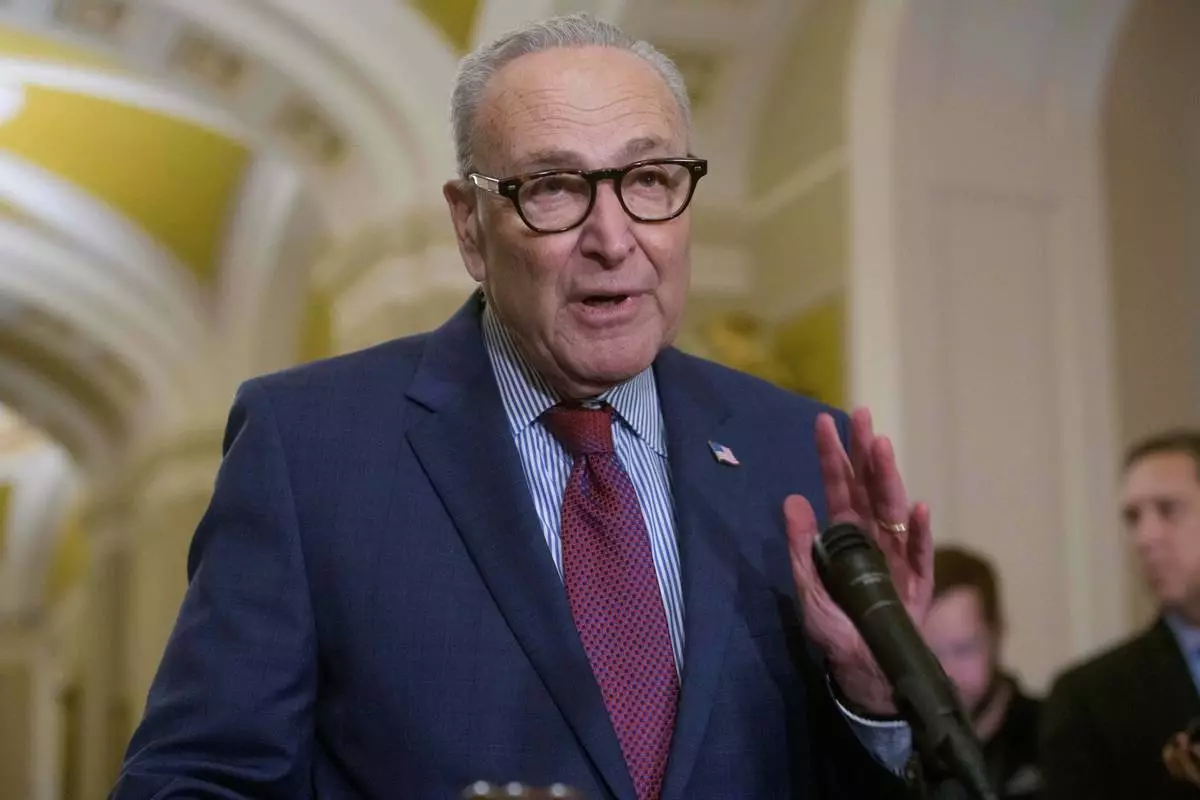
Senate Minority Leader Chuck Schumer, D-N.Y., speaks during the Senate Democrat policy luncheon news conference at the Capitol, Tuesday, Jan. 13, 2026, in Washington. (AP Photo/Rod Lamkey, Jr.)
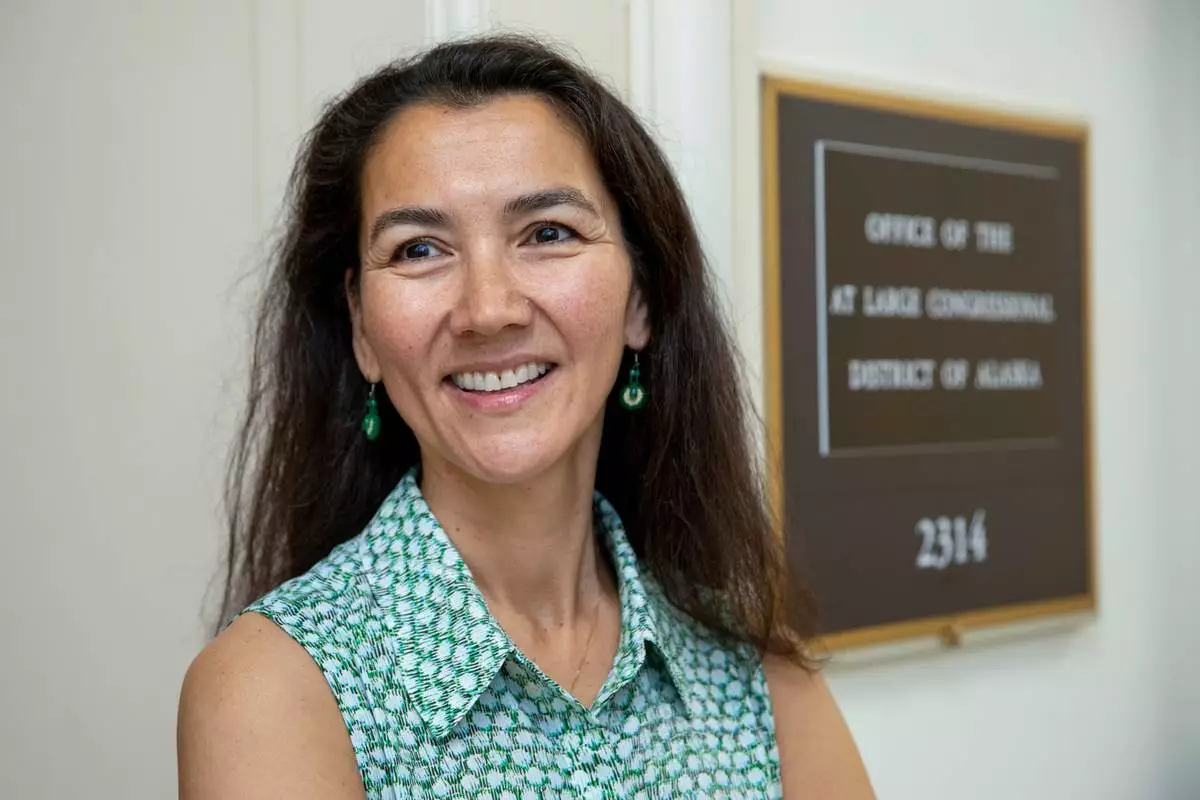
FILE - Rep.-elect Mary Peltola, D-Alaska, is interviewed on Capitol Hill in Washington, Sept. 12, 2022. (AP Photo/Amanda Andrade-Rhoades, File)