Huntington Bank will absorb Detroit's TCF Financial in an all-stock deal worth $6 billion, the latest in a string of tie-ups that have led to a crop of new and larger U.S. regional banks.
Huntington, with $120 billion in assets, outsizes TCF, which has assets of around $50 billion. The TCF brand will be changed to Huntington, and Detroit's TCF Center will be renamed after Huntington in the coming years.
That said, Huntington has pledged to maintain TCF's presence in Detroit, including its plans to occupy a skyscraper currently under construction in downtown Detroit that will contain TCF's commercial lending business.
In this Jan. 28, 2019 file photo, a TCF Bank sign is shown in Eastpointe, Mich. Regional bank Huntington Bank will merge with Detroit-based TCF Financial in an all-stock deal worth $6 billion, the banks jointly announced Monday, Dec. 14, the latest in a recent wave of bank mergers that is creating a new crop of large regional banks across the country. (AP PhotoPaul Sancya, File)
“We wanted to remain Detroit's hometown bank,” said TCF Financial CEO Gary Torgow, in an interview.
The consumer front of the combined bank will will be based in Columbus, Ohio, Huntington’s home town.
Huntington is among the largest participants in the Paycheck Protection Program, the government fund that provided loans to small businesses to help meet payolls during the pandemic and avoid layoffs. The bank, like many others, has had to restructure its operations to allow its thousands of employees to work remotely.
Along with going into Detroit, the merger will give Huntington access to markets like Denver and the Upper Midwest.
“We are going to be much better together,” said Huntington Bank CEO Steve Steinour, noting that Huntington, along with new markets, would also get access to TCF's equipment finance business and inventory finance businesses.
The Huntington-TCF merger is the latest deal among regional banks, who have looked to get bigger and more competitive against the Wall Street titans like JPMorgan Chase, Citigroup and Bank of America. The first big deal came last year between BB&T and SunTrust, which merged together to become Trust Bank. Earlier this year, Pennsylvania's PNC Financial Services Group Inc. announced it would buy the U.S. operations of Spanish bank BBVA.
Under the agreement announced Monday, Huntington's Steinour will become chairman, president and CEO of the combined holding company and CEO of the bank operations. TCF's Torgow will become chairman of the board.
The deal is expected to close next year in the second quarter, subject to regulatory approval.
WASHINGTON (AP) — President Donald Trump said Tuesday he is ordering a blockade of all “sanctioned oil tankers” into Venezuela, ramping up pressure on the country’s authoritarian leader Nicolás Maduro in a move that seemed designed to put a tighter chokehold on the South American country's economy.
Trump's escalation comes after U.S. forces last week seized an oil tanker off Venezuela’s coast, an unusual move that followed a buildup of military forces in the region. In a post on social media Tuesday night announcing the blockade, Trump alleged Venezuela was using oil to fund drug trafficking and other crimes and vowed to continue the military buildup until the country gave the U.S. oil, land and assets, though it was not clear why he felt the U.S. had a claim.
“Venezuela is completely surrounded by the largest Armada ever assembled in the History of South America,” Trump said in a post on his social media platform. “It will only get bigger, and the shock to them will be like nothing they have ever seen before — Until such time as they return to the United States of America all of the Oil, Land, and other Assets that they previously stole from us.”
Pentagon officials referred all questions about the post to the White House.
The buildup has been accompanied by a series of military strikes on boats in international waters in the Caribbean and eastern Pacific. The campaign, which has drawn bipartisan scrutiny among U.S. lawmakers, has killed at least 95 people in 25 known strikes on vessels.
The Trump administration has defended it as a success, saying it has prevented drugs from reaching American shores, and they pushed back on concerns that it is stretching the bounds of lawful warfare.
The Trump administration has said the campaign is about stopping drugs headed to the U.S., but Trump’s chief of staff Susie Wiles appeared to confirm in a Vanity Fair interview published Tuesday that the campaign is part of a push to oust Maduro.
Wiles said Trump “wants to keep on blowing boats up until Maduro cries uncle.”
Tuesday night's announcement seemed to have a similar aim.
Venezuela, which has the world’s largest proven oil reserves and produces about 1 million barrels a day, has long relied on oil revenue as a lifeblood of its economy.
Since the Trump administration began imposing oil sanctions on Venezuela in 2017, Maduro’s government has relied on a shadowy fleet of unflagged tankers to smuggle crude into global supply chains.
The state-owned oil company Petróleos de Venezuela S.A., commonly known as PDVSA, has been locked out of global oil markets by U.S. sanctions. It sells most of its exports at a steep discount in the black market in China.
Francisco Monaldi, a Venezuelan oil expert at Rice University in Houston, said about 850,000 barrels of the 1 million daily production is exported. Of that, he said, 80% goes to China, 15% to 17% goes to the U.S. through Chevron Corp., and the remainder goes to Cuba.
It wasn't immediately clear how the U.S. planned to enact what Trump called a “TOTAL AND COMPLETE BLOCKADE OF ALL SANCTIONED OIL TANKERS going into, and out of, Venezuela.”
But the U.S. Navy has 11 ships, including an aircraft carrier and several amphibious assault ships, in the region.
Those ships carry a wide complement of aircraft, including helicopters and V-22 Ospreys. Additionally, the Navy has been operating a handful of P-8 Poseidon maritime patrol aircraft in the region.
All told, those assets provide the military a significant ability to monitor marine traffic coming in and out of the country.
Associated Press writers Konstantin Toropin in Washington and Regina Garcia Cano in Caracas, Venezuela, contributed to this report.
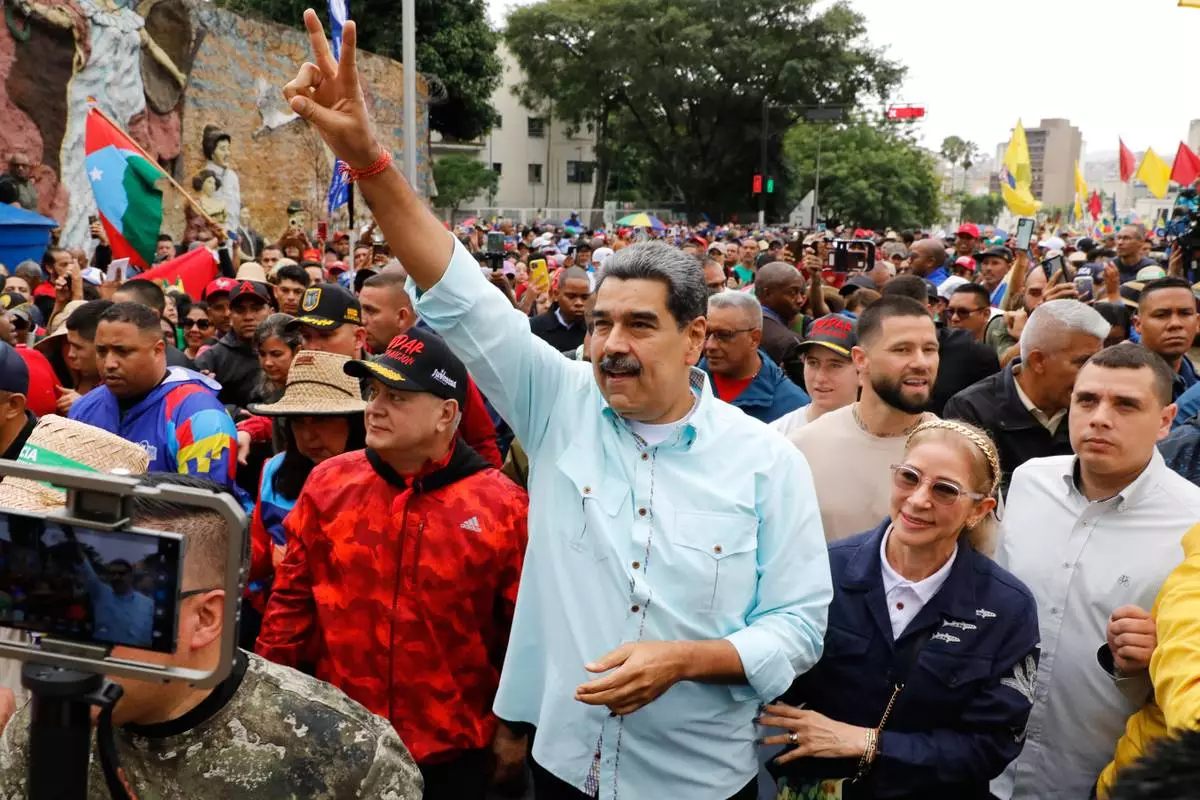
President Nicolas Maduro joins a rally marking the anniversary of the Battle of Santa Ines, which took place during Venezuela's 19th-century Federal War, in Caracas, Venezuela, Wednesday, Dec. 10, 2025. (AP Photo/Cristian Hernandez)
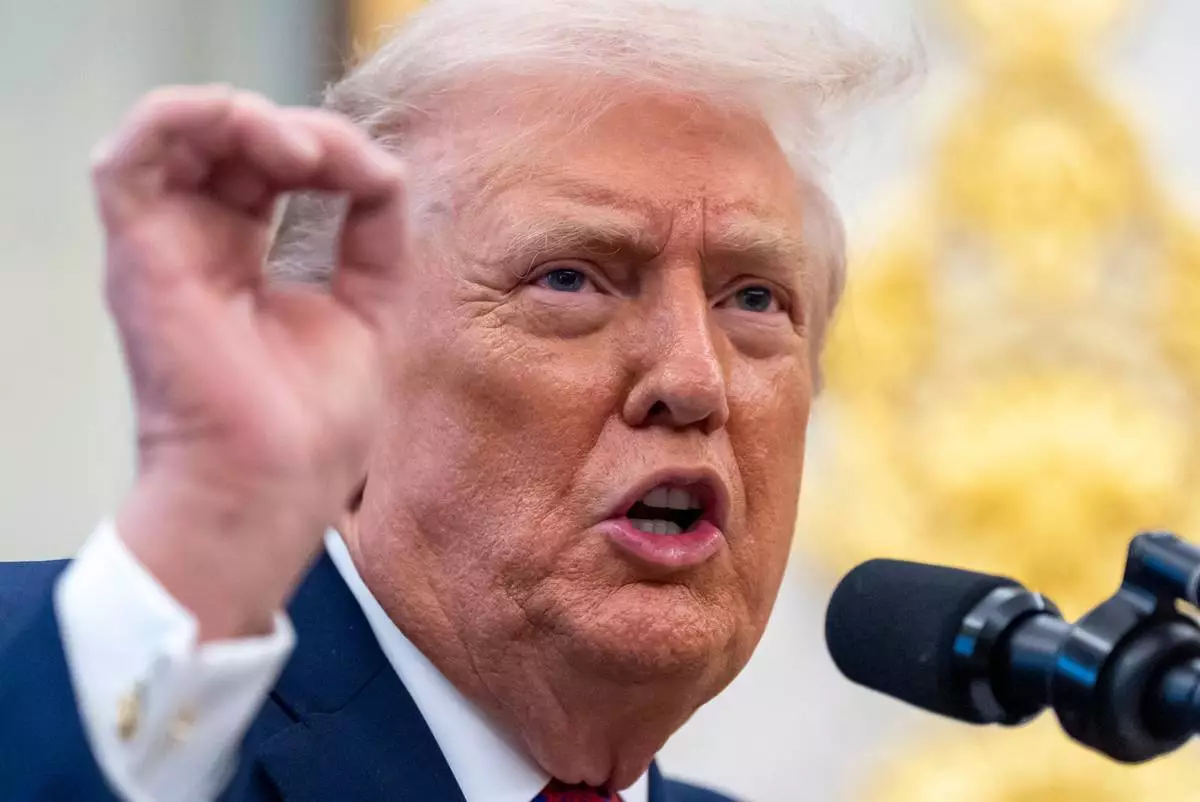
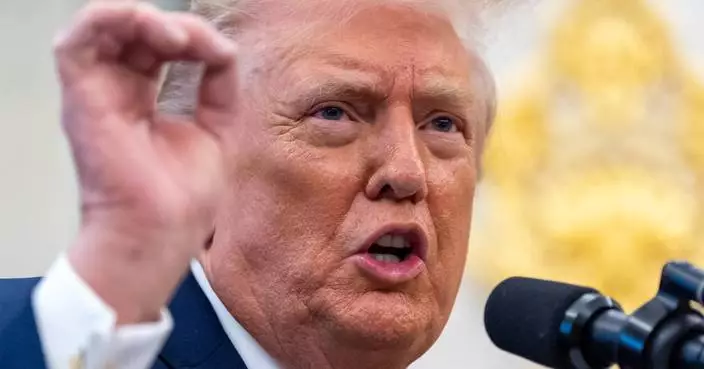
President Donald Trump speaks during a Mexican Border Defense Medal presentation in the Oval Office of the White House, Monday, Dec. 15, 2025, in Washington. (AP Photo/Alex Brandon)