Skip to Content Facebook Feature Image

The gonzo art of writing for 'Borat Subsequent Moviefilm'

News

The gonzo art of writing for 'Borat Subsequent Moviefilm'
News

News

The gonzo art of writing for 'Borat Subsequent Moviefilm'

2021-04-14 03:08 Last Updated At:03:30

Screenplay writing, usually a fairly solitary, uneventful process, is more of a full-contact sport for a movie like “Borat Subsequent Moviefilm.”

Work for the nine Oscar-nominated writers of the “Borat” sequel began conventionally enough. Brainstorming, a draft, a table read. But as soon as shooting starts, there’s no telling what can happen, how people will react to Sacha Baron Cohen’s Kazakh alter-ego, or what strange circumstances might befall their protagonist.

As Borat hurtles through the world, a team of writers trails along, endlessly writing and rewriting for every evolving scenario. Take, for example, when Baron Cohen ended up in a five-day lockdown with two QAnon believers. Anthony Hines, a writer and producer on the film, would reach Baron Cohen by stealthily taking a ladder to Baron Cohen’s second-floor bedroom, like a Cyrano de Bergerac of comedy.
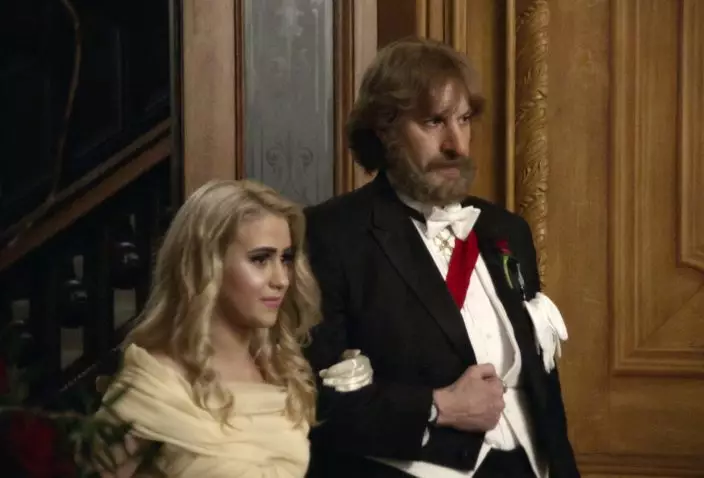
This image released by Amazon Studios shows Maria Bakalova, left, and Sacha Baron Cohen in a scene from "Borat Subsequent Moviefilm." .(Amazon Studios via AP)

This image released by Amazon Studios shows Maria Bakalova, left, and Sacha Baron Cohen in a scene from "Borat Subsequent Moviefilm." .(Amazon Studios via AP)

“It was quite sort of dark and dangerous,” says Hines, a longtime collaborator of Baron Cohen's. “It was literally a matter of climbing up that ladder and poking your head into Borat’s bedroom window at 2 a.m. and giving him feedback and giving him some ideas.”

Like most things about “Borat Subsequent Moviefilm,” the film’s Academy Awards nomination for adapted screenplay is unusual. Seldom are the scripts to broad comedies nominated, but both “Borat” films have been. Its nine writers are the most ever nominated in the category. (When it won at the Writer Guild Awards, Baron Cohen theorized it was because 60% of the guild worked on the movie.) And the film’s full title — “Borat Subsequent Moviefilm: Delivery of Prodigious Bribe to American Regime for Make Benefit Once Glorious Nation of Kazakhstan” — is the longest ever for an Oscar nominee.

“When they read out the nomination and the title of the film, I think it will essentially feel like a filibuster,” Dan Mazer said on a recent Zoom with Hines and four other of the film’s writers, Peter Baynham, Dan Swimer, Jena Friedman and Nina Pedrad.

This image released by Amazon Studios shows Sacha Baron Cohen in a scene from "Borat Subsequent Moviefilm." (Amazon Studios via AP)

This image released by Amazon Studios shows Sacha Baron Cohen in a scene from "Borat Subsequent Moviefilm." (Amazon Studios via AP)

“If we win, it’s a massive boost the trophy manufacturing industry,” added Hines.

You can read a transcribed script of “Borat Subsequent Moviefilm,” and it does make for a unique reading experience. Descriptions include “EXT. MEL GIBSON SQUARE - DAY.” But the movie’s final form gives you only a small window into the gonzo art of writing for Borat.

There are plenty of scenes scripted straightforwardly, but screenwriting for Borat also means finding ways to manipulate the real world, guessing how people will respond, and shoehorning those guerilla encounters into a coherent narrative. That adds up to, says Hines, “an extraordinary amount of writing — far, far more than a conventional movie.”

“There’s nine movies,” says Swimer.

A lot of what they do never comes near the screen, nor is it even designed to. To help lure Rudy Giuliani for the film’s infamous hotel room scene, they created a fake documentary about the coronavirus called “Keeping America Alive: How Trump Defeated COVID.” After watching the tape, Giuliani’s office OK’ed the interview under the impression it was for that film.

“That’s a writing process all of its own. It’s like scripts within scripts,” says Hines. “We shot part of that documentary with other people who were not going to be in the movie like a sizzle reel with a voiceover going something like: ‘Where Trump saw an invisible enemy, the Democrats saw an invisible friend.’”

Sometimes — especially during the run-up to the 2020 election — real-life farce could seem like their handwork, too. Giuliani’s Four Seasons Landscaping press conference, for instance.

“That was us as well,” says Baynham. “We wrote the Landscaping thing.”

Most of the writers are Borat veterans, many of them going back to “Da Ali G Show.” But on “Subsequent Moviefilm,” Baron Cohen (a credited writer, too, and a regular presence in the writing room) brought some fresh voices to Borat, including Friedman, Pedrad and Erica Rivinoja. Their input was key in mapping the journey of Borat's daughter Tutar through American-style misogyny and Borat’s slow, strange transition to what might be called feminism.

But because “Borat Subsequent Moviefilm” was made in secret, just joining the project was disorienting.

“I didn’t really even know what the movie was,” says Pedrad (“Saturday Night Live”). “I go, locked in a room, read the script. A couple pages in, I’m like: ‘This sounds a lot like ... no. Is it?’”

In case of leak, scripts were written in code. Borat’s name never appeared in the pages. “One minute, he was Sergio from Guatemala, then he was Apu from Armenia,” says Hines. By the end, the names were all jumbled up. Johnny the Monkey was identified as Jeremy the Horse.

Friedman, a “Daily Show” veteran, was responsible for the scene set in a “pregnancy crisis center.” There, Pastor Jonathan Bright, led to believe that Tutar is pregnant by her father, still argues against abortion.

“I can’t believe we got that scene in a major motion picture,” says Friedman. “I remember there was a discussion like, ‘Do you think we’ll really be able to get a pastor be OK with incest?’ Just knowing what I know from those places, I was like, ‘Absolutely, yes.’”

The writers will play out some scenes with actors beforehand to get a sense of likely responses to Borat. But they also encounter plenty of people who say things that couldn’t possibly be prepared for. If Borat holds up a mirror to American society, the reflection is often unpredictable and disquieting.

That includes the plastic surgeon, Dr. Charles Wallace, visited by Borat and Tutar who frankly tells them that he would he would want to sleep with Tutar if Borat wasn't there. The moment still astounds Mazer.

“It’s a really interesting dilemma we go through because the more extreme it is, the less people believe that it’s real,” he says. “You just go: How do people like that actually exist? And they do, and we find them, and it’s more common than you would imagine.”

Their plans are frequently upended. The pandemic, itself, caused a massive rewrite. Sometimes people get wind that it’s Baron Cohen in disguise. For the scene with Tutar at a Republican women’s event, Borat was removed at the last moment after producers overheard something. In the first “Borat” film, a Civil War reenactment scene was scrubbed when one of the reenactors’ sons spotted Baron Cohen.

But remarkably frequently, the writers say, Baron Cohen finds a way to make happen the ridiculous scenarios they dream up — scenes they think can’t possibly be pulled off. Sometimes they’re watching along by a live video link. Sometimes they’re hidden among a crowd, as Hines was while an overalls-clad Cohen performed as “Country Steve” at a pro-gun rally. Or they might be anxiously waiting for word in the writers’ room.

“We’ll be sitting there nervously going, ‘How many of our jokes made it in? How did the scene go?’ The amount of times we’ll get a text back saying, ‘We did it. We got X to happen. We got Y to happen,’” says Mazer, shaking his head. “It’s like a bank job. It’s like a celebration. You just go, ’I can’t believe that happened. How did he get to it? I never in my wildest dreams imagined this crazy thing that we wrote ended up manifesting.'"

Follow AP Film Writer Jake Coyle on Twitter at: http://twitter.com/jakecoyleAP
YANGON, Myanmar (AP) — Myanmar began a second round of voting Sunday in its first general election since the military takeover five years ago.

Voting expanded to additional townships including some areas affected by the civil war between the military government and its armed opponents.

Critics say the polls organized by the military government are neither free nor fair and are an effort by the military to legitimize its rule after seizing power from the elected government of Aung San Suu Kyi in February 2021.

Tom Andrews, a special rapporteur working with the U.N. human rights office, urged the international community Thursday to reject what he called a “sham election,” saying the first round exposed coercion, violence and political exclusion.

“You cannot have a free, fair or credible election when thousands of political prisoners are behind bars, credible opposition parties have been dissolved, journalists are muzzled, and fundamental freedoms are crushed,” Andrews said.

According to the Assistance Association for Political Prisoners, which keeps detailed tallies of arrests and casualties linked to the conflict, more than 22,000 people are detained for political offenses, and more than 7,600 civilians have been killed by security forces since 2021.

The army’s takeover triggered widespread peaceful protests that soon erupted into armed resistance, and the country slipped into a civil war.

A new Election Protection Law imposes harsh penalties and restrictions for virtually all public criticism of the polls. The authorities have charged more than 330 people under new electoral law for leafleting or online activity over the past few months.

Opposition organizations and ethnic armed groups had previously vowed to disrupt the electoral process.

On Sunday, attacks targeting polling stations and government buildings were reported in at least four of the 100 townships holding polls, with two administrative officials killed, independent online media, including Myanmar Now, reported.

Polling stations opened at 6 a.m. in 100 townships across the country, including parts of Sagaing, Magway, Mandalay, Bago and Tanintharyi regions, as well as Mon, Shan, Kachin, Kayah and Kayin states. Many of those areas have recently seen clashes or remain under heightened security, underscoring the risks surrounding the vote.

The election is being held in three phases due to armed conflicts. The first round took place Dec. 28 in 102 of the country’s total 330 townships. A final round is scheduled for Jan. 25, though 65 townships will not take part because of fighting.

Myanmar has a two-house national legislature, totaling 664 seats. The party with a combined parliamentary majority can select the new president, who can name a Cabinet and form a new government. The military automatically receives 25% of seats in each house under the constitution.

Maj. Gen. Zaw Min Tun, the military government's spokesperson, told journalists on Sunday that the two houses of parliament will be convened in March, and the new government will take up its duties in April.

On Sunday, people in Yangon and Mandalay, the two largest cities, cast their ballots in high schools, government buildings and religious buildings.

At more than 10 polling stations visited by Associated Press journalists, voter numbers ranged from about 150 at the busiest site to just a few at others, appearing lower than during the 2020 election when long lines were common.

The military government said there were more than 24 million eligible voters, about 35% fewer than in 2020. The government called the turnout a success, claiming ballots were cast by more than 6 million people, about 52% of the more than 11 million eligible voters in the election's first phase.

Myo Aung, a chief minister of the Mandalay region, said more people turned out Sunday than in the first phase.

Maung Maung Naing, who voted in Mandalay’s Mahar Aung Myay township, said he wanted a government that will benefit the people.

“I only like a government that can make everything better for livelihoods and social welfare,” he said.

Sandar Min, an independent candidate from Yangon’s Latha township, said she decided to contest the election despite criticism because she wants to work with the government for the good of the country. She hopes the vote will bring change that reduces suffering.

“We want the country to be nonviolent. We do not accept violence as part of the change of the country,” Sandar Min said after casting a vote. “We care deeply about the people of this country.”

While more than 4,800 candidates from 57 parties are competing for seats in national and regional legislatures, only six parties are competing nationwide.

The first phase left the military-backed Union Solidarity and Development Party, or USDP, in a dominant position, winning nearly 90% of the contested seats in the first phase in the lower house. It also won a majority of seats in regional legislatures.

Suu Kyi, Myanmar’s 80-year-old former leader, and her party aren’t participating in the polls. She is serving a 27-year prison term on charges widely viewed as spurious and politically motivated. Her party, the National League for Democracy, was dissolved in 2023, after refusing to register under new military rules.

Other parties also refused to register or declined to run under conditions they deem unfair, while opposition groups have called for a voter boycott.

An official of the Union Election Commission counts ballots at a polling station during the second phase of general election in Mandalay, central Myanmar, Sunday, Jan. 11, 2026. (AP Photo/Aung Shine Oo)

An official of the Union Election Commission counts ballots at a polling station during the second phase of general election in Mandalay, central Myanmar, Sunday, Jan. 11, 2026. (AP Photo/Aung Shine Oo)

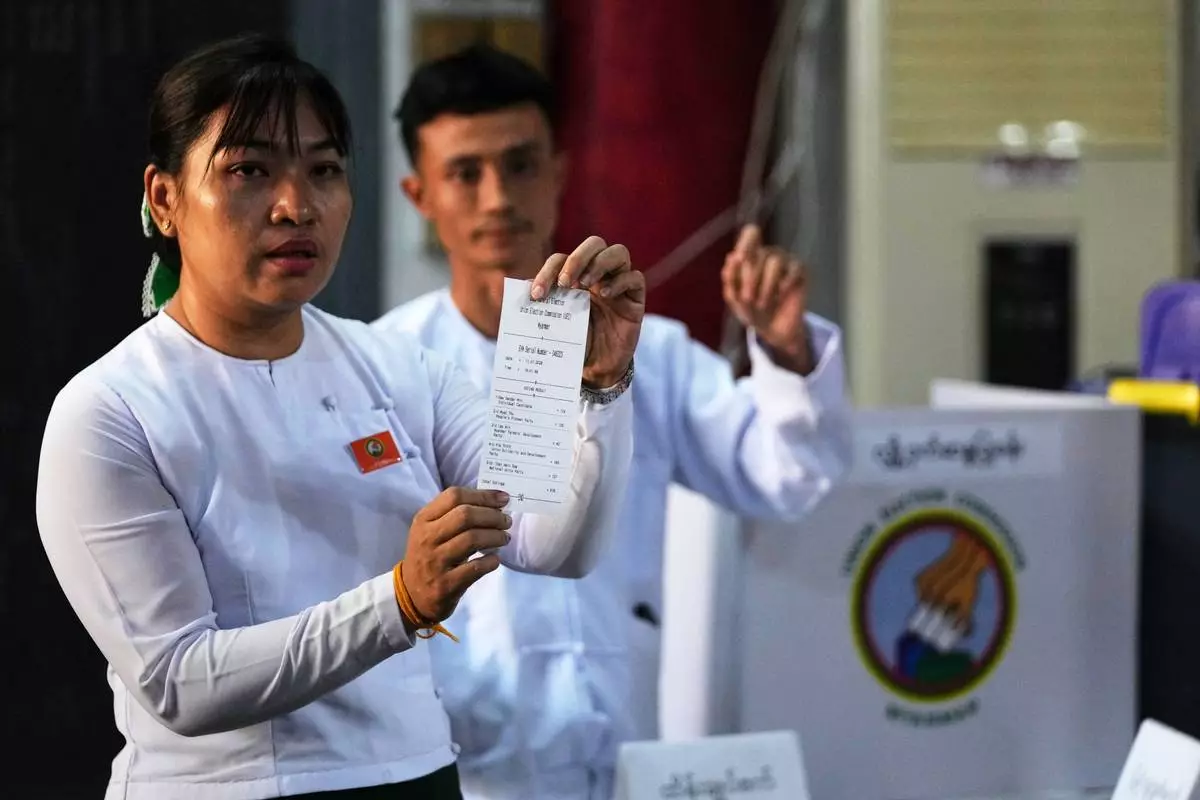
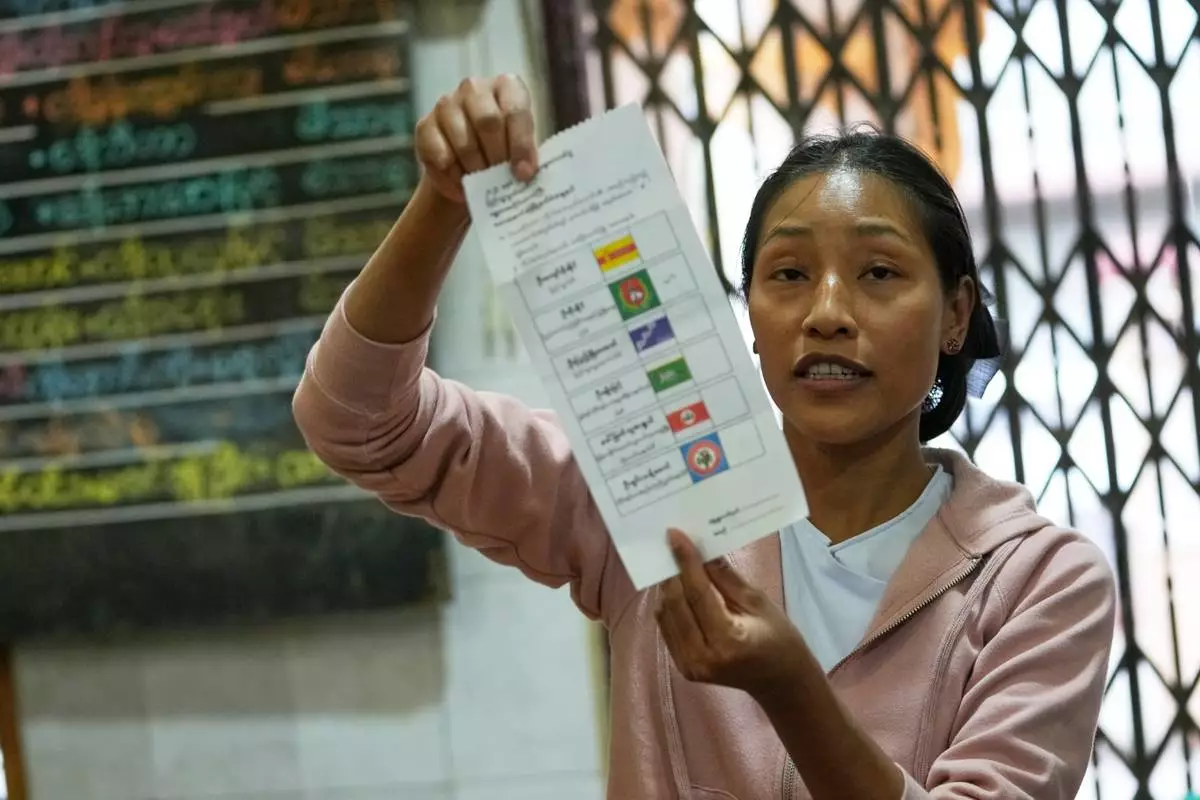
An official of the Union Election Commission shows a slip as they count ballots at a polling station during the second phase of general election in Yangon, Myanmar, Sunday, Jan. 11, 2026. (AP Photo/Thein Zaw)

An official of the Union Election Commission shows a slip as they count ballots at a polling station during the second phase of general election in Yangon, Myanmar, Sunday, Jan. 11, 2026. (AP Photo/Thein Zaw)

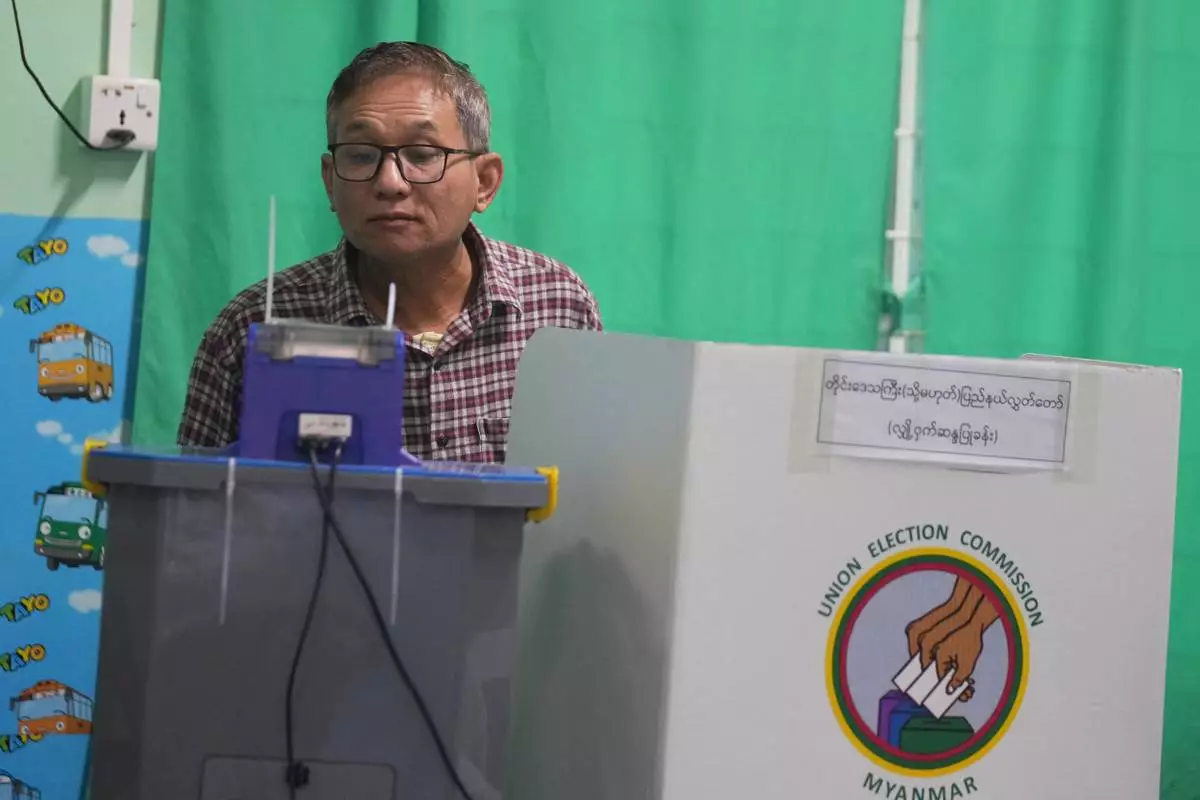
A voter casts ballot at a polling station during the second phase of general election Sunday, Jan. 11, 2026, in Yangon, Myanmar. (AP Photo/Thein Zaw)

A voter casts ballot at a polling station during the second phase of general election Sunday, Jan. 11, 2026, in Yangon, Myanmar. (AP Photo/Thein Zaw)

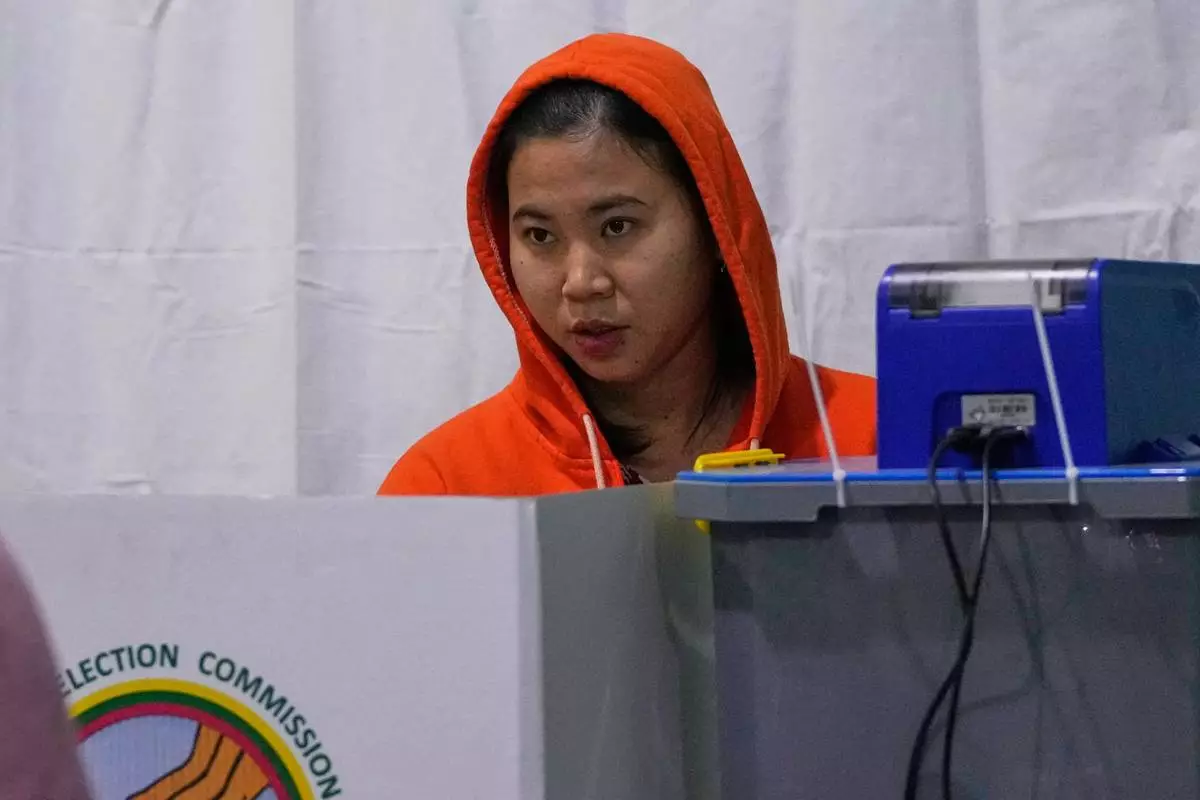
A voter casts ballot at a polling station during the second phase of general election in Mandalay, central Myanmar, Sunday, Jan. 11, 2026. (AP Photo/Aung Shine Oo)

A voter casts ballot at a polling station during the second phase of general election in Mandalay, central Myanmar, Sunday, Jan. 11, 2026. (AP Photo/Aung Shine Oo)

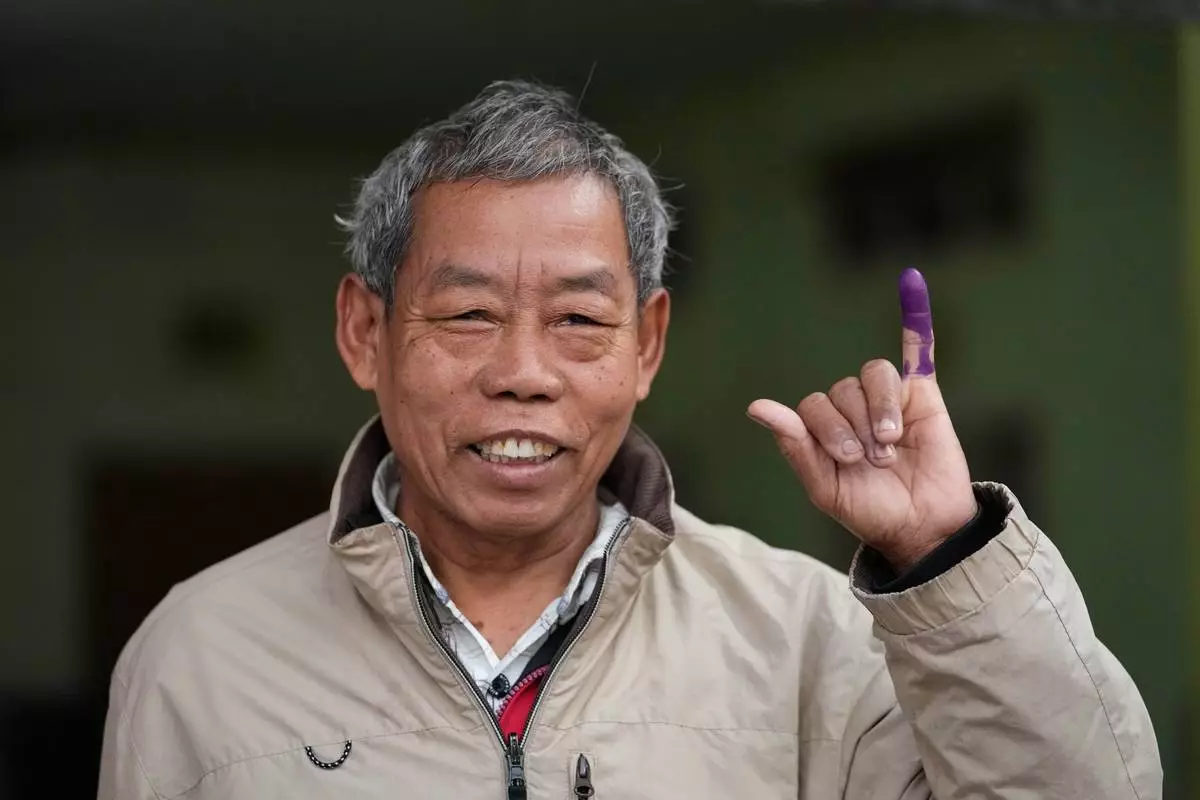
A voter shows his finger, marked with ink to indicate he voted, at a polling station during the second phase of general election in Mandalay, central Myanmar, Sunday, Jan. 11, 2026. (AP Photo/Aung Shine Oo)

A voter shows his finger, marked with ink to indicate he voted, at a polling station during the second phase of general election in Mandalay, central Myanmar, Sunday, Jan. 11, 2026. (AP Photo/Aung Shine Oo)

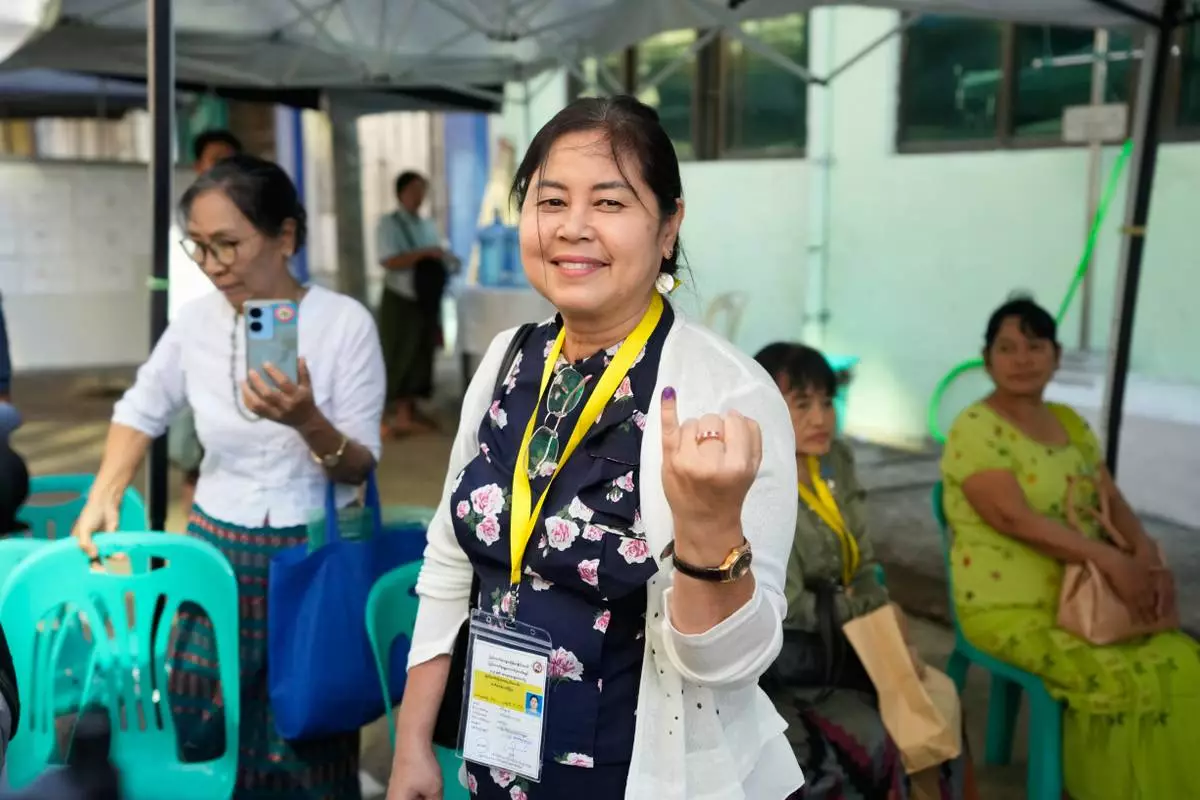
Sandar Min, an individual candidate for an election and former parliament member from ousted leader Aung San Suu Kyi's National League for Democracy (NLD) party, shows off her finger marked with ink indicating she voted at a polling station during the second phase of general election Sunday, Jan. 11, 2026, in Yangon, Myanmar. (AP Photo/Thein Zaw)

Sandar Min, an individual candidate for an election and former parliament member from ousted leader Aung San Suu Kyi's National League for Democracy (NLD) party, shows off her finger marked with ink indicating she voted at a polling station during the second phase of general election Sunday, Jan. 11, 2026, in Yangon, Myanmar. (AP Photo/Thein Zaw)

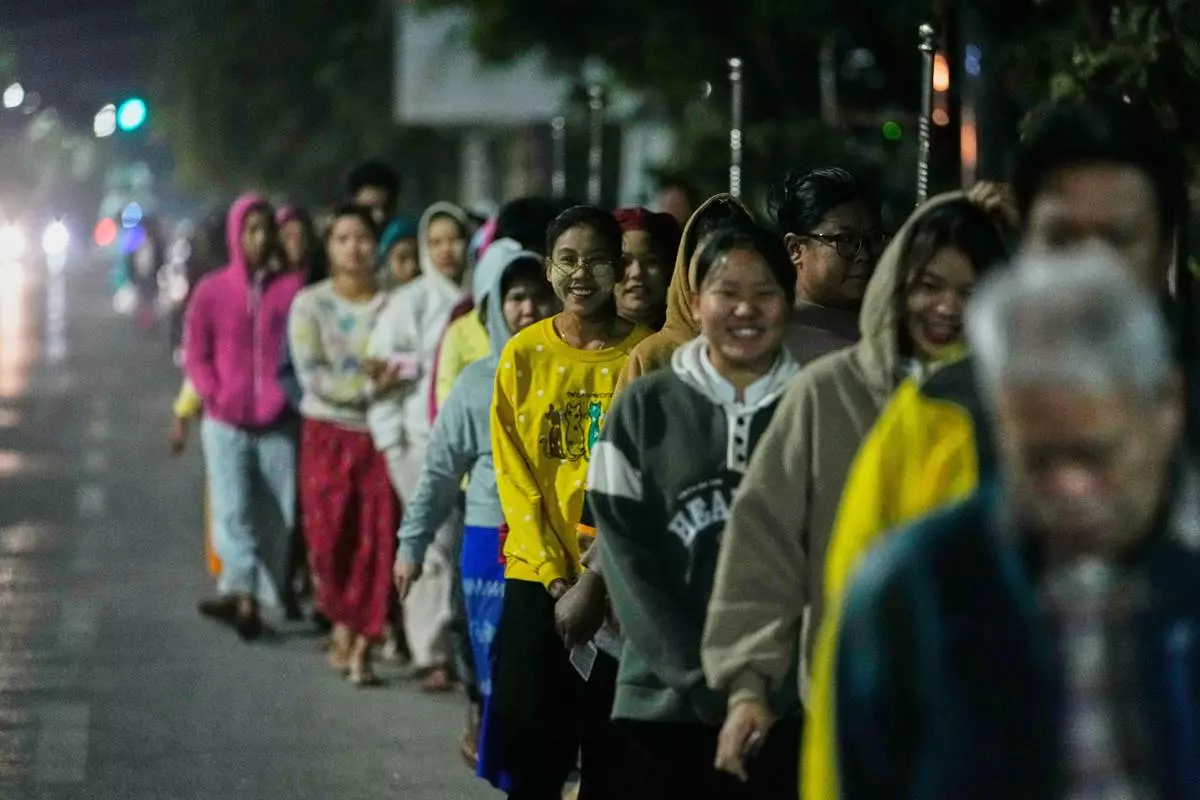
Voters wait for a polling station to open during the second phase of general election in Mandalay, central Myanmar, Sunday, Jan. 11, 2026. (AP Photo/Aung Shine Oo)

Voters wait for a polling station to open during the second phase of general election in Mandalay, central Myanmar, Sunday, Jan. 11, 2026. (AP Photo/Aung Shine Oo)

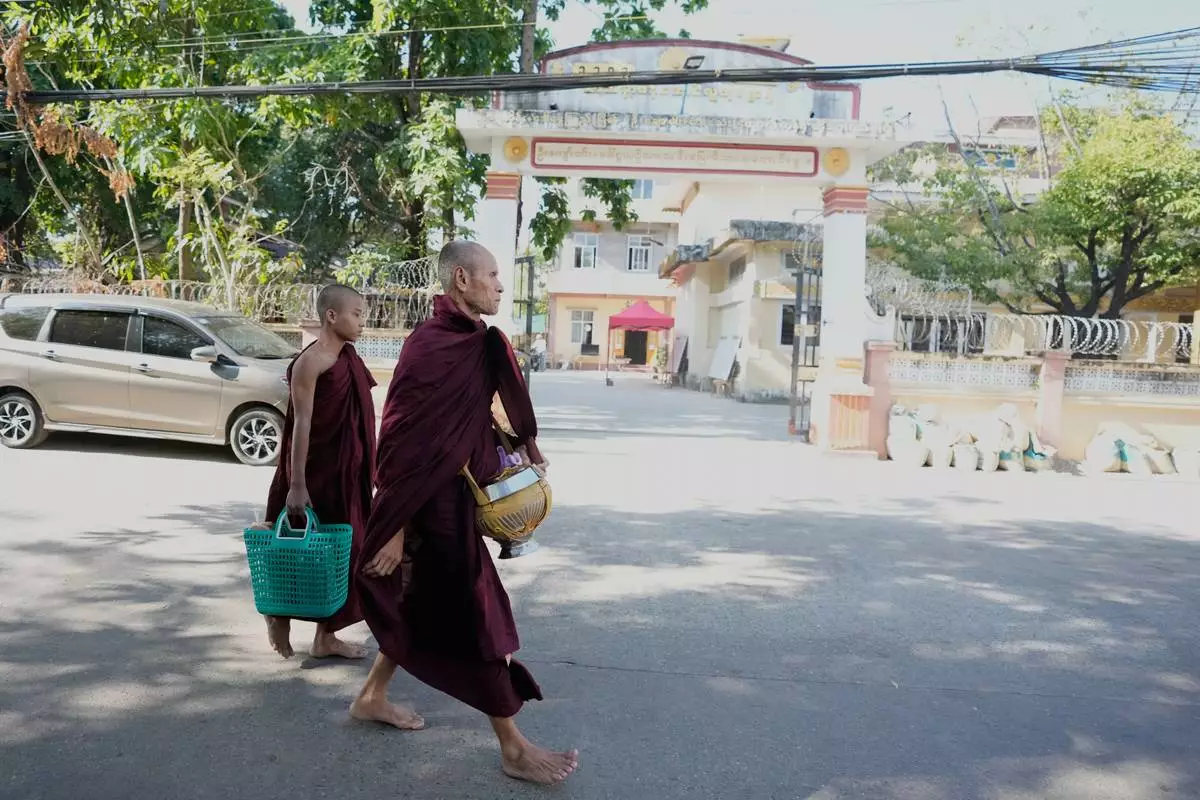
Buddhist monks walk past a polling station opened at a monastery one day before the second phase of the general election in Yangon, Myanmar, Saturday, Jan. 10, 2026. (AP Photo/Thein Zaw)

Buddhist monks walk past a polling station opened at a monastery one day before the second phase of the general election in Yangon, Myanmar, Saturday, Jan. 10, 2026. (AP Photo/Thein Zaw)

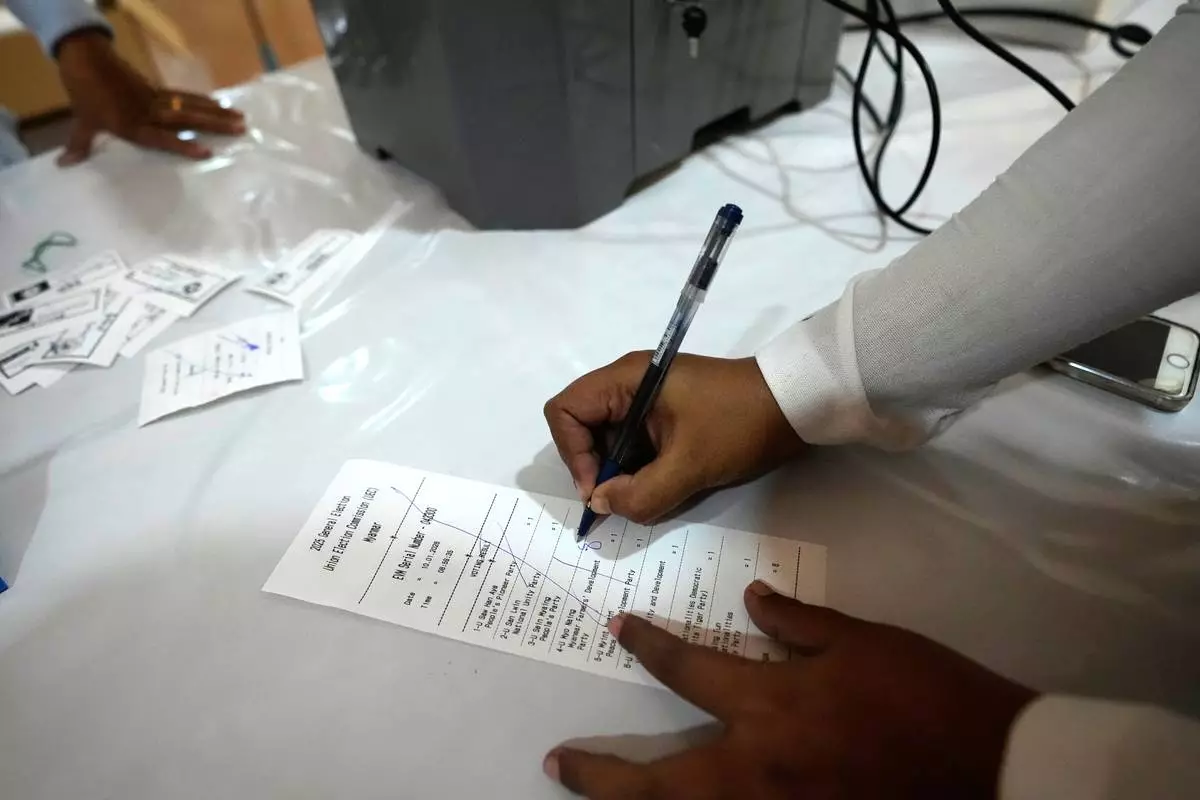
An official of the Union Election Commission checks a sample slip from an electronic voting machine as they prepare to set up a polling station opened at a monastery one day before the second phase of the general election in Yangon, Myanmar, Saturday, Jan. 10, 2026. (AP Photo/Thein Zaw)

An official of the Union Election Commission checks a sample slip from an electronic voting machine as they prepare to set up a polling station opened at a monastery one day before the second phase of the general election in Yangon, Myanmar, Saturday, Jan. 10, 2026. (AP Photo/Thein Zaw)

Recommended Articles