The spring flowers in full blossom across China have boosted the country's tourism, with some scenic spots incorporating flower culture into tourism experience during the three-day Qingming Festival holiday.
The Qingming Festival, or Tomb-Sweeping Day, fell on Thursday this year. It is a traditional Chinese holiday for people to pay tribute to the deceased, worship ancestors, and go for spring outings to savor springtime.
In Hebi City of central China's Henan Province, a cherry blossom avenue stretching nearly four kilometers is flanked by over 30,000 blossoming trees, attracting crowds of citizens and tourists coming to capture the picturesque scenery of white and pink blooms against the clear blue sky.
"I used to see other people wearing Hanfu costumes to take pictures with flowers, and I was quite envious of them. Today, my best friend and I also took a set of photos in Hanfu, and I feel terrific," said Guan Manman, a visitor.
In addition to appreciating the captivating cherry blossoms, tourists can enjoy colorful cherry blossom-themed cultural activities such as self-service photo shoots, intangible cultural heritage crafts, and immersive exploration of China chic.
"There are seven seals. We need to stamp them one by one. Each features a unique pattern. Look at this little postcard, it has a crane and our cherry blossoms on it," said Zhao Yuqing, a visitor.
In Leping City of east China's Jiangxi Province, a sprawling 15,000-hectare expanse of golden rapeseed flowers takes center stage in the spring landscape, luring crowds of tourists.
"The rapeseed flowers are very easy on the eye, as if I have fallen into a fairyland," said a tourist named Lu Yanyu.

Spring blooms boost tourism across China
Sweltering summer heat, dwindling rainfall and aging irrigation facilities have left vast farmlands parched across Syria, further straining agricultural production amid fuel and power shortages that have crippled timely crop watering.
The Food and Agriculture Organization of the United Nations noted that the persistent drought has seriously affected agricultural production and food security in Syria.
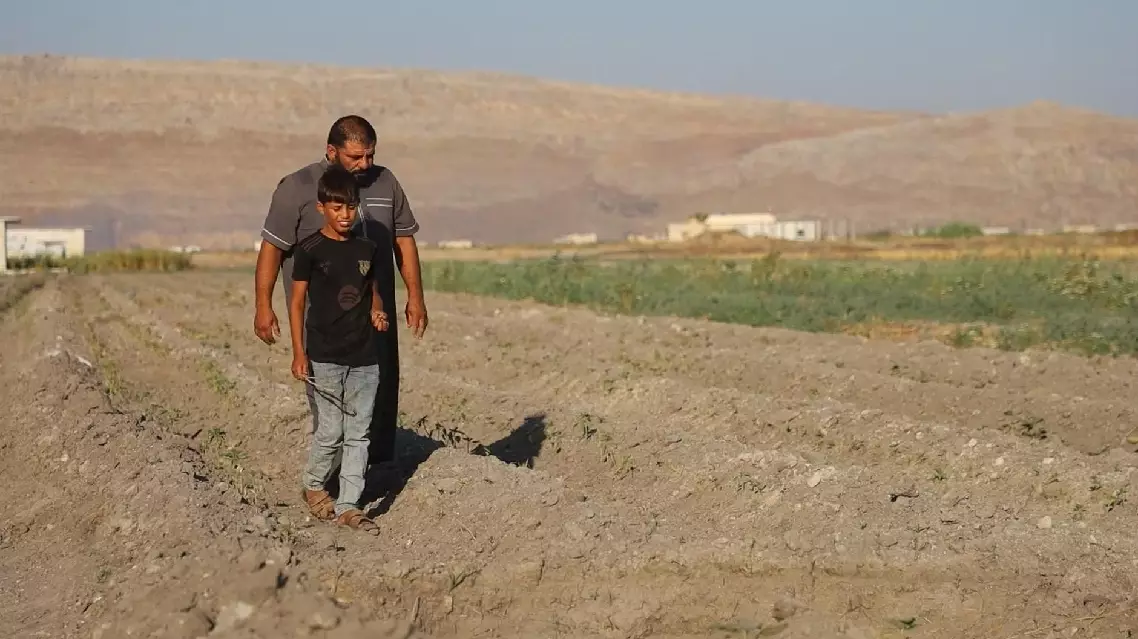
Northwest Syria's Idlib Governorate has seen vast stretches of land lose their former greenery.
Irrigation canals are nearly dry, exposing cracked soil, while crops have turned yellow and withered from water shortages.
Idlib Governorate was once one of Syria's key agricultural production areas, where rivers and multiple dams were used for irrigation, with wheat, cotton, sugar beets and olives among the main crops.
In recent years, the constant war has damaged a large number of water infrastructure facilities, while extreme heat and reduced rainfall have further aggravated the agricultural crisis.
"Our land is desertified. The harvest this year is not good, and the land is barren. As you can see, there is no water, not even drinking water. In the past, dams used to supply water to farmland, but now there is no water. The irrigation facilities have been destroyed and the land has become desert," said Ahmad Jamil Abbas, a local farmer.
Al-Ghab Plain in Idlib was once one of Syria's key grain-producing areas, but today, farmers are struggling to sustain production.
"In the past, water was delivered to our land to irrigate farmland through canals from Rastan Dam, Mahardah Dam and Al-Ashary canal. However, after the irrigation water was cut off, farmers in Al-Ghab area began to suffer from drought, and the land became desert. This used to be one of the best agricultural areas. Last year, I relied on wells for irrigating my land, but the cost was too high to recover," said Nasir Hussein, another local farmer.
Agriculture is a key pillar of Syria's economy, with millions of people relying on farming for their livelihoods.
However, data from the United Nations show that currently only about 40 percent of Syria's farmland is under normal cultivation, with Idlib and Aleppo among the regions hardest hit by drought.
Heat, drought, aging facilities compound Syria's agricultural woes