Skip to Content Facebook Feature Image

Heat, drought, aging facilities compound Syria's agricultural woes

HotTV

HotTV

HotTV

Heat, drought, aging facilities compound Syria's agricultural woes

2026-08-03 17:06 Last Updated At:18:25

Sweltering summer heat, dwindling rainfall and aging irrigation facilities have left vast farmlands parched across Syria, further straining agricultural production amid fuel and power shortages that have crippled timely crop watering.

The Food and Agriculture Organization of the United Nations noted that the persistent drought has seriously affected agricultural production and food security in Syria.

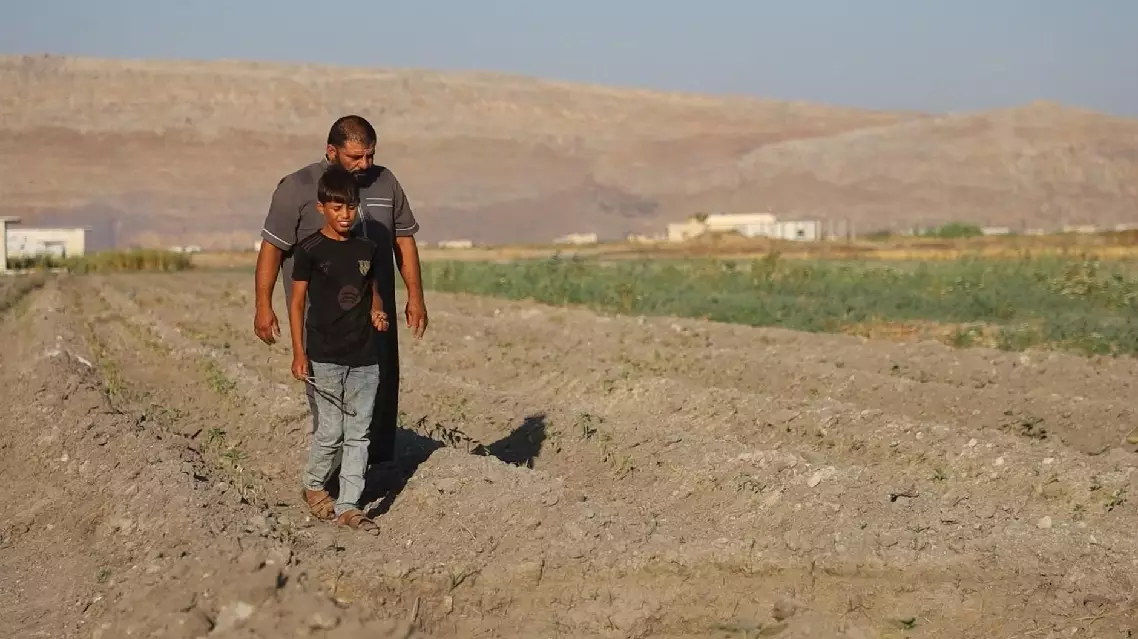
Northwest Syria's Idlib Governorate has seen vast stretches of land lose their former greenery.

Irrigation canals are nearly dry, exposing cracked soil, while crops have turned yellow and withered from water shortages.

Idlib Governorate was once one of Syria's key agricultural production areas, where rivers and multiple dams were used for irrigation, with wheat, cotton, sugar beets and olives among the main crops.

In recent years, the constant war has damaged a large number of water infrastructure facilities, while extreme heat and reduced rainfall have further aggravated the agricultural crisis.

"Our land is desertified. The harvest this year is not good, and the land is barren. As you can see, there is no water, not even drinking water. In the past, dams used to supply water to farmland, but now there is no water. The irrigation facilities have been destroyed and the land has become desert," said Ahmad Jamil Abbas, a local farmer.

Al-Ghab Plain in Idlib was once one of Syria's key grain-producing areas, but today, farmers are struggling to sustain production.

"In the past, water was delivered to our land to irrigate farmland through canals from Rastan Dam, Mahardah Dam and Al-Ashary canal. However, after the irrigation water was cut off, farmers in Al-Ghab area began to suffer from drought, and the land became desert. This used to be one of the best agricultural areas. Last year, I relied on wells for irrigating my land, but the cost was too high to recover," said Nasir Hussein, another local farmer.

Agriculture is a key pillar of Syria's economy, with millions of people relying on farming for their livelihoods.

However, data from the United Nations show that currently only about 40 percent of Syria's farmland is under normal cultivation, with Idlib and Aleppo among the regions hardest hit by drought.
Heat, drought, aging facilities compound Syria's agricultural woes
Heat, drought, aging facilities compound Syria's agricultural woes

Heat, drought, aging facilities compound Syria's agricultural woes
Heat, drought, aging facilities compound Syria's agricultural woes
Israel has tightened restrictions on Palestinian workers from the occupied West Bank, suspending numerous permits since the October 7, 2023 attacks.

Although some permits have been reinstated, many Palestinians remain unable to legally work in Israel, placing heavy economic pressure on families.

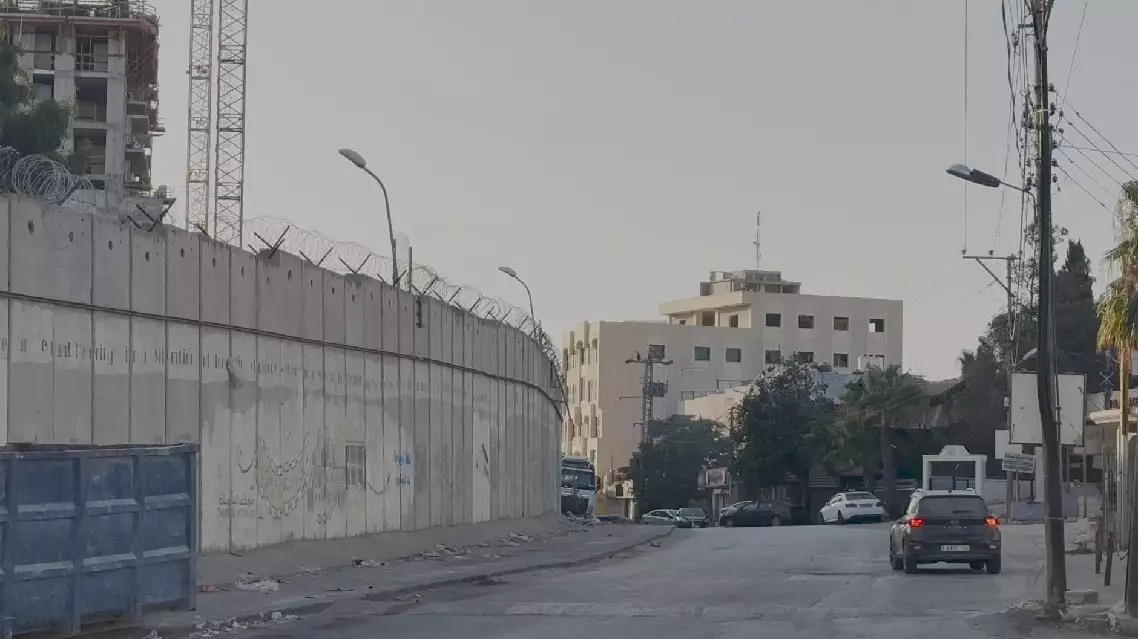
A separation wall divides Israel from the occupied West Bank, where workers line up at checkpoints each morning to reach jobs.

Hamdi Salama, a construction worker from Bethlehem, makes the daily journey to his job in Jerusalem.

"Before October 7, we used to pass through the 300 checkpoint. After October 7, I think they removed all permits for all workers in Palestine, and there were no workers left, no permits for workers at all," he said.

The 300 checkpoint is one of the main crossings between Bethlehem and Jerusalem. Before October 7, thousands of Palestinian workers passed through here on their way to jobs in Israel.

Hamdi lost his permit along with thousands of other workers. He only managed to get a new one a few months ago, but now pays thousands of shekels each month: far more than the few hundreds he used to pay. For many Palestinians, legal work is now out of reach.

Unable to obtain permits, many Palestinians have turned to risky crossings without authorization, using breaches in the separation barrier or remote areas.

"Over the past two years, many have been killed, many have been injured, and prisons are full of workers, all because there are no resources," said Hamdi Salama.

Those caught risk arrest and imprisonment. Others are shot while trying to cross. But many say they have little choice if they want to provide for their families.

"[People say,] 'I have a fifty percent [chance] of being shot, but if I stay at home, there’s an eighty percent [chance] that my children will starve. So I prefer to risk myself and go to work.’," said Assaf Adiv, executive director of the independent Union MAAN Workers Association in Israel.

The tightened restrictions have also affected Israel’s labor market. Construction, one of the sectors most dependent on Palestinian workers, faces major shortages as many employers struggle to replace them.

Israel curbs West Bank labor, leaving Palestinian families under economic strain

Israel curbs West Bank labor, leaving Palestinian families under economic strain

Recommended Articles