Skip to Content Facebook Feature Image

Israel curbs West Bank labor, leaving Palestinian families under economic strain

HotTV

HotTV

HotTV

Israel curbs West Bank labor, leaving Palestinian families under economic strain

2026-08-03 17:10 Last Updated At:19:37

Israel has tightened restrictions on Palestinian workers from the occupied West Bank, suspending numerous permits since the October 7, 2023 attacks.

Although some permits have been reinstated, many Palestinians remain unable to legally work in Israel, placing heavy economic pressure on families.

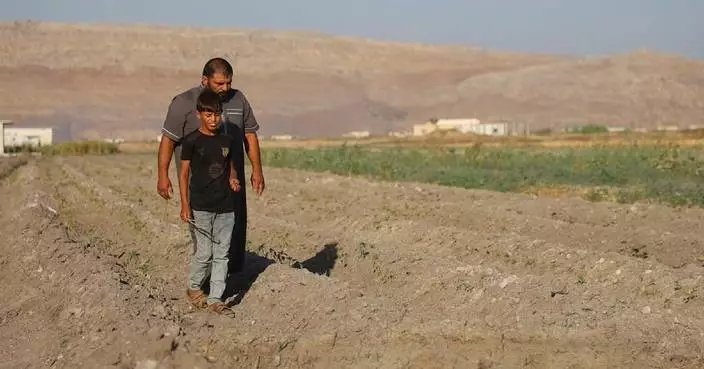
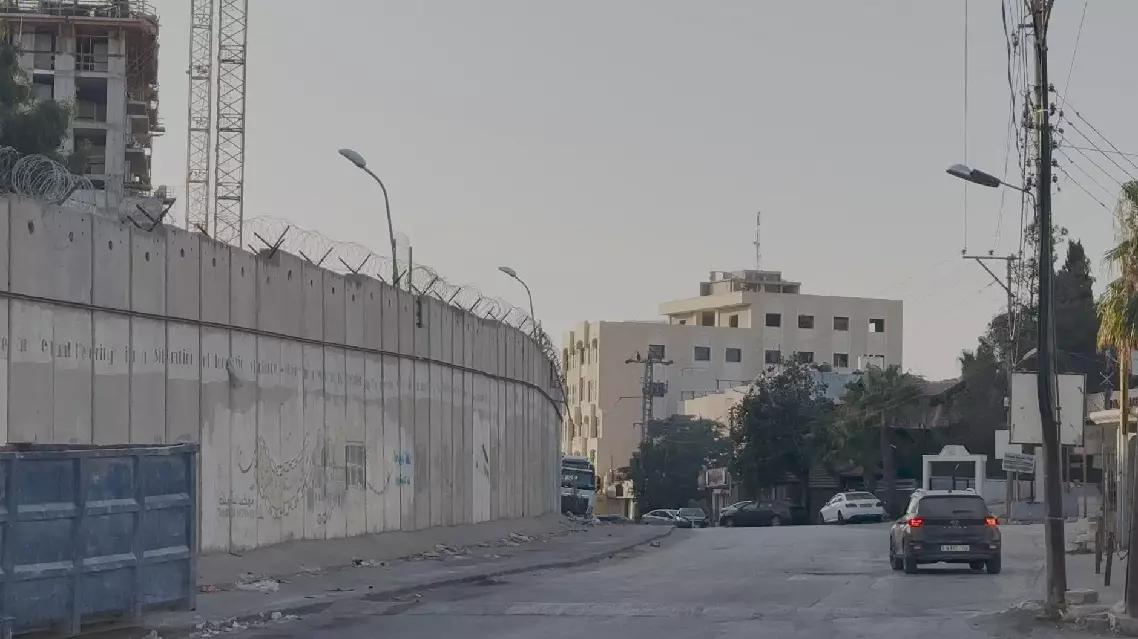
A separation wall divides Israel from the occupied West Bank, where workers line up at checkpoints each morning to reach jobs.

Hamdi Salama, a construction worker from Bethlehem, makes the daily journey to his job in Jerusalem.

"Before October 7, we used to pass through the 300 checkpoint. After October 7, I think they removed all permits for all workers in Palestine, and there were no workers left, no permits for workers at all," he said.

The 300 checkpoint is one of the main crossings between Bethlehem and Jerusalem. Before October 7, thousands of Palestinian workers passed through here on their way to jobs in Israel.

Hamdi lost his permit along with thousands of other workers. He only managed to get a new one a few months ago, but now pays thousands of shekels each month: far more than the few hundreds he used to pay. For many Palestinians, legal work is now out of reach.

Unable to obtain permits, many Palestinians have turned to risky crossings without authorization, using breaches in the separation barrier or remote areas.

"Over the past two years, many have been killed, many have been injured, and prisons are full of workers, all because there are no resources," said Hamdi Salama.

Those caught risk arrest and imprisonment. Others are shot while trying to cross. But many say they have little choice if they want to provide for their families.

"[People say,] 'I have a fifty percent [chance] of being shot, but if I stay at home, there’s an eighty percent [chance] that my children will starve. So I prefer to risk myself and go to work.’," said Assaf Adiv, executive director of the independent Union MAAN Workers Association in Israel.

The tightened restrictions have also affected Israel’s labor market. Construction, one of the sectors most dependent on Palestinian workers, faces major shortages as many employers struggle to replace them.
Israel curbs West Bank labor, leaving Palestinian families under economic strain
Israel curbs West Bank labor, leaving Palestinian families under economic strain


Israel curbs West Bank labor, leaving Palestinian families under economic strain

Israel curbs West Bank labor, leaving Palestinian families under economic strain

Hainan Province in south China has emerged as a popular destination for inbound tourists this summer despite soaring temperatures, driven by its visa-free policies, immersive cultural experiences and improved travel services.

From wellness tourism and intangible cultural heritage programs to tropical rainforest villages, the island is attracting a growing number of international visitors seeking authentic Chinese culture.

Supported by visa-free access for citizens of 86 countries, the island province now operates 78 international passenger air routes linking 45 cities in 25 countries and regions.

Sanya, one of the island's most popular destinations, saw inbound tourist arrivals rise 43 percent year on year in June, despite the summer heat, as local authorities expanded tourism offerings and improved travel convenience.

"We are focusing on developing immersive tourism products featuring wellness, intangible cultural heritage, nighttime performances and outdoor sports. All 14 of our A-level scenic spots have completed multilingual signs and guide services, multilingual menus have been introduced, and foreign bank card payment terminals have been widely installed across the city," said Zhang Hao, deputy director of the tourism development bureau of Sanya City.

Enhanced tourism products and visitor-friendly services have encouraged many overseas travelers to return to Hainan.

According to the China Tourism Academy, more than 60 percent of inbound tourists list experiencing Chinese culture as a primary purpose of their trips.

In Maona Village, a Li ethnic community nestled in the tropical rain forest of Wuzhishan, foreign visitors are joining tea-picking and tea-processing activities to experience Chinese tea culture firsthand.

They also take part in traditional bamboo pole dancing with local villagers, gaining a deeper understanding of customs and heritage of the Li ethnic group.

China's Hainan Province draws growing inbound tourists with immersive cultural experiences

China's Hainan Province draws growing inbound tourists with immersive cultural experiences

Recommended Articles