As this year marks the 45th anniversary of the establishment of the China-U.S. diplomatic ties, Guangzhou, capital of south China's Guangdong Province, has launched the China (Guangzhou)-U.S. Youth Sports and Cultural Exchange Camp, bringing together students from both countries.
The program, themed "Friends coming from afar", aims to enhance friendship between young people in China and the United States, and promote their exchanges and cooperation in fields such as culture, sports and education.
The eight-day program runs until Wednesday. During their visit to Guangzhou, U.S. students have paired up with their Chinese counterparts to experience the charm of the city. They visited schools and a botanical garden, participated in various of physical activities such as practicing Chinese martial arts, and learned about Chinese culture and history.

China-US youth exchange camp launched in Guangzhou
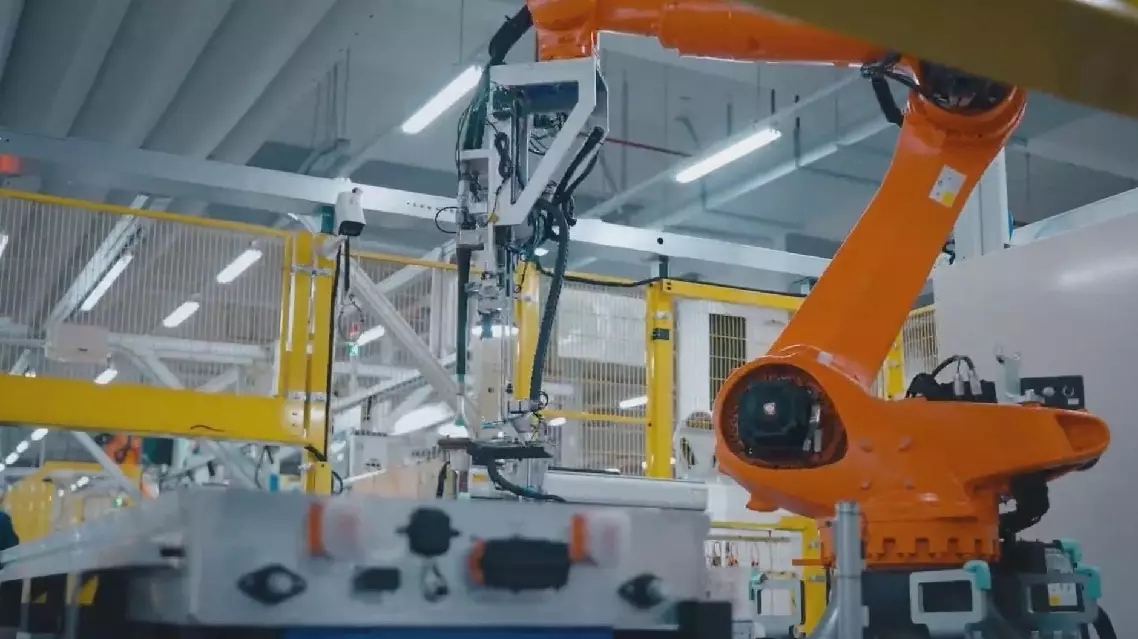
China's industrial sales revenue grew steadily in the first eight months of this year, with equipment manufacturing and high-tech industries posting notable growth as new quality productive forces are cultivated at a faster pace, revealed the country's latest tax data released on Monday.
From January to August, the industrial economy maintained steady progress, with industrial sales revenue rising 7.3 percent year on year, according to the State Taxation Administration (STA).
Sales revenue in mining, manufacturing, and the production and supply of electricity, heat, gas and water grew 8.3 percent, 7.5 percent and five percent respectively, all maintaining relatively fast growth.
Equipment manufacturing continued to play a stabilizing role, with sales revenue up 10.1 percent year on year. In particular, sales revenue in computer and communication equipment manufacturing, electrical machinery and equipment manufacturing, and instruments and meters manufacturing grew 18.8 percent, 14 percent and 14.1 percent respectively.
Meanwhile, new quality productive forces were cultivated at a faster pace. In the first eight months, sales revenue of high-tech industries rose 15.7 percent year on year.
Among them, high-tech manufacturing sales revenue grew 18.9 percent, with AI-related sectors such as integrated circuits and intelligent vehicle-mounted devices up 67.7 percent and 38.8 percent respectively, the data showed.
In addition, the integration of the digital and real economies continued to deepen. From January to August, sales revenue of core industries of the digital economy grew 9 percent year on year, according to STA.
Sales revenue of digital product manufacturing and digital product services grew 16.6 percent and 11.1 percent respectively, reflecting the continuous improvement of digital industrialization.
Nationwide, corporate procurement of digital technology rose 8.6 percent year on year. In particular, the manufacturing sector increased investment in digital transformation, with its procurement of digital technology also growing from a year earlier.
China's industrial economy grows steadily in first eight months