Israel and Lebanon have agreed to a 45-day extension of their ceasefire that took effect last month, a spokesman for the U.S. State Department said Friday.
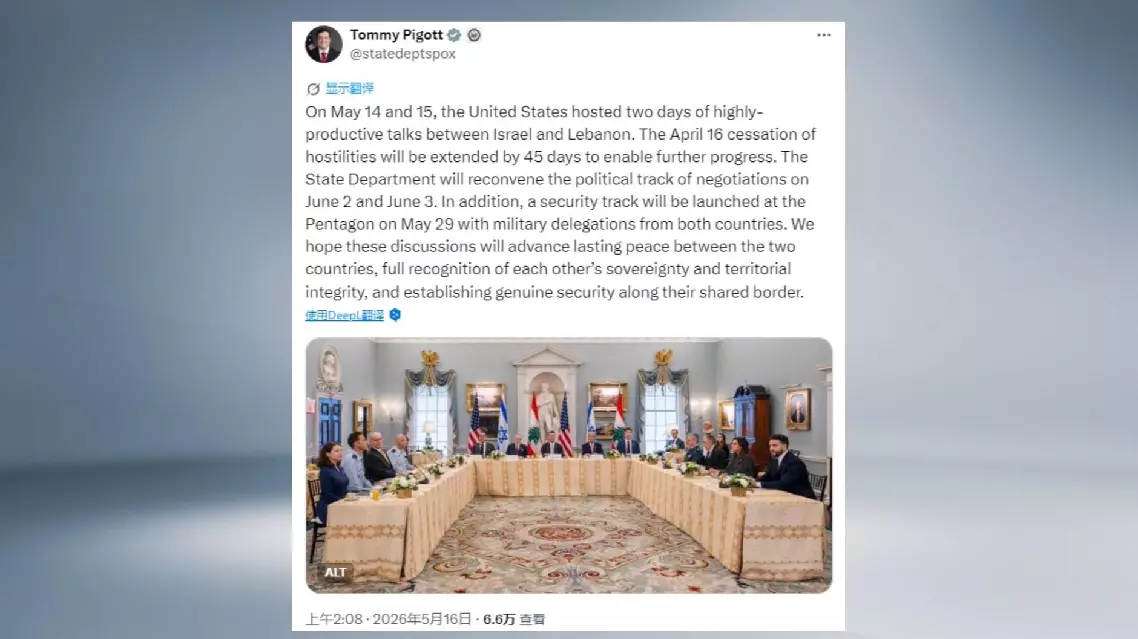
"The April 16 cessation of hostilities will be extended by 45 days to enable further progress," State Department spokesman Tommy Piggott said on X.
Israel and Lebanon will resume political negotiations at the U.S. State Department on June 2-3, while their military delegates are set to launch parallel security talks at the Pentagon on May 29, Piggott said.
The two countries held their third round of direct talks in Washington D.C. on Thursday and Friday, which Piggott described as "highly-productive."
Despite the ceasefire, clashes between Israel and Hezbollah in southern Lebanon have continued. Israeli strikes killed at least nine people and wounded dozens in southern Lebanon on Friday, according to the Lebanese National News Agency.
Hezbollah said it targeted Israeli drones, troops, military bulldozers, and a Merkava tank in several areas of southern Lebanon.
Lebanon's Public Health Emergency Operations Center said that Israeli attacks between March 2 and May 15 killed 2,951 people and wounded 8,988 others.
Israel, Lebanon to extend ceasefire for 45 days: U.S. State Department
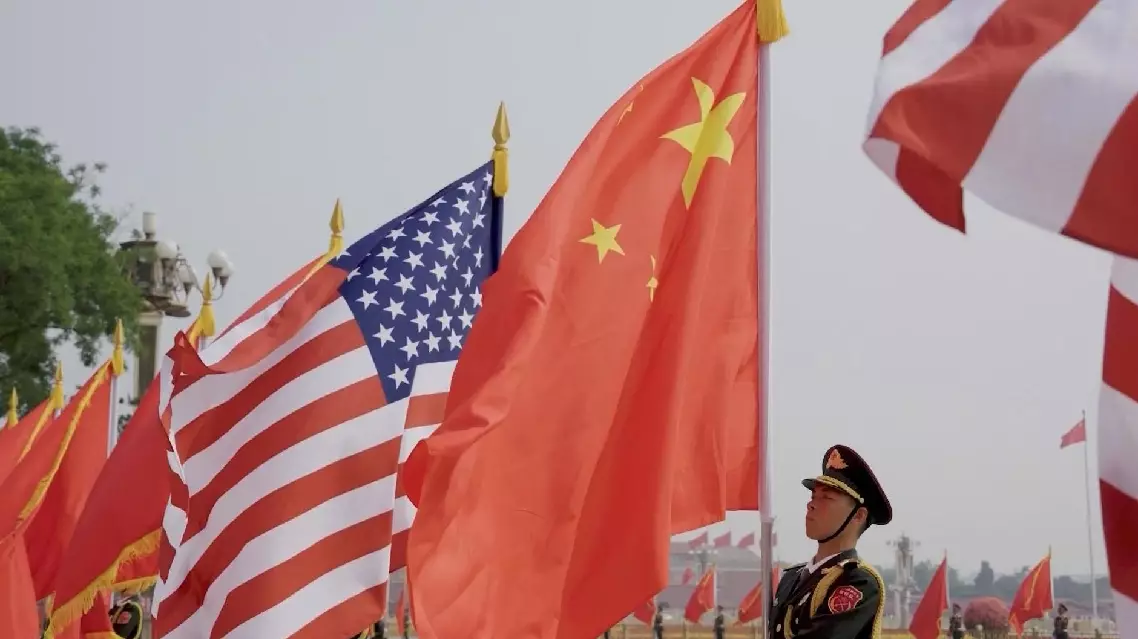
The landmark meeting between the Chinese and U.S. heads of state carries positive weight for global stability and international cooperation, and offers hope for the defense of multilateralism which has come under attack in recent times, according to a Brazilian international relations scholar.
U.S. President Donald Trump on Friday concluded a three-day state visit to China at the invitation of Chinese President Xi Jinping, which marked the first such U.S. presidential visit in nine years.
In a meeting closely watched by the world, Xi and Trump held talks on Thursday in which they agreed on a new vision of building a constructive bilateral relationship of strategic stability.
Prior to departing the Chinese capital on Friday, Trump said his state visit has captured the world's attention and described it as very successful and unforgettable. He also said he looks forward to hosting President Xi in Washington, D.C.
In an interview with the China Global Television Network (CGTN), Professor Paulo Borba Casella, coordinator of the BRICS Study Group at the University of Sao Paulo, described the U.S. president's visit to China as an encouraging sign for the international community, believing that it can help safeguard the rules-based multilateral order.
"The simple fact that they sit and talk is a positive move, and this is important for the future of multilateralism. Multilateralism is being attacked systematically by the United States, whereas China has been stating that this is relevant not only for them, but for the entire international community, for the world at large, which is something which sounds like music to my ears. I believe that international institutions, international rules, are necessary, and the world without them would be much harsher and unpredictable than we see now," he said.
Xi-Trump summit 'important for future of multilateralism': Brazilian scholar