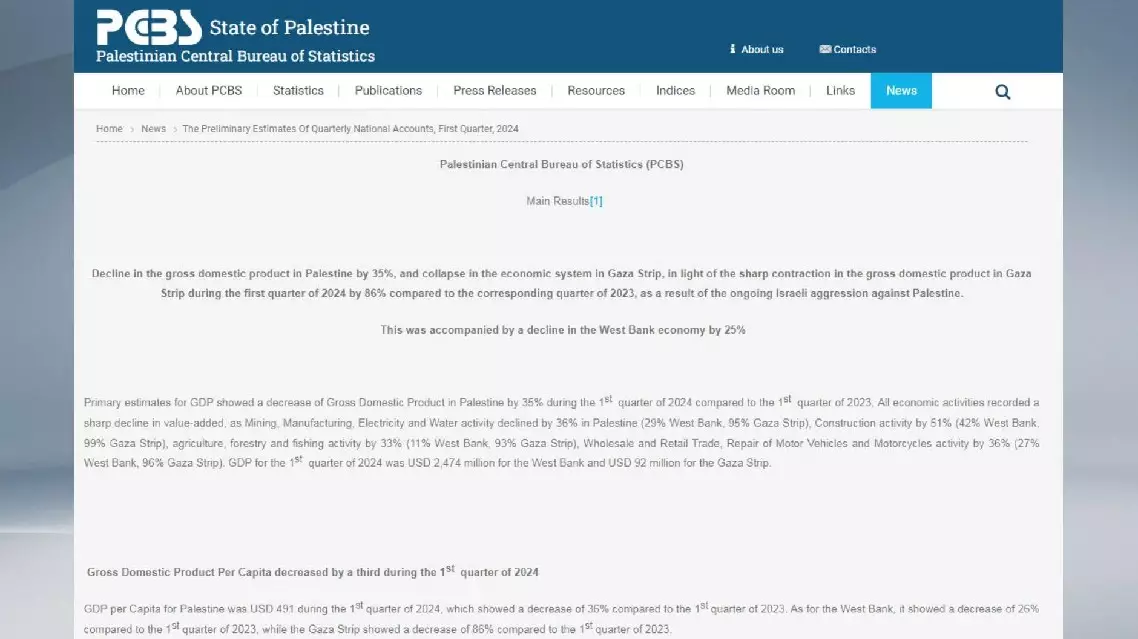
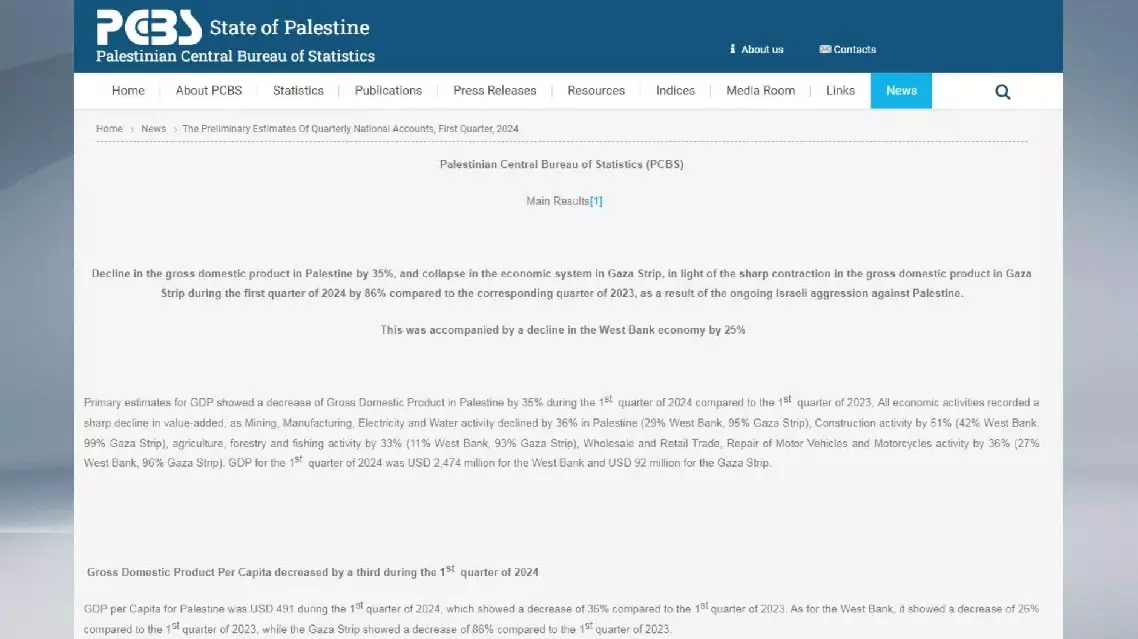
Gaza's gross domestic product (GDP) has contracted by 86 percent year on year in the first three months of 2024 amid intensifying Israeli attacks, according to data released by Palestinian Central Bureau of Statistics (PCBS) on Thursday.
The PCBS statement shows that the GDP of Palestine in the first quarter of 2024 declined by 35 percent year on year, while that of the Gaza Strip sharply shrank by 86 percent due to ongoing Israeli attacks, indicating that the local economic system has collapsed.
The West Bank also saw a year-on-year contraction by 25 percent.
Palestine's GDP per capita was 491 U.S. dollars in the first three months of 2024, down 36 percent compared to the same period of last year, with that of the Gaza Strip decreased by 86 percent.
Gaza's GDP contracts 86 pct amid Israeli attacks
Gaza's GDP contracts 86 pct amid Israeli attacks
A Chinese mainland spokesperson on Saturday criticized Taiwan leader Lai Ching-te for clinging to a secessionist mindset, provoking confrontation, and undermining peace and stability across the Taiwan Strait.
Zhang Han, spokesperson for the State Council Taiwan Affairs Office, made the remarks in response to a media question about Lai's speech delivered in Taipei earlier in the day.
Lai Ching-te's Saturday speech ignored facts and misrepresented truths, attempting to mislead the public with evil intentions, said the spokesperson, noting that Lai clung to a secessionist mindset, peddled the so-called "mainland threat" and "democracy vs. authoritarianism" narrative, and attempted to seek secession through military buildup and soliciting foreign support, provoke antagonism and confrontation across the Taiwan Strait, and undermine peace and stability.
"There is but one China in the world. Taiwan is part of China. That is the real status quo in the Taiwan Strait. The one-China principle is a basic norm governing international relations, a prevailing consensus in the international community, and an important part of the international order established after World War II. The future of Taiwan can only be and must be jointly decided by all Chinese people including Taiwan compatriots", said the spokesperson.
"We will uphold the one-China principle and the 1992 Consensus, widely unite Taiwan compatriots from all walks of life, resolutely fight against separatist forces, oppose external interference, and safeguard peace and stability in the Taiwan Strait. We will stick to the idea that people on both sides of the Taiwan Strait are of the same family, deepen exchanges and cooperation across the Strait, promote peaceful cross-Strait relations and integrated development, and advance the cause of national reunification and the great cause of national rejuvenation," the spokesperson said.

Mainland slams Lai Ching-te's secessionist narrative