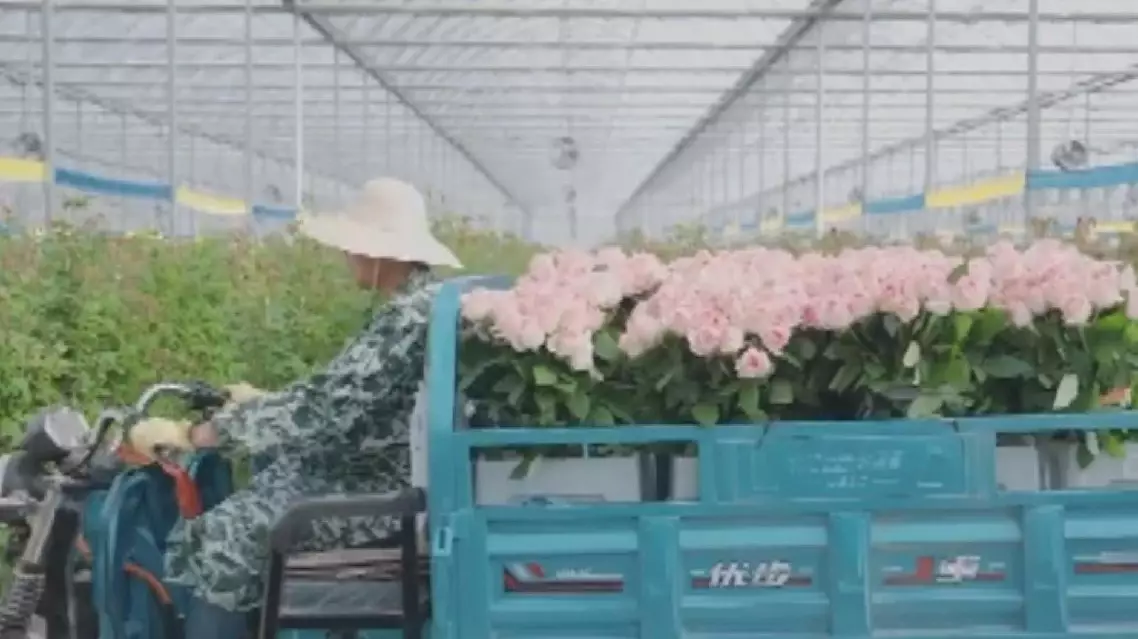
Sci-tech versatility has boosted high-quality floriculture in southwest China's Yunnan Province, which has shifted from a traditional flower producer to a modern one featuring tech-savvy processing and marketing.
Yunnan Province exported fresh-cut flowers worth 570 million yuan (about 80 million U.S. dollars) in 2023, maintaining its top position in the country for the fifth consecutive year.
To meet the substantial demand for these specialty goods, Yunnan Province launched a trillion-yuan modern agriculture initiative with plateau characteristics in 2020. This initiative has facilitated partnerships between enterprises and scientific research institutions, accelerating the adoption of advanced technologies in flower cultivation.
Standardized management, integrated water and fertilizer systems, and soilless cultivation have effectively addressed industry challenges.
"The intelligent greenhouses automatically adjust sunlight, temperature, and humidity using draft fans, windows, and sunshields, which significantly improves plant growth and enhances yields. Such facilities have extended harvesting seasons to six to seven times per year, yielding between 160,000 to 180,000 flowers per mu (about 0.067 hectares)," said Sun Xiaoming, associate professor of China Agricultural University.
The classification process for flowers has also been revolutionized for greater efficiency.
"Previously, manual classification led to constant errors. Now, our self-developed automatic classification equipment uses three industrial cameras to grade fresh-cut flowers into 28 categories based on size, bloom degree, and branch length," said Sun.
Following effective post-harvest treatments, cut flowers are then distributed to markets. From planting to trading, Yunnan's flower industry is becoming more environmentally friendly and efficient, driven by these new high-quality production methods.
Sci-tech versatility boosts high-quality floriculture in Yunnan
A new China Global Television Network (CGTN) documentary explores how the historic Long March spirit is driving modern innovation, as young Chinese researchers and engineers are channeling this relentless drive to overcome critical bottlenecks in the EV and AI industries.
Titled "The Source of AI: Not a Single Rock Goes to Waste", the documentary highlights the pioneering journeys of Zhong Yu and He Pengyu.
Two years ago, Zhong made a pivotal career shift, leaving a long-established automaker to return to China and join Farasis Energy, a homegrown battery manufacturer based in Ganzhou City of east China's Jiangxi Province.
Working around the clock, Zhong and his team are developing solid-state batteries. This next-generation technology promises higher energy density and enhanced safety, having the potential to completely disrupt the current automotive landscape.
Through his research, Zhong is determined to establish China as a global leader in the battery sector.
While Zhong focuses on the power sources of the future, He Pengyu is tackling the foundational raw materials required for the EV and AI boom.
The rapid expansion of these sectors has triggered a massive surge in demand for copper and rare earth elements. However, extracting and separating these valuable minerals from raw ore has long been a formidable technical hurdle.
Without advanced equipment, China's mining industry once relied on grueling, inefficient manual sorting.
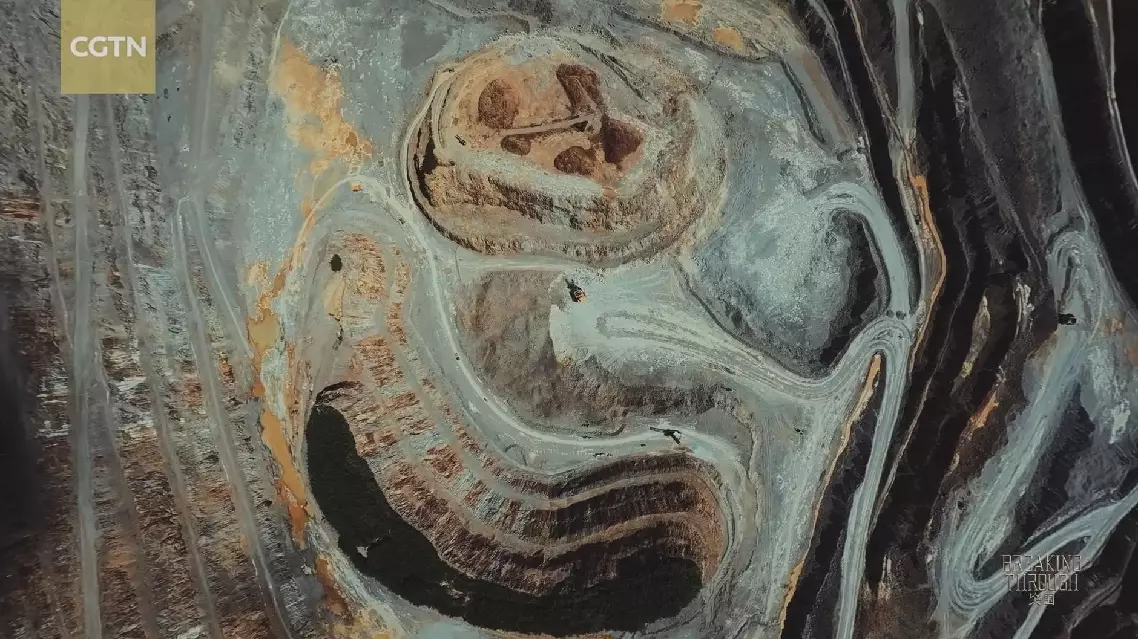
Determined to change this paradigm after returning from his studies in France, He founded HPY Sorting. The company has developed a revolutionary AI-driven optical ore sorting system capable of automatically separating waste rock from valuable ore.
Processing up to 300 tons of ore per hour, this intelligent sorting technology is now deployed in mines across the world, replacing tasks that once relied on human experience with precision-driven algorithms and automated machinery.
He Pengyu hopes that through his innovation, not a single rock goes to waste.
The documentary is part of CGTN's "Breaking Through" series, which traces China's journey from the historic Long March undertaken by the Red Army nine decades ago to its modern-day achievements, highlighting the resilience, ingenuity, and determination of its people.
Long March spirit drives critical breakthroughs in China's EV, AI industries: documentary