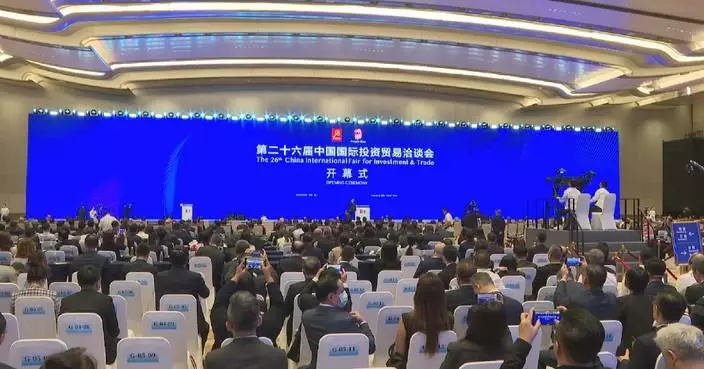
In a bid to promote Malaysian palm oil to Chinese businesses and consumers, an official from the Southeast Asian country's plantation authority led a delegation to China from July 8 to 12.
During the trip, Chan Foong Hin, Deputy Minister of the Malaysian Ministry of Plantation and Commodities, visited the cities of Shanghai, Nanjing and Beijing, where he witnessed the signing of several Memorandums of Understanding (MoUs).
The delegation also explored new business opportunities in the palm oil sector and the broader agricultural produce industry.
Chan emphasized his hope to expand Malaysian companies' cooperation with China and to help Chinese consumers better appreciate the diverse uses of palm oil.
"The Malaysian Palm Oil Board's Shanghai branch is designed to specifically address the needs of the large Chinese market by offering customized products," said the deputy minister, referring to a Malaysian government agency dedicated to serving the country's palm oil industry.
He added that that the commodity has excellent potential for use in popular Chinese foods.
"For instance, red palm oil can be used in hot pot soup and as animal feed for hairy crabs, improving the flavor of the crab meat," Chan said.
As the world's second-largest palm oil producer and China's second-largest source for the commodity, Malaysia accounts for about 30 percent of global output, with the sector contributing 2.4 percent to the nation's GDP.
Malaysia has seen its market share grow as China's large consumer base exhibits increasing demand for products like synthetic detergents and cosmetics that use palm oil and its derivatives.
A growing number of Chinese companies and institutions have been partnering with their Malaysian counterparts to better integrate the palm oil supply chain and expand its applications.
"Our cooperation with Tsinghua University -- where we have tested our emissions [of] biodiesel produced from palm oil and tested it on heavy vehicles here in China -- based on this collaboration, the heavy vehicles that use biodiesel from Malaysia have shown a reduction in carbon emission. We definitely hope that we can use more palm oil or combination biodiesel as well as power generation where we can reduce the emission. And this is very important," said Datuk Parveez, director general of the Malaysian Palm Oil Board.
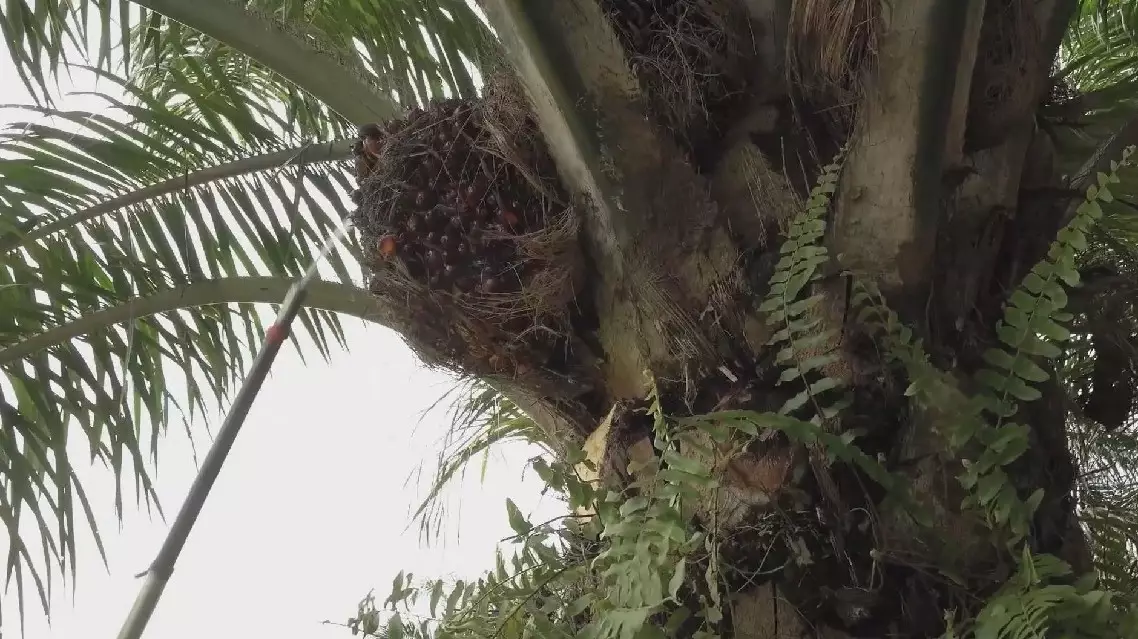
Malaysian delegation visits China to boost cooperation on palm oil exports
Armed police officers and soldiers, in coordination with multiple professional rescue forces, are conducting in-depth search and rescue operations for missing people in the core disaster zone in Mingkeng Village of east China's Jiangxi Province.
At around 07:00 on Tuesday, the rescue headquarters integrated 12 professional teams, including the armed police, public security, and the fire department, to launch a search-and-rescue operation for missing persons in the hardest-hit area of the Shixia group of Mingkeng Village.
As of 18:00 on Tuesday, the mudslide that occurred in the early hours of Saturday has killed 12 people, including one newly identified missing person found in subsequent searches. At present, one person remains unaccounted for, and rescue forces are intensifying their search and rescue efforts.
Meanwhile, the Ji'an Detachment of the Jiangxi Armed Police Force deployed officers and soldiers to extend rescue efforts to surrounding disaster-affected townships.
On Tuesday morning, rescuers split into multiple teams and rushed to several villages in Zuo'an Township and Tanghu Township of Suichuan County to urgently evacuate the trapped residents.
Trapped in mountainous areas, villagers faced destroyed access roads and mountain paths that became slippery and impassable after days of heavy rainfall; most stranded residents were elderly people with limited mobility. The armed police officers and soldiers conducted door-to-door checks and carried the trapped residents on their backs, successfully evacuating all of them to safe zones.
"All village roads are completely impassable. The local residents here are all left-behind elderly people and children, and it is extremely difficult to complete the evacuation relying solely on the strength of the town government officials. This time, we are deeply indebted to the armed police officers and soldiers for their assistance in evacuating all these elderly residents," said Wang Yuli, deputy mayor of Tanghu Township in Suichuan County.
"The mountain slopes are covered in thick mud, making the ground extremely slippery. In some sections, stretchers cannot pass through at all, so rescuers have to carry the stranded people on their backs. As long as the people are safe, it is worthwhile to endure all the hardship and exhaustion," said Jiang Jiang, a soldier of the Ji'an Detachment of the Jiangxi Armed Police Force.
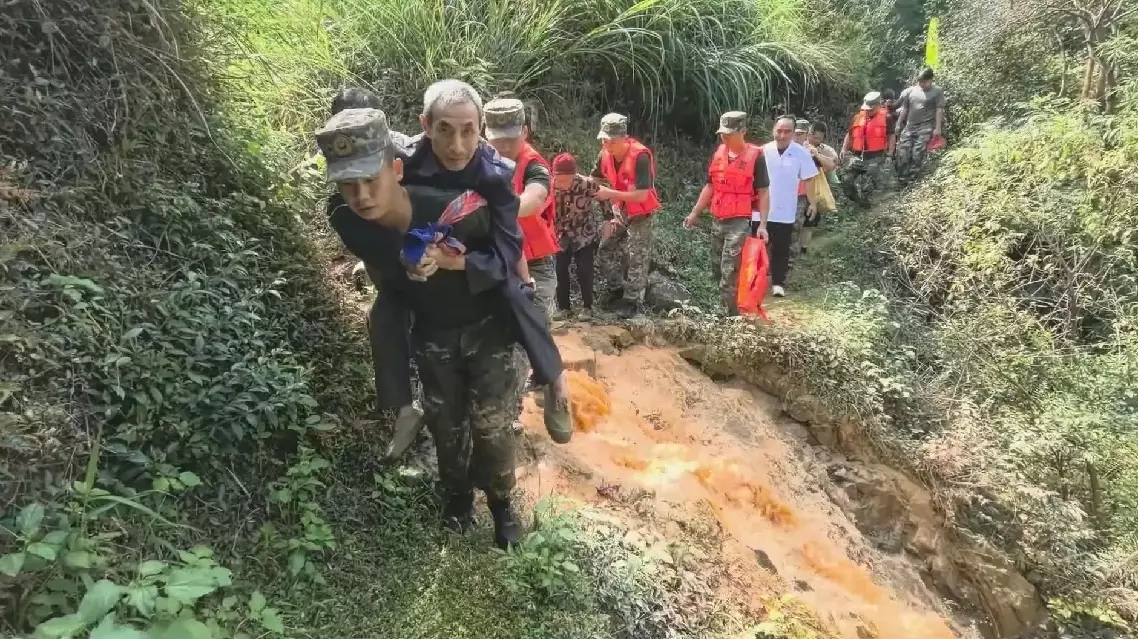
Rescuers intensify search efforts in mudslide-hit village in east China's Jiangxi