Russia said on Friday that its forces had made advances in the Krasnyi Lyman direction in the Donetsk region, while Ukraine said on the same day that its forces had attacked multiple energy and logistics facilities inside Russia and in Russia-controlled territories.
Russia's Defense Ministry said in its latest report that over the past week, its forces conducted one concentrated strike and six group strikes against Ukraine's military-industrial enterprises, fuel and energy infrastructure, as well as military positions.
The Russian troops took control of seven more settlements, and in the Krasnyi Lyman direction, they continued demining operations and search-and-clearance missions to eliminate remaining Ukrainian personnel, while pushing westward, the ministry said.
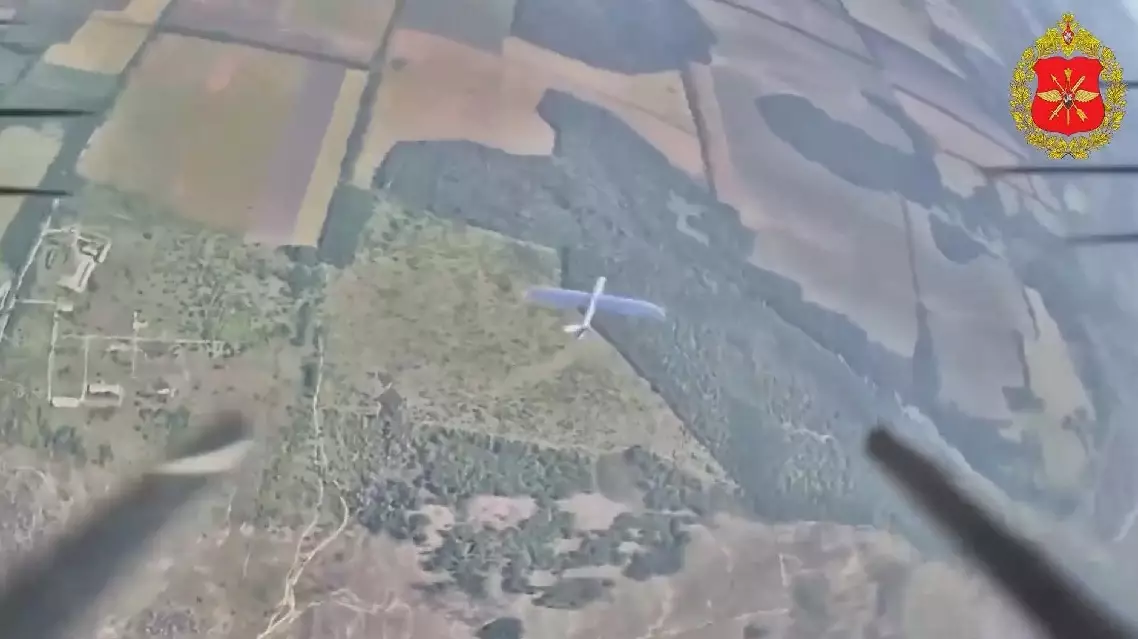
It also said the Russian air defense systems intercepted and destroyed 144 Ukrainian fixed-wing drones over several regions and the Black Sea on Friday.
Meanwhile, the General Staff of the Armed Forces of Ukraine said the Ukrainian forces carried out strikes early Friday against multiple targets inside Russia and in Russian-controlled areas.
According to the Ukrainian side, the targets included an oil refinery, an oil terminal, fuel storage facilities, a gas condensate processing enterprise, as well as 18 vessels, including oil tankers.
Russian forces advance in Krasnyi Lyman direction, Ukraine strikes Russian energy infrastructure
China on Friday called on the United Nations Security Council (UNSC) to uphold an impartial stance on the Iranian nuclear issue and help create favorable conditions for a political settlement, as Security Council members remained sharply divided over whether the body should continue considering the matter.
At a meeting on the Iranian nuclear issue held on Friday, the representatives of China and Russia opposed continuing discussion of the Iranian nuclear issue under the Security Council's "non-proliferation" agenda item. Russia requested a procedural vote on the meeting's agenda.
China's deputy permanent representative to the United Nations, Sun Lei, noted that Security Council Resolution 2231 expired on Oct. 18, 2025, and that the related UN sanctions arrangements on Iran had also been terminated. Therefore, he said, the Security Council should conclude its consideration of the Iranian nuclear issue.
"The situation in the Middle East and the Iranian nuclear issue are now at a critical juncture. The Security Council should play a constructive role in promoting negotiations and de-escalating tensions. Certain members of the Security Council, however, are bent on pushing for a meeting under a terminated agenda item in the name of so-called 'supporting diplomatic efforts.' This not only exacerbates divisions within the Security Council but also undermines the atmosphere for negotiation and severely hampers the political settlement of the Iranian nuclear issue. China is gravely concerned over this," said Sun.
"China urges relevant countries to stop politicizing the issue at the Security Council, faithfully implement measures related to the 'Termination Day' of Resolution 2231, uphold the authority of the Security Council and the credibility of multilateral diplomacy, and create favorable conditions for a political settlement of the Iranian nuclear issue," the representative continued.
Sun said that resolving the Iranian nuclear issue requires respecting the legitimate concerns and lawful rights of all parties. Iran should continue to honor its commitment not to develop nuclear weapons, while retaining its legitimate right to the peaceful use of nuclear energy, he said.
He added that the United States should take concrete actions to help create conditions for a political settlement.
"The Security Council's immediate priority is to uphold an objective and impartial position, secure more time and space for diplomatic efforts, foster a positive atmosphere for negotiations, and avoid becoming a tool for individual countries to advance their own political agenda and exert pressure," Sun said.
The representatives of the United States, Britain and France argued that the decision by Britain, France and Germany to invoke the "snapback" sanctions mechanism under Resolution 2231 was lawful and that the Security Council should continue considering the Iranian nuclear issue.
China voted against the procedural motion on the meeting's agenda.
China urges end to political manipulation over Iran nuclear issue at UN