The Ningxia Hui Autonomous Region in northwest China has witnessed a high-quality development in its dairy sector by leveraging its ideal climate and pioneering technologies.
Located in the eastern foothills of the Helan Mountains, which run along the 38th parallel north, the Earth's golden ratio line, Ningxia boasts a favorable climate with abundant sunshine, mild winters, and cool summers, which is widely recognized in the industry as an ideal area for raising high-quality dairy cows. Capitalizing on these natural advantages, Ningxia's dairy industry has experienced robust growth, earning it the moniker of a "golden milk source belt" .
In May 2023, Chinese dairy giant Inner Mongolia Mengniu Dairy (Group) Co., Ltd. established the world's first fully intelligent dairy factory in Ningxia. This cutting-edge facility can produce one million tons of liquid milk annually, generating 10 billion yuan in output value with a workforce of just 100 employees.
The factory's advanced automatic and intelligent manufacturing systems handle every aspect of production, from planning to scheduling, decision-making and troubleshooting, independently.
In a traditional packaging workshop, such operations would typically require over 300 workers, but this factory needs just two maintenance personnel.
By connecting products, materials, and equipment through a 5G-powered Internet of Things, the facility has drastically reduced manpower while boosting efficiency.
Complementing the smart factory is the country's first fully automated intelligent laboratory for dairy product testing, which holds over 110 patents, including the laboratory itself.
The lab's analyses have found that many of Ningxia's raw milk samples exceed the national protein content standard by more than 15 percent, underscoring the exceptional quality of the region's dairy source.
The high-quality milk can be attributed to Ningxia's pioneering work in dairy cow breeding. The region is home to the first ranch in China to widely apply cloning technology, successfully producing a herd of seven cloned cows. "We conducted a large-scale screening across the country. First, we selected 'super dairy cows' with a lifetime milk production exceeding 100 tons. We collected ear tissue samples from these super dairy cows and isolated fibroblasts. Then, we used somatic cell nuclear transfer technology to clone them," said Dr. Yang Mingmao of Northwest Agriculture and Forestry University.
Ningxia's breakthrough in cloning high-yield dairy cows has enabled the region to establish a herd of superior germplasm.
The next step is to develop a breed of high-quality, genetically valuable breeding bulls through stem cell cloning technology, which could help China break the foreign monopoly on advanced dairy genetics, according to Dr. Wei Yaochang of Northwest Agriculture and Forestry University,
"Our main task for this year is to transplant the cloned embryos into surrogate cows at our farm. If we can successfully deliver these cloned bulls, it will mean that we have achieved a breakthrough. This is just the first one, but we will produce many more in the future. Once we establish a population, we are confident that we can break the foreign monopoly and achieve independent breeding," said Dr. Wei.
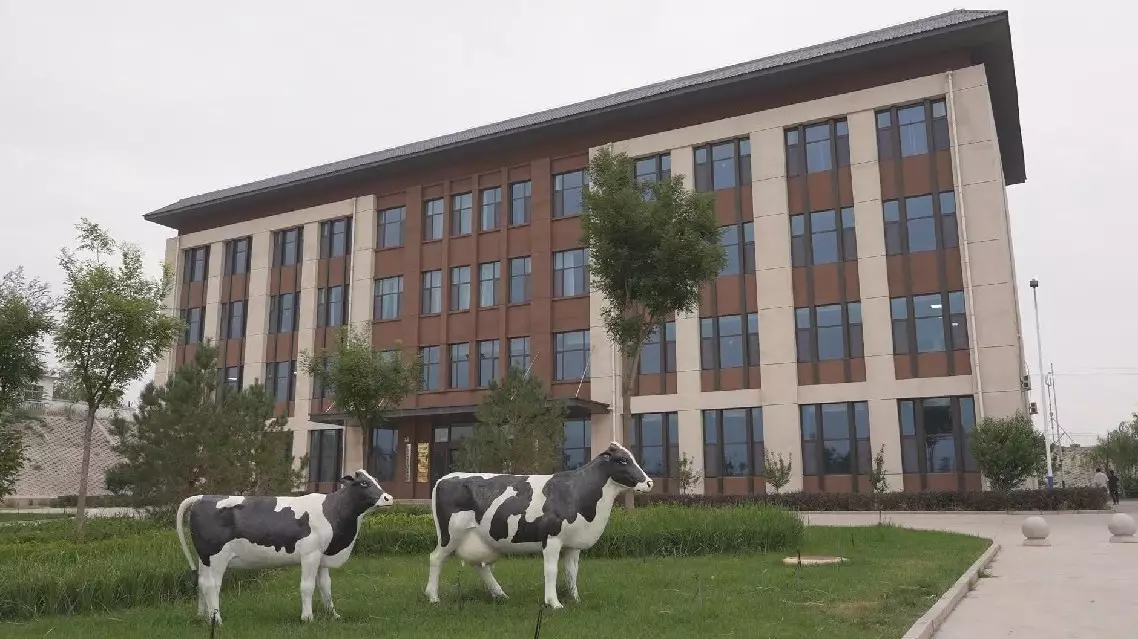
Ningxia's dairies achieve high-quality development with smart factories, advanced breeding techniques