A South American crime boss wanted in the killings of at least 23 people in Peru was captured this week in New York, three months after U.S. immigration authorities arrested and then released him after he illegally entered the country at the Texas-Mexico border.
The arrests Wednesday of Gianfranco Torres-Navarro and his girlfriend, Mishelle Sol Ivanna Ortíz Ubillús, ended an international search that gripped Peru in the wake of violence attributed to Torres-Navarro and his “Los Killers” gang. Their capture also raised questions about why the notorious gang leader was allowed to stay in the U.S. after his initial brush with immigration authorities in May.
Torres-Navarro, 38, is the leader of “Los Killers de Ventanilla y Callao." Peruvian authorities say the gang, formed in 2022, has used violence to thwart rivals and further its core business of extorting construction companies in an area along the Pacific coast where Peru’s main port is located.
Torres-Navarro was previously a member of the Los Malditos de Angamos criminal organization, Peru’s Public Prosecutor’s Office said. He is also known as “Gianfranco 23,” a reference to the number of people he is alleged to have killed or ordered killed. He reportedly has the names of victims tattooed on his body.
Jorge Chavez-Cotrina, the head of Peru’s Special Prosecutor’s Office against Organized Crime, told The Associated Press that the crimes Torres-Navarro was wanted for include contract killings, extortion and running a criminal organization.
The Public Prosecutor’s Office has described Ortiz Ubillús as Torres Navarro’s romantic partner, lieutenant and cashier. She has a sizable following on TikTok, where she's shown off their luxe lifestyle, including designer clothes and resort vacations.
Online immigration detention records for Torres-Navarro and Ortíz Ubillús did not include information on lawyers who could comment on their behalf.
Col. Franco Moreno, the head of Peru’s High Complexity Crime Investigations Division, told AP that Torres-Navarro's victims included rival gang leaders and their families.
Torres-Navarro “is a highly dangerous criminal who believed he was untouchable and responsible for 23 murders." All of it was done "to increase his criminal leadership,” the investigator said.
Torres-Navarro and Ortíz Ubillús are believed to have fled Peru after he and the “Los Killers” gang were suspected of killing retired police officer Cesar Quegua Herrera and wounding a municipal employee at a restaurant in San Miguel in March.
Torres-Navarro also is suspected of ordering a February 2023 hit on the leader of another gang and five members of his family, including two children, Moreno said.
In some cases, Torres-Navarro "has personally executed the deaths of his rivals," Chavez-Cotrina said.
Torres-Navarro illegally entered the U.S. on May 16 near Roma, Texas, about 210 miles (339 kilometers) south of San Antonio, according to U.S. Immigrations and Customs Enforcement.
U.S. Customs and Border Protection arrested him the same day and released him with a notice to appear for immigration proceedings, ICE said.
Peruvian authorities say they didn't order the location and international capture of Torres-Navarro and Ortíz Ubillús' until July 3. U.S. authorities said they received information on July 8 that Torres-Navarro was wanted in Peru and subsequently moved to arrest him.
ICE arrested them in Endicott, New York, a small village about 145 miles (233 kilometers) northwest of New York City, the agency said.
U.S. Border Patrol releases tens of thousands of migrants each month who enter illegally with notices to appear in immigration court to pursue asylum or other forms of humanitarian protection.
Releases into the U.S. have fallen dramatically in line with fewer crossings as Mexican authorities have stepped up enforcement within their borders and the U.S. introduced asylum restrictions in June.
There were 27,768 releases into the U.S. in July, down from 191,782 in December. In May, when Torres-Navarro entered the country, 62,164 people were released with notices to appear in court.
The Border Patrol may refer migrants to ICE for detention while their cases go through immigration court, but the agency receives funding to hold only 34,000 people. Space is reserved for those deemed the highest security risks.
Migrants who are released are photographed and fingerprinted. They must provide a U.S. address where they will live.
U.S. Customs and Border Protection did not respond to AP’s questions about Torres-Navarro, including what information it had about him in May or whether the Peruvian government had flagged him in databases it searches.
The agency provided a fact sheet stating that it “uses a range of resources and information, including information shared by partners worldwide, to inform screening and vetting and to target such individuals attempting to come to United States.”
The agency, part of the Department of Homeland Security, said it “has implemented enhanced screening measures at the border to identify known or suspected gang members” and that people confirmed as such are referred for criminal prosecution or detained for removal from the U.S.
Customs and Border Protection did not immediately respond to questions about whether those procedures were in place when Torres-Navarro entered the country and, if so, whether he was subject to such screening.
Torres-Navarro has been on the radar of Peruvian authorities for years, but he has largely eluded attempts to hold him accountable for his alleged crimes.
In 2019, while on the run from authorities, he was sentenced to 10 years in prison for illegal weapons possession.
He remained at large until 2021, when he was arrested at a toll checkpoint near Peru’s capital city, Lima. Torres-Navarro was freed last December after an acquittal in that case.
Peruvian authorities said “Los Killers” soon ramped up its violence, culminating in the killing of the retired police officer in San Miguel.
In June, six reputed members of “Los Killers” were arrested in a series of raids and accused of homicide, contract killing, and extortion, the National Police of Peru said.
Moreno said his investigators began following the gang after the February 2023 execution of a rival gang boss and that man's family. Moreno said Peruvian authorities tracked phone calls, geolocations and messages from Torres-Navarro and his gang of at least 10 members.
Torres-Navarro is being held at a federal detention facility about halfway between Buffalo and Rochester, New York, pending an immigration hearing, ICE said.
Ortíz Ubillús is being held at a processing center in Phillipsburg, Pennsylvania, according to ICE’s Online Detainee Locator System.
They are likely to be deported to Peru unless they are charged in the U.S.
Spagat reported from San Diego. Briceno reported from Lima, Peru. Associated Press reporters Carolyn Thompson and Phil Marcelo also contributed to this report.
What to know about the US arrest of a Peruvian gang leader suspected of killing 23 people
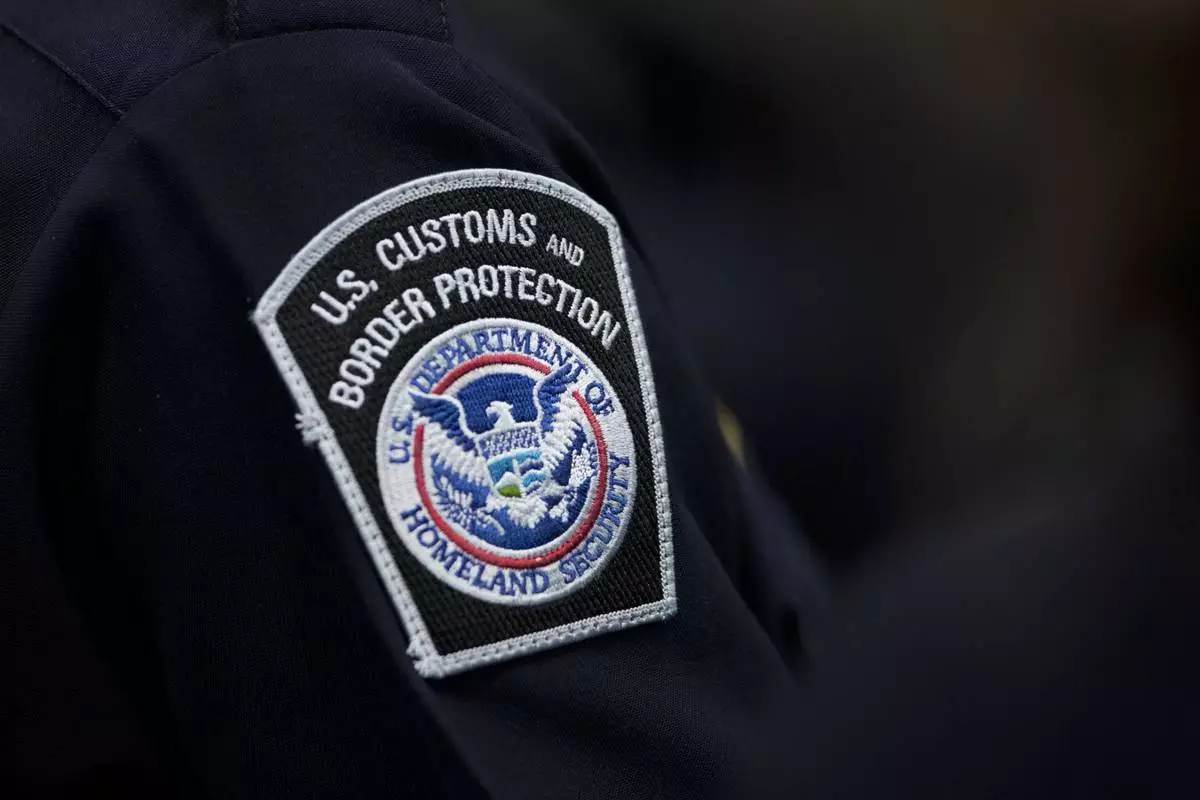
FILE - A customs agent wears a patch for the U.S. Customs and Border Protection agency, Oct. 27, 2017, at John F. Kennedy International Airport in New York. (AP Photo/Mark Lennihan, file)
What to know about the US arrest of a Peruvian gang leader suspected of killing 23 people