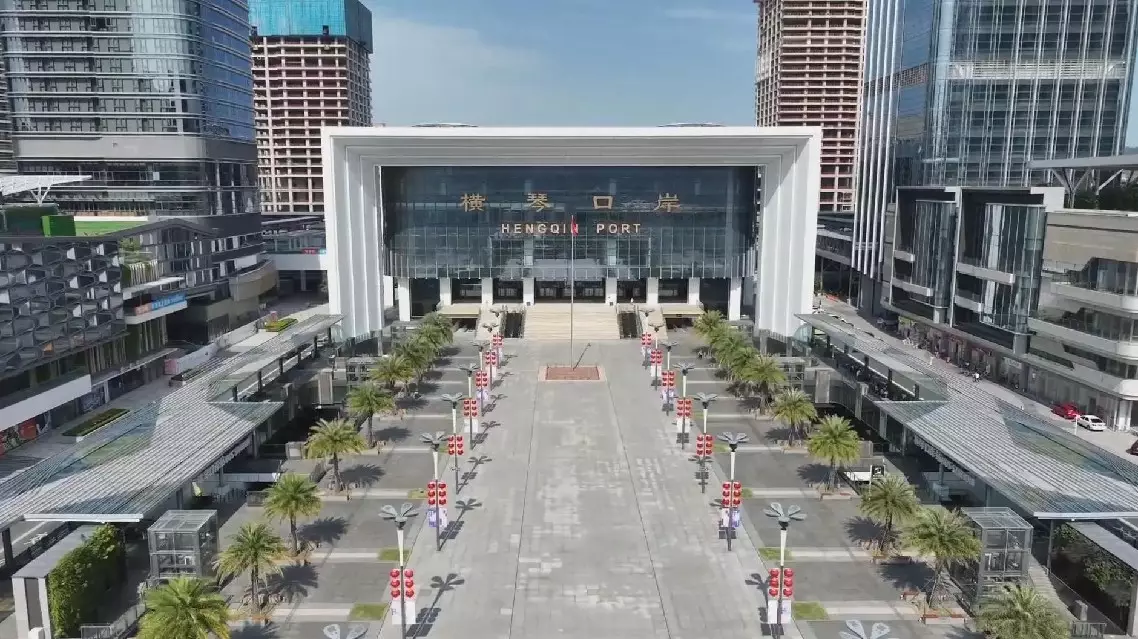
Since its opening in August 2020, the Hengqin Port in south China's Guangdong Province has handled over 48 million passenger trips and 5.88 million vehicle crossings, with average annual growth rates hitting 62.2 percent and 40.4 percent respectively, according to statistics from the border inspection station of the Hong Kong-Zhuhai-Macao Bridge (HZMB).
This significant increase is largely driven by the ongoing development of the Hengqin Guangdong-Macao In-Depth Cooperation Zone, built to promote economic diversification of the Macao Special Administrative Region (SAR), and continuous improvements in the port's infrastructure and services.
The latest data showed that the port, located in Zhuhai City, now handles an average of 57,000 passenger trips and 6,000 vehicle crossings daily, more than double the figures from four years ago.
This year, the port set new single-day records, with over 86,000 passenger trips and 7,200 vehicle crossings registered in one day.
The enhanced accessibility through Hengqin is gradually transforming the lifestyle of Macao residents, fueling a growing interest among them in purchasing property, starting businesses and enjoying leisure activities in Hengqin.
"Statistics suggest that among people traveling through the Hengqin Port, mainland residents traveling to the Macao SAR for work and study account for approximately 39 percent, Hong Kong and Macao residents make up about 26 percent, and mainland tourists visiting Macao constitute around 24 percent. The characteristics of the Hengqin Port as a '70-percent livelihood, 30-percent tourism' port are becoming increasingly prominent," said Zeng Xiang, deputy head of the HZMB border inspection station.
"My family bought a property here in Hengqin four or five years ago. Compared to our previous visits, the changes have been enormous. The environment around where we live has improved significantly and everything is much more convenient now. That's why we prefer crossing borders through the Hengqin Port," said Mrs. Wang, a Hong Kong resident.
In recent years, the Hengqin Port has undergone continuous infrastructure upgrades, further streamlining the border crossing process for both vehicles and passengers.
Additionally, the Hengqin Border Inspection Station is accelerating the construction of an intelligent vehicle inspection system and refining the clearance processes for Hengqin-Macao tour groups and frequent travelers to make it more efficient for people to cross borders.
"So far this year, the port has handled over 13 million passenger crossings and approximately 1.4 million vehicle crossings. We anticipate that by the end of the year, the total number of passenger trips could surpass 20 million, and vehicle crossings could exceed 2 million. In response to the growing demand, the Hengqin Border Inspection Station will continue to enhance services and optimize clearance procedures to contribute to the rapid integrated development of Hengqin and Macao," Zeng added.
Sunday marks the fourth anniversary of the opening of the Hengqin Port, which was designed to facilitate travel between Macao and Zhuhai to further boost development of the Guangdong-Hong Kong-Macao Greater Bay Area (GBA).
Dubbed a "super passage", the main working area of the Hengqin Port is 450,000 square meters, equivalent to 63 football fields. It has a designed daily capacity of 222,000 passengers, which can help ease the pressure of the Gongbei Port -- another major port linking Zhuhai and Macao -- and increase the daily capacity for passenger flow between Guangdong and Macao.
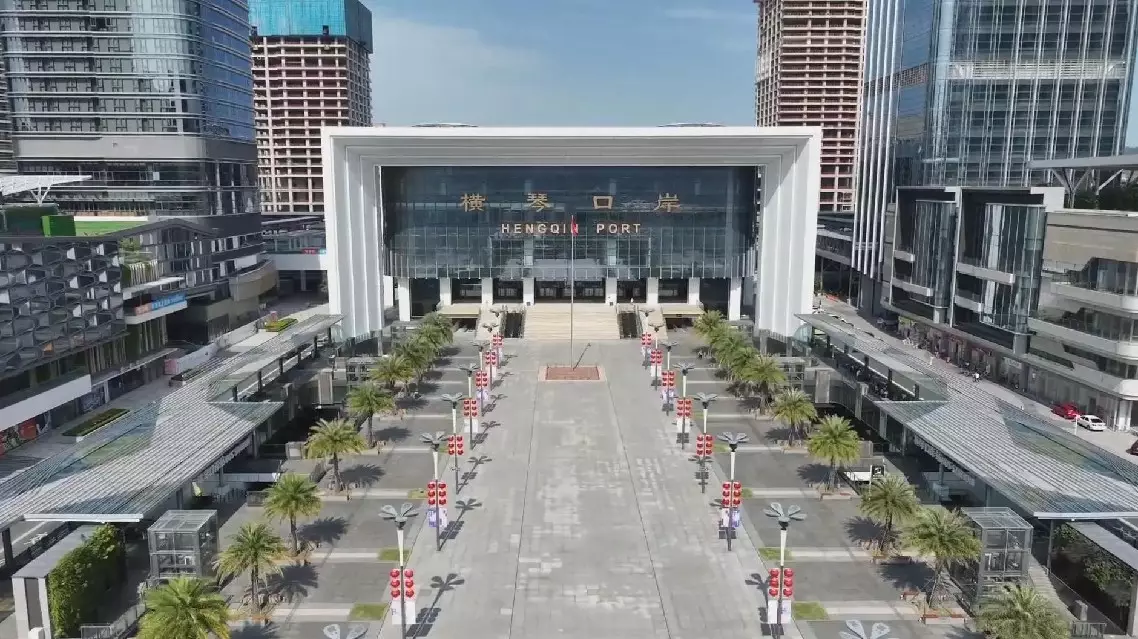
Port linking Macao, mainland handles 48 mln passenger trips since opening four years ago
Port linking Macao, mainland handles 48 mln passenger trips since opening four years ago