As China and Brazil celebrate the 50th anniversary of the establishment of their diplomatic relations, a series of cultural and political events took place this week in Brazil's capital, Brasilia, to mark the occasion, where attendees expressed their expectations for closer bilateral relations in both political and cultural terms.
The vibrant colors and movements of Chinese performing arts were on display in Brasilia on Wednesday to mark the anniversary, with about 80 artists from China performing at this cultural event.
"I think the most important thing between these relations, not only commercial relations that we have between Brazil and China, is people-to-people [interaction]. So, of course, it's important to show this relationship not only [in commercial terms], but also [through] cultural relationship between Brazil and China," said Thomas Law, president of the Brazil-China Sociocultural Institute.
During this event, audience members got to see examples of traditional Chinese dances performed by Beijing's Dance Academy, representing six of the 56 ethnic groups officially recognized across China.
Another highlight was a performance by the Zhejiang Wu Opera Company on Friday, entitled "A Stroll Through Tradition: Glimpses of China." The group, which has performed in 51 countries, blends traditional plays, music, acrobatic stunts, martial arts, and the always popular Dragon Dance.
"The dances were like really a cultural expression that I had never [seen] before. It was really an amazing experience, and I hope to be able to see it again one day," said Isabela Christo, a student.
"This is part of a relationship across continents. It's really important. It's a way of fostering knowledge of China here in Brazil and also of Brazil in China," said Adriano Cesar, an audience member.
On the political front, Brazil's Parliament held a solemn session on Thursday on the floor of the Chamber of Deputies, where a commemorative medal produced by the Brazilian mint was unveiled to mark the 50 years of diplomatic relations between the two countries.
In 2018, a law passed in Brazil's Parliament established August 15th as the National Chinese Immigration Day, the day that also celebrates the beginning of diplomatic relations with China in 1974.
The Chinese Ambassador to Brazil spoke about the importance and the prospects of China-Brazil relations.
"Deputies and senators are representatives of the people and this House is holding a great event to celebrate this anniversary. It shows the enthusiasm of the entire Brazilian society for these relations between China and Brazil. Let's make the next 50 years even better," said Zhu Qingqiao, Chinese Ambassador to Brazil.
"We saw here in the National Congress a solemn session of tributes but also with a reaffirmation of common commitments to continue on this path," said Daniel Almeida, a Federal Deputy of Brazil.
Brazil's Parliament also organized an exhibition in its building highlighting important milestone in the 50 years of bilateral relations and served guests slices from a richly-decorated 500-kilogram cake to celebrate this important anniversary.
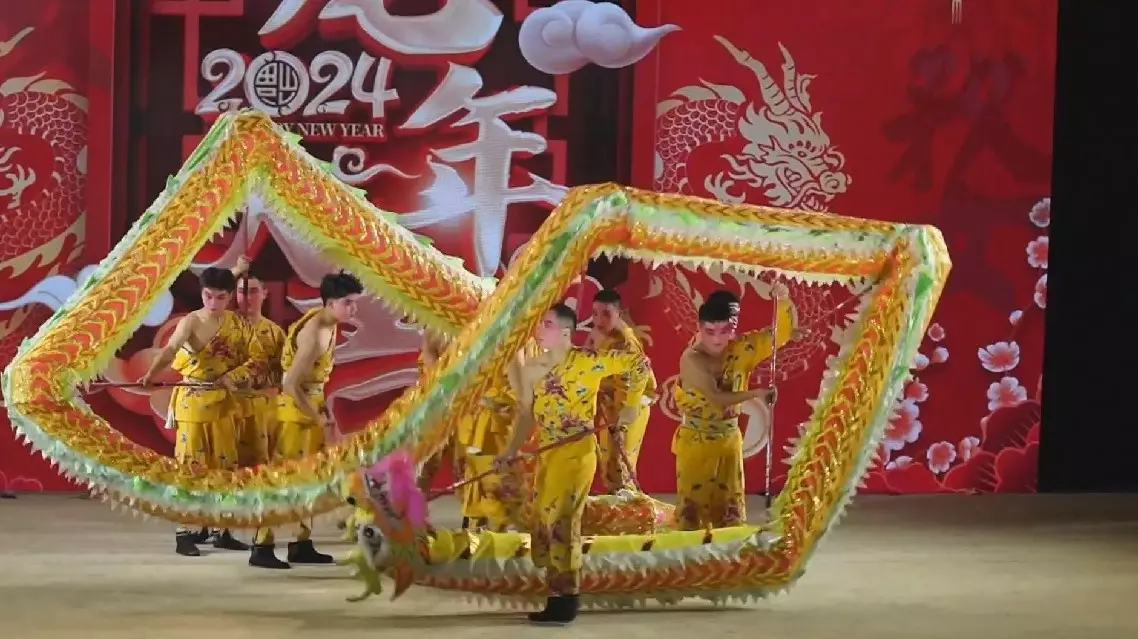
Brazilian capital celebrates 50 years of diplomatic ties with China