Skip to Content Facebook Feature Image

Reservoirs in South Korea's Gangwon-do face severe water shortages as heatwave persists

China

China

China

Reservoirs in South Korea's Gangwon-do face severe water shortages as heatwave persists

2024-08-19 21:29 Last Updated At:22:27

Reservoirs in South Korea's Gangwon-do Province are facing severe water shortages, with storage levels far below the national average and with some reservoirs nearly dry, as the scorching heatwave continues to rage across the country.

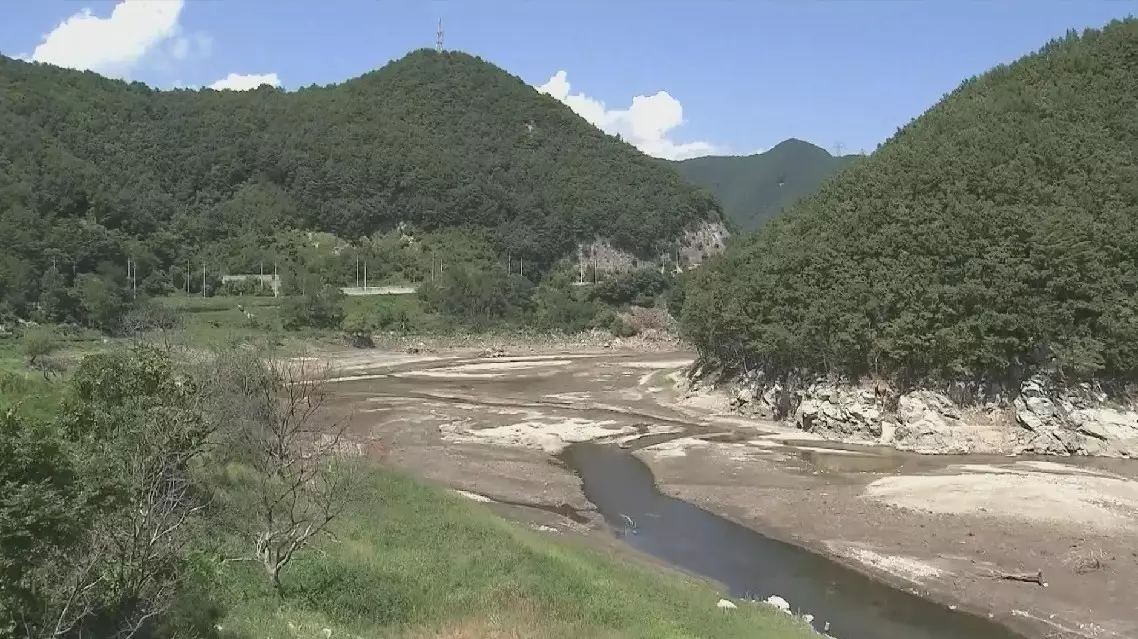
A reservoir near Gangneung City, once a wide lake providing water for domestic and agricultural use, has now shrunk to a narrow stream due to insufficient rainfall, and large portions of the reservoir bed are now exposed to sunlight.

Currently, many reservoirs in the Gangwon-do region have seen water storage rates running below 40 percent, much lower than the national average of 61.7 percent.

This year, Gangwon-do has received only about 70 percent of its usual rainfall. In the Gangneung area, the total precipitation over the past 30 days was just 43 millimeters, which is only 9.3 percent of the amount from the same period of last year. The Korea Meteorological Administration has reported no indications of heavy rain in the area recently, raising more concerns over the reservoirs' ability to maintain normal water supplies if the dry conditions persist.

Meanwhile, high temperatures have also severely impacted agriculture and aquaculture in South Korea. In Gangwon-do, peach growth is poor due to the lack of rainfall, while on Jeju Island, only 20 percent of carrots sown last month have germinated.

In addition, from June 11 to Aug 18, over 900,000 poultry and livestock have died due to the intense heat, 2.6 times higher than the same period of last year. Moreover, more than 1.5 million fish in ponds have died due to excessive water temperatures, surging 190 percent from the same period of last year, according to data from South Korea's Ministry of Security and Public Administration.
Reservoirs in South Korea's Gangwon-do face severe water shortages as heatwave persists
Reservoirs in South Korea's Gangwon-do face severe water shortages as heatwave persists
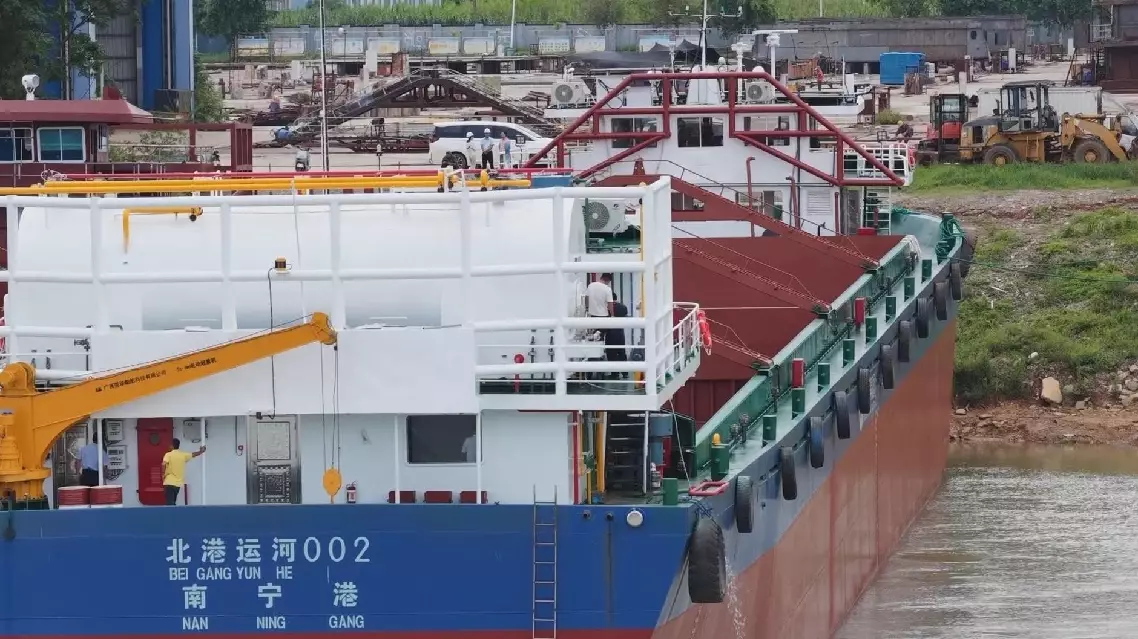
The first 5,000-tonne-class intelligent eco-friendly vessel is set to begin trial navigation on Wednesday on the Pinglu Canal in south China's Guangxi Zhuang Autonomous Region, a landmark waterway that stands as the country's first digitalized smart canal linking rivers with the sea.

The vessel, named "Beigang Yunhe 002," is a dual-purpose carrier designed for both container and bulk cargo. Tailor-made to maximize single-lock throughput on the Pinglu Canal, it is equipped with intelligent features such as route planning, collision alert systems, and remote-sensing monitoring. A single canal lock can accommodate up to six such ships at a time.

The first batch of four such intelligent vessels has already been completed at a shipyard in Guigang City of Guangxi. Trial navigations will be rolled out successively for each unit, with final delivery slated for this August.

Stretching 134.2 kilometers from the Pingtang River in Guangxi's Hengzhou City to the Beibu Gulf in the South China Sea, the Pinglu Canal is the backbone of the country's New International Land-Sea Trade Corridor, a key initiative that enhances global trade connectivity for China's western inland regions.

The waterway is expected to open to full navigation this September. Once it becomes fully operational, the Pinglu Canal will facilitate the direct shipment of goods from Guangxi and the neighboring Yunnan and Guizhou provinces through the Xijiang river system to ports in the Beibu Gulf of Guangxi, rather than routing them through Guangdong in south China. This strategic shift is projected to significantly reduce the shipping distance by approximately 560 kilometers.

First smart ship for China's flagship Pinglu Canal project set for trial voyage

First smart ship for China's flagship Pinglu Canal project set for trial voyage

Recommended Articles