The central Chinese province of Hunan has been helping send fresh flowers from Kenya to customers all over China and even to Uzbekistan as the country keeps rolling out favorable trade policies for African countries and steadily increasing import from the continent.
Hunan, as one of China's most active provinces in Sino-African trade, is capable of importing flowers from Nairobi within just about 17 hours.
The flowers in the store of Huang Zinan, a Chinese Kenyan flower dealer, maintained original fresh appearance even after traveling as far as 7,000 kilometers.
"Since last year we have been selling about 100,000 flowers monthly, mostly to 15 first-tier cities like Beijing, Shanghai, Guangzhou and Shenzhen," she said.
China completed its first entrepot trade for African flowers in July after 400 fresh roses from Kenya were sent to Uzbekistan from a comprehensive bonded area in Changsha, the capital of Hunan Province.
"We can sell them to a third country or countries along the Belt and Road. By increasing trade, we can help create jobs for local farmers and the production of flowers will definitely grow as well," said Huang.
By late June, China has applied zero-tariff to 98 percent of taxable goods from 27 least developed countries in Africa. It also established "green lanes" for African agricultural exports to China and signed 22 protocols regarding the export of agricultural products to China with 14 African countries.
Currently, high-quality characteristic African products like aquatic products, honey, peanuts, soybeans, coffee, and fruit have been imported into Chinese market in a steady flow.

Hunan facilitates Kenyan flowers trade within China, internationally
A new China Global Television Network (CGTN) documentary explores how the historic Long March spirit is driving modern innovation, as young Chinese researchers and engineers are channeling this relentless drive to overcome critical bottlenecks in the EV and AI industries.
Titled "The Source of AI: Not a Single Rock Goes to Waste", the documentary highlights the pioneering journeys of Zhong Yu and He Pengyu.
Two years ago, Zhong made a pivotal career shift, leaving a long-established automaker to return to China and join Farasis Energy, a homegrown battery manufacturer based in Ganzhou City of east China's Jiangxi Province.
Working around the clock, Zhong and his team are developing solid-state batteries. This next-generation technology promises higher energy density and enhanced safety, having the potential to completely disrupt the current automotive landscape.
Through his research, Zhong is determined to establish China as a global leader in the battery sector.
While Zhong focuses on the power sources of the future, He Pengyu is tackling the foundational raw materials required for the EV and AI boom.
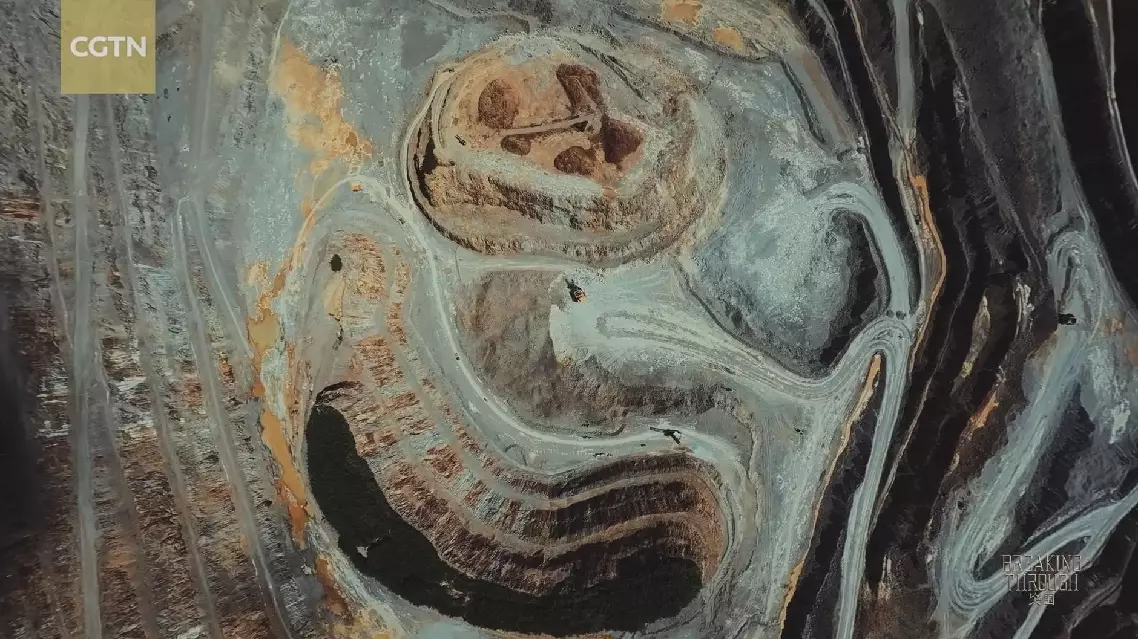
The rapid expansion of these sectors has triggered a massive surge in demand for copper and rare earth elements. However, extracting and separating these valuable minerals from raw ore has long been a formidable technical hurdle.
Without advanced equipment, China's mining industry once relied on grueling, inefficient manual sorting.
Determined to change this paradigm after returning from his studies in France, He founded HPY Sorting. The company has developed a revolutionary AI-driven optical ore sorting system capable of automatically separating waste rock from valuable ore.
Processing up to 300 tons of ore per hour, this intelligent sorting technology is now deployed in mines across the world, replacing tasks that once relied on human experience with precision-driven algorithms and automated machinery.
He Pengyu hopes that through his innovation, not a single rock goes to waste.
The documentary is part of CGTN's "Breaking Through" series, which traces China's journey from the historic Long March undertaken by the Red Army nine decades ago to its modern-day achievements, highlighting the resilience, ingenuity, and determination of its people.
Long March spirit drives critical breakthroughs in China's EV, AI industries: documentary