The Spring/Summer 2025 (SS25) China Fashion Week opened in Beijing on Tuesday as models graced the runway adorned in a host of hot new designs blending elements of Chinese aesthetics with Western design. Scheduled to run through September 13, the event has attracted around 260 brands and more than 400 designers from several countries including the United States, Russia, Austria and Vietnam. Over 160 significant fashion events are set to unfold during the fashion week, which will showcase the latest trends in menswear, womenswear, and a whole catalogue of other eye-catching items to attendees through a series of special releases, fashion contests, and business exhibitions.
Organizers say the latest edition of the long-running biannual show is set to be the biggest yet.
"The Spring/Summer 2025 (SS25) China Fashion Week is the largest one being held since its launch. Through a variety of activities, we hope audience can learn more about fashion and design, including styling tips and international fashion trends," said Xie Fangming, vice chairman of the China Fashion Association who run the event. The China Fashion Week is an important platform for designers from China and abroad to showcase their latest innovations while also facilitating a range of cultural and artistic exchanges.
Since its launch in 1997, it has moved in tandem with the development of China's fashion industry, bridging gaps between designers and various international markets for well over two decades.
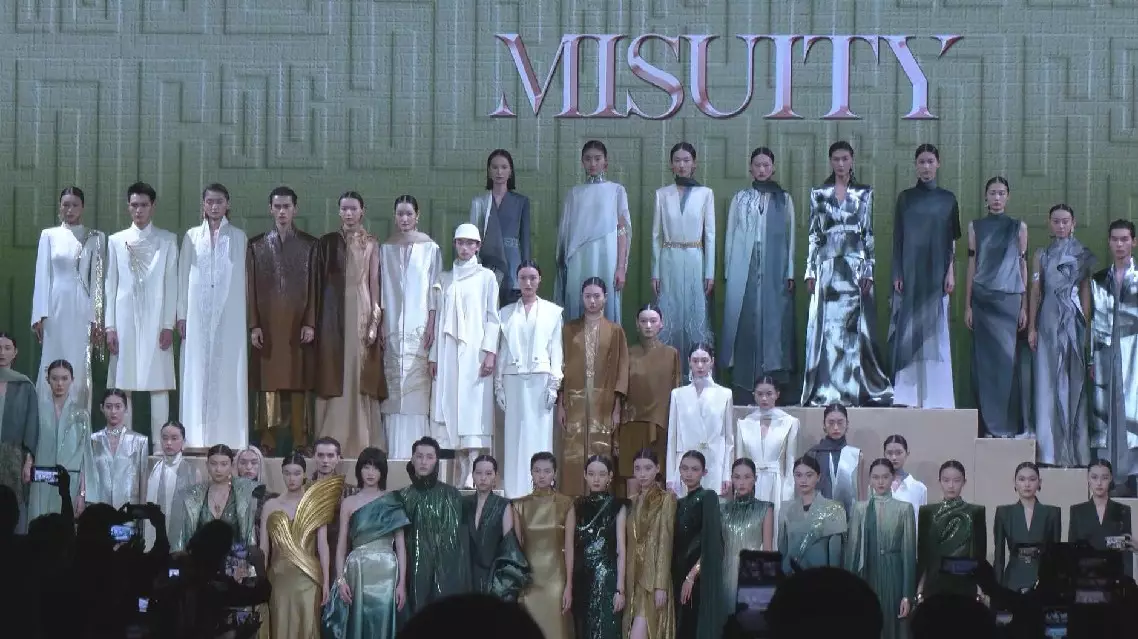
Hot new trends on show as latest China Fashion Week kicks off in Beijing

Brazilian scholars have strongly condemned the latest U.S. move to impose tariffs on select Brazilian products, calling it a clear violation of World Trade Organization (WTO) rules and an act of protectionism that places U.S. domestic law above international rules.
It comes after the U.S. announced a 25 percent tariff on certain imports from Brazil starting July 22 and imposed another 12.5 percent tariff on some Brazilian products, citing so-called "failure to effectively prevent forced labor," leaving some Brazilian industries to face combined tariffs of up to 37.5 percent.
The Brazilian government has rejected the U.S. tariff decisions and said it would turn to the WTO's dispute settlement system to resolve the issue.
Legal experts have also dismissed the U.S. justifications for the measure as unfounded, noting that Brazil has long maintained a trade deficit with the United States. They said that the unilateral duties undermine the principle of reciprocity in trade established by the WTO.
"The U.S. actions violate WTO agreements. The U.S. did not base the application of these measures on international agreements, but on its domestic law. The Brazilian government has revealed that it held numerous negotiations with the U.S. to reach an agreement, but the U.S. made overly harsh demands. Basically, the U.S. demanded that Brazil surrender and make concessions, which Brazil could not accept," said Rabih Nasser, Professor of international law, international trade law and arbitration at the Sao Paulo Law School of Fundacao Getulio Vargas (FGV Direito SP).
Major Brazilian commodities including coffee, beef, and crude oil are excluded from the tariffs; while industrial machinery, tires, sugar, ethanol, tobacco, footwear, and some aluminum products are subject to high tariffs. Given this specific item list, analysts say it appears the U.S. is again prioritizing its own domestic political and economic interests through this tariff strategy which seeks to avoid steep import cost hikes that could fuel inflation.
"The U.S. exempted goods that would impact domestic inflation or be difficult to substitute in the domestic market. So the tariff measures are turned more into a negotiating lever calibrated by the internal interests of the United States," said Vitelio Brustolin, a professor of international relations at the Fluminense Federal University (UFF).
The escalating trade barriers have already contributed to a steady decline in Brazil's trade dependence on the U.S. In the first half of this year, Brazilian exports to the U.S. fell 13 percent year-on-year, accounting for just 9.4 percent of Brazil's total exports, the lowest share since records began in 1997. Meanwhile, Brazil's exports to the rest of the world grew by 11.5 percent during the same period.
Brazilian scholars say US putting domestic law above int'l rules in latest tariff move