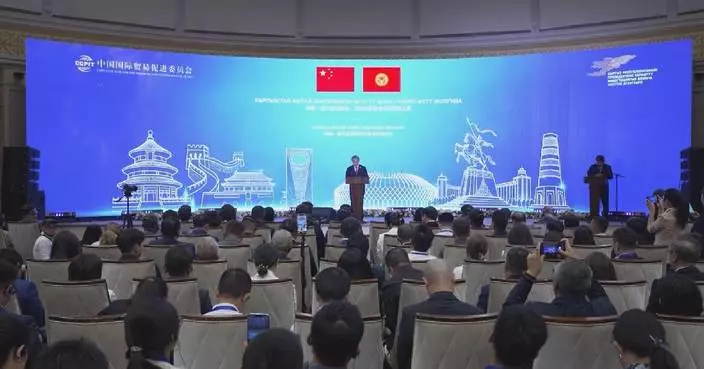
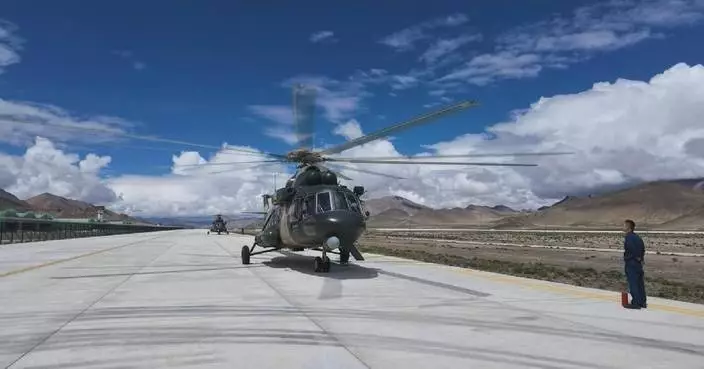
Tecno Mobile, produced by China's Transsion Holdings, has become one of the most popular smartphone brands in Africa, catering to the unique needs of African consumers with innovative technology and user-centered design.
Known as the "King of Africa's mobile phones," Tecno Mobile has been dominating the African market for years.
"Tecno has topped the African smart phone market in recent years, with a market share exceeding 40 percent," Arif Chowdhury, board member at Transsion Holdings, said via video link to a TV program on China Central Television (CCTV) called Dialogue.
Noticing locals' need to use different SIM cards in one device, TECNO launched phones with dual SIM cards in Africa in 2007, the first brand to do so there.
It also quickly pioneered enhanced camera solutions for Africans and the African market.
"Since many Africans have darker skin tones, taking good photos in low light was a common challenge. So we made efforts in improving the photo quality for them. We assembled a team of algorithm experts who studied tens of thousands of photos of Africans to develop a solution. When the lighting is poor, the algorithm will focus more on dark-skinned people and beautify the image, turning out an amazing quality," said Chowdhury.
Tecno has also prioritized long battery life in some of its product models, which help local consumers overcome charging difficulties.
"Some customers have difficulties in charging phones since they don't have power supply. In some cases, people even have to travel long distances to reach a charging station and pay for phone charging services. So we introduced phones with large batteries that can last for 10 to 20 days on standby," he said.

Chinese-made Tecno smartphone gains market dominance in Africa with user-centered approach
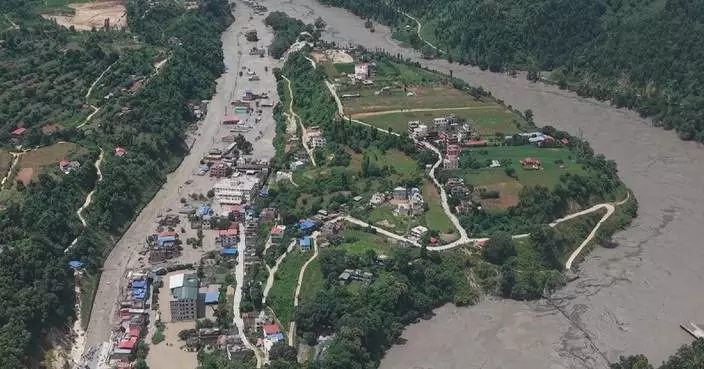
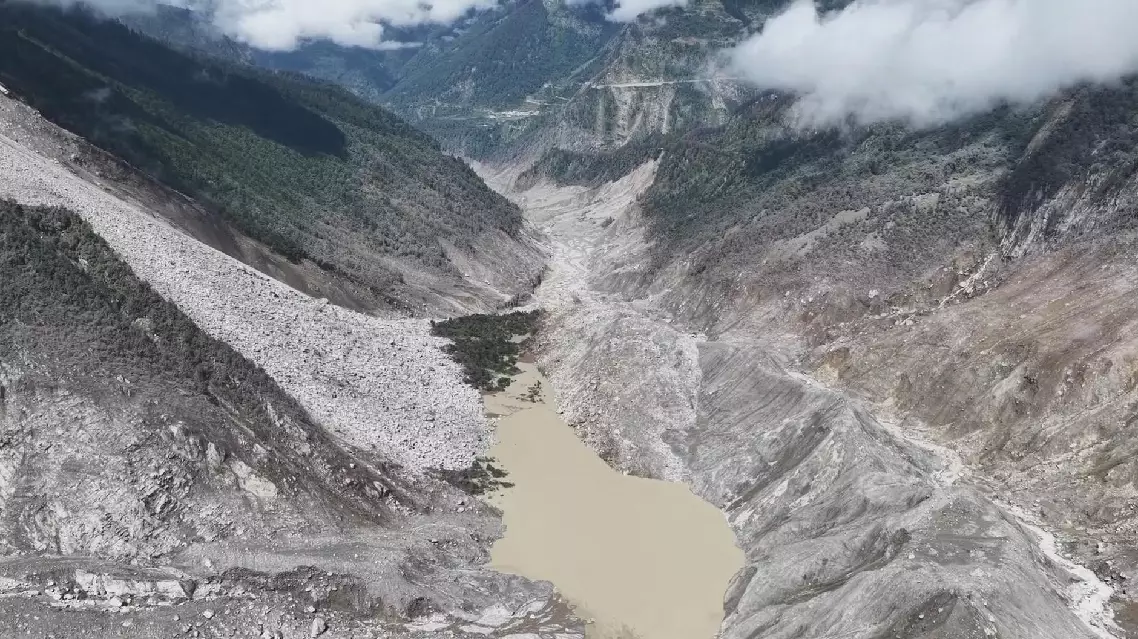
The threat of the barrier lake formed after Wednesday's catastrophic mudslide at the Gyirong Port, a major China-Nepal land border crossing in southwest China's Xizang Autonomous Region, continues to subside, with the lake's size steadily shrinking, according to an on-site monitoring team.
In the wake of the disaster, which has claimed at least seven lives and left more than 550 others missing in Gyirong, China Anneng -- a state-owned engineering and rescue enterprise -- has deployed teams to the disaster zone to support the search and rescue operations.
One of the teams tasked with monitoring the barrier lake, which sits over 10 kilometers upstream from the port, said real-time surveillance footage showed the lake was continuing to drain out.
"Our task today is to find a stable monitoring point on the opposite bank and install our detection equipment there to monitor the displacement of the landslide body and guard against the risks of a secondary collapse," said Chen Hanxiao, a member of the monitoring team from the Lhasa base of China Anneng.
The 15-member monitoring team have brought with it drones, satellite stations, and communication gear.
"A comparison of today's imagery with yesterday's shows that the water level here has dropped by about one-third. The receding water poses no further threat to the dam's structural integrity, buying valuable time for the rescue crews to carry out critical hazard mitigation work," said Hu Bo, head of the monitoring team.
However, Hu cautioned that despite the encouraging signs, the situation remains unpredictable given the region's complex glacial environment and changeable weather conditions. He stressed that real-time surveillance and data analysis are vital to assessing the barrier lake's stability and supporting follow-up operations.
The mudslide was triggered by a high-altitude glacier collapse on the Nepalese side, where the disaster had killed more than 620 people and left over 2,400 others missing, as of Saturday morning, according to the country's national disaster risk reduction and management authority.
Threat of barrier lake waning after massive mudslide near China-Nepal border