WASHINGTON (AP) — Former President Donald Trump persisted in saying during the presidential debate that he won the 2020 election and took no responsibility for any of the mayhem that unfolded at the Capitol on Jan. 6, 2021, when his supporters stormed the building to block the peaceful transfer of power.
The comments Tuesday night underscored the Republican's refusal, even four years later, to accept the reality of his defeat and his unwillingness to admit the extent to which his falsehoods about his election loss emboldened the mob that rushed the Capitol, resulting in violent clashes with law enforcement. Trump's grievances about that election are central to his 2024 campaign against Democrat Kamala Harris, as he professes allegiance to the rioters.
In 2020, Democrat Joe Biden won 306 electoral votes to Trump's 232, and there was no widespread fraud, as election officials across the country, including Trump’s then-attorney general, William Barr, have confirmed. Republican governors in Arizona and Georgia, crucial to Biden’s victory, vouched for the integrity of the elections in their states. Nearly all the legal challenges from Trump and his allies were dismissed by judges, including two tossed by the Supreme Court, which includes three Trump-nominated justices.
An Associated Press review of every potential case of voter fraud in the six battleground states disputed by Trump found fewer than 475. Biden took Arizona, Georgia, Michigan, Nevada, Pennsylvania and Wisconsin and their 79 electoral votes by a combined 311,257 votes out of 25.5 million ballots cast for president. The disputed ballots represent just 0.15% of his victory margin in those states.
In the ABC debate, Trump was asked twice if he regretted anything he did on Jan. 6, when he told his supporters to march to the Capitol and exhorted them to “fight like hell.” On the Philadelphia stage, Trump first responded by complaining that the questioner had failed to note that he had encouraged the crowd to behave “peacefully and patriotically.” Trump also noted that one of his backers, Ashli Babbitt, was fatally shot inside the building by a Capitol Police officer.
Trump suggested that protesters who committed crimes during the 2020 racial injustice protests were not prosecuted. But an AP review in 2021 of documents in more than 300 federal cases stemming from the protests sparked by George Floyd’s death found that more than 120 defendants across U.S. pleaded guilty or were convicted at trial of federal crimes including rioting, arson and conspiracy.
When the question about his actions on Jan. 6 arose again, Trump replied: “I had nothing to do with that other than they asked me to make a speech. I showed up for a speech.”
But he ignored other incendiary language he used throughout the speech, during which he urged the crowd to march to the Capitol, where Congress was meeting to certify Biden’s victory. Trump told the crowd: “If you don’t fight like hell, you’re not going to have a country anymore.” That’s after his lawyer, Rudy Giuliani, declared: “Let’s have trial by combat.”
Trump didn’t appeal for the rioters to leave the Capitol until more than three hours after the assault began. He then released a video telling the rioters it was time to “go home,” but added: “We love you. You’re very special people.”
He also repeated an oft-stated false claim that then-House Speaker Nancy Pelosi, D-Calif., “rejected” his offer to send “10,000 National Guard or soldiers” to the Capitol. Pelosi does not direct the National Guard. As the Capitol came under attack, she and then-Senate Majority leader Mitch McConnell, R-Ky. called for military assistance, including from the National Guard.
Harris pledged to “turn the page” from Jan. 6, when she was in the Capitol as democracy came under attack.
“So for everyone watching, who remembers what January 6th was, I say, 'We don’t have to go back. Let’s not go back. We’re not going back. It’s time to turn the page.”
Though Trump had seemed to acknowledge in a recent podcast interview that he had indeed “lost by a whisker," he insisted Tuesday night that that was a sarcastic remark and resumed his boasts about the election.
“I’ll show you Georgia, and I’ll show you Wisconsin, and I’ll show you Pennsylvania,” he said in rattling off states where he claimed, falsely, that he had won. “We have so many facts and statistics.”
Associated Press writers Alanna Durkin Richer and Melissa Goldin contributed to this report.
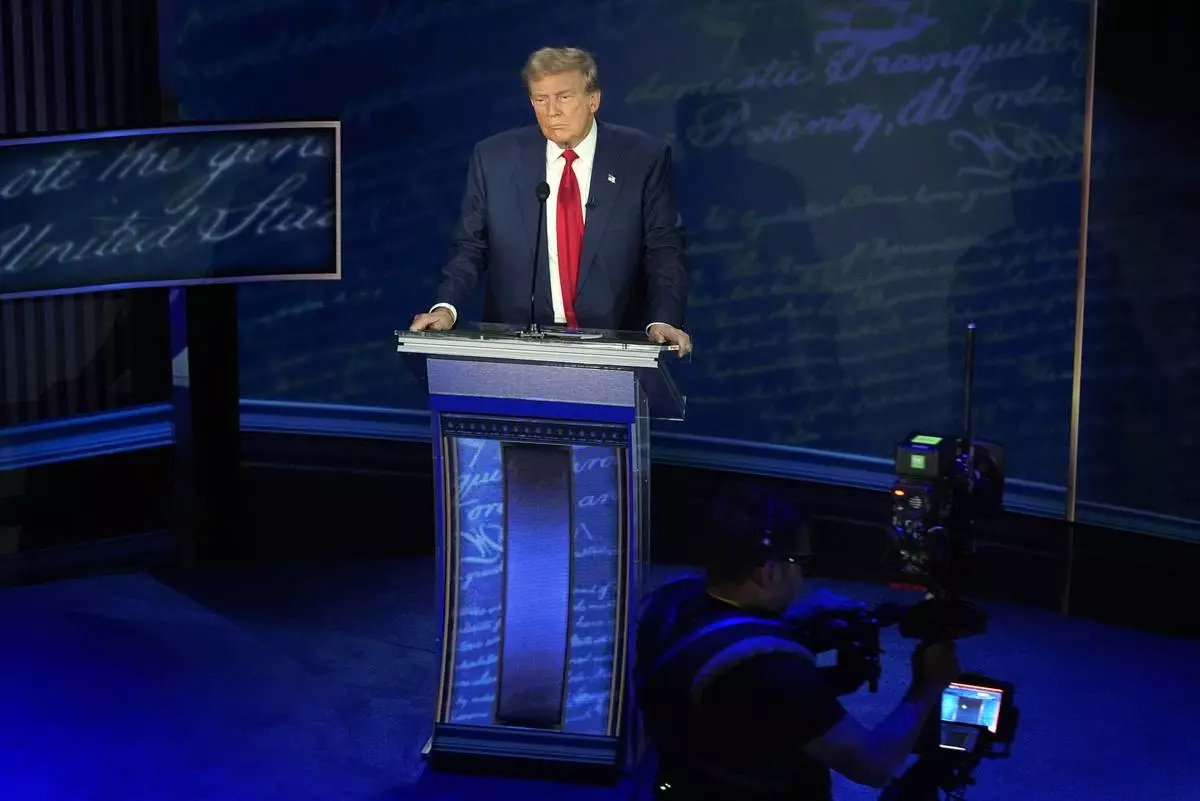
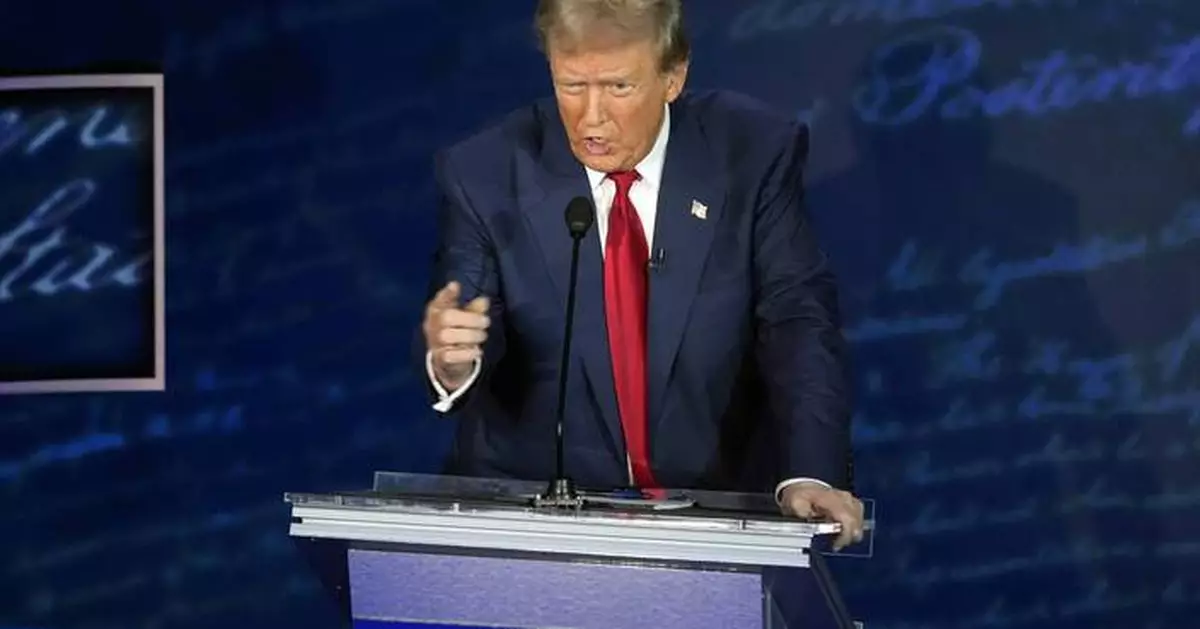
Republican presidential nominee former President Donald Trump waits at the podium during a break in the presidential debate with Democratic presidential nominee Vice President Kamala Harris at the National Constitution Center, Tuesday, Sept.10, 2024, in Philadelphia. (AP Photo/Alex Brandon)
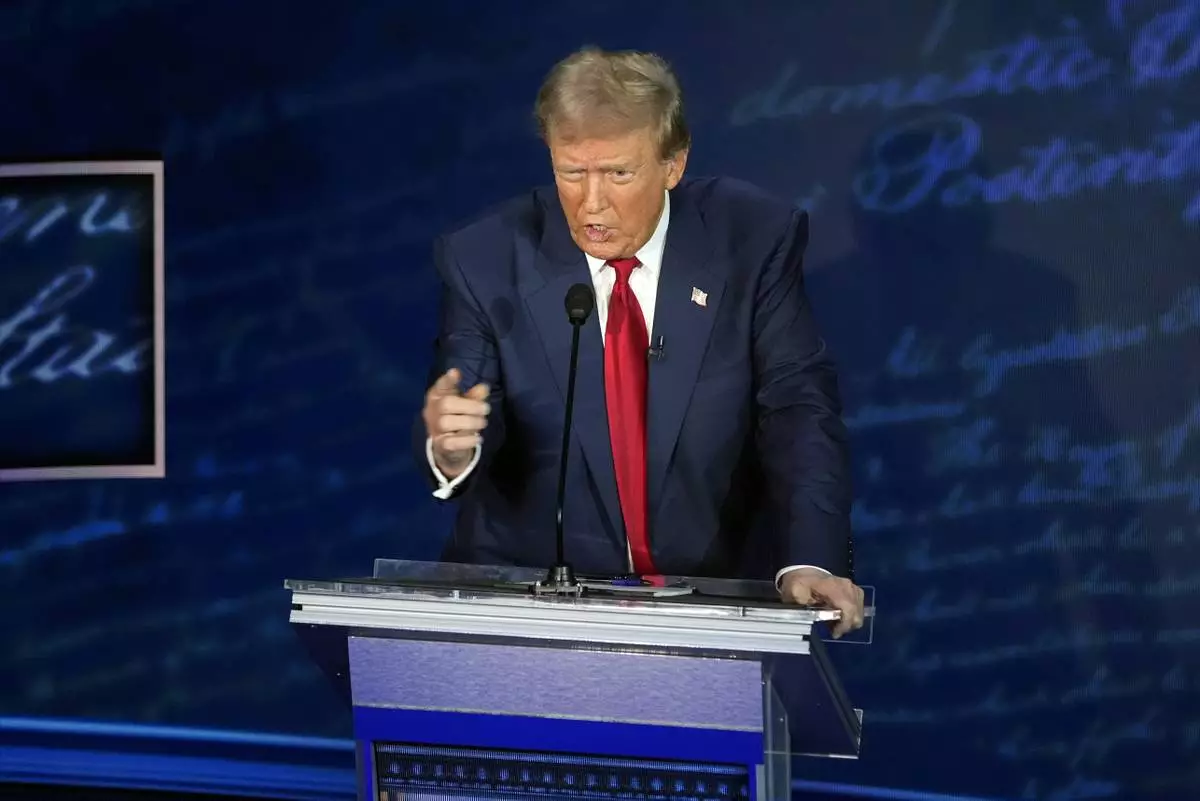
Republican presidential nominee former President Donald Trump speaks during a presidential debate with Democratic presidential nominee Vice President Kamala Harris at the National Constitution Center, Tuesday, Sept.10, 2024, in Philadelphia. (AP Photo/Alex Brandon)
HOUSTON (AP) — Colson Montgomery hit a solo homer and Sam Antonacci drove in two runs to lead the Chicago White Sox over the Houston Astros 6-3 in Game 1 of an AL Wild Card Series on Tuesday.
The White Sox, in the postseason for the first time since 2021, made a remarkable turnaround this year to become the only team in major league history to follow consecutive 100-loss seasons with a playoff berth. They had lost 100 games three straight seasons, including 121 defeats in 2024, setting the record for most losses since 1899.
“We came here to win the series and the first part of that is getting this first win, which is great,” manager Will Venable said.
He added that he was impressed with the poise his young team showed.
“A bunch of young guys that haven’t been in this situation before, they didn’t back down at all,” he said. “So really good stuff to come out and have an early win.”
The White Sox got a letter of support from Pope Leo XIV, a Chicago native, prior to the game and got to work immediately to show off for the pontiff.
They led 3-0 after two innings and held on for their first playoff win since Oct. 10, 2021 in the ALDS against Houston.
The AL West-winning Astros eked out a playoff spot with an 81-81 record to become the first team to reach the postseason without a winning record. Houston lost its eighth straight home playoff game in its ninth trip to the postseason in the last 10 years.
Game 2 in the best-of-three series is Wednesday in Houston.
Manager Joe Espada is confident his team will respond Wednesday to force a Game 3.
“Our backs have been against the corner before and I think that’s when we are our best, when we fight back,” he said. “We know it’s a do or die and we’ve been here before, so I really admire how they bounce back and they react to challenges. I expect them to go out there and bounce back and our offense to get going.”
MVP-favorite Yordan Alvarez said they're ready for the challenge.
“Tomorrow we have to come out here and win or there’s no tomorrow after that,” he said in Spanish through a translator.
Houston had runners on first and third with two outs in the eighth after singles by Jeremy Peña and Alvarez when Jose Altuve reached and Peña scored on an error by third baseman Miguel Vargas to cut the lead to 6-3.
The Astros' tough day came in front of a surprisingly thin crowd. The announced attendance was 34,011 in a park with a capacity of 40,963. The home fans peppered the team with some boos when it fell behind early.
Both teams went with a bullpen game and combined to use 13 pitchers. Chicago opened with rookie left-hander Hagen Smith, and he allowed two hits in three scoreless innings.
“It was cool just to get the opportunity to go out there and do that,” he said. “And, yeah, just try to go out there and compete the best I can for the team and give us the best chance to win.”
Houston’s rookie opener AJ Blubaugh gave up two walks, and an error by Christian Walker left runners on first and third with one out in the first. The White Sox took an early lead on a sacrifice fly by Murakami.
Bryan King plunked Montgomery to load the bases with no outs in the second before Antonacci’s single pushed the lead to 3-0.
Espada said having to use two pitchers so early made piecing together the game difficult.
“It puts you in a tough spot for sure,” he said.
Montgomery, who Venable dropped to ninth in the order Tuesday, opened the fourth with a 432-foot homer to straightaway center field to make it 4-0. He hit 31 home runs in the regular season but also set the single-season record with 227 strikeouts.
Chicago made it 5-0 on a bases-loaded RBI single by Chase Meidroth with one out in the fifth.
Pinch-hitter Nelson Velázquez hit a two-run homer to cut the lead to 5-2 with two outs in the fifth.
The White Sox tacked on another run on a wild pitch by Bennett Sousa in the seventh.
Ace Hunter Brown (6-4, 3.19 ERA) will start Game 2 as the Astros try to avoid elimination against RHP Sean Burke (11-7, 3.34 ERA).
See AP’s full MLB coverage here
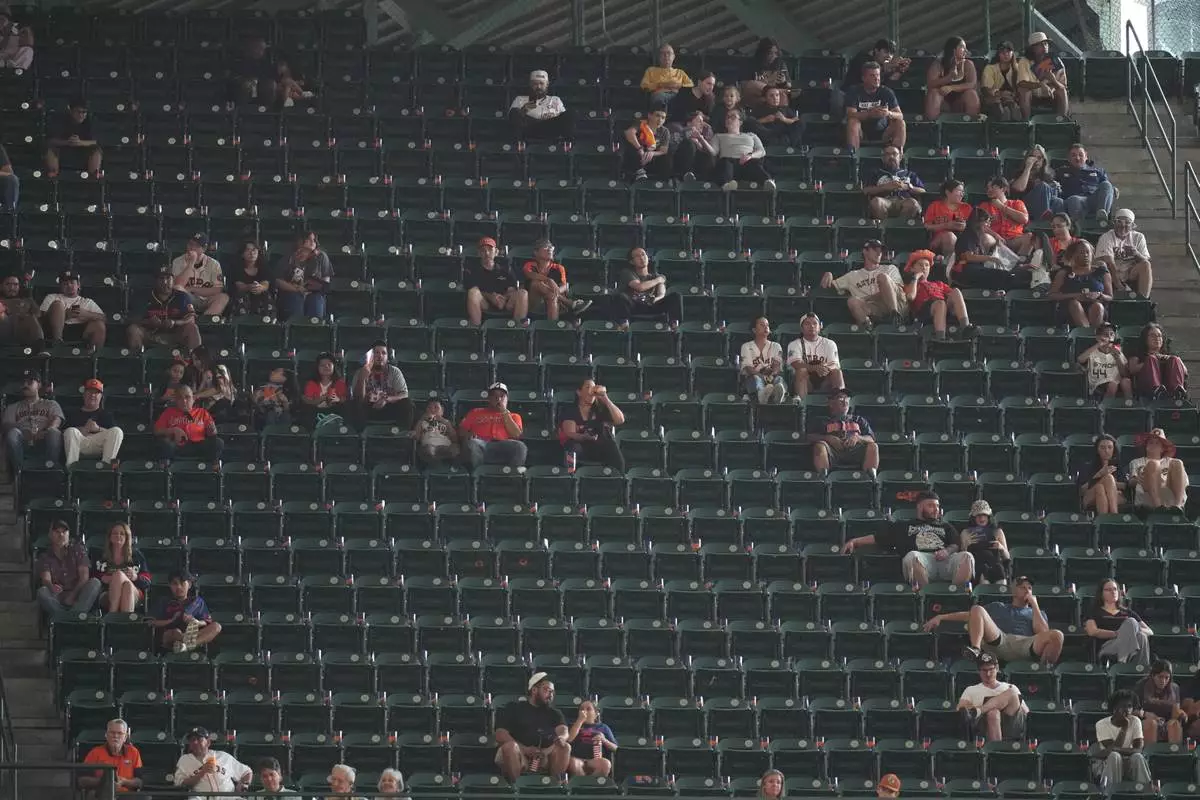
Fans sit among empty seats during the second inning in Game 1 of baseball's American League Wild Card Series between the Houston Astros and Chicago White Sox, Tuesday, Sept. 29, 2026, in Houston. (AP Photo/Karen Warren)
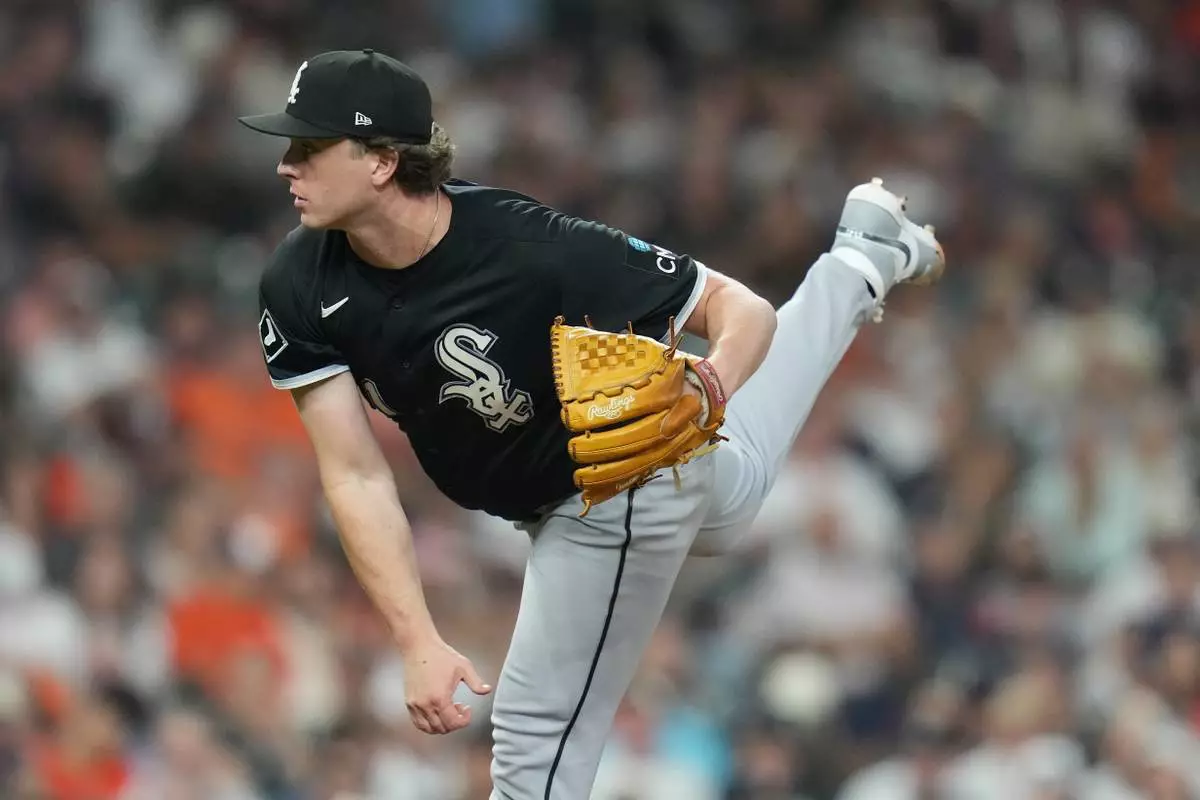
Chicago White Sox relief pitcher Grant Taylor follows through on a pitch during the seventh inning in Game 1 of baseball's American League Wild Card Series against the Houston Astros, Tuesday, Sept. 29, 2026, in Houston. (AP Photo/Karen Warren

Houston Astros starting pitcher AJ Blubaugh (69) delivers during the first inning in Game 1 of baseball's American League Wild Card Series against the Chicago White Sox, Tuesday, Sept. 29, 2026, in Houston. (AP Photo/Karen Warren)
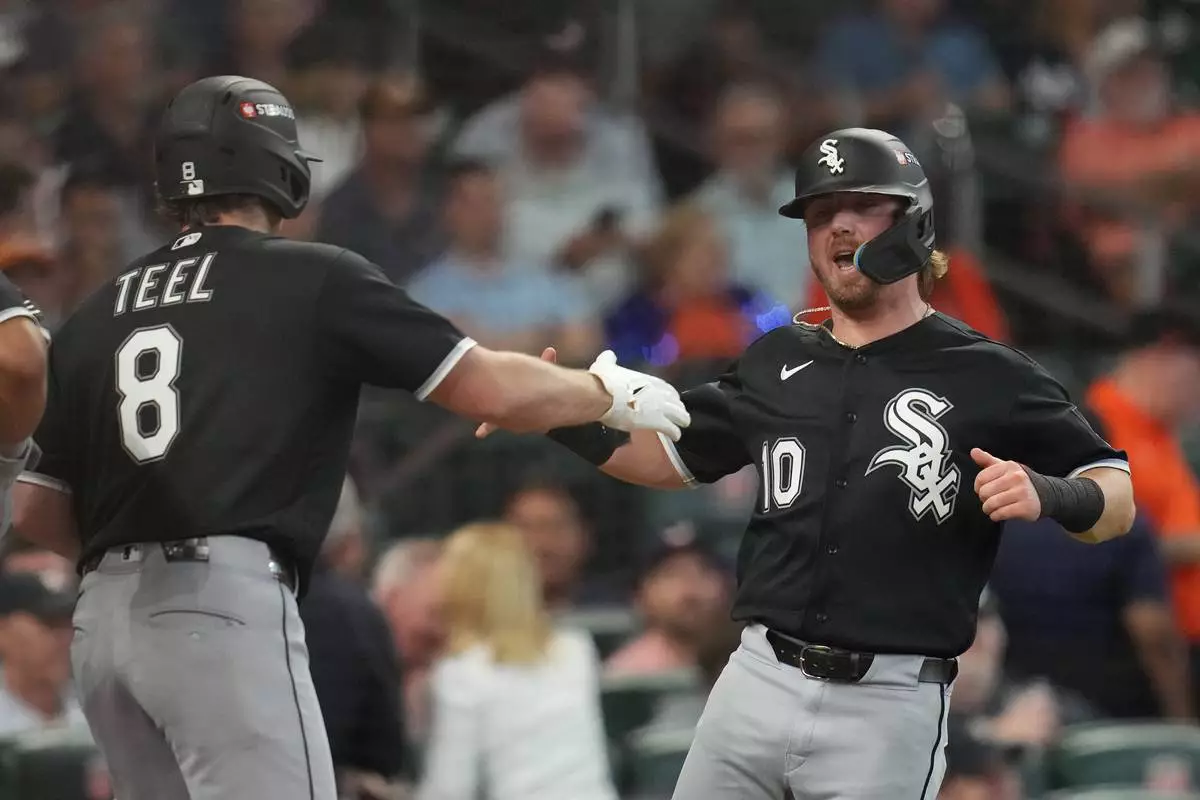
Chicago White Sox's Chase Meidroth (10) celebrates with Kyle Teel (8) after scoring off a 2-run single hit by by Sam Antonacci during the second inning in Game 1 of baseball's American League Wild Card Series against the Houston Astros, Tuesday, Sept. 29, 2026, in Houston. (AP Photo/Karen Warren)
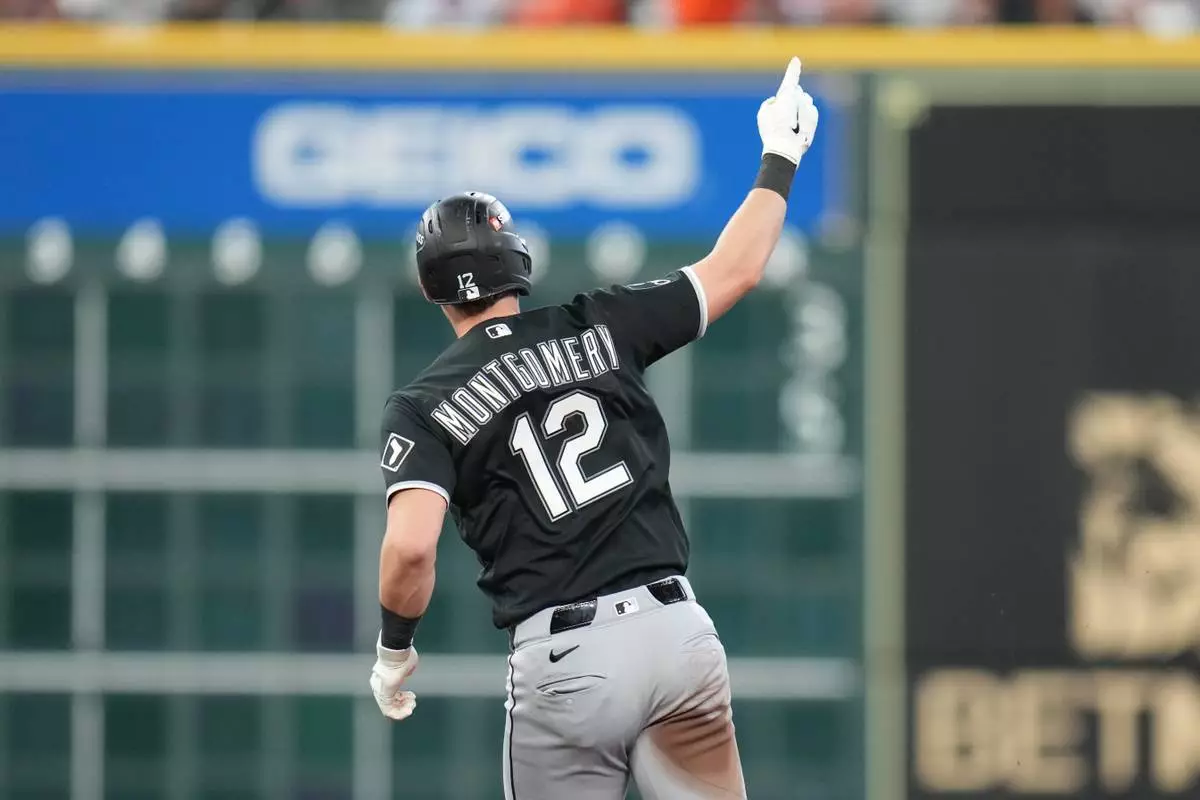
Chicago White Sox's Colson Montgomery (12) runs the bases after hitting a solo home run during the fourth inning in Game 1 of baseball's American League Wild Card Series against the Houston Astros, Tuesday, Sept. 29, 2026, in Houston. (AP Photo/Karen Warren)