Skip to Content Facebook Feature Image

Insanity is the only explanation for mass shooting at Colorado supermarket, defense says

News

Insanity is the only explanation for mass shooting at Colorado supermarket, defense says
News

News

Insanity is the only explanation for mass shooting at Colorado supermarket, defense says

2024-09-21 02:32 Last Updated At:02:40

BOULDER, Colo. (AP) — A mentally ill man carefully amassed guns and ammunition to kill as many people as possible before pursuing and fatally shooting 10 people at a Colorado supermarket in 2021, proving he knew exactly what he was doing, a prosecutor told jurors Friday.

Ahmad Alissa's decision to buy steel-piercing bullets and an optic sight that put a red dot on his victims, before firing multiple times at all but one of his victims shows he acted with intent and was not insane at the time, Assistant District Attorney Ken Kupfner said during closing arguments in Alissa's trial. Everyone who was shot died in the attack.

Alissa, who has schizophrenia, has pleaded not guilty by reason of insanity in the attack at the store in the college town of Boulder.

Mental illness is not the same thing as insanity under the law. In Colorado, insanity is defined as having a mental disease so severe it is impossible for a person to tell the difference between right and wrong.

One of Alissa's attorneys, Kathryn Herold, accused prosecutors of trying to appeal to the emotions of jurors by presenting graphic videos of the attack and detailed testimony from victims, even though no one disputed Alissa was the shooter. While two state psychologists appointed by the court found that Alissa was sane at the time of the attack, Herold said they had some reservations. She told jurors that they are the ones who must decide whether he was insane or not.

“When you remove that emotion, it is clear that insanity is the only explanation for this tragedy,” she told them.

Alissa told the state psychologists that he heard voices that were yelling in his head, including what he described as “killing voices” right before the shooting. The psychologists said he never provided details about the voices and whether they said anything specific. However, Alissa did tell them that he thought the voices might stop if he committed a mass shooting.

Herold asked jurors to imagine what it was like to hear voices in your head, yelling in court: “Kill, kill, kill!”

Kupfner told jurors that Alissa fired his first shot at his second victim, Kevin Mahoney, in the parking lot after bracing himself on the hood of a car so he could take better aim with his semi-automatic pistol, which resembled an AR-15 rifle, Kupfner said. Alissa then pursued Mahoney as he tried to get back to the store.

“The defendant was tenacious and he was relentless,” Kupfner said.

During two weeks of trial, the families of those killed saw surveillance and police body camera video of the shooting. Survivors testified about how they fled, helped others to safety and hid. An emergency room doctor crawled onto a shelf and hid among bags of chips.

Herold disputed comments that witnesses said Alissa made during the attack, including “This is fun,” arguing that was out of step with the lack of emotion the experts found when they met with Alissa. She said she thought their brains were trying to make sense of what had happened.

Several members of Alissa’s family, who immigrated to the United States from Syria, testified that starting a few years earlier he had become withdrawn and spoke less. He later began acting paranoid and showed signs of hearing voices, and his condition worsened after he got COVID-19 in late 2020, they said.

Alissa’s mother told the court that she thought her son was “sick.” His father testified that he thought Alissa could be possessed by a djin — an evil spirit — and that his condition was shameful for his family.

His parents and some of Alissa's siblings sat in the court gallery for the first time during the trial on Friday, just a few feet behind him. Alissa fidgeted during the arguments, sometimes appearing to be paying attention to the attorneys and other times appearing distracted and looking around the room.

Relatives of the victims mostly sat on the other side of the courtroom.

Alissa is charged with 10 counts of first-degree murder, multiple counts of attempted murder and other offenses, including having six high-capacity ammunition magazine devices banned in Colorado after previous mass shootings.

Alissa started shooting immediately after getting out of his car at the store on March 22, 2021, killing most of the victims in just over a minute. He killed a police officer who responded to the attack and then surrendered after another officer shot him in the leg.

Alissa got an adrenaline rush and a sense of power from shooting people, Kupfner argued, though prosecutors did not offer any motive for the attack. Kupfner said Alissa first began searching for public places like bars and restaurants in Boulder to attack, before focusing his research on large stores the day before the shooting. Alissa pulled into the first supermarket he encountered as he entered Boulder on his drive from his home in the Denver suburb of Arvada, he said.

The defense did not have to provide any evidence in the case and did not present any experts to say he was insane.

However, the defense pointed out that the state psychologists did not have full confidence in their sanity finding. That was largely because Alissa did not provide them more information about what he was experiencing, even though it could have helped his case.

The experts also said they thought the voices he was hearing played some role in the attack and they did not believe it would have happened if Alissa were not mentally ill.
Trial of man who killed 10 at Colorado supermarket turns to closing arguments
Trial of man who killed 10 at Colorado supermarket turns to closing arguments

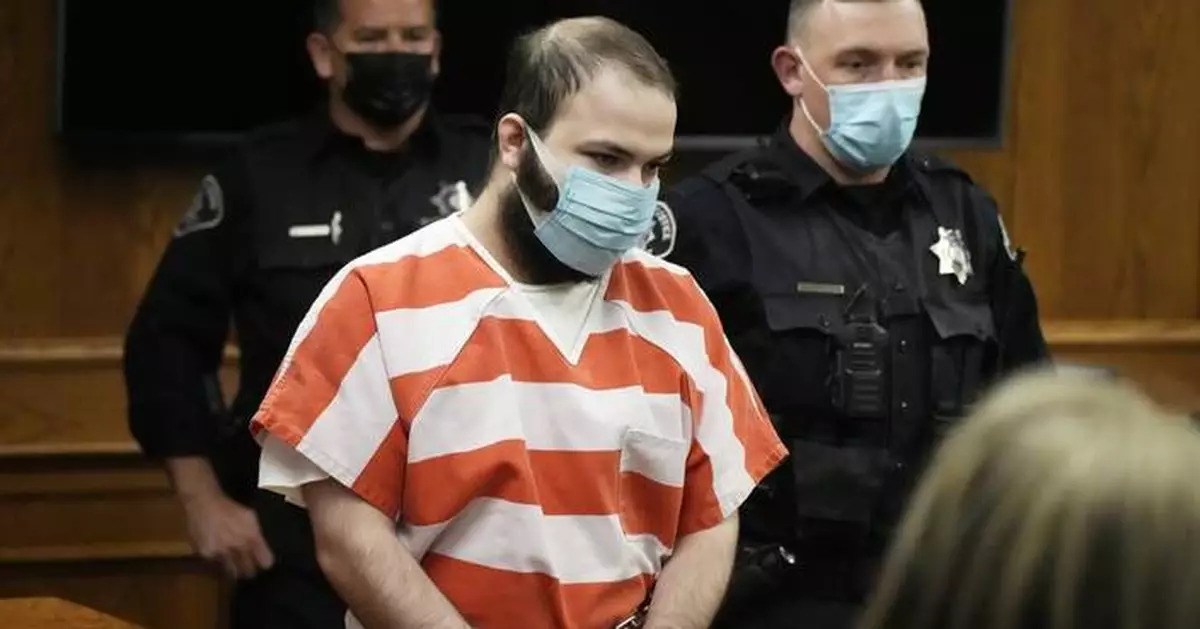
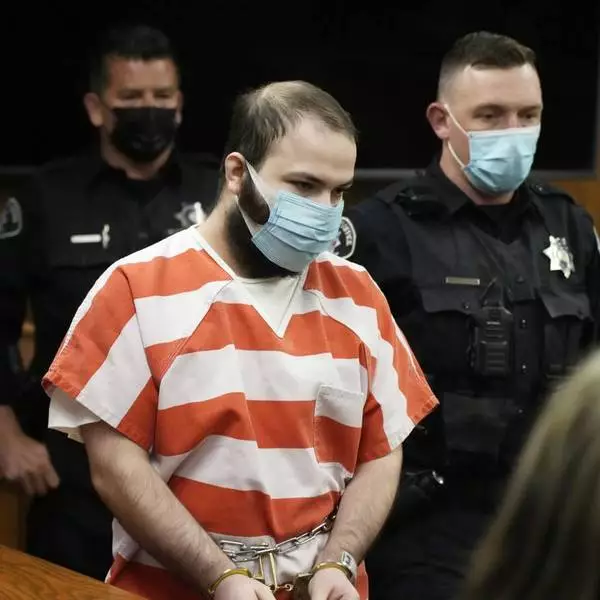
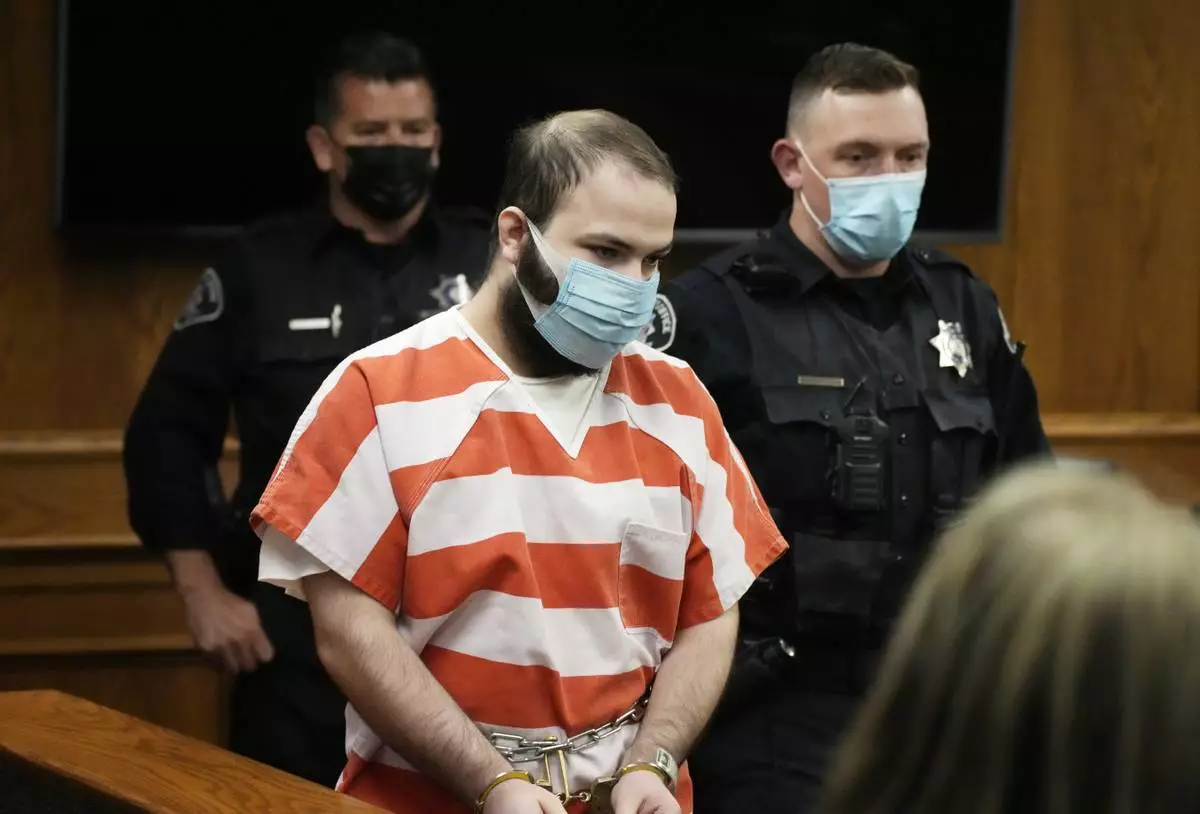
FILE - Ahmad Al Aliwi Alissa, accused of killing 10 people at a Colorado supermarket in March 2021, is led into a courtroom for a hearing, Sept. 7, 2021, in Boulder, Colo. (AP Photo/David Zalubowski, Pool, File)
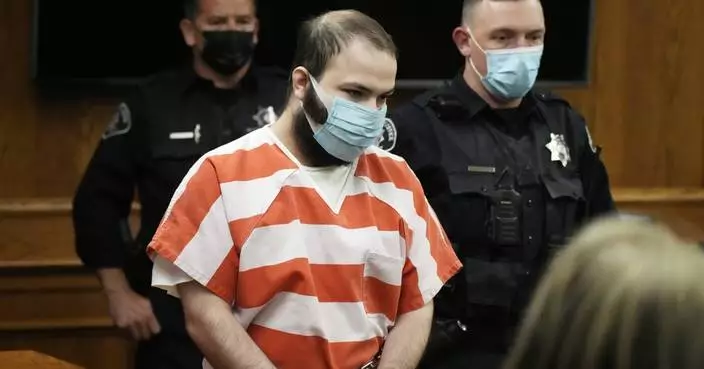
FILE - Ahmad Al Aliwi Alissa, accused of killing 10 people at a Colorado supermarket in March 2021, is led into a courtroom for a hearing, Sept. 7, 2021, in Boulder, Colo. (AP Photo/David Zalubowski, Pool, File)

Trial of man who killed 10 at Colorado supermarket turns to closing arguments
Trial of man who killed 10 at Colorado supermarket turns to closing arguments

Glenn Hall, a Hockey Hall of Famer whose ironman streak of 502 starts as a goaltender remains an NHL record, has died. He was 94.

Nicknamed “Mr. Goalie,” Hall worked to stop pucks at a time when players at his position were bare-faced, before masks of any kind became commonplace. He did it as well as just about anyone of his generation, which stretched from the days of the Original Six into the expansion era.

A spokesperson for the Chicago Blackhawks confirmed the team received word of Hall’s death from his family. A league historian in touch with Hall’s son, Pat, said Hall died at a hospital in Stony Plain, Alberta, on Wednesday.

A pioneer of the butterfly style of goaltending of dropping to his knees, Hall backstopped Chicago to the Stanley Cup in 1961. He won the Conn Smythe Trophy as most valuable player of the playoffs in 1968 with St. Louis when the Blues reached the final before losing to Montreal. He was the second of just six Conn Smythe winners from a team that did not hoist the Cup.

His run of more than 500 games in net is one of the most untouchable records in sports, given how the position has changed in the decades since. Second in history is Alec Connell with 257 from 1924-30.

“Glenn was sturdy, dependable and a spectacular talent in net,” Commissioner Gary Bettman said. “That record, set from 1955-56 to 1962-63, still stands, probably always will, and is almost unfathomable — especially when you consider he did it all without a mask.”

Counting the postseason, Hall started 552 games in a row.

Hall won the Calder Trophy as rookie of the year in 1956 when playing for the Detroit Red Wings. After two seasons, he was sent to the Black Hawks along with legendary forward Ted Lindsay.

Hall earned two of his three Vezina Trophy honors as the league's top goalie with Chicago, in 1963 and '67. The Blues took him in the expansion draft when the NHL doubled from six teams to 12, and he helped them reach the final in each of their first three years of existence, while winning the Vezina again at age 37.

Hall was in net when Boston's Bobby Orr scored in overtime to win the Cup for the Bruins in 1970, a goal that's among the most famous in hockey history because of the flying through the air celebration that followed. He played one more season with St. Louis before retiring in 1971.

“His influence extended far beyond the crease," Blues chairman Tom Stillman said. “From the very beginning, he brought credibility, excellence, and heart to a new team and a new NHL market.”

A native of Humboldt, Saskatchewan, Hall was a seven-time first-team NHL All-Star who had 407 wins and 84 shutouts in 906 regular-season games. He was inducted into the Hall of Fame in 1975, and his No. 1 was retired by Chicago in 1988.

Hall was chosen as one of the top 100 players in the league's first 100 years.

Blackhawks chairman and CEO Danny Wirtz called Hall an innovator and “one of the greatest and most influential goaltenders in the history of our sport and a cornerstone of our franchise.”

“We are grateful for his extraordinary contributions to hockey and to our club, and we will honor his memory today and always,” Wirtz said.

The Blackhawks paid tribute to Hall and former coach and general manager Bob Pulford with a moment of silence before Wednesday night’s game against St. Louis. Pulford died Monday.

A Hall highlight video was shown on the center-ice videoboard. The lights were turned off for the moment of silence, except for a spotlight on the No. 1 banner for Hall that hangs in the rafters at the United Center.

Fellow Hall of Famer Martin Brodeur, the league's leader in wins with 691 and games played with 1,266, posted a photo of the last time he saw Hall along with a remembrance of him.

“Glenn Hall was a legend, and I was a big fan of his,” Brodeur said on social media. “He set the standard for every goaltender who followed. His toughness and consistency defined what it meant to play.”

AP Sports Writer Jay Cohen in Chicago contributed to this report.

AP NHL: https://apnews.com/hub/nhl

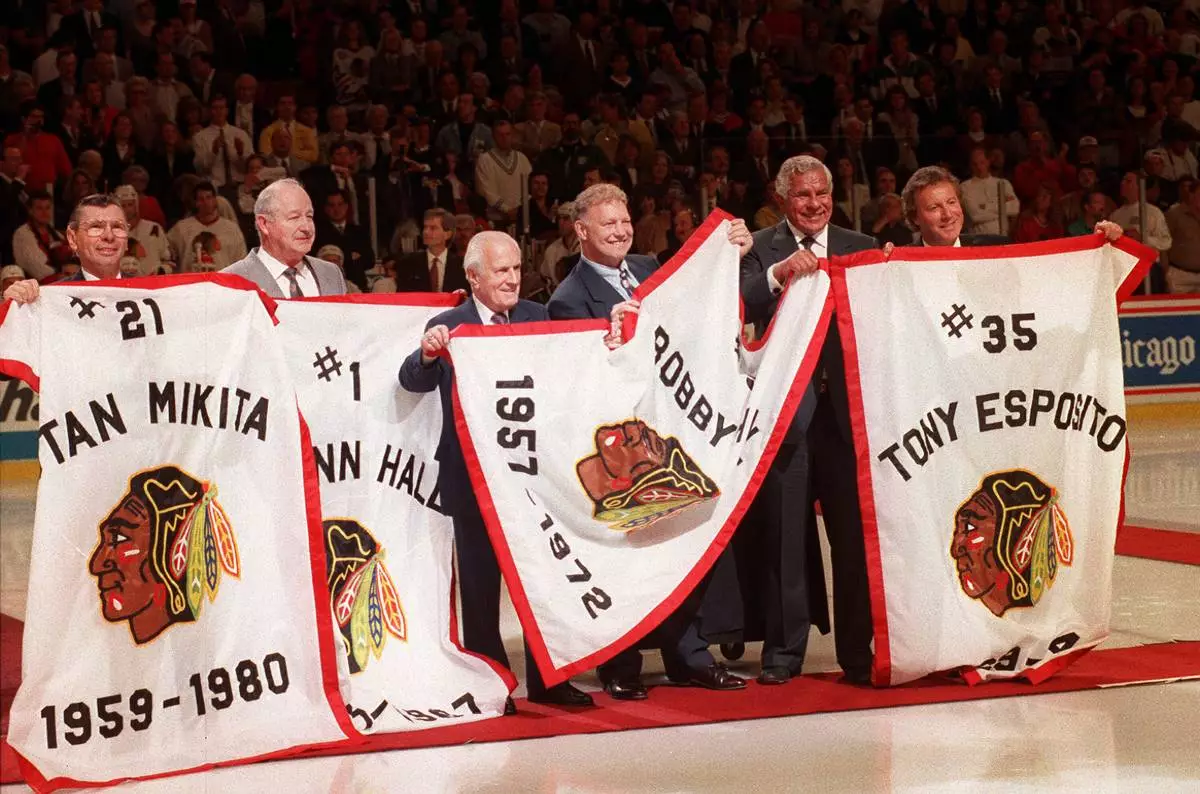
FILE - Glenn Hall, second from left, stands with fellow former Chicago Blackhawks players Stan Mikita, former general manager Tommy Ivan, Bobby Hull, Bill Wirtz and Tony Esposito during a pre-game ceremony at the Chicago Stadium in Chicago, Ill., April 14, 1994. (AP Photo/Fred Jewell, File)

FILE - Glenn Hall, second from left, stands with fellow former Chicago Blackhawks players Stan Mikita, former general manager Tommy Ivan, Bobby Hull, Bill Wirtz and Tony Esposito during a pre-game ceremony at the Chicago Stadium in Chicago, Ill., April 14, 1994. (AP Photo/Fred Jewell, File)

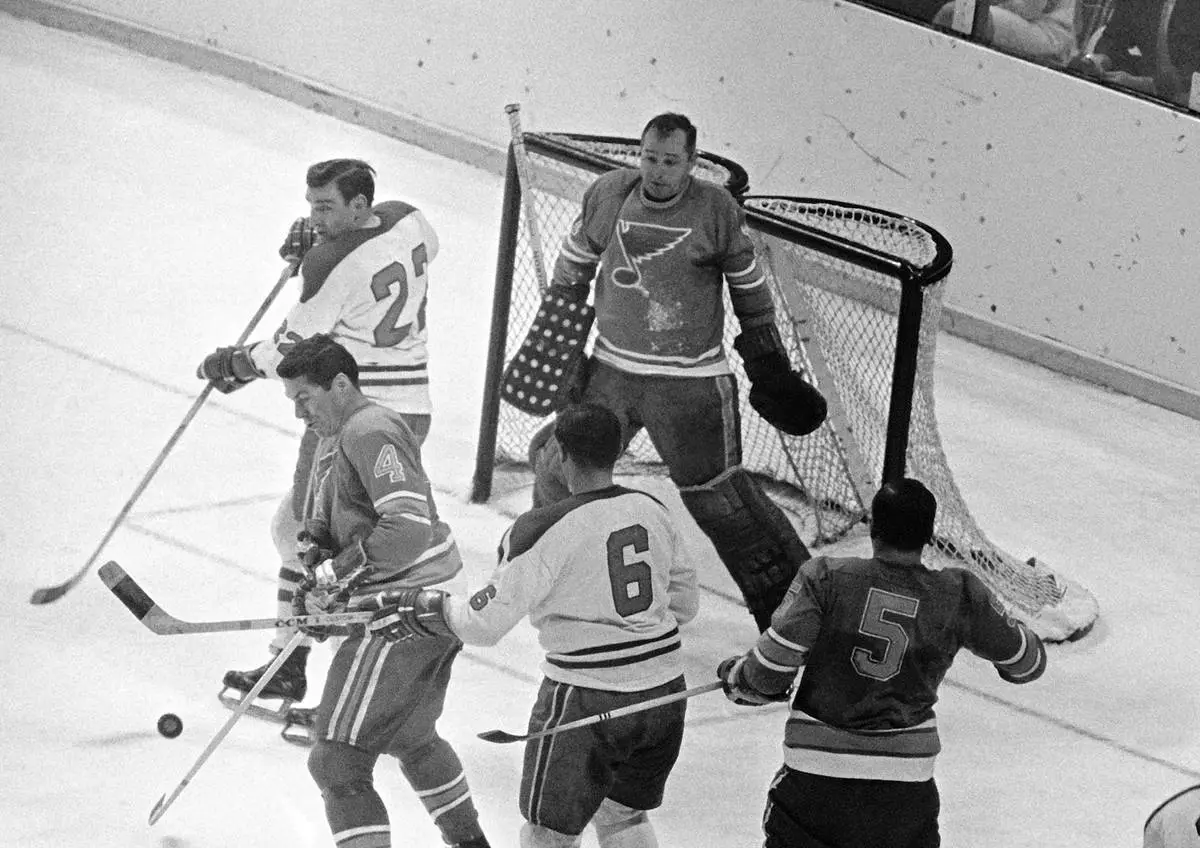
FILE - St. Louis Blues goalie Glenn Hall, top right, is pinned to his net waiting to make a save on a Montreal Canadians shot as Blues' Noel Picard (4) tries to block the puck while Canadiens' John Ferguson (22) and Ralph Backstorm wait for a rebound in the third period of their NHL hockey Stanley Cup game, May 5, 1968. (AP Photo/Fred Waters, File)

FILE - St. Louis Blues goalie Glenn Hall, top right, is pinned to his net waiting to make a save on a Montreal Canadians shot as Blues' Noel Picard (4) tries to block the puck while Canadiens' John Ferguson (22) and Ralph Backstorm wait for a rebound in the third period of their NHL hockey Stanley Cup game, May 5, 1968. (AP Photo/Fred Waters, File)

Recommended Articles