The world's first 150,000-deadweight tonnage (DWT) smart aquaculture vessel Guoxin 2-1, a floating fish farm, is under construction in Qingdao City of east China's Shandong Province, and set to be operational in 2025.
The mega vessel measures 245 meters in length and 45 meters in width. It has 15 breeding cabins, each larger than two standard swimming pools. As a sister ship of "Guoxin 1", "Guoxin 2-1" has carried out more than 160 optimizations and innovations in terms of functional layout and new energy utilization.
Guoxin 1 has sailed for nearly 14,000 nautical miles to the Yellow Sea, East China Sea and South China Sea where different fish can be cultivated in their ideal temperatures and produced 2,700 tons of yellow croakers since its launch in May 2022.
"While retaining the hoisting method, we have employed an approach of side entry to send fish fry into the cabin. Holes are added on ship's side so that the fish fry can be directly transported to the breeding cabins, which greatly improves the efficiency and also reduces the damage rate," said Tian Neidong, a project director of Guoxin China Shipbuilding Qingdao Marine Technology.
In order to realize intelligent fish farming, the tanks are centrally controlled. Operations on board the ship are monitored with underwater cameras, sensors and a self-feeding system, as well as connectivity with the company's shore-based offices to monitor the fish.
The fish rearing density in the tanks is four to six times higher than in traditional aquaculture cages and the aquaculture cycle is shortened by 30 percent. In addition, the fish survival rate and the rate of weight gain are also increased.
"We have installed more than 2,000 sensors in various areas of the ship, which can transmit different data such as water temperature, water quality, and oxygen content in the breeding cabins to the monitoring room in real time, and then transmit it to the shore-based monitoring center through the ship-shore integrated system, realizing the interconnection between the aquaculture vessels and the land, and among the aquaculture ships," said Tian.
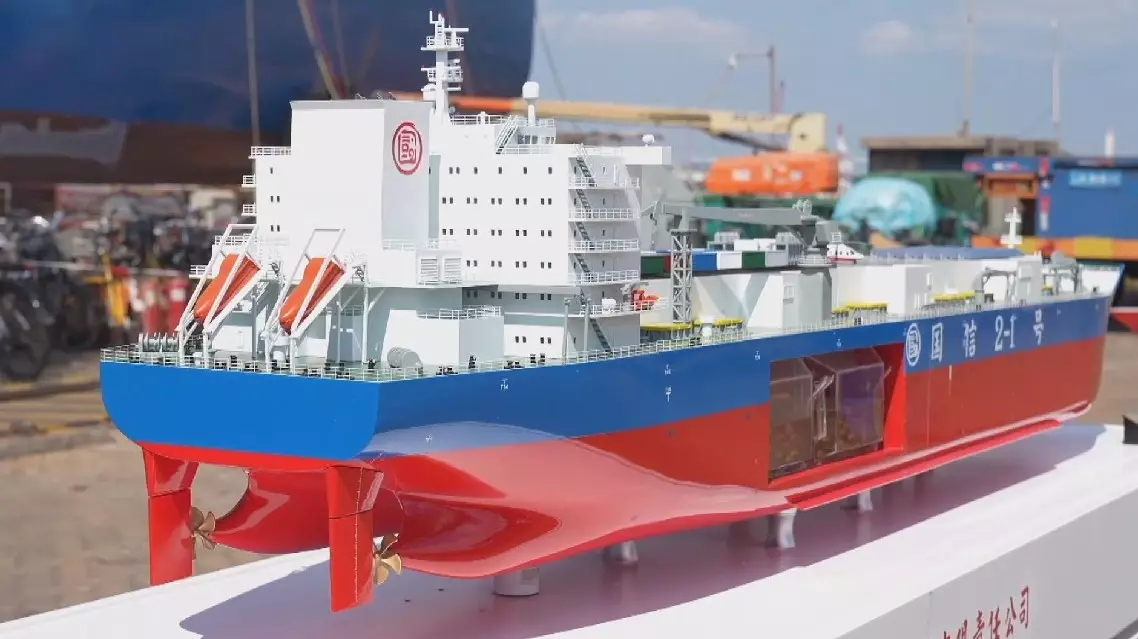
World's first 150,000-DWT offshore fish farming vessel to go operational in 2025
A growing number of motorists in Iraq are turning to liquefied petroleum gas (LPG) as a cost-effective and readily accessible alternative to gasoline, a shift driven by mounting concerns over fuel prices, supply reliability and declining fuel quality, with implications that extend beyond household savings to Iraq's broader energy sector.
An auto workshop in Erbil, capital of Iraq's Kurdistan region, is one of many helping Iraqi motorists switch from gasoline to LPG. By installing an additional fuel system, drivers can reduce their reliance on gasoline while keeping the option to use it. For many drivers, the main motivation for adding the LPG system is economical.
"The difference is going to be very significant. Instead of spending 350,000 dinars (around 230 U.S. dollars) per month on gasoline, I'll now spend around 60,000 dinars on gas. Overall, this is going to make a very big difference in my running costs," said Haider Baha-Adin, an Iraqi driver.
But it's not just about saving money. For many motorists, switching to LPG also means avoiding long waits at gasoline stations.
"Just to get gasoline, I sometimes have to wait in line for three hours before I reach the station. With gas, that isn't the case. There are no such queues, so I can fill up very easily," said Baha-Adin.
The growing demand for LPG is also keeping mechanics busy. At the workshop in Erbil, technicians install LPG systems in around 5 to 10 vehicles a day. Installation costs vary depending on the vehicle and the type of system, ranging from several hundred to more than 800 U.S. dollars.
But cost and convenience aren't the only factors behind the shift. Workshop owner Saif Saad says concerns over declining gasoline quality are also pushing drivers toward LPG.
"The gasoline is not good, its octane rating has been declining, and its quality is poor. People are worried about their cars. GDI (gasoline direct injection) vehicles, GDI engines, and regular engines experience knocking and delayed combustion in the chamber," said Saif Saad, owner of the World Gas Systems workshop.
However, the growing demand is also creating challenges. Saad say his workshop is facing difficulties securing the equipment needed for LPG installations, especially with the current instability in the region which has disrupted supply chains.
Beyond the savings for motorists, the growing demand for alternative fuels could also have wider economic implications, creating new opportunities for investment in Iraq's energy sector.
"The Kurdistan Regional Government has a plan to invest in gas along with the oil because we used to invest in oil only, but nowadays the government is looking for alternatives, because that's a new, emerging trend and an emerging business for the government to help with the budget at the same time, to help the citizen. The government is trying to focus on LPG and electric vehicles," said Nabaz Nawzad, dean of the College of Administration and Economy at Lebanese French University in Erbil.
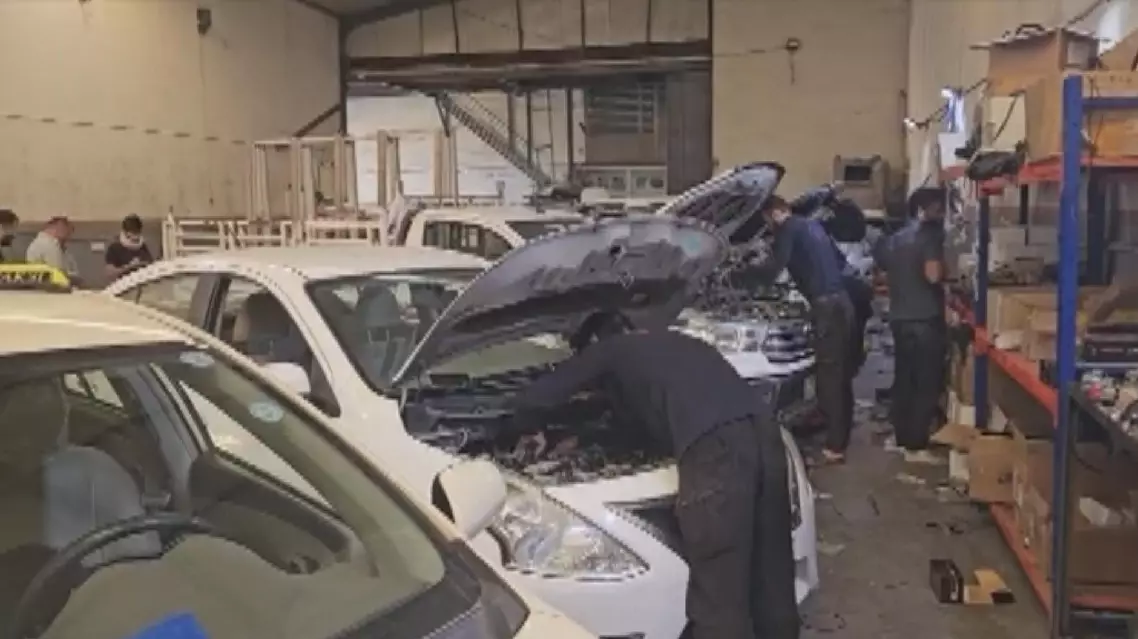
Iraqi motorists turn to LPG amid fuel price hikes, quality concerns