Many traditional industries in China are showcasing their latest products and innovations towards green and low‑carbon development at the 2024 World Manufacturing Convention which kicked off on Friday in east China's Aunhui Province.
In July this year, China issued a guideline on accelerating the green development of the manufacturing industry to speed up the construction of a modern industrial system and promote new industrialization.
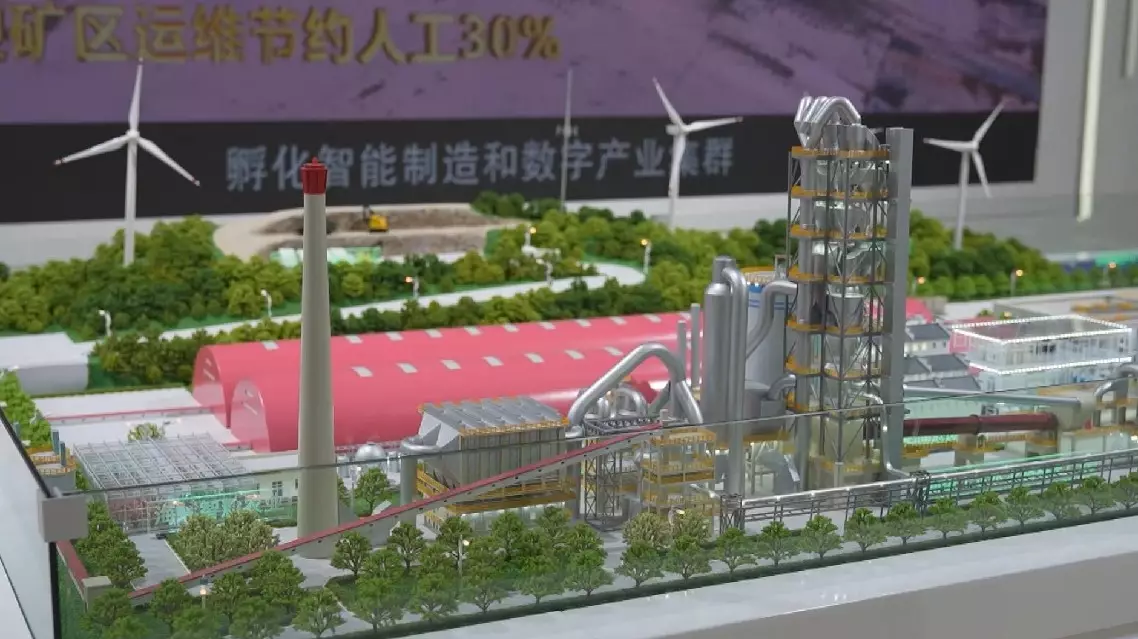
At the four-day event, themed "Intelligent Manufacturing for a Better Future", a cement company is displaying a model of a smart factory powered by green electricity.
"The car is powered by the energy storage of wind power and solar power in our factory. The electric mining cars are unmanned. The entire process, from the mining end, achieves high-end, intelligent, and green operations. The waste heat of our cement plant can be recycled to generate electricity that can supply 50 percent of our plant's needs," said the exhibitor of the cement company. The automobile industry is also transforming and upgrading. Many regions across China have prioritized new energy vehicles as a strategic emerging industry. The new energy vehicles are also a highlight of the exhibition at the convention.
Apart from using clean energy, products with eye-catching appearance designs and excellent performance were also highlighted.
With the development of the sector of the new energy vehicle, a variety of new products and cutting-edge technologies are also being upgraded, bringing people more new choices.
Around 1,000 guests from both at home and abroad are attending the convention.
Held since 2018, the World Manufacturing Convention has attracted over 600 top executives from Fortune 500 companies to date. More than 3,600 projects have been signed at the event, generating actual investment of over 1.5 trillion yuan (about 212 billion U.S. dollars).
Chinese traditional industries showcase green innovations at World Manufacturing Convention
Flowers with novel appearances drew strong interest from visitors at this year's Hortiflorexpo IPM Beijing, which ran from April 10 to 12.
With more Chinese consumers seeking products that offer emotional value, expo visitors were noticing not only traditional, beautiful flowers, but also those newer, more distinctive varieties.
Among the many blooms on display, those featuring widely recognized icons stood out as especially eye catching.
"This is the Psychopsis papilio, also known as 'Monkey King'. You can see that its flower has three tendrils, which vividly resembles the pheasant feathers worn by Monkey King," said Zha Niyi, an exhibitor, introducing the flower commonly known as the butterfly orchid.
Monkey King, or Sun Wukong, is from a classic Chinese novel, Journey to the West, written by Wu Cheng'en during the Ming Dynasty (1368-1644). Monkey King has stood as one of the most iconic symbols of Chinese culture, embodying generations of Chinese people's imagination of a hero.
This growing consumer interest is also evident in the flowers' sales volumes. In 2025, China’s fresh-cut flower exports surged by over 40 percent, surpassing 200 million U.S. dollars for the first time. Over the past five years, the country's total flower exports have exceeded two billion U.S. dollars.
"This demonstrates that China's flower industry has a solid export base and strong production capacity with the approach of high-quality development," said Zhang Li, deputy director of the Market Circulation Branch of the China Flower Association.
As Chinese consumers become more willing to pay for experiences that generate positive emotions, visitors at the exhibition were increasingly drawn to flowers with cute names and auspicious meanings.
Consumers' growing desire for emotional fulfillment is also driving the wider development in the flower-consumption market. "A single flower can give rise to an entire industry and a whole sector," said Wang Caiyun, president of the Osmanthus Branch of the China Flower Association.
China has grown into the world's largest flower producer, a major consumer, and a leading trading country. Its flower economy now delivers annual output worth more than 520 billion yuan (about 76.16 billion U.S. dollars), driving employment and income growth for more than 220,000 business entities.
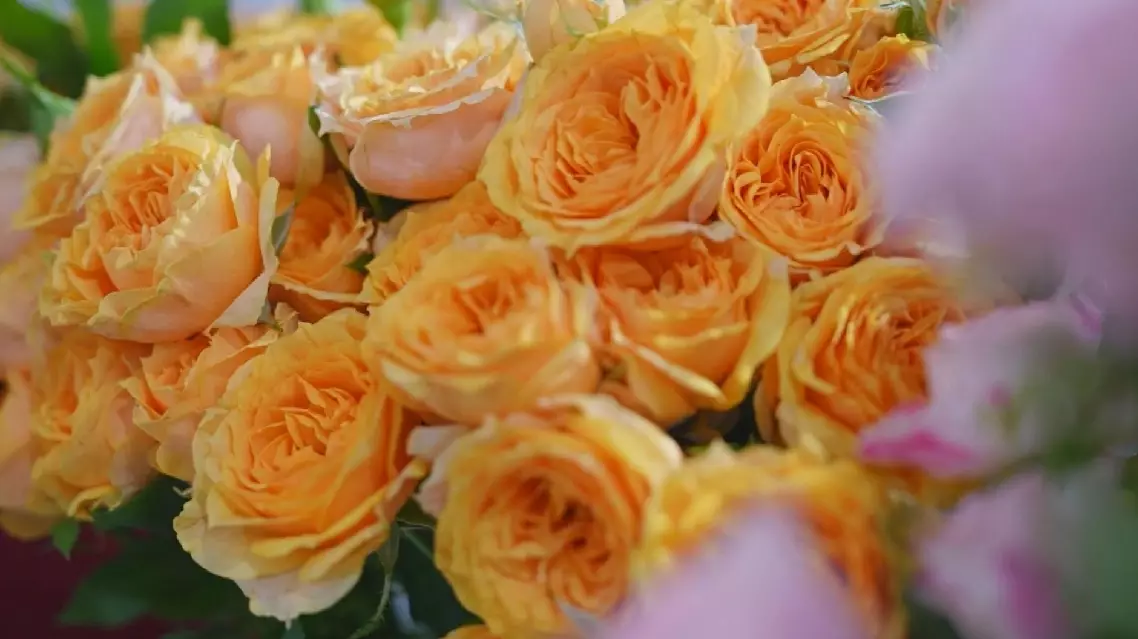
Novel flowers catch eyes at Hortiflorexpo IPM Beijing