Russia said on Saturday that its troops consolidated advantages on multiple fronts, while Ukraine said it struck Russian ammunition depots and airbase in the past day.
The Russian Defense Ministry said on Saturday that the Russian Armed Forces used high-precision weapons and drones to launch a group strike on energy facilities of Ukrainian defense companies, drone production sites and deployment points of Ukrainian troops and weaponry early in the morning.
The Russian Defense Ministry said that in the past day, Russian armed forces consolidated advantages on multiple fronts, repelled several counterattacks by Ukrainian forces, inflicted casualties on Ukrainian troops and destroyed Ukrainian army's weaponry including tanks, armored combat vehicles, and howitzers, while the Russian air defense forces downed 177 Ukrainian drones.
The General Staff of the Ukrainian Armed Forces said on Saturday that the Ukrainian army attacked Russian ammunition depots and radar stations in the Krasnodar Region and near the Tver Region.
Citing sources, Ukrainian national news agency Ukrinform reported on Saturday that the Security Service of Ukraine used drones to hit the Shaykovka military airbase in Russia's Kaluga Region, where TU-22M strategic aircraft are stationed.

Russia consolidates advantages on multiple fronts, Ukraine strikes ammunition depots, airbase
China's commercial satellites have become invisible, essential infrastructure in daily life, driving major changes by helping tracking crops in farmland, inspecting infrastructure and support a growing range of services on the ground.
The outline of the 15th Five-Year Plan (2026-2030), China's latest five-year blueprint which was adopted on Thursday, designated aerospace as one of the strategic emerging industries for priority development.
Among the companies driving the growth China's space sector is Changguang Satellite Technology Co., Ltd. in northeast China's Jilin Province, which has evolved from a research institute into a market-driven commercial space leader.
The company's Jilin-1 constellation, which had its first group of satellites launched back in October 2015, now consists of 144 satellites and is capable of observing any point on the globe about 40 times a day.
Despite these achievements, the company has continued to push for technological innovation, reducing satellite weight while maintaining imaging performance.
"Our Gaofen-06 satellites, along with the Magic Cube and Platform series, weigh about 20 kilograms at the lowest, while their imaging performance remains largely comparable to earlier satellites that weighed more than 400 kilograms," said Zhao Xiangyu, deputy director of the company's Microwave Satellite Research Laboratory.
The Jilin-1 constellation has increasingly integrated into daily life and industrial development. Its high-resolution data supports multiple sectors, from protecting farmland to monitoring urban expansion, bringing tangible changes to people's lives.
"Some projects, such as wind turbines and photovoltaic facilities, are built in remote mountainous areas. Supervising them manually would require significant manpower and efforts. What makes supervision possible today is Jilin-1's ability to frequently obtain large-scale data over vast areas," said Yang Hongwei, director of the Survey and Mapping Division at the Department of Natural Resources of Jilin.
As the 15th Five-Year Plan highlights the development of the space sector, Changguang is accelerating its expansion.
Inside a high-level clean workshop, satellites are being mass-produced. Beyond remote sensing, the company has also expanded into the communications satellite field, achieving technological breakthroughs in low-Earth-orbit satellite internet.
"(In the future research and development,) we aim to combine the technical challenges of traditional remote-sensing satellites with those of high-orbit communications satellites, while also meeting the requirements of modern communications services. These are the key challenges we are working to overcome," said Zhu Ruifei, the company's deputy chief engineer.
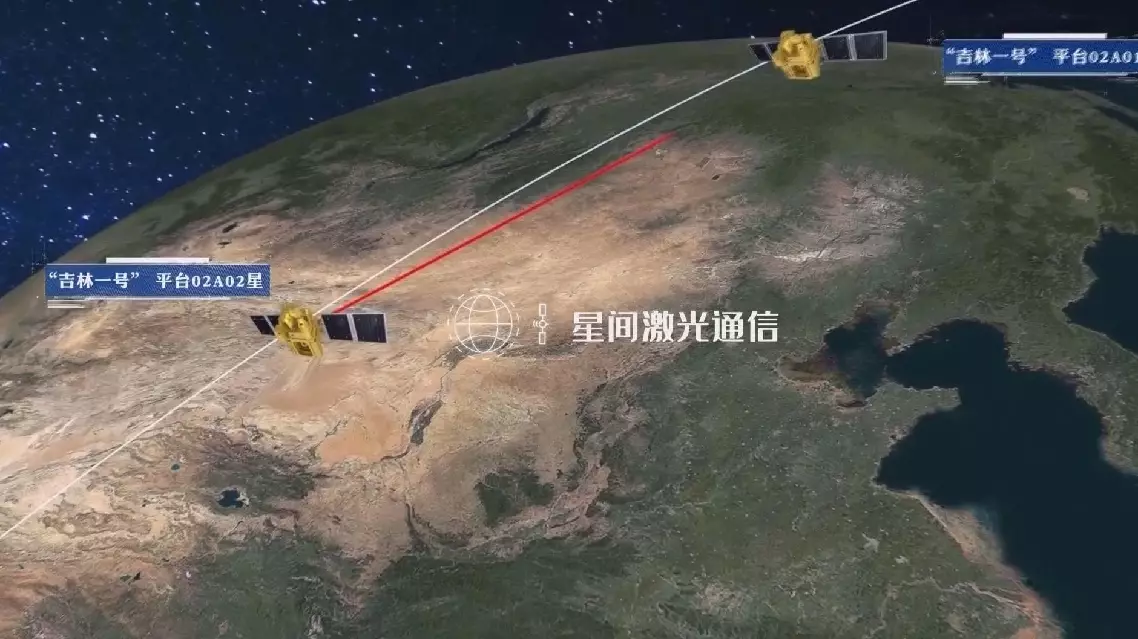
China's commercial satellites drive major changes in daily life