High-yield hybrid rice varieties developed by Chinese scientists have been introduced to Malaysian farmers to help increase production and reduce the Southeast Asian country's reliance on foreign rice.
Rice is a staple food for more than half of the world's population. Ensuring food security relies heavily on increasing rice yields.
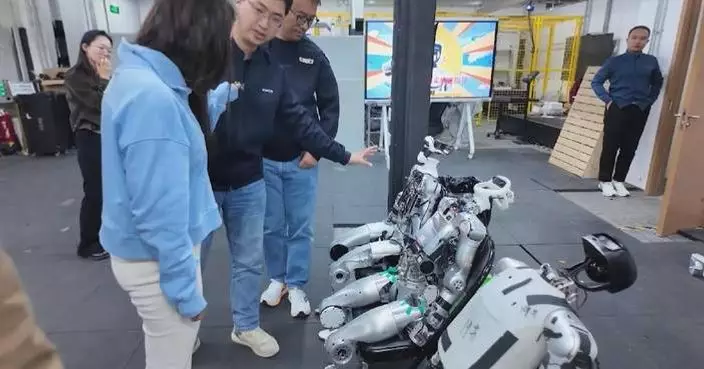
At the Nanfan Breeding Base in Sanya City of south China's Hainan Province, Chinese scientists are making significant advancements in hybrid rice breeding.
"We have a project here with a yield of 22.5 tons per hectare for double-cropping rice in the local area. This can be considered a very high yield level, both in China and even in the world. Rice originated in China. We have very abundant rice-breeding resources. Our rice production is number one in the world. In terms of the foundation of scientific research, the level of scientific research, and the level of high-yield breeding. We can even say that we are leading in these areas," said Tu Shengbin, an associate professor of the Chengdu Institute of Biology under the Chinese Academy of Sciences.
Hybrid rice has long been promoted across Asia as a solution to hunger. It continued to push the boundaries of agricultural productivity under the pioneering vision of Yuan Longping, the "China's Father of Hybrid Rice."
Generally, hybrid rice outperforms conventional varieties by 20 to 30 percent. Yuan's hybrid rice has been cultivated in over 60 countries and regions.
Research teams, like Professor Tu's, are sharing this hybrid technology with neighboring countries.
"We think our varieties can achieve high yields under conditions of high fertility and abundant water and also in the neighboring countries around the South China Sea and ASEAN countries through simplified cultivation," Tu said.
The similar climates of China and ASEAN countries enable the sharing of agricultural advancements with nations like Malaysia.
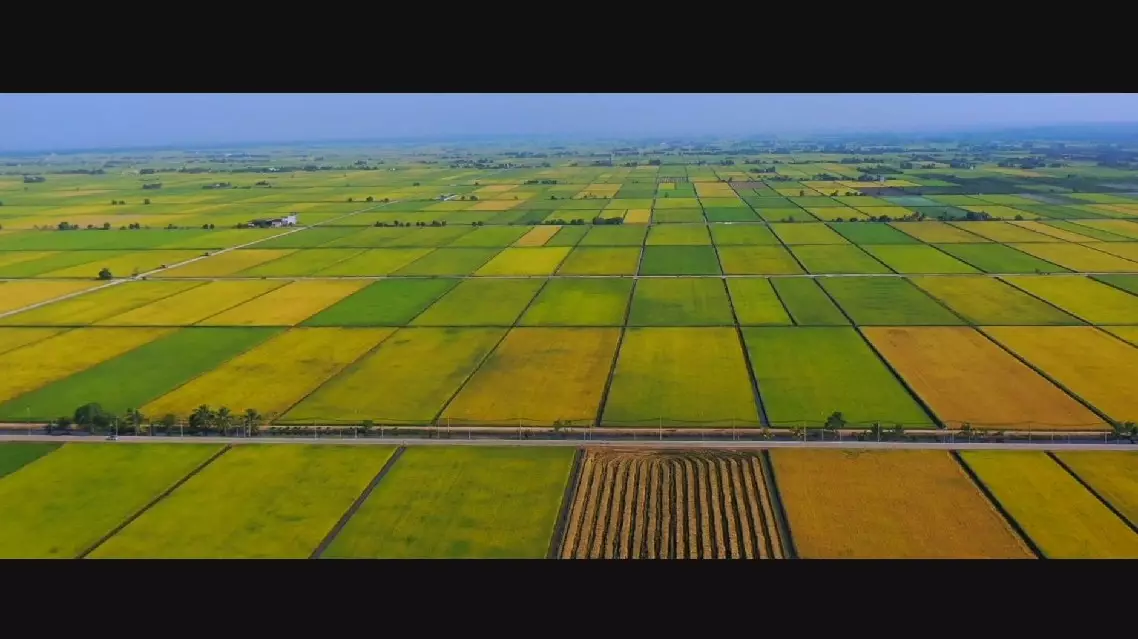
In Sekinchan, Malaysia's rice belt, farms are large and yield around eight tons of rice per hectare. But the national average remains just four tons of rice per hectare.
"I've been planting rice with my mom since my childhood. One problem in Malaysia is that we don't have enough rice, and we rely heavily on imported rice. This is a huge blow for the economy of Malaysia. So, we've made a lot of efforts on rice cultivation in the past six decades, and so has our government, but we still couldn't reach a high level," said Allen Lim Mau Soon, managing director of the PLS Marketing (M) SDN BHD.
Since 2018, Professor Tu and his team have frequently visited Sekinchan. In fields where Chinese techniques are implemented, yields have increased to over 12 tons per hectare.
Now, more farmers there have turned to Chinese hybrid rice.
"I've just started planting hybrid rice. I'm not sure how it will turn out, but I hope it will yield good results, because the other varieties we had tried were not very ideal," said Cheah Chean Chia, a local farmer.
"Currently, we have a self-sufficiency ratio in Malaysia only about 65 percent of rice. So, this is an opportunity to have the collaboration with China in terms of introducing hybrid rice,and that the future collaboration is very good for the Malaysian (rice) industry," said Mohamad Zabawi Abdul Ghani, director general of the Malaysian Agricultural Research and Development Institute (MARDI).
The MARDI is expected to sign a Memorandum of Understanding with Professor Tu's institute, with a goal of achieving 80 percent rice self-sufficiency in Malaysia by 2030.
"We want to work with MARDI's research team to adapt hybrid rice to Malaysia's climate, market and consumer needs to study and localize hybrid rice, to lower its costs, and to promote large-scale cultivation. After reducing rice imports and meeting the domestic needs of Malaysian people, they can also export rice to China," Tu said.
"We hope that with China's help, we can grow hybrid rice, increase yields in Malaysia, and make rice more affordable for our people," Lim said.
Chinese hybrid rice helps Malaysia reduce import reliance