Two pairs of giant panda twins, born in 2023, made their much-anticipated public debut on Tuesday at the Qinling Four Rare Animals Science Park in Xi'an, northwest China's Shaanxi Province.
The two pairs are Chang Qing (meaning evergreen in Chinese) and Chang Ning (meaning lasting peace in Chinese), as well as Chang Qing (meaning lasting auspiciousness in Chinese) and Chang Le (meaning lasting happiness in Chinese), respectively.
The four lively pandas put on quite a show -- one showed off an impressive upside-down hook move, while another twirled happily on a play facility. The other two took a more relaxed approach, lying on the ground munching bamboo before tumbling into a playful wrestle once their bellies were full.
The four captive-bred panda cubs are all about two and a half years old, and are already able to eat bamboo skillfully on their own.
Their lively interactions not only entertain visitors but also boost their physical activity, aid digestion, and support healthy growth.
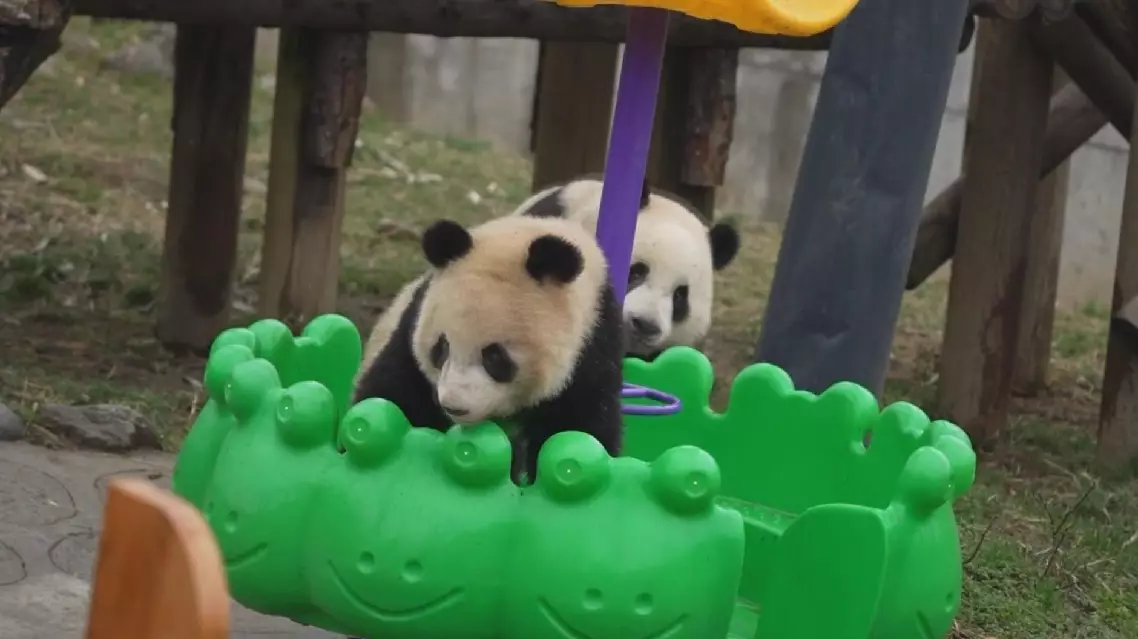
Two pairs of panda twins make public debut in Xi'an
China will accelerate the deep integration of artificial intelligence (AI) with the economy and society with a focus on further empowering manufacturing in 2026, Chinese Minister of Industry and Information Technology Li Lecheng said in Beijing on Thursday.
Li shed light on China's strategic push toward higher-quality economic growth and social development through the "AI Plus" initiative, in a media interview on the sidelines of this year's annual session of the 14th National People's Congress (NPC), the top national legislature, which opened earlier in the day.
His remarks echoed a government work report submitted to the NPC for deliberation on Thursday morning, which highlighted AI as a focal point in technological advancement and said that China will promote faster application of new-generation intelligent terminals and AI agents and encourage large-scale commercial application of AI in key fields.
Li said China will give full play to its strong industrial edge to create more AI-empowered commercial products in such areas as humanoid robots, brain-computer interfaces, and self-driving vehicles, while deeply embedding AI in manufacturing.
In the meanwhile, the country will also step up regulatory efforts to manage AI-related risks, said the minister.
"We will rely on our industrial strength to optimize product supply. We will work hard to promote AI computers, AI mobile phones, and smart homes to better meet the people's needs for a better life. We will vigorously step up the research and iterative updates of the new-generation AI products, including brain-computer interfaces, self-driving vehicles, and humanoid robots, and promote technological breakthroughs and iterations in these fields," said Li.
"We will leverage our rich industrial scenarios to deepen AI applications. 'AI + manufacturing' is a must-to-choose issue, not an optional one, which is why this year we will vigorously promote the integration of AI with manufacturing.' One point I wish to emphasize is that in advancing the artificial intelligence industry, we must ensure the effective coordination of development and security. Artificial intelligence must remain under human direction, serve human needs, and stay firmly subject to human control," said the minister.
Last August, the State Council, China's cabinet, issued a policy directive for the "AI Plus" push, as the country aims to comprehensively create an AI-integrated economy and society by 2035.
A key part of the national strategy is the integration of AI into manufacturing to reshape China's industrial base and enable the country to further climb the global value chain.
The scale of China's core AI industry exceed 1.2 trillion yuan (about 170 billion U.S. dollars) in 2025, with the number of AI-related domestic enterprises reaching 6,200, Li said.
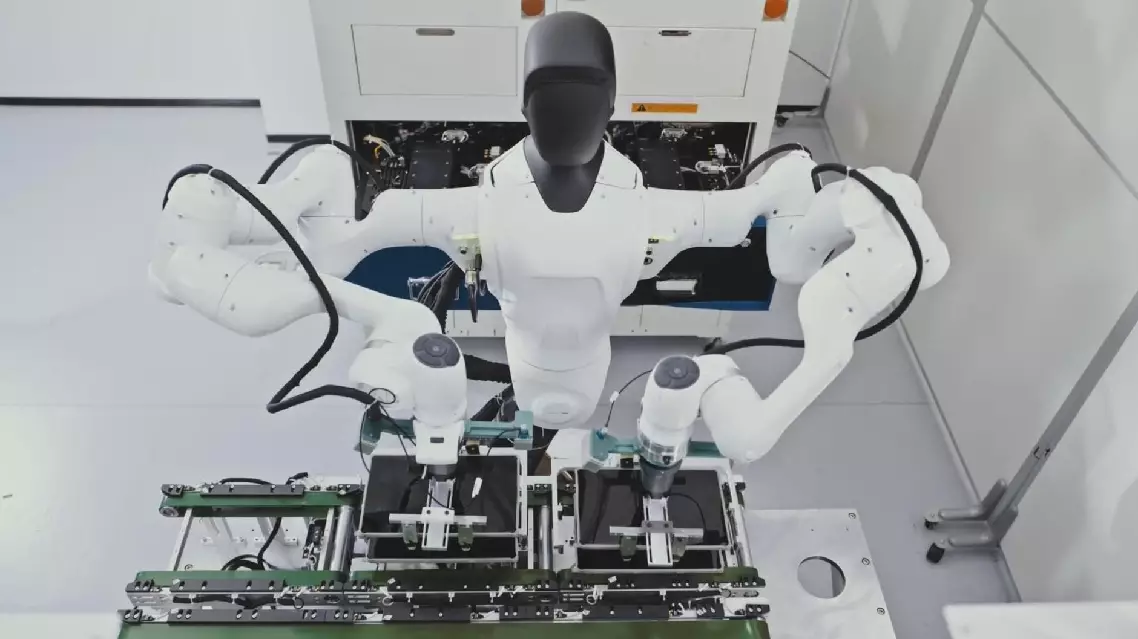
China to deepen sector-wide AI adoption with focus on integration with manufacturing: minister