China's envoy to the United Nations (UN) Fu Cong on Wednesday urged the international community to reject selective counter-terrorism measures and double standards, warning that terrorism's links with conflict, crime, inequality, and emerging technologies pose a grave threat to global peace and security.
Speaking at a UN briefing, Fu said that over the past two decades the UN Global Counter-Terrorism Strategy has played a pivotal role in preventing and combating terrorism, strengthening member states' counter-terrorism capacity, and enhancing international cooperation. But he cautioned that progress has been undermined by the uneven application of counter-terrorism principles, adding that such selective approaches weaken global unity and credibility in the fight against terrorism.
Fu noted that terrorism today is increasingly intertwined with armed conflict, transnational organized crime, social inequality, and the misuse of emerging technologies, interlocking challenges that continue to cast a long shadow over international peace and security.
"We must firmly reject selective approaches and double standards and eliminate the breeding ground for terrorism by reducing conflicts and poverty and by respecting the diversity of civilizations," said Fu.
He stressed that the ninth review of the UN Global Counter-Terrorism Strategy should serve as an opportunity to close these gaps, deepen cooperation, and build greater unity against terrorism, while firmly opposing selective approaches and double standards.
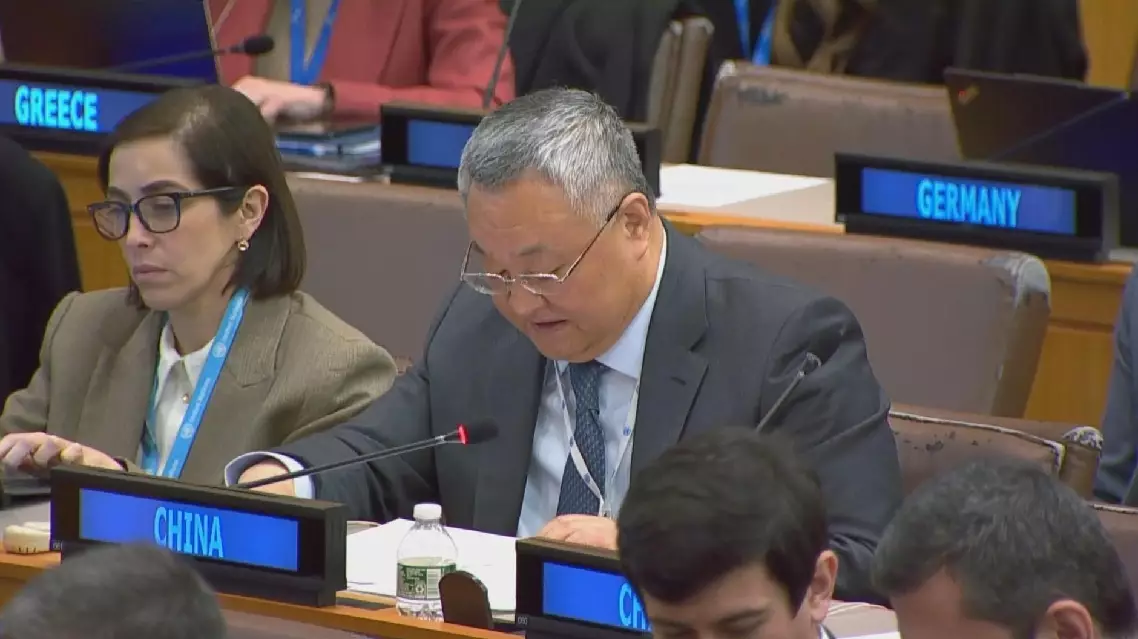
China's UN envoy warns of terrorism's evolving threats, calls for end to double standards
A Chinese mainland spokesperson on Wednesday slammed Taiwan leader Lai Ching-te over his latest remarks on cross-Strait relations, accusing him of promoting secessionism and escalating tensions across the Taiwan Strait.
Chen Binhua, spokesperson for the Taiwan Affairs Office of the State Council, said in a press release that Lai's speech marking his second anniversary in office was "filled with lies and deception, hostility and confrontation."
Chen accused Lai of stubbornly adhering to a secessionist stance in pursuit of "Taiwan independence," while exaggerating the so-called threats from the mainland and intensifying confrontation across the Strait.
Lai played an old trick of advocating the secessionist agenda on one hand and, on the other, calling insincerely for dialogue and exchanges with the mainland, attempting to mislead people in Taiwan and deceive the international community, he said.
Chen said that these common tricks have been seen through by more and more Taiwanese people. Their deceptive and provocative actions will be met with firm opposition from compatriots on both sides and the international community, and are doomed to fail.
Reaffirming the mainland's position on the Taiwan question, Chen said Taiwan has never been a country, is not one now, and will never become one in the future.
He described the Taiwan question as a historical issue left over from a Chinese civil war in the 1940s.
No election result in Taiwan could alter the fact that Taiwan is part of China or sever the historical and legal bonds linking the two sides of the Strait, according to Chen.
The mainland would never allow any person or force to pursue secessionist activities under any pretext, he added.
Calling secessionists "the chief culprit" who undermines cross-Strait peace, Chen said the mainland would continue to uphold the one-China principle and the 1992 Consensus, unite broadly with Taiwan compatriots, combat secessionist activities, and safeguard peace and stability across the Strait.
Central government spokesperson refutes Lai Ching-te's latest remarks, warns against secessionist moves