Skip to Content Facebook Feature Image

Lunar samples from Chang'e-6 mission to be open for research applications

China

China

China

Lunar samples from Chang'e-6 mission to be open for research applications

2024-09-24 09:27 Last Updated At:15:07

Lunar samples from the moon's far side, brought back by China's Chang'e-6 mission in late June, will soon be available for research applications.

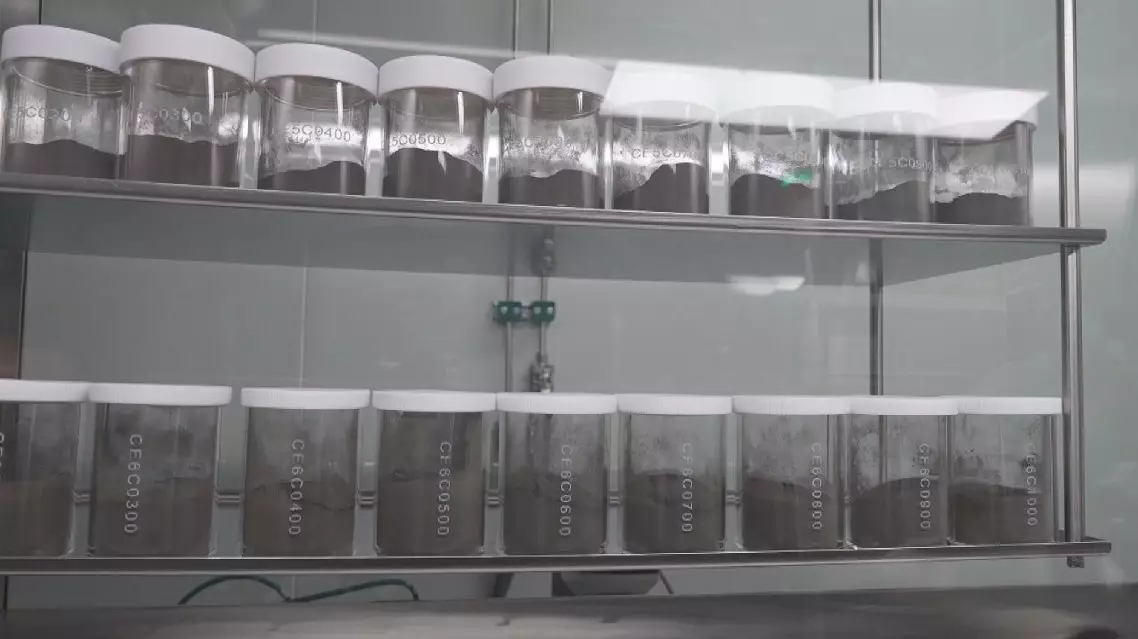
In a historic milestone, the Chang'e-6 returner delivered 1,935.3 grams of lunar samples from the far side of the moon on June 25. This marks the first time that humanity has collected material from this unexplored region, generating significant excitement among scientists who are eager to expand their understanding of the moon through these unique samples.

The Chang'e-6 lunar samples will be distributed to researchers through an open application system. Researchers can visit the Lunar and Deep Space Exploration Scientific Data and Sample Release System on the China's Lunar Exploration and Deep Space Exploration website (www.clep.org.cn) to find detailed information and apply for access to the samples.

"We've only studied the near side of the moon, but there's still half of it we know little about. How different is it from the near side? Why is it different? So far, we've already completed the initial steps of unsealing, sorting and processing the samples, along with conducting preliminary analysis. Around the end of the year, we will distribute the samples to domestic scientists for in-depth research," said Li Chunlai, deputy chief designer of the Chang'e-6 mission.

According to the deputy designer, scientists worldwide are eager to get their hands on the one-of-a-kind samples. While 10 sets of samples have already been collected from the moon's near side, this is the only sample from the far side, making it particularly valuable for advancing lunar studies.

"So far, international applications for samples from the Chang'e-5 mission have closed. As for the Chang'e-6 samples, there will be some time before they are accessible for global research. It's customary for our Chinese scientists to study the samples for some time before such research applications are open to international researchers," he added.

The Chang'e-6 probe was launched from the Wenchang Spacecraft Launch Site in south China's Hainan Province on May 3, 2024. It touched down on the far side of the moon on June 2. During its two-day stay, Chang'e-6 used a scoop and drill, collecting nearly two kilograms of lunar material. On June 25, upon its return it brought back the samples and made a landing in north China.
Lunar samples from Chang'e-6 mission to be open for research applications

Lunar samples from Chang'e-6 mission to be open for research applications
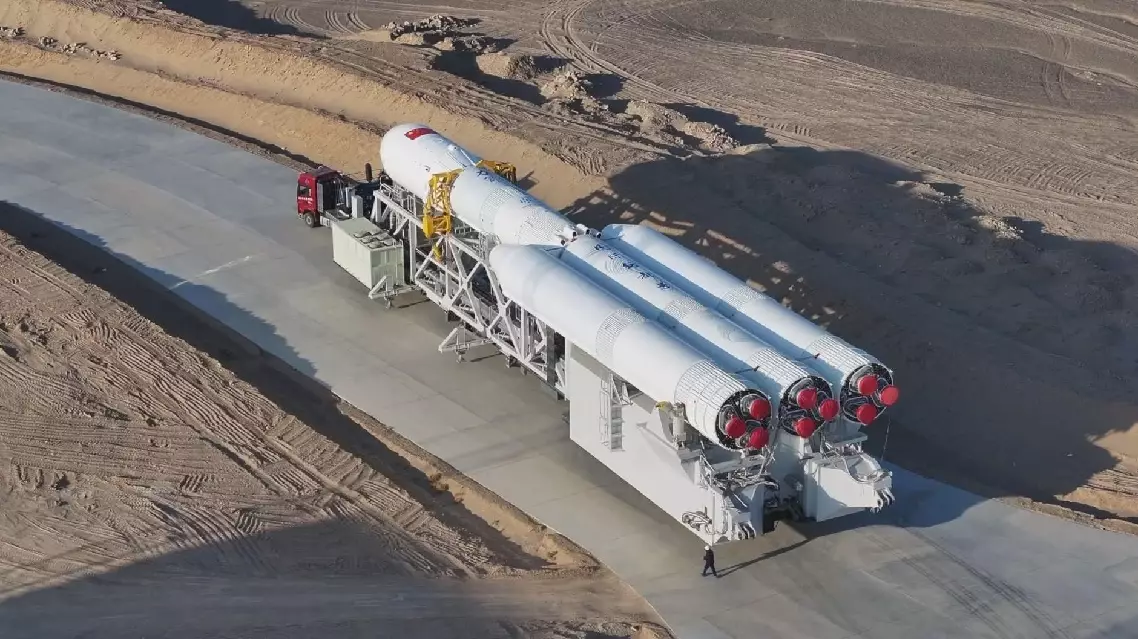
Modular and universal design enables smoother production and launch for Lijian-2 carrier rocket, said a designer as a Lijian-2 Y1 carrier rocket with three satellites onboard blasted off at 19:00 (Beijing Time) from a commercial aerospace innovation pilot zone in northwest China and sent the satellites into the planned orbit on Monday.

With a low Earth orbit payload capacity of 12 tonnes, the rocket is fully equipped to meet the demands of space station cargo missions. But for commercial spaceflight, high payload capacity alone is not enough. The Lijian-2 is able to deliver impressive performance thanks to the thoughtful design innovation.

A closer look at the Lijian-2 reveals that its core stage and two boosters appear nearly identical. This is no coincidence but a deliberate "universal" design known as the "universal booster core" configuration. This approach allows major components of the rocket to be mass-produced, significantly streamlining the manufacturing process.

"From the very beginning of its design, the Lijian-2 followed a philosophy of large quantity and mass production. That is why the appearance of the rocket’s units is highly similar. The biggest feature of this rocket is that the core stage and the boosters are designed to be identical in configuration," said Lian Jie, deputy chief designer of Lijian-2 carrier rocket of CAS Space, a commercial spaceflight company established by the Institute of Mechanics under the Chinese Academy of Sciences (CAS).

According to Lian, the greatest advantages of this design lie in its flexibility and efficiency. If a component encounters an issue, it can be quickly replaced like a standard part - a key feature that supports the development of high-frequency launch capability.

"If a problem occurs during the launch, we can quickly take a booster produced in the same batch to replace the faulty one, so as to ensure a smooth launch as scheduled," he said.

Modular, universal design enables smoother production, launch of Lijian-2 rocket: designer

Modular, universal design enables smoother production, launch of Lijian-2 rocket: designer

Recommended Articles