Shanghai welcomed two more cruise ships on Sunday, lifting the total at Wusongkou International Cruise Terminal to three, as inbound tourism booms under China's new visa-free and travel facilitation measures.
The newly arrived ships, MSC Magnifica and Adora Magic City, joined Mein Schiff 6, which had docked a day earlier at the Shanghai Wusongkou International Cruise Terminal.
During the weekend, cruise ports in Shanghai handled over 20,000 inbound and outbound passengers, with foreign nationals accounting for more than half of the total.
"Immigration service, very good, very fast. Everything very quick," said a Russian tourist.
"We going to Disneyland, it's a cool trip," said another Russian tourist.
China’s expanded visa-free entry is reshaping inbound travel. Since February, ordinary passport holders from Canada and the UK have been exempted, and arrivals from both countries have climbed sharply.
"Very good, excellent policy and anything that reduces the amount of time. We had ten days in China already," said a Canadian tourist.
Shanghai’s ports have already processed more than 10 million passenger trips this year, up 2.9 percent from 2025, underscoring sustained growth in cross-border movement. China now offers unilateral visa exemption to 50 countries, mutual visa-free access with 29, and 240-hour transit privileges to travelers from 55 nations, a policy framework that is reshaping inbound tourism at scale.
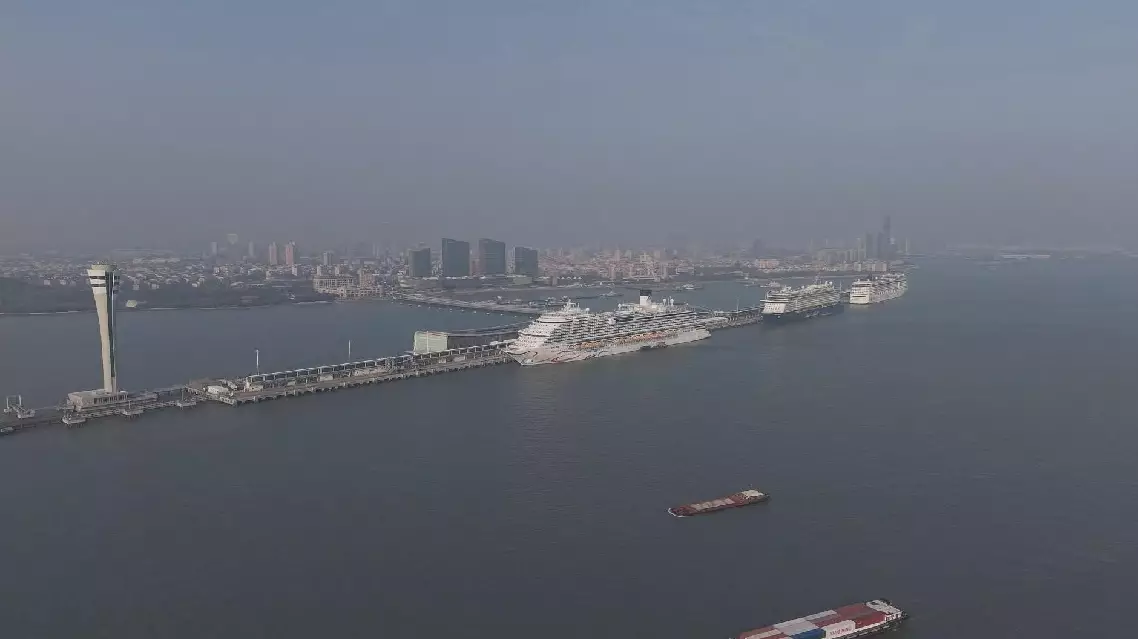
Shanghai sees surge in cruise tourism as visa policies boost inbound travel
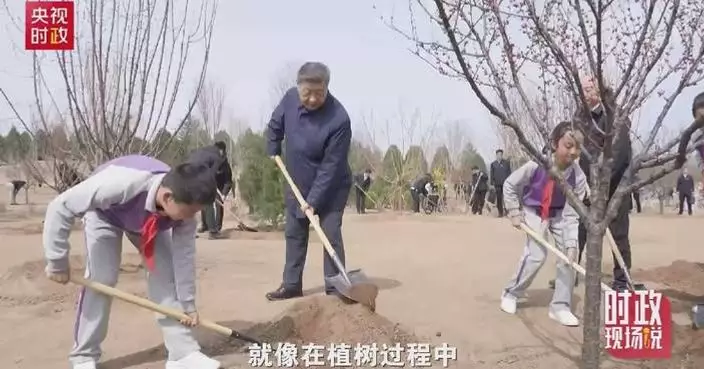
Chinese President Xi Jinping joined students and residents in Beijing's Changping District on Monday, to plant trees as part of a national campaign that has been running in China for the past 45 years.
For more than a decade, Chinese leaders have joined the annual tree-planting event, a simple act with a resolute message: Ecological progress is not a slogan; it is a commitment shared by all.
This year, the tree planting carries special significance, as the country adopted a new Ecological and Environmental Code in March which further strengthens the legal foundation for building a Beautiful China.
"Grandpa Xi said that tree-planting is a mission that must carry on generation after generation. That's why he plants trees with us every year to inspire the whole society to join in and help make our environment more beautiful," said Shi Manyu, a student at Changping School of Tsinghua University Primary School .
During the event, Xi said that China had seen sustained increases in both forest area and tree stock volume, as well as a continuous reduction in the effects of desertification.
He said China was restoring green spaces faster than anywhere else in the world, and noted that afforestation is an important task in building a Beautiful China, urging sustained and solid efforts to advance the initiative.
Over the past decade, China has reversed decades of desert expansion across the country's arid north, building the Three-North Shelterbelt, known as China's "Great Green Wall".
In southern Guizhou, rocky deserts have been turned into fruit orchards, lifting farmers out of poverty.
This year marks the first year of implementing the 15th Five-Year Plan (2026-2030) and the 45th anniversary of the nationwide voluntary tree-planting campaign, Xi noted.
Under the new circumstances, ecological restoration programs should place greater emphasis on improving quality, developing related industries, and delivering benefits to the people, he said.
"General Secretary Xi said during the tree-planting that afforestation demands persistent, long-term effort. We must remember his call to expand, invigorate, and protect green spaces in tandem, and on that basis, turn them into ecological assets," said Xin Xin, deputy director of Changping's Forestry and Parks Bureau.
One of Xi's well-known views on the environment is that lucid waters and lush mountains are invaluable assets, which can be of great benefit to the nation if used sustainably.
The new five-year plan calls for targeted, data-driven forest management, and expanding the path from ecology to economy.
"I think tree-planting is not just about caring for the environment and making our surroundings greener. It's also about sharing China's vision of carbon peak and carbon neutrality with the world, so that countries everywhere can understand our commitment and feel inspired to join in protecting our planet. Together, we can make this world a better, more beautiful place," said Yu Wanruoshi, another student at the primary school.
As this primary school student highlights, China's green journey is guided by the notion that everyone benefits from a healthy ecology, and that everyone must contribute. China's tree-planting campaign is a lasting promise, and harmony with nature is central to its development plan and to its vision of a shared ecological future benefitting all.
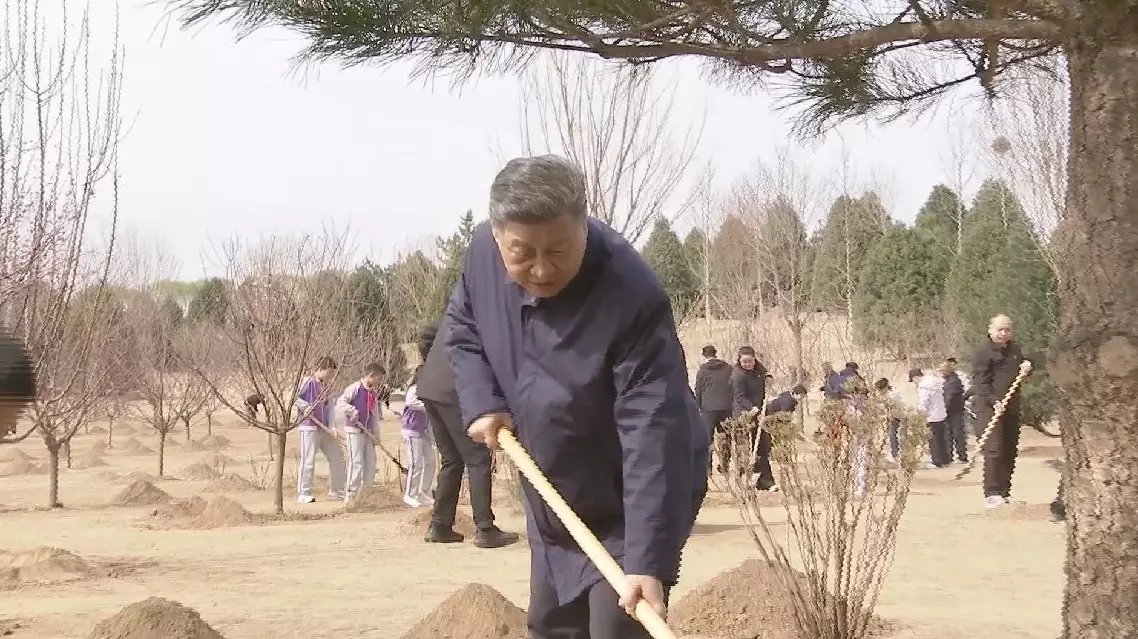
Xi joins Beijing residents to plant trees as China looks to a greener future