Skip to Content Facebook Feature Image

Hong Kong, Tokyo stocks plunge as Middle East tensions rattle investors

China

China

China

Hong Kong, Tokyo stocks plunge as Middle East tensions rattle investors

2026-03-30 22:14 Last Updated At:22:57

Hong Kong and Tokyo stocks tumbled Monday as mounting Middle East tensions fueled fears of a global economic slowdown, analysts said.

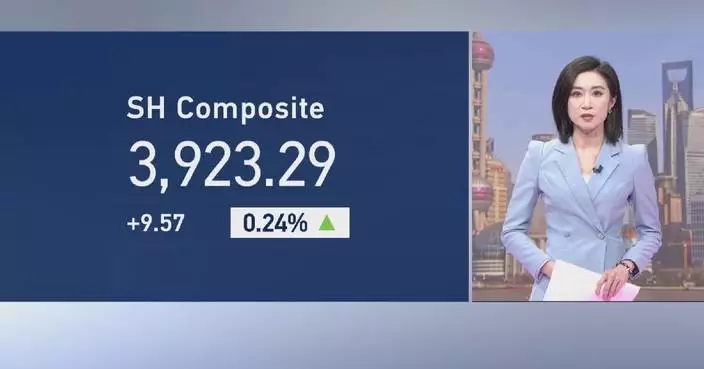
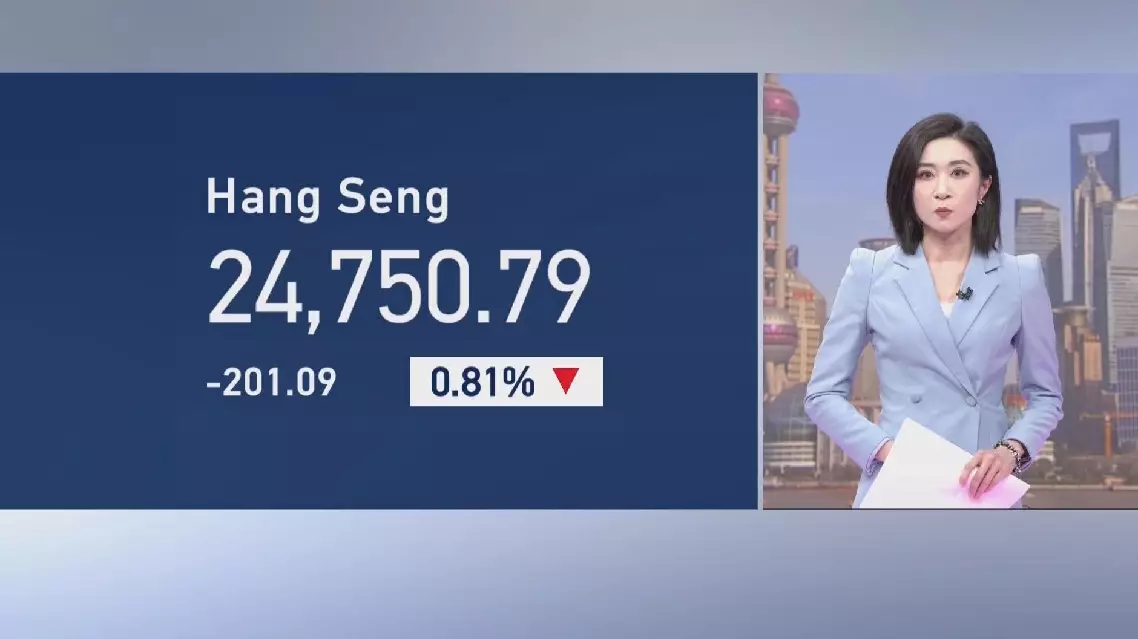
Hong Kong's stock market ended lower on Monday with the benchmark Hang Seng Index down 0.81 percent to close at 24,750.79 points.

The Hang Seng China Enterprises Index lost 0.65 percent to end at 8,399.12 points, and the Hang Seng Tech Index fell 1.84 percent to end at 4,690.08 points.

Wang Ying, a market analyst with China Global Television Network (CGTN), said the plunge reflected investor fears that escalating conflicts could slow global growth.

"Markets around the region were actually influenced by fears of widening Middle East conflict and the concerns that the war could slow global economic growth. Still, we see that oil prices are heading for a record monthly rise, bringing a spike in inflation. And Hong Kong markets were trading lower today as the Hang Seng Index lost 0.81 percent and the Hang Seng Tech Index fell 1.9 percent at the close. In focus, PetroChina added 1.1 percent following the oil price rally, even though it reported a 4.5 percent decline in annual net profit. Meanwhile, aluminum stocks skyrocketed as Iran's attack on aluminum companies in the UAE and Bahrain led to a spike in these firms, with investors now bracing for a deeper supply shock. Aluminum Corporation of China spiked to 7.3 percent and its Shanghai-listed stock climbed to 4.63 percent and China Hongqiao added 3.77 percent," said Wang.

Tokyo stocks closed sharply lower on Monday, with the benchmark Nikkei index briefly plunging more than 5 percent, as crude oil futures soared amid dim prospects for a ceasefire between the United States and Iran.

The 225-issue Nikkei Stock Average ended down 1,487.22 points, or 2.79 percent, from Friday at 51,885.85. The broader Topix index finished 107.35 points, or 2.94 percent, lower at 3,542.34.

"Over in Japan, the Nikkei 225 index was down 2.8 percent after falling as much as 5.3 percent earlier in the session and the key stock gauge was down nearly 12 percent for the month so far. A large number of local shares went ex-dividend today. In the AI and semiconductor sector, SoftBank fell 2.6 percent, Advantest lost 5.2 percent and Tokyo Electron slipped 2 percent. Meanwhile, the Bank of Japan said that it is closely watching the yen's movements and will adjust its policy accordingly as the yen slightly recovered," said Wang.

Meanwhile, the U.S. dollar topped the 160 yen line, seen as a key psychological barrier, for the first time since July 2024 on Friday in New York, driven by safe-haven buying.

The U.S. currency then weakened to the upper 159 yen range on Monday in Tokyo after Atsushi Mimura, Japan's vice finance minister for international affairs, issued a verbal warning about the yen's decline and signaled the possibility of government intervention.
Hong Kong, Tokyo stocks plunge as Middle East tensions rattle investors

Hong Kong, Tokyo stocks plunge as Middle East tensions rattle investors
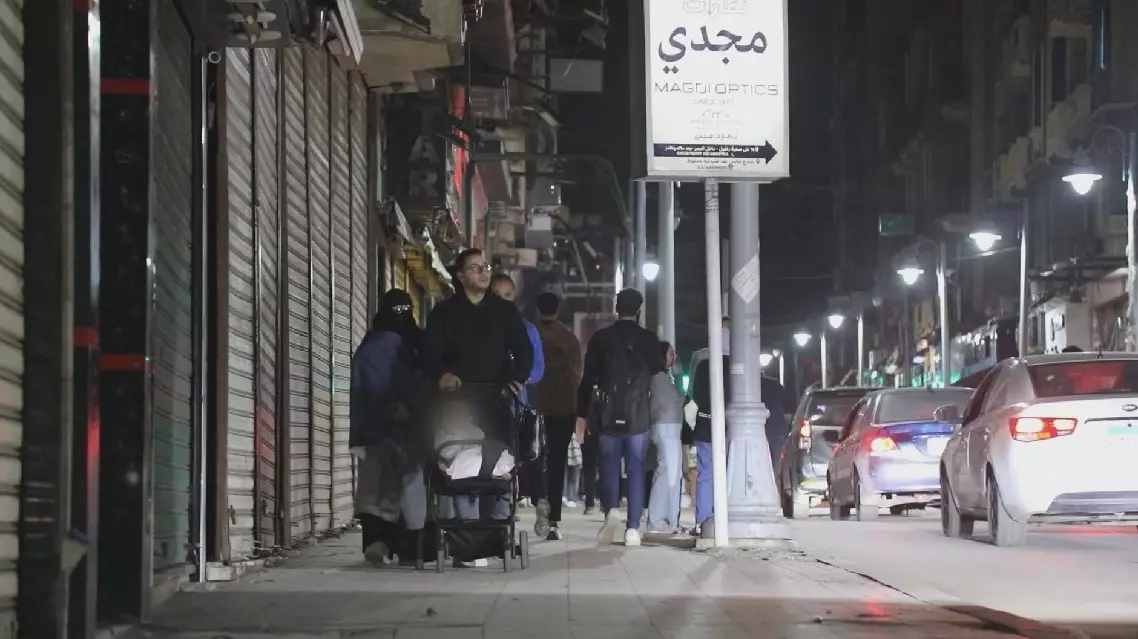
Egypt has ordered measures to cut electricity consumption after the U.S. and Israeli war against Iran disrupted oil and gas supplies, requiring shops to close early and roadside advertising to be switched off.

Shops and restaurants must shut at 21:00 under the new curfew, nearly four hours earlier than usual, curtailing Egypt’s peak evening business hours.

For restaurant manager Yasser Hamido, the closures mean reshuffling shifts, giving workers breaks, and rethinking how to keep the business running during shorter hours.

"We accept these measures, because we know it's important for the country. We'll just have to adapt by giving some of our workers a break and rescheduling shifts, then wait and see what happens," Hamido said.

The restrictions are already reshaping daily life. Egypt, known for its bustling streets and vibrant nightlife, is turning dark. Even billboards and public lights are being switched off. Only popular tourist destinations such as Sharm El Sheikh and Hurghada on the Red Sea have been exempted.

"The latest conflict in the Middle East has led to a shortage in natural gas supplies globally, including Egypt. This, coupled with energy price hikes, have made it difficult for Egypt to import gas for electricity generation. Most of Egypt's power stations are run by natural gas," said economic analyst Hossam Gawish.

The government says the energy import bill had jumped from 1.2 billion U.S. dollars in January to above 2.1 billion U.S. dollars in mid-March, forcing it to take several measures to regulate electricity consumption and avoid power cuts.

But, the early closure of all commercial, sports and entertainment activities has been controversial. Although the government outlined the economic benefits of this decision at a critical time, it has been widely criticized by a large segment of the Egyptian population.

Most Egyptians typically spend their leisure hours in the evening, when cooler temperatures draw people outdoors. Those hours account for a significant share of economic activity, and businesses have raised alarm over potential losses from early closure requirements.

"When you reduce operating hours, it leads to a significant drop in revenue and even GDP, a drop in pay for workers and a drop in the purchasing power of Egyptians. But it's a habit. Most Egyptians have to readjust their habits to be like many countries that normally close early. It will take time however," said Gawish.

Facing public backlash, officials said the early shop-closure policy will run on a trial basis and be reassessed in May.

Egypt orders early shop closures to save power amid supply crunch

Egypt orders early shop closures to save power amid supply crunch

Recommended Articles