Russia reported on Monday that its forces had taken control of two settlements in the Kharkov and Zaporizhzhia regions over the past 24 hours, while Ukraine claimed to have thwarted Russian attempts to advance deeper into its territory.
In its daily report, the Russian Ministry of Defense said that over the past day, Russian forces had struck military airfields, energy infrastructure facilities, and long-range drone launch sites of the Ukrainian armed forces.
Russian forces also attacked temporary deployment points of Ukrainian armed forces and foreign mercenaries, reported the Defense Ministry, adding that Russian air defense units shot down 312 fixed-wing drones.
On the same day, the General Staff of the Armed Forces of Ukraine reported that 147 clashes took place along the front lines in the past day.
Ukrainian forces had inflicted significant losses on Russian forces in both personnel and equipment in multiple sectors, it said.
In addition, Ukrainian troops targeted three concentration areas of Russian personnel and equipment as well as one drone control point, and shot down more than 2,400 drones, it said.
On the same day, Ukrainian President Volodymyr Zelensky said Ukraine is prepared to establish an Orthodox Easter ceasefire with Russia.
He emphasized that Ukraine supports any format for ending the conflict, which preserves the country's dignity and independence, including a full ceasefire and a ban on strikes against energy infrastructure.
This year, Orthodox Easter will be celebrated in Ukraine and Russia on April 12.
Zelensky also revealed that Ukraine has received signals from some partners requesting it to scale back strikes on Russia's oil industry.
In response, he emphasized a position of reciprocal ceasefire, saying that if Russia stops attacking Ukraine's energy infrastructure, Ukraine will not strike those of Russia.

Russia claims control of 2 settlements, Ukraine reports halting Russian advances
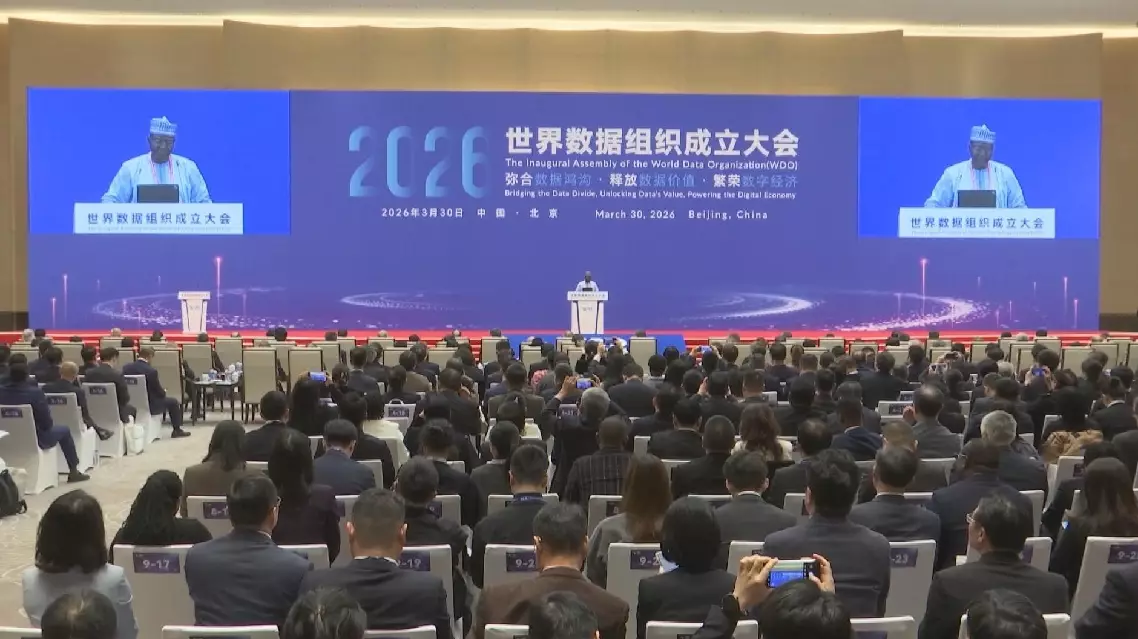
The World Data Organization (WDO) was formally established in Beijing on Monday, marking a significant step toward global cooperation on data development and governance.
Around 500 people attended the inaugural assembly of the WDO, including representatives of the organization's members, Chinese and international scientists and technologists, government officials, and heads of international organizations.
As a professional, non-governmental and non-profit international body voluntarily established by relevant entities and individuals in the global data sector, the WDO aims to provide a platform for global data collaboration that is practice-oriented, industry-focused and designed for multi-stakeholder dialogue and cooperation.
"Data can drive innovation, strengthen policy making, and accelerate scientific progress, but only if access is equitable and capacity is built, where it is needed most," Muhammadou M.O. Kah, chair of the United Nations Commission on Science and Technology for Development, and vice chair of the UN Data Governance Working Group said at the meeting.
China's digital infrastructure has seen rapid advancement. By mid-2025, the country had built over 4.8 million 5G base stations, with total computing power ranking second globally.
"We make cell phone chip sets. So we're very interested in data and China, especially with making sure that 5G and then looking forward to 6G networks are done really well," said Jonathan Gerald Thomason from Qualcomm Wireless Ltd.
"Having the opportunity to have secure and rule-based data system is very important. So I think establishing World Data Organization is a good one," said Kimiebi Imomotimi Ebienfa, spokesman of the Ministry of Foreign Affairs of Nigeria.
With its headquarters in Beijing, the WDO, is the first professional international organization focused on advancing data development and governance practices.
It is expected that by 2030, the organization will become an internationally influential platform and a trusted hub in the data field.
World Data Organization launched in Beijing to bridge global data divide