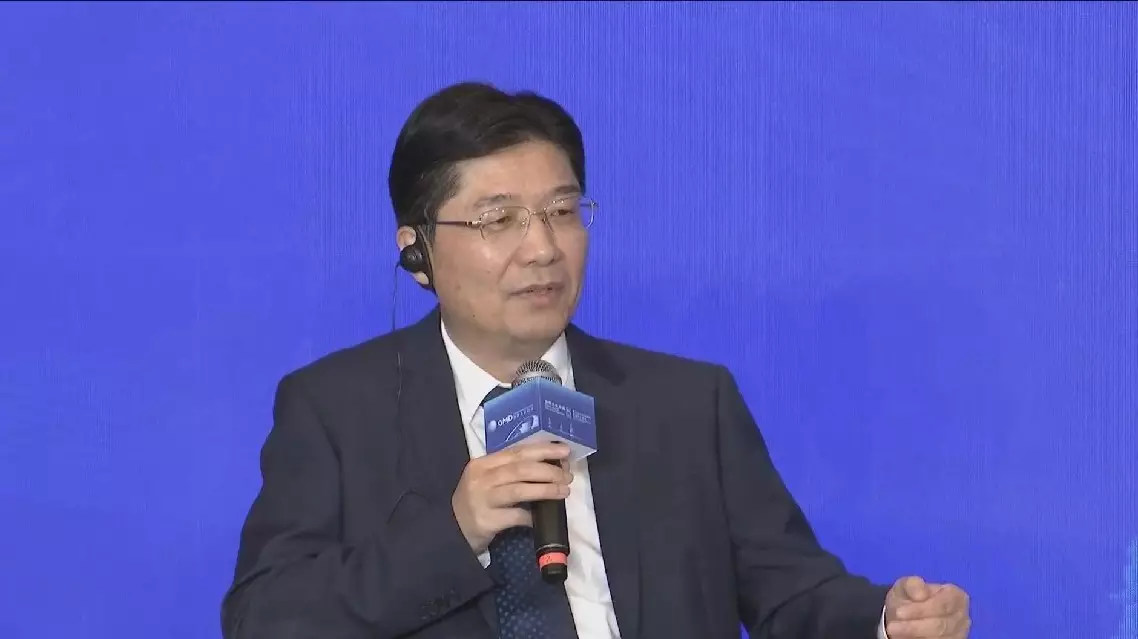
The mayor of Hangzhou City in east China's Zhejiang Province, speaking at a global mayors' dialogue held in the city on Wednesday, advocated good city governance and development toward a sustainable future by telling the story of how the city's Qiandao Lake has got transformed into a clean and lucrative local signature spot.
The event, first edition of the Global Mayors Dialogue with the topic of urban governance and sustainable development, was attended by mayors and representatives from 24 cities in 15 countries and regions, along with representatives of envoys to China and relevant Chinese government departments.
At the dialogue, Yao Gaoyuan, the mayor of Hangzhou, said that Qiandao Lake, located in the city's Chun'an County, is actually an artificial lake built during the construction of the Xin'an River Hydropower Station. Like dazzling gems,1,078 islands dot the lake and thousands of smaller ones are scattered across it. Hence, the lake has earned the name of "Qiandao Lake," which literally means "Thousand Islands Lake" in Chinese.
The mayor noted that the lake was once poorly protected and misused simply for industrial development, but the advice from Chinese President Xi Jinping, serving as chief of the Zhejiang provincial committee of the Communist Party of China back then, has changed the area's focus on water governance. Xi emphasized the importance of finding the delicate balance between economic growth and environmental protection to keep harmony between humanity and nature.
"In the early 1980s, the development and protection of the Qiandao Lake went through detours. In an effort to boost the local economy, industrial parks were established on the lake's shores, focusing on low-end manufacturing, and aquaculture was also developed on the water surface. This extensive development approach somewhat impacted and polluted the lake's water body to a certain extent," said the mayor.
"In 2005, during Xi's tenure in Zhejiang, he visited Chun'an for research and proposed a shift in the area's development approach. He emphasized the importance of leveraging the ecological value of the Qiandao Lake. He said, 'We must not let the 450,000 people of Chun'an hold a golden bowl but beg for food.' Since then, Chun'an has set a development strategy that relies on the water resources," Yao said.
The lake water's quality has gotten significantly improved since the materialization of the Lucid Water-Lush Mountain theory, which the president proposed on his inspection tour in Zhejiang's Yucun village in August 2005, calling lucid waters and lush mountains invaluable assets comparable to the gold and silver of legend. The successful cultivation of a household brand of mineral water using the lake's water-- Nongfu Spring demonstrates that environment-friendly industries have became a driver of the local economy.
"Hangzhou adopted two key approaches. The first was to foster an environment-friendly bottled water industry. Last year, just the water beverage companies alone generated over 100 million yuan (about 14 million U.S. dollars) in tax revenue and resulted in sales of over 14 billion yuan (about 2 billion U.S. dollars). The other approach was to tap into the ecological tourism potential of the lake's pristine water resources. Last year, Chun'an County received 12 million tourist visits to the Qiandao Lake, which is equivalent to the size of the population of Hangzhou. These 12 million tourist visits brought in 17 billion yuan (about 2.4 billion U.S. dollars) in tourism revenue. By embracing the Lucid Water-Lush Mountain theory, not only can we protect the local ecology, but we can also boost the local economy, and most importantly, bring wealth to local people," said Yao.
Hangzhou mayor shares experience in turning lake water into "gold mine"