The city that produced China's first electric locomotive has gone global, with many of the world's electric trains now tracing their roots back to Zhuzhou in the country's central province of Hunan.
At CRRC Zhuzhou Locomotive Company, a subsidiary of the China Railway Rolling Stock Corporation, engineers and technicians have been working at full stretch to complete the latest meter-gauge train destined for Malaysia's Electric Train Service (ETS).
"For this train, this third version from our [ETS series] product. Compared with the previous project, we've installed a lot of intelligent and economical device or system on the train. So something like the DAS system, the system can give economical driving advice to the driver. So the driver following this advice can reduce the energy consumption more than 10 percent for the operator," said Ren Zewen, locomotive technical manager at the company.
It is just one of many trains produced by the company that are now used globally, from Türkiye to Brazil, and from Belgium to Mexico. In all, CRRC Zhuzhou's products span six continents and over 50 countries and regions. The most recent batch of locomotives for export to the Netherlands has successfully rolled off the production line.
Remarkably, it all started 66 years ago when the company, then known as Zhuzhou Electric Locomotive Works, produced China's first electric locomotive.
Founded in 1936, CRRC Zhuzhou and its predecessors have witnessed major advances in China's electric locomotive industry, transitioning from general to heavy loads, from direct to alternating currents, from normal to high-speed rail, and from a sector reliant on imports to becoming a major exporter.
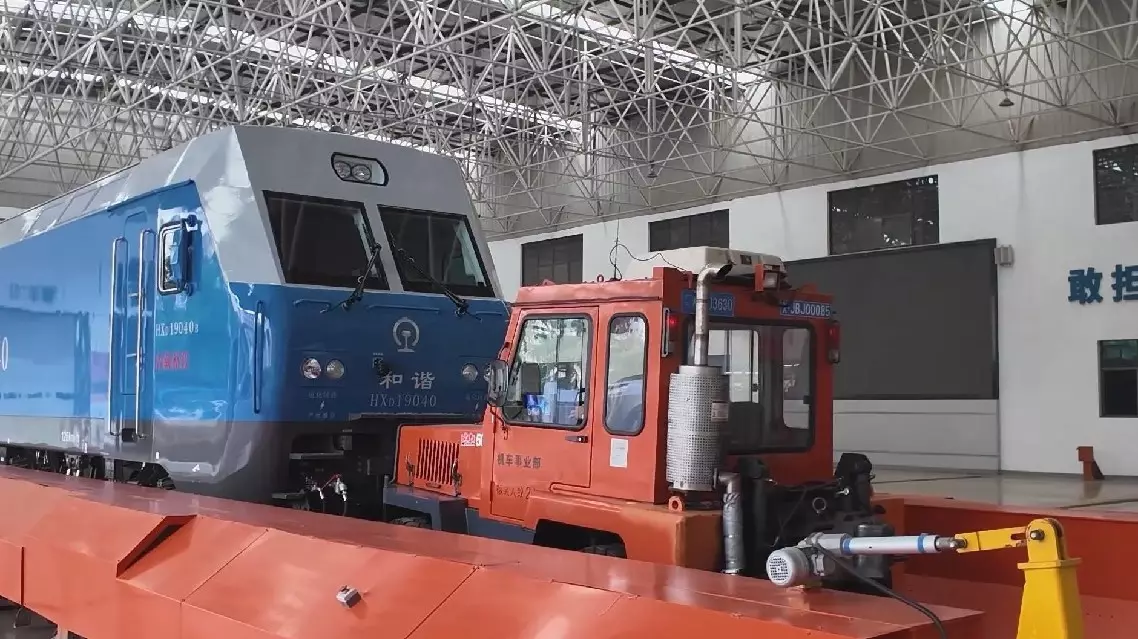
Cradle of China's electric trains becomes global locomotive exporter
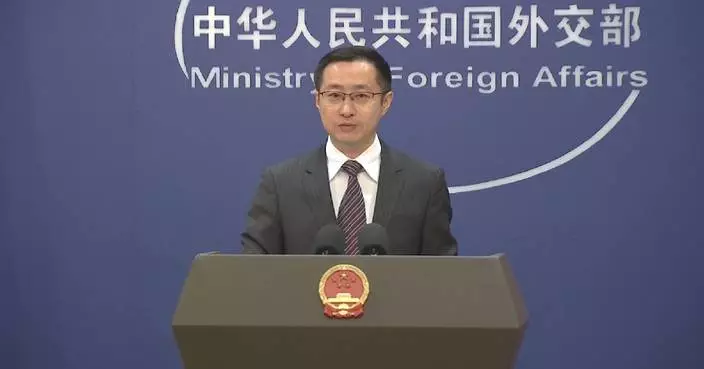
China's development has never been a "threat" to anyone but the source of growth advancing common development of all countries, Foreign Ministry spokesman Lin Jian said at a regular press conference in Beijing on Friday.
Some Western media and think tanks are peddling so-called "China Shock 2.0," saying that "China is achieving fast development in high-tech sectors such as renewable energy and AI and relies on foreign markets to absorb its overcapacity, thus reducing the market share of developed countries and sending more serious shock waves to the global economy compared with the era of traditional manufacture industry," while there are foreign commentators saying that the "China Shock 2.0" argument ignores the genuine innovation occurring within the Chinese industrial ecosystem and that Chinese export is the exact booster of the global economy that is needed in the turbulent period and more indispensable than ever.
Commenting on that, Lin said: "From the world's factory to the world's market and innovation powerhouse, China's development is achieved through strong performance driven by innovation and brings tangible cooperation opportunities and space to the world. High-quality Chinese products represented by the 'old three' of textiles, furniture and home appliances have stabilized the global industrial and supply chain, lowered the living cost of global consumers and eased the inflationary pressure worldwide. China's green production capacity represented by the 'new three' of electric vehicles, batteries and solar panels has bridged the gap between supply and demand in global green development and bolstered the global energy transition and low-carbon development. Moreover, China's high-tech products represented by the 'new new three' of robots, AI and innovative drugs have broken high-tech barriers and monopoly and enabled people in more countries to access affordable new technologies," said the spokesman.
"Openness and cooperation bring about progress and win-win result. China's development has never been a 'threat' to anyone but the source of growth advancing common development of all countries. What really creates 'shocks' to the world has never been the innovation of Chinese companies and efficiency of Chinese industrial capacity, but protectionist moves of setting up barriers, decoupling and severing industrial and supply chains. China will stay committed to high-standard opening up, defend the multilateral trading system and provide more certainty and new impetus to the world economy with its own steady development," said Lin.
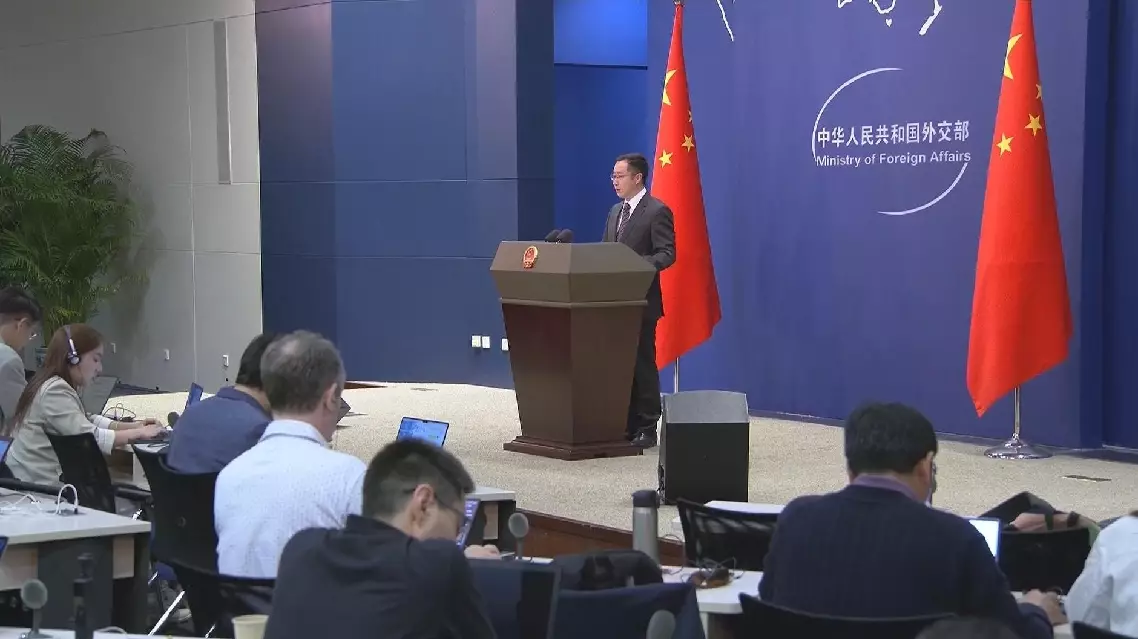
China's development never a threat: FM spokesman