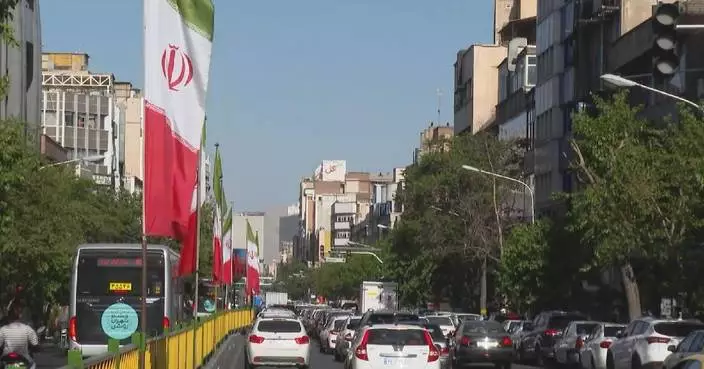
Renewed tensions in Iran and the Strait of Hormuz are casting a shadow over Iran's fragile tourism rebound, with hoteliers in the historic city of Isfahan helplessly saying that international visitors remain scarce despite a gradual return of domestic travelers.
The war that erupted in late February, triggered by the U.S. and Israel airstrikes and followed by Iranian retaliation, has left a heavy toll on Iran's tourism and lodging industry.
In Isfahan's old town, the Ghasr Monshi Hotel stands as a 400-year-old mansion converted into a boutique property. Once owned by a son-in-law of Safavid ruler Shah Abbas (1571-1629), the residence has been restored with traditional courtyards, underground cooling spaces and so forth, making it a showcase of Iranian heritage tourism.
Rahimi, manager at the hotel, said that visitor numbers dropped sharply around Nowruz, the Persian New Year falling on March 20 this year, but the property has kept its doors open despite the tourism frustration. Since a Pakistan-mediated ceasefire on April 8, guests from across Iran have slowly returned, though international bookings remain minimal, according to Rahimi.
"The war has affected all hotels in Iran, especially ours. But our motto has always been to keep the lights on. Thanks to Allah. We were the only hotel in Isfahan that has continued to provide services throughout this period," said Rahimi.
Demand remains lower than last year, with rising costs for supplies, wages and operations adding pressure.
Rahimi said that the hotel is trying to retain long-term staff, but renewed tensions in the Strait of Hormuz and the Gulf have left flight schedules, reservations and traveler confidence uncertain.
"Because of the war, all these issues have brought us many difficulties, whether in raw material prices, staff wages or other costs. But we are working hard through comprehensive management to overcome them," he said.
"If war breaks out again, our hotel policies will be adjusted accordingly. Of course, we will continue to provide service, but regrettably, we would have to cut some staff to keep the hotel running," he added.
Rahimi said that before the conflict, the hotel, as one of Isfahan's best guesthouses, was booked six months in advance.
He expressed hope that if stability holds, international tourists will begin returning in the coming weeks, reviving a sector that once brought vitality to the city's economy.
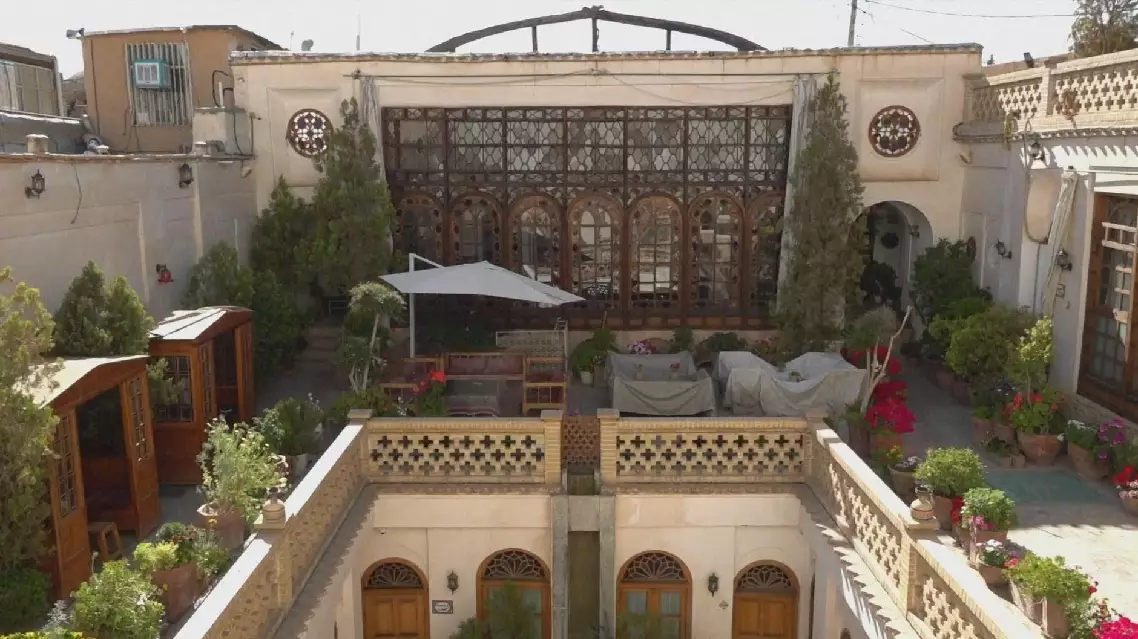
Tensions in Strait of Hormuz weigh on Iran's tourism recovery
Tensions in Strait of Hormuz weigh on Iran's tourism recovery