China's manufacturing prowess has placed it at the forefront of global technological advancements, driving the sector towards smarter and more eco-friendly practices.
"Lighthouse" is the designation given to factories that have evolved and successfully implemented Fourth Industrial Revolution technology. Currently China boasts around 40 percent of the global lighthouse factories, ranking first in the world.
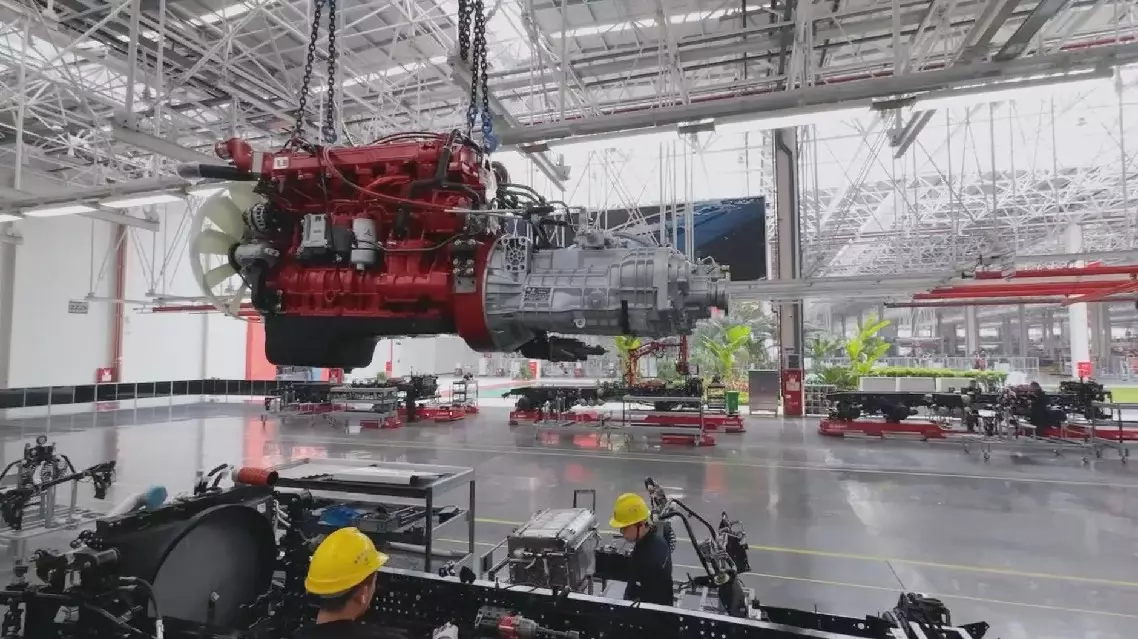
In the 100,000 square meter manufacturing plant of Sany Group in Hunan Province, the maximum output has been as high as 800 trucks per month since 2021.
Yao Zhiheng, director of Intelligent Manufacturing of Sany Group, likens the production of pump trucks to the art of tailored suits, but with a futuristic twist. The key to this innovation is the main control room.
"In the control room, we allocate specific tasks to the operating machines through our advanced systems – transforming steel plates into diverse, customized parts with remarkable efficiency," said Yao.
Efficiency is key, and the factory's smart optimization techniques have boosted steel utilization rates from 70 percent to over 80 percent, leading to significant cost savings.
"By increasing steel utilization by just one percentage point, we're able to reduce our costs by nearly 20 million yuan, about 2.8 million U.S. dollars," said Yao.
From cutting to welding to assembling, the factory's nine major manufacturing processes and 32 production scenarios have achieved full automation.
"The company's digitalization efforts span 368 projects with a total investment of 664 million yuan(about 95 million US dollars). These projects aim to foster high-quality development and align with our country's push for new industrialization," said Jiang Qingbin, vice president of Sany Group.
However, Jiang acknowledges that the heavy industry's upgrade path is not without challenges.
"We still face challenges like meeting diverse demands on assembly lines and information barriers across industrial chains," said Jiang.
But Jiang remains confident that China's ongoing reforms aimed at integrating the real and digital economies will help overcome these obstacles.
As China's manufacturing sector continues to lead the world in technological advancements, factories such as Sany Group stand as beacons of hope for a smarter and more sustainable future.
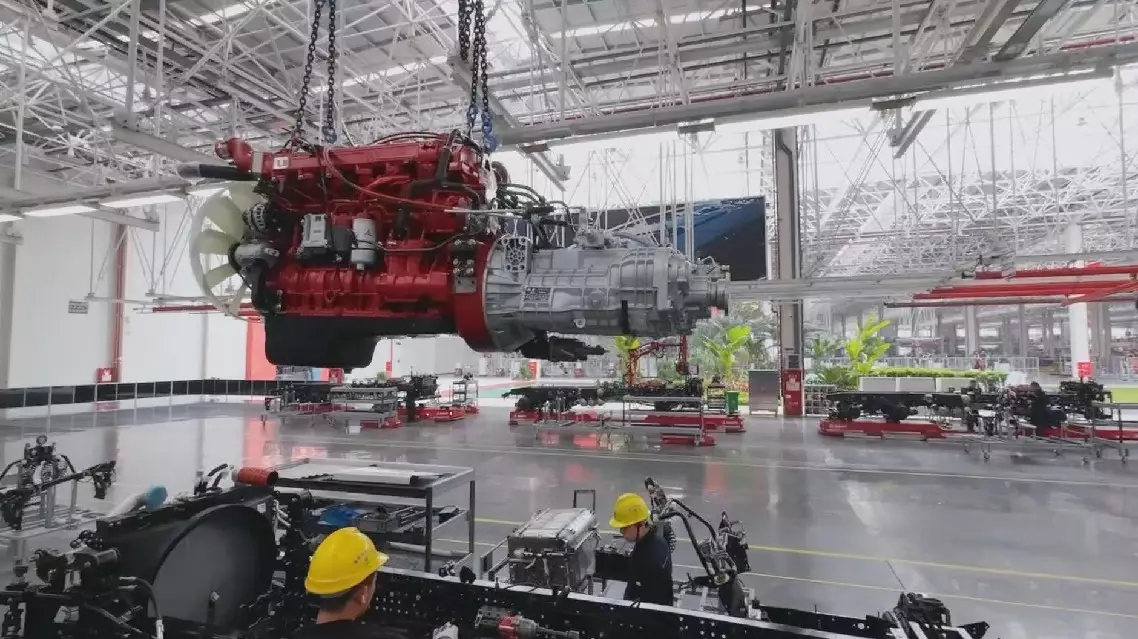
China leads global tech evolution with lighthouse factories

The Iranian government is focusing on public concerns and maintaining stable supplies of essential goods amid recent protests, Iranian President Masoud Pezeshkian said in a televised interview on Sunday.
In the city of Karaj, northwest of the capital Tehran, daily life has largely continued as normal. A video filmed by a local resident on Sunday shows food stores open and grocery shelves fully stocked.
"This is the block near my home, and there are some food stores here. Daily life continues here. Last night we did not see many protests in Karaj. Right now the city is very safe. This is a grocery store close to my home. All the food is available; nothing is in shortage. Here are noodles and different types of beans. Here are dairy products, cheese, and yogurt. I also checked other grocery stores and didn't see any shortages. Everything is available," said local resident Ali Reza.
Iranian officials have described recent disturbances as acts orchestrated by the "enemy," including some carried out by well-trained and armed "terrorists." The incidents have caused casualties among security personnel and civilians, as well as property damage.
The Secretary of Iran's Supreme National Security Council Ali Larijani has directed authorities to severely punish the "terrorists."
Meanwhile, Iran's police chief Ahmad-Reza Radan said on Sunday that the police had raised alert levels and arrested several leaders of the troublemakers during the operations on Saturday.
President Pezeshkian noted in the interview that the normal demands of the Iranian people are reasonable and justified, but they must realize that triggering riots and carrying out terrorist acts are the enemy's attempts to undermine the country. He urged the public to remain vigilant.
Also on Sunday, Iranian Parliament Speaker Mohammad Baqer Qalibaf warned that Tehran would regard U.S. and Israeli bases and facilities in the Middle East as "legitimate targets" if Washington takes military action against Iran. His remarks followed media reports saying U.S. President Donald Trump is "seriously considering authorizing a strike" against Iran.
Iranian state media reported that at least 109 members of Iran's security forces have been killed in clashes since the protests began 14 days ago. Meanwhile, human rights groups based outside the country said the number of protesters killed has exceeded 200, though the figure could not be independently verified.
The protests initially erupted over a sharp depreciation of the rial and sweeping subsidy reforms. Iranian authorities have blamed the unrest on foreign-linked agents and sanctions imposed by the United States.
Iranian president says government focusing on ensuring supplies amid protests