Russia claimed on Wednesday that its forces had struck Ukrainian energy and transportation targets, and taken control of two settlements while Ukraine reported successfully repelling Russia's attacks.
The Russian Ministry of Defense said in its daily briefing that over the past day, Russian tactical aviation, strike drones, missile forces, and artillery targeted Ukraine's energy and transportation infrastructure, and drone and unmanned boat assembly, storage, and launch sites.
Russian air defense forces claimed to have shot down 303 fixed-wing drones. The Black Sea Fleet reportedly destroyed six Ukrainian unmanned boats in the northwestern Black Sea. Additionally, Russian forces asserted control over two settlements in the Donetsk and Sumy regions.
On the same day, the General Staff of the Armed Forces of Ukraine reported that there were 189 battles in frontline areas. Ukrainian forces repelled Russian attacks across multiple directions and struck five Russian troop assembly points and four drone sites, shooting down 1,775 Russian drones. They also launched assaults on key military and logistical facilities, including radar stations, air defense systems, ammunition depots, and fuel storage in Zaporizhzhia, Donetsk, and Crimea.
The report also said that the targets of these attacks included the MR-10 radar station and air defense command post at Kacha Airport in western Crimea, the Tor anti-aircraft missile system in southern Zaporizhzhia, ammunition depots in northern Crimea and fuel storage in southern Simferopol.

Russia claims striking multiple Ukrainian targets; Ukraine reports repelling Russia's attacks
Chinese President Xi Jinping has always said that the common interests between China and the United States outweigh their differences, as bilateral relations, like a giant ship, should be steered forward steadily to offer opportunities for each other and benefits to the whole world.
At the invitation of U.S. President Donald Trump, Xi left for the United States on Wednesday afternoon for a state visit and a high-stakes meeting with Trump.
With the upcoming visit, the two presidents are expected to complete reciprocal visits within months. The trip will be Xi's second state visit to the United States following his first in 2015.
In May, Trump paid a state visit to China, marking the first U.S. presidential visit to the country in nearly nine years. During the welcome banquet for Trump in Beijing, Xi underlined the significance of bilateral relations of the world's two major countries.
"As the most important bilateral relationship in the world today, China-U.S. relations bear on the well-being of more than 1.7 billion people in the two countries and affect the interests of over 8 billion people worldwide," Xi said.
Xi has repeatedly stressed the need to find the right way for the world's two major countries to get along. And the Beijing summit gave renewed momentum to that effort. Xi and Trump have agreed on a new vision of building a constructive China-U.S. relationship of strategic stability over the next three years and beyond.
In the meantime, Xi has maintained a pragmatic view of the challenges and differences within the two countries.
"Given their different national conditions, China and the United States do not always see eye to eye with each other, and it is normal for the two leading economies of the world to have frictions now and then," Xi told Trump during their meeting in Busan, the Republic of Korea, in October 2025.
To navigate these frictions, Xi has always stressed the absolute necessity of mutual respect and non-interference in each other's internal affairs.
"China never bets against the United States, and never interferes in its internal affairs. China has no intention to challenge the United States or to unseat it. Instead, we will be glad to see a confident, open, ever-growing and prosperous United States. Likewise, the United States should not bet against China, or interfere in China's internal affairs. It should instead welcome a peaceful, stable and prosperous China," Xi said in his speech at the Welcome Dinner by Friendly Organizations in San Francisco in 2023.
Ultimately, Xi has expressed China's overarching stance that the success of each country is an opportunity for the other, rather than a threat.
"China and the United States have more common interests than differences. Success in one is an opportunity for the other, and a stable bilateral relationship is good for the world," Xi said in his talks with Trump in May.
In both Busan last year and in Beijing this May, the Chinese president used the metaphor of "giant ship" to describe China-U.S. relations, stressing the pivotal role of the leadership of the two countries to steer bilateral relations onto the right course.
"Mr. President, you and I are at the helm of China-U.S. relations. We should stay the right course and navigate through the complex landscape," said the Chinese president, "We should steer the giant ship of China-U.S. relations forward steadily and in the right direction."
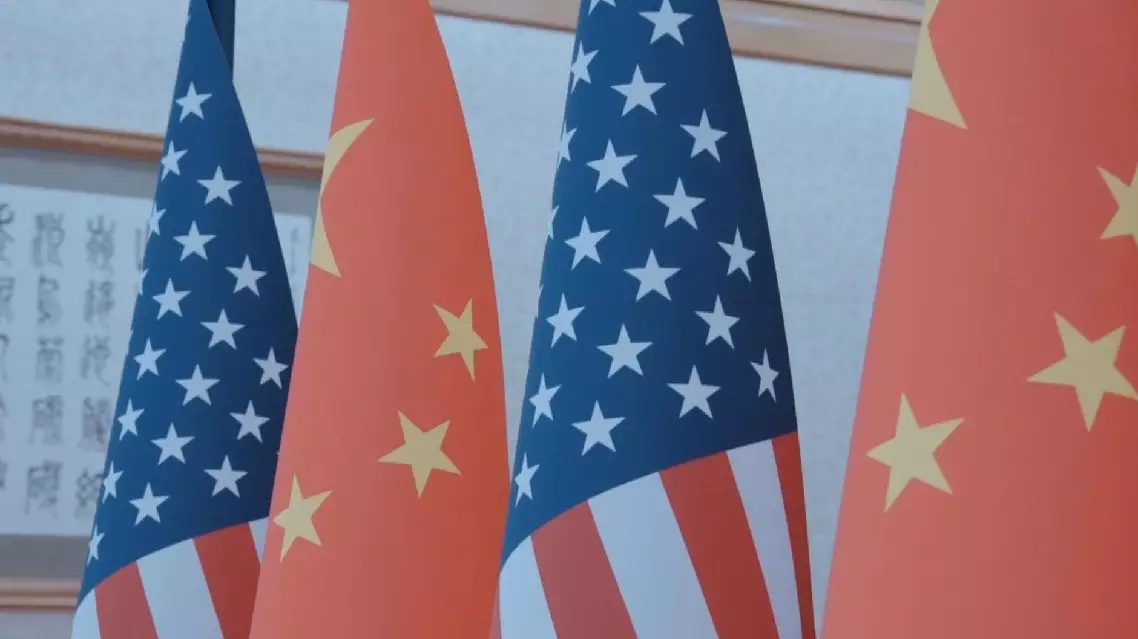
Xi says China-U.S. relations should move forward steadily to bring benefits to entire world