A former Israeli diplomatic negotiator has warned that the Gaza ceasefire is fragile and the U.S.-backed peace plan is a "recipe for avoiding hard questions."
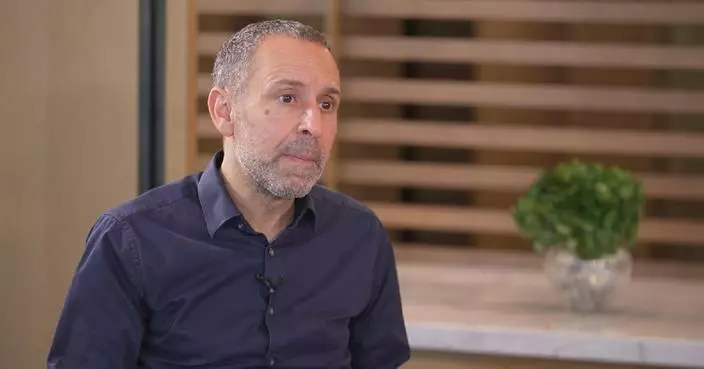
Daniel Levy, a former senior adviser to Israeli Prime Minister Ehud Barak, said in an interview aired on Wednesday by China Global Television Network (CGTN) that the erosion of international law has become a major obstacle to lasting stability.
U.S. President Donald Trump's administration in September 2025 unveiled a 20-point, three-phase peace plan aimed at ending the Israel-Hamas conflict that began in October 2023. The first phase was marked by repeated accusations of violations by both sides, highlighting persistent distrust.
In January, Washington moved to launch the second phase of the plan, shifting the focus to demilitarization, technocratic governance and reconstruction -- a transition that has proven difficult to sustain on the ground.
Recent remarks by Palestinian Prime Minister Mohammed Mustafa further underscored the fragility of the situation, with the Gaza ceasefire yet to be fully implemented and ongoing restrictions described as an "economic siege" on the Palestinian Authority.
"There was a push from the region to work with Trump to get a ceasefire in place, but the 20-point plan that the President brought forward was a recipe for avoiding hard questions and for leaving in place plenty of destructive potential, and that is what has happened, including the idea that under these circumstances, one could impose a disarmament on a resistance movement, Hamas, that was not defeated in the battlefield," Levy said.
"So for Israel, it constantly says Hamas hasn't disarmed, therefore we don't have to do any of these other things. Palestinians are squeezed into a tiny area of the territory. Even after the war, the living conditions are nothing short of inhumane and appalling," he said.
"Israel is able to continue this. It has the U.S. imprimatur. Parties who know this is going badly are reticent or reluctant to rock the boat, because they know that as bad as the situation is, there's one thing that could be worse, which is a return to the full-on, hundreds of killed a day, mass starvation that we had," he added.
Looking at the broader trajectory of the peace process, Levy said the erosion of international legal norms has become a major obstacle compared with two decades ago.
Levy, who was involved in the Oslo peace process in the 1990s, said the current situation reflects a deeper shift away from the international legal frameworks that once underpinned diplomatic efforts.
"One looks back and compares it to 20 years ago, perhaps more disturbing, because one sees how much more international law, a UN-centered, UN Charter approach to even how we conduct war, to how we go about functioning in this world, how much further that has been de-centered, especially when it applies to West Asia, especially when it applies to the Palestinians, to the extent to which you now have such an aggressive campaign against the institutions of international law, against the International Court of Justice, against the UN Charter itself," he said.
"You have had, during this time, an Israeli ambassador to the United Nations stand on the podium at the UN itself. This is a country that is still a member of the United Nations. And so it has become a badge of pride in Israel to stand against international law. And so it begins with reasserting the idea that you are accountable for your actions. If you act in a criminal fashion, there will be costs. There will not be impunity. If you can't get the diplomatic accountability conversation going, then the region is going to end up revolving around balances of military power and the deployment of that power which will only lead to more human suffering," he said.
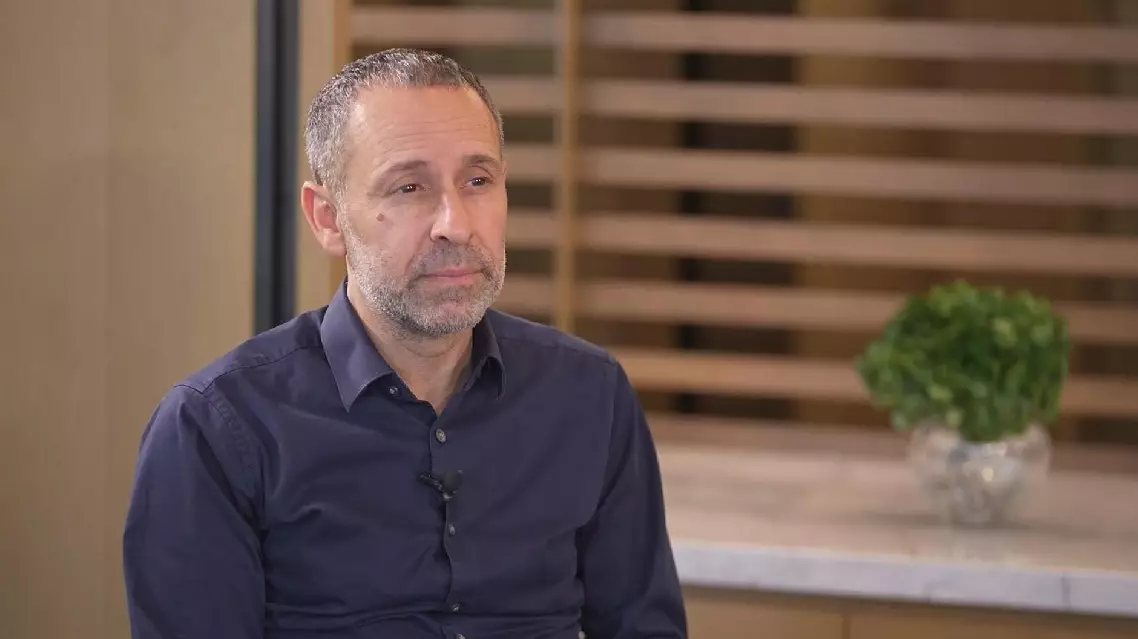
Gaza ceasefire process faces serious obstacles: ex-Israeli negotiator