The ongoing 21st China-ASEAN Expo in the south China city of Nanning has enlarged the annual event's cooperation with exhibitors and buyers to encompass more areas of the world while expanding on previous achievements in building stable regional industrial chains.
At this year's expo, the Gulf countries were invited to participate for the first time, affording them an opportunity to boost contacts with both China and Association of Southeast Asian Nations (ASEAN) member states. The United Arab Emirates (UAE), as a special partner country, brought its specialty food such as dates and chickpeas as well as spices. One UAE retailer said the company is looking to expand its presence in the Chinese market.
"We have [gone into many] Asian markets, especially Singapore, Malaysia, Indonesia and India. Mainly at this exhibition [our intention is that] UAE products will be introduced to here local markets. This is our aim," said the UAE exhibitor.
On Tuesday, the first day of the event, 109 project agreements were signed, involving companies from Vietnam, Malaysia, Laos and other ASEAN member countries. They primarily focus on key industries such as new chemical materials, new energy and energy storage, and machinery and equipment.
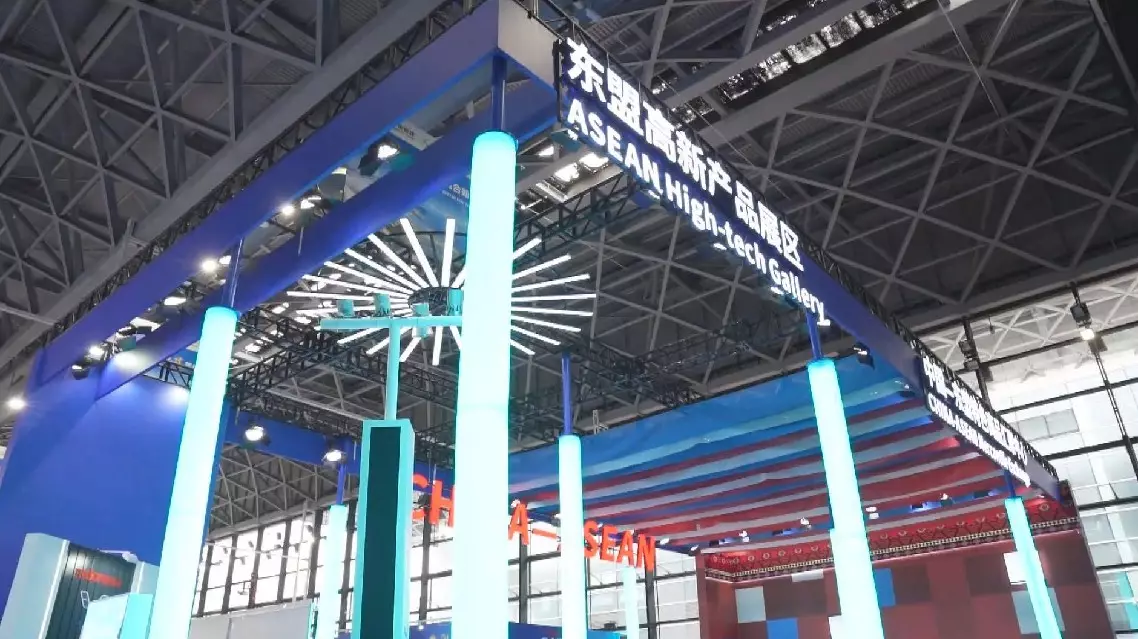
From products to supply chains, cooperation between China and ASEAN countries is gradually deepening. At the high-tech products exhibition area that was set up for the first time, a miniature new energy vehicle has caught many eyes. The car was launched by Chinese automaker Wuling Motors after establishing a plant in Indonesia.
"We have brought some core industrial chains to invest and build factories in Indonesia. We have also bought from more than 70 local Indonesian supply chains, including our batteries, which has driven the manufacturing sector there," said Xiang Tao, an exhibitor for Wuling Motors.
The industrial chain and supply chain matchmaking meetings between the ASEAN and China, Japan and the Republic of Korea have resulted in more than 190 cooperation intentions with a total value of over 2.1 billion U.S. dollars. Cooperation in equipment manufacturing, digital technology, medicine and health care is becoming increasingly close among these nations.
"In the joint statement of a trilateral summit, the three leaders emphasized the main cooperative areas are digitalization, digital transformation and science and technology and innovation, and climate change and carbon neutrality. The recent main trend is digital and green," said Lee Hee-sup, secretary-general of the Trilateral Cooperation Secretariat among China, Japan, and the Republic of Korea.
The expo, which runs from Tuesday till Saturday this week in Nanning City, south China's Guangxi Zhuang Autonomous Region, attracts more than 3,000 exhibitors, with new themes focusing on digital technology, green energy and smart vehicles.
China-ASEAN Expo enlarges reach, deepens regional cooperation