More than 400 pieces of cultural relics discovered from two historical shipwrecks under the South China Sea were showcased to public for the first time at an exhibition in south China's Hainan Province on Friday.
Located at the China (Hainan) Museum of the South China Sea, the exhibition has a total of 408 artifacts from the two ancient shipwrecks on display, along with 34 borrowed artifacts from the Palace Museum in Beijing and other museums in the rest of the country.
Dating back to the Ming Dynasty (1368-1644), the two shipwrecks were discovered at a depth of about 1,500 meters near the northwest continental slope of the South China Sea in October 2022, with one shipwreck loading with a large amount of delicate porcelains and the other with precious timbers.
Many exquisite porcelains retrieved from the No.1 shipwreck are displayed at the exhibition, captivating visitors.
"The No.1 shipwreck carries a lot of pieces of relics featuring exquisite craftsmanship and designs," said Xin Lixue, curator of the China (Hainan) Museum of the South China Sea.
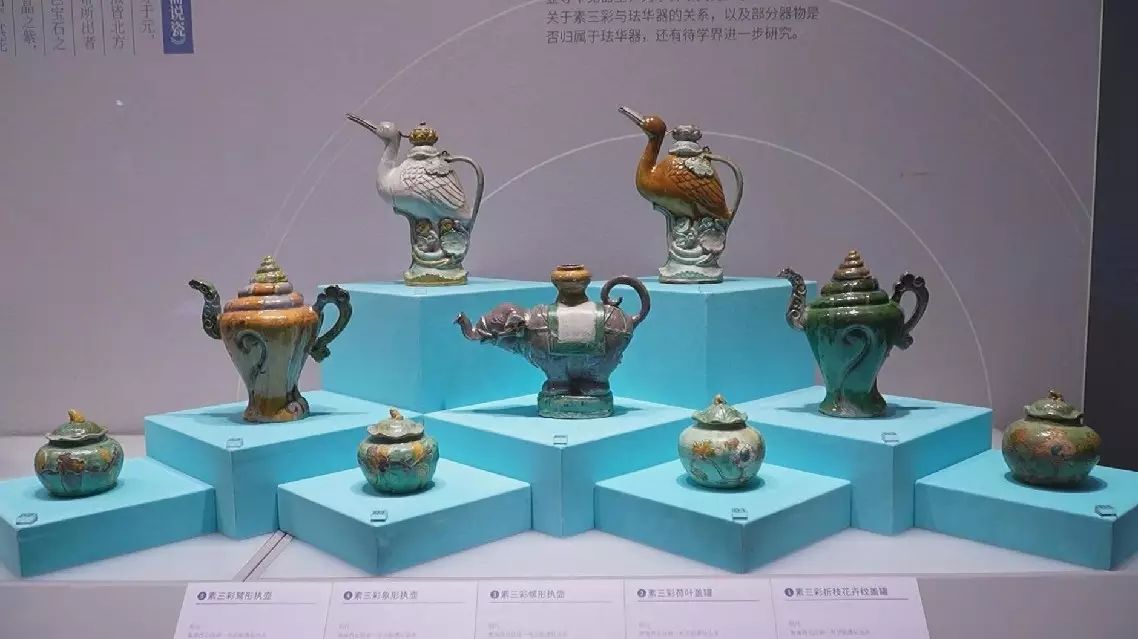
The most eye-catching exhibit is Fahua-colored porcelain, with 13 pieces (sets) on display. The archaeological discovery of Fahua-colored porcelain is very rare, and it is the first discovery in a shipwreck.
Apart from porcelains, ebony retrieved from the No.2 shipwreck are also showcased at the exhibition. Ebony is a dense black or brown hardwood. Despite high value, its unique color, durability, hardness and ability to take a high polish has captivated Chinese customers since ancient times.
"This is ebony. Chinese people have been fond of ebony produced in south and southeast Asia. It was quite common to import the this kind of hard, dense wood from these places to China in Ming Dynasty. Ebony is a high-quality hardwood, so it was precious at that time." said Xin as he introduced the wood.
The exhibition also provides more immersive experiences for visitors, which allow them to get a closer look at the spectacular scene of shipwrecks under the deep sea and even "touch" the relics being scattered around with the help of advanced virtual reality (VR) technology.
Rare sunken relics recovered from South China Sea make public debut