Skip to Content Facebook Feature Image

SpaceX launches rescue mission for 2 NASA astronauts who are stuck in space until next year

News

SpaceX launches rescue mission for 2 NASA astronauts who are stuck in space until next year
News

News

SpaceX launches rescue mission for 2 NASA astronauts who are stuck in space until next year

2024-09-29 02:47 Last Updated At:02:50

CAPE CANAVERAL, Fla. (AP) — SpaceX launched a rescue mission for the two stuck astronauts at the International Space Station on Saturday, sending up a downsized crew to bring them home but not until next year.

The capsule rocketed into orbit to fetch the test pilots whose Boeing spacecraft returned to Earth empty earlier this month because of safety concerns. The switch in rides left it to NASA’s Nick Hague and Russia’s Alexander Gorbunov to retrieve Butch Wilmore and Suni Williams.

More Images
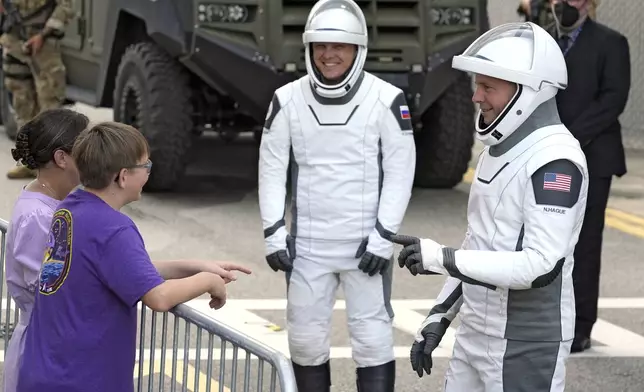
NASA astronaut Nick Hague, right, talks to his family members as Roscosmos cosmonaut Aleksandr Gorbunov looks on after leaving the Operations and Checkout building for a trip to the launch pad 40 Saturday, Sept. 28, 2024, at the Kennedy Space Center in Cape Canaveral, Fla. Two astronauts are beginning a mission to the International Space Station. (AP Photo/Chris O'Meara)
NASA astronaut Nick Hague, right, talks to his family members as Roscosmos cosmonaut Aleksandr Gorbunov looks on after leaving the Operations and Checkout building for a trip to the launch pad 40 Saturday, Sept. 28, 2024, at the Kennedy Space Center in Cape Canaveral, Fla. Two astronauts are beginning a mission to the International Space Station. (AP Photo/Chris O'Meara)

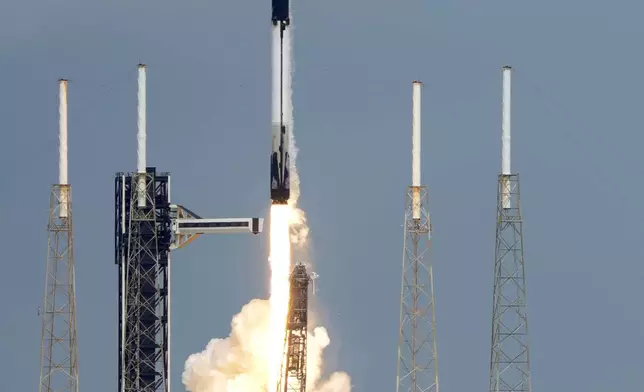
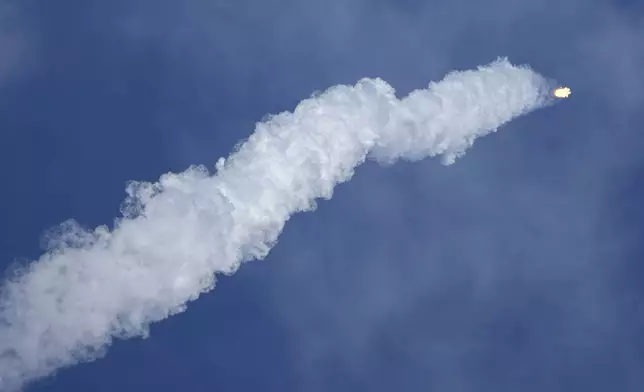
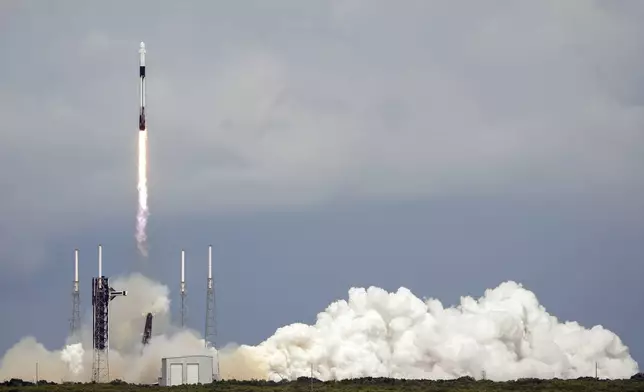
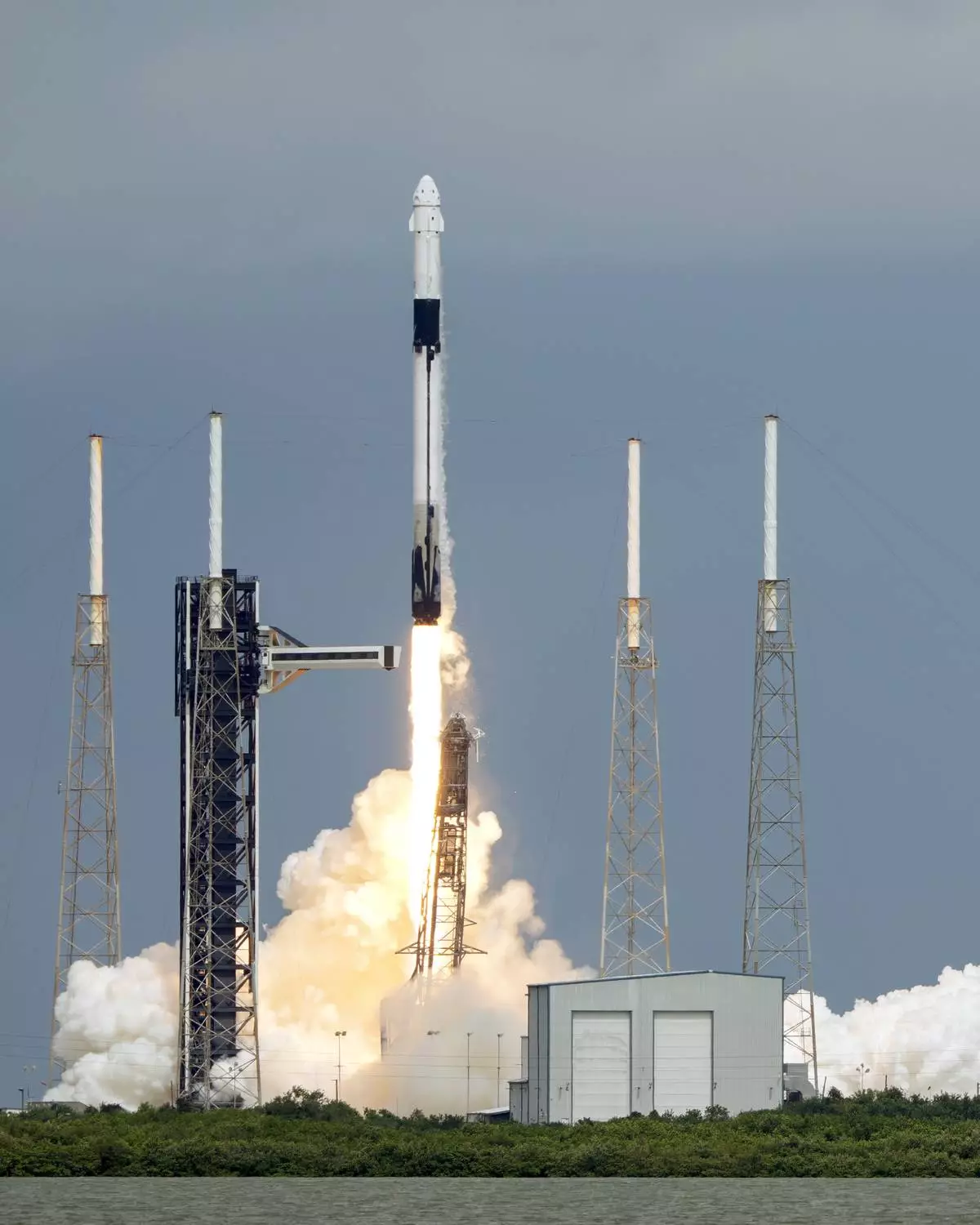
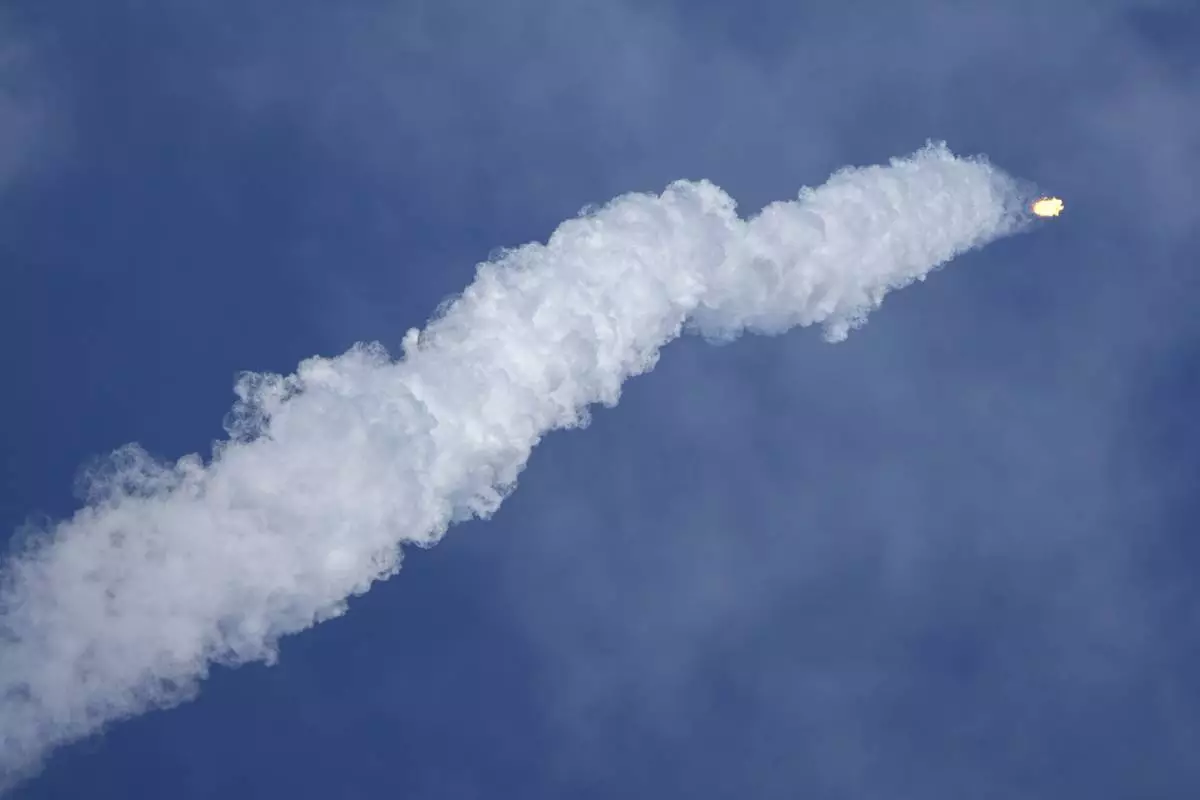
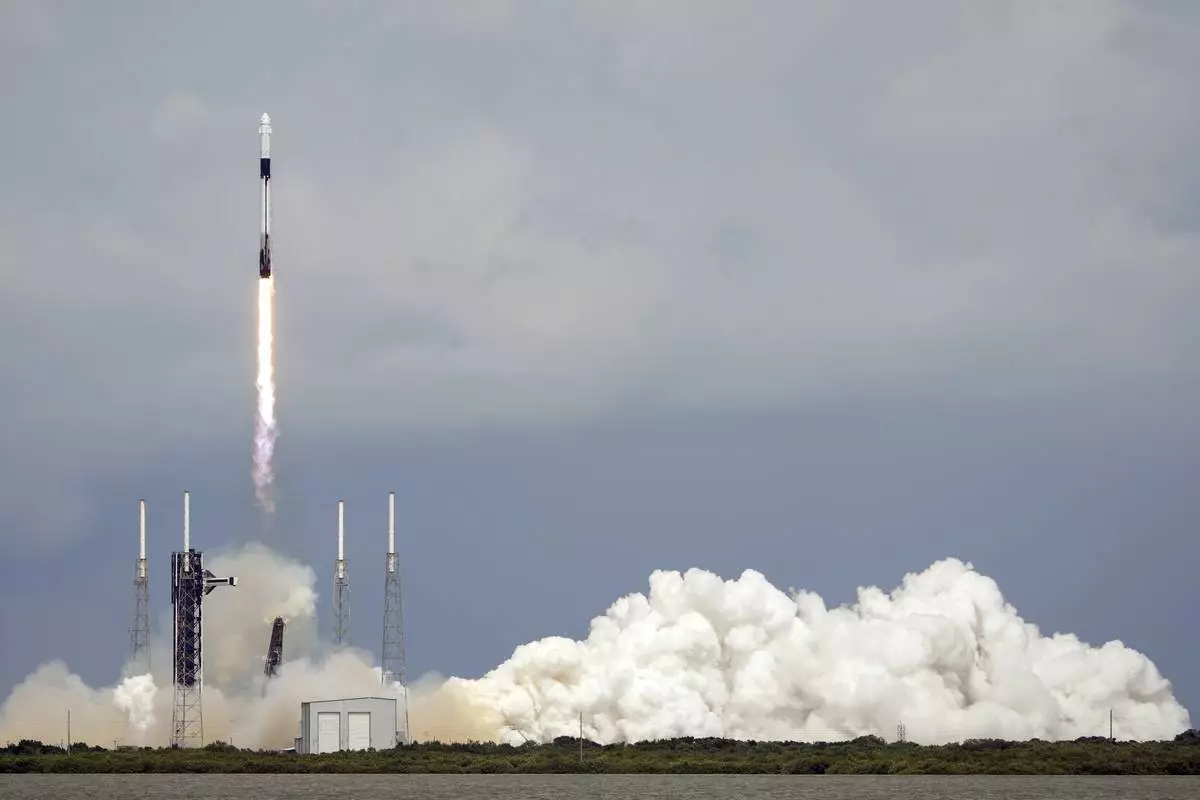
A SpaceX Falcon 9 rocket with a crew of two lifts off from launch pad 40 at the Cape Canaveral Space Force Station Saturday, Sept. 28, 2024 at Cape Canaveral, Fla. (AP Photo/John Raoux)
A SpaceX Falcon 9 rocket with a crew of two lifts off from launch pad 40 at the Cape Canaveral Space Force Station Saturday, Sept. 28, 2024 at Cape Canaveral, Fla. (AP Photo/John Raoux)
A SpaceX Falcon 9 rocket with a crew of two lifts off from launch pad 40 at the Cape Canaveral Space Force Station Saturday, Sept. 28, 2024 at Cape Canaveral, Fla. (AP Photo/John Raoux)
A SpaceX Falcon 9 rocket with a crew of two lifts off from launch pad 40 at the Cape Canaveral Space Force Station Saturday, Sept. 28, 2024 at Cape Canaveral, Fla. (AP Photo/John Raoux)

A SpaceX Falcon 9 rocket with a crew of two lifts off from launch pad 40 at the Cape Canaveral Space Force Station Saturday, Sept. 28, 2024 at Cape Canaveral, Fla. (AP Photo/John Raoux)

A SpaceX Falcon 9 rocket with a crew of two lifts off from launch pad 40 at the Cape Canaveral Space Force Station Saturday, Sept. 28, 2024 at Cape Canaveral, Fla. (AP Photo/John Raoux)

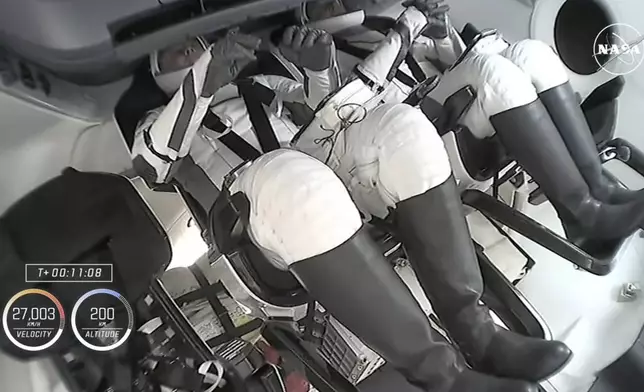
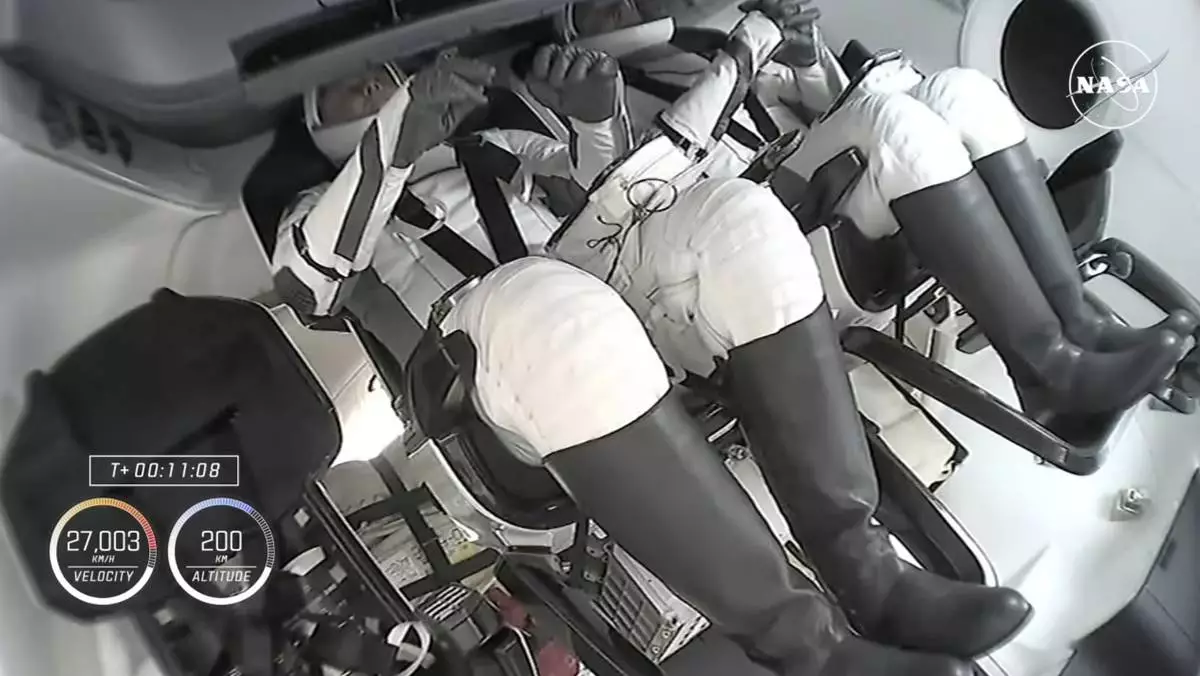
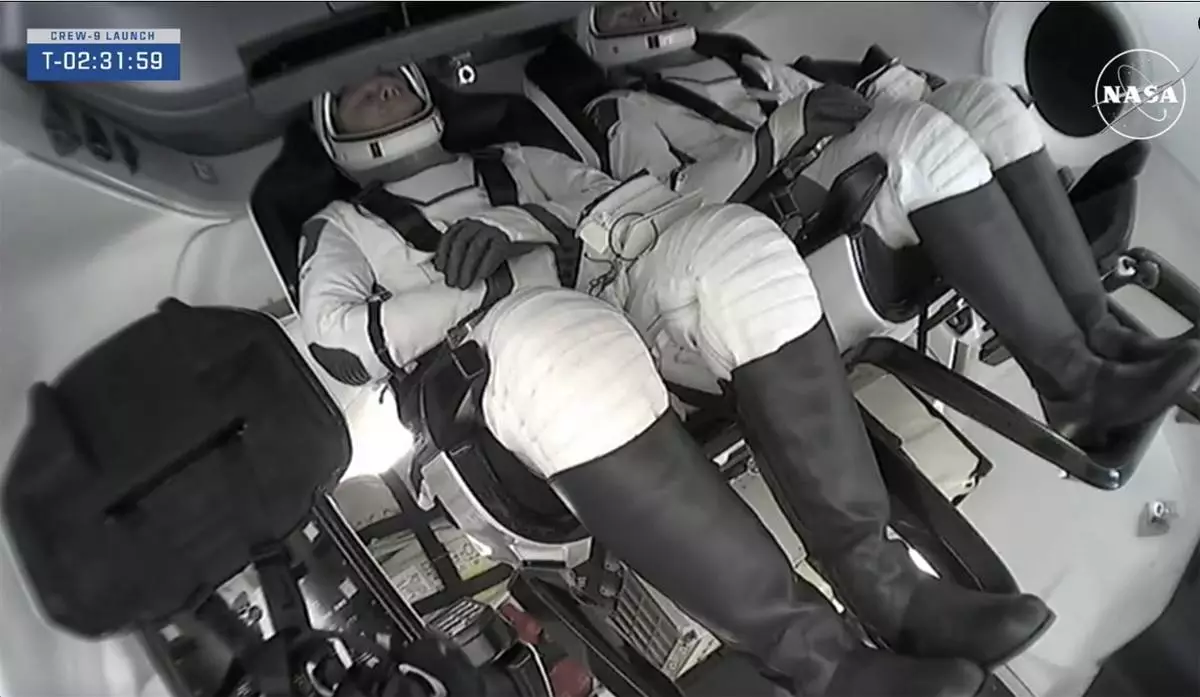
In this image from video provided by NASA, Roscosmos cosmonaut Aleksandr Gorbunov, left, and astronaut Nick Hague travel inside a SpaceX capsule en route to the International Space Station after launching from the Kennedy Space Center in Cape Canaveral, Fla., Saturday, Sept. 28, 2024. (NASA via AP)
In this image from video provided by NASA, Roscosmos cosmonaut Aleksandr Gorbunov, left, and astronaut Nick Hague travel inside a SpaceX capsule en route to the International Space Station after launching from the Kennedy Space Center in Cape Canaveral, Fla., Saturday, Sept. 28, 2024. (NASA via AP)

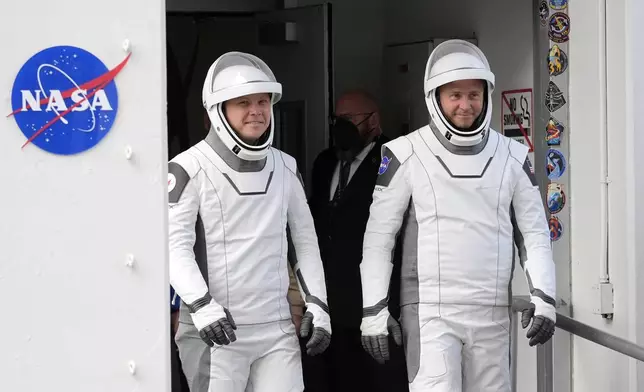
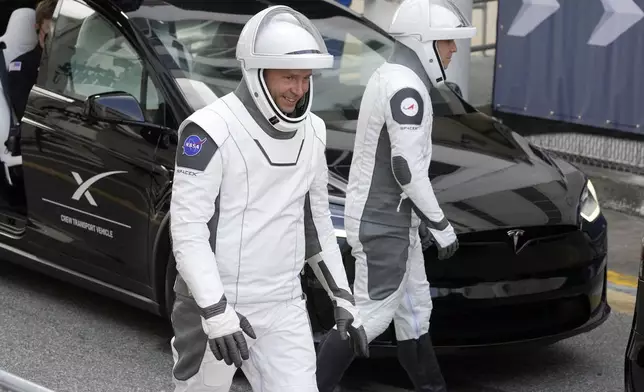
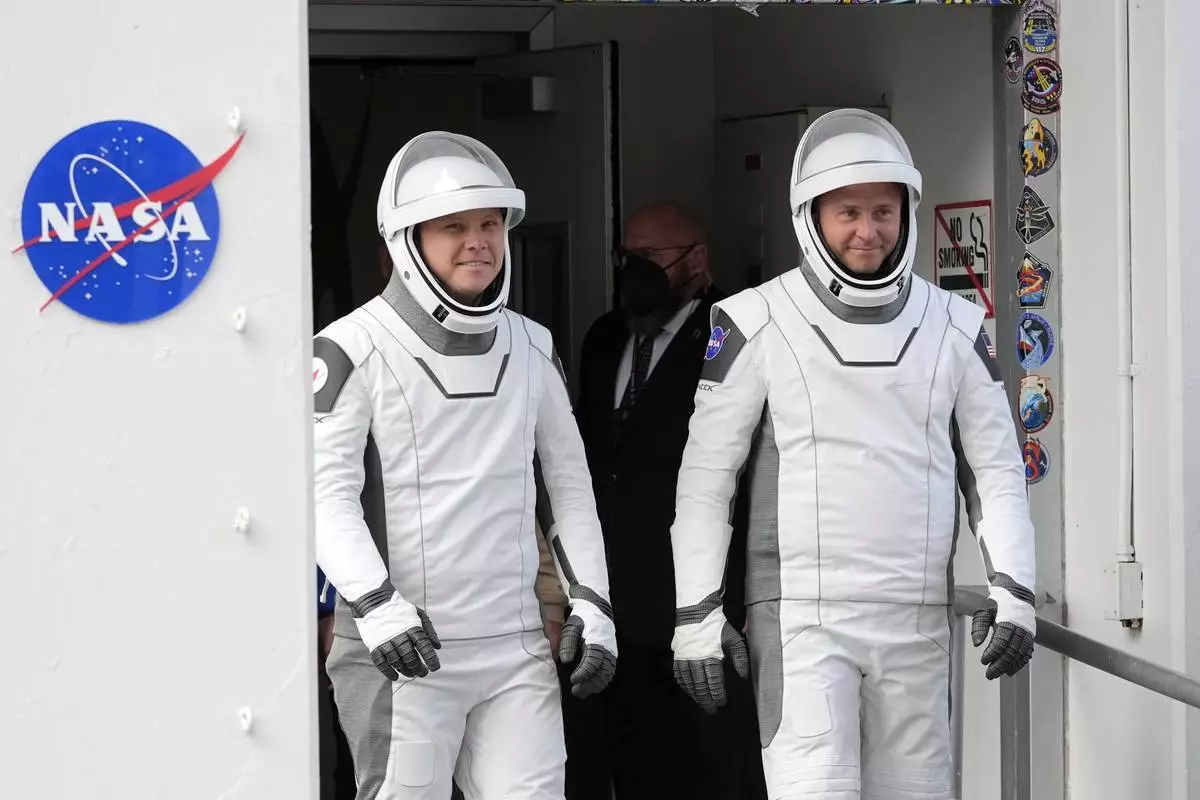
Roscosmos cosmonaut Aleksandr Gorbunov, left, and NASA astronaut Nick Hague leave the Operations and Checkout Building on their way to Launch Complex 40 for a mission to the International Space Station Saturday, Sept. 28, 2024 at Cape Canaveral, Fla., (AP Photo/John Raoux)
Roscosmos cosmonaut Aleksandr Gorbunov, left, and NASA astronaut Nick Hague leave the Operations and Checkout Building on their way to Launch Complex 40 for a mission to the International Space Station Saturday, Sept. 28, 2024 at Cape Canaveral, Fla., (AP Photo/John Raoux)

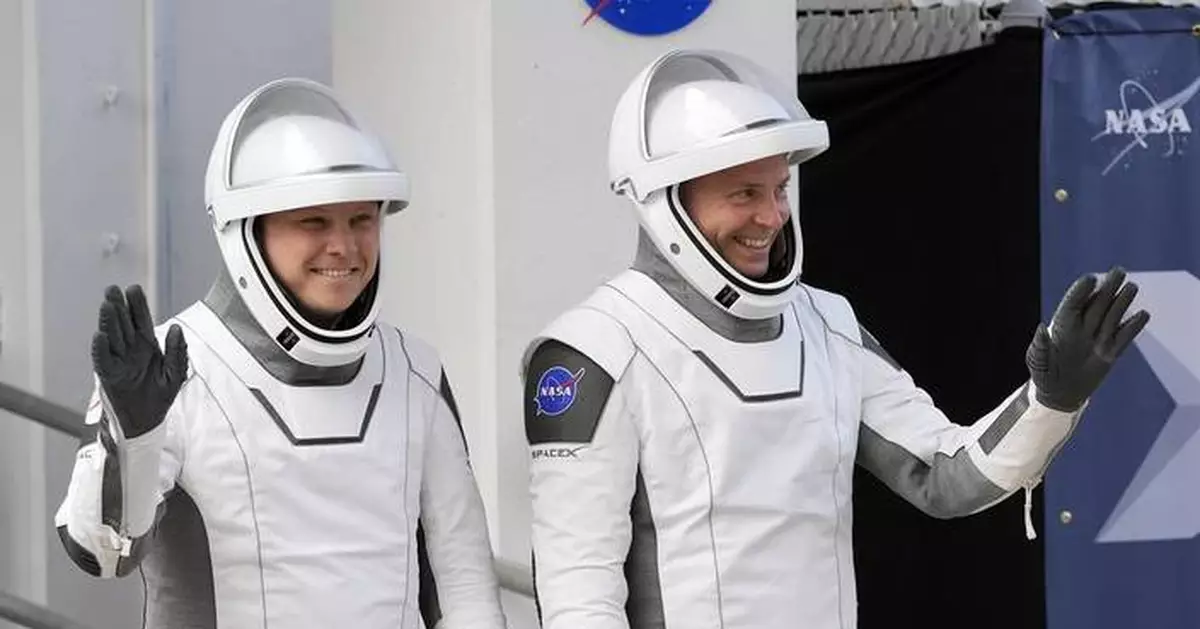
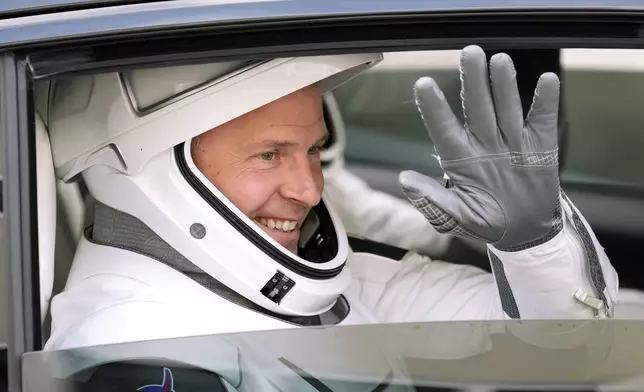
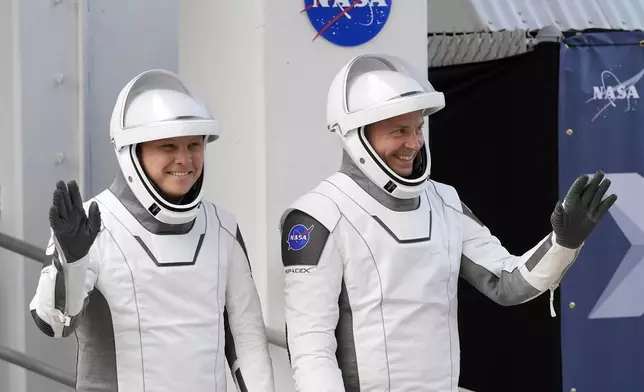
NASA astronaut Nick Hague, left, and Roscosmos cosmonaut Aleksandr Gorbunov wave as they leave the Operations and Checkout building for a trip to the launch pad 40 Saturday, Sept. 28, 2024, at the Kennedy Space Center in Cape Canaveral, Fla. Two astronauts are beginning a mission to the International Space Station. (AP Photo/Chris O'Meara)
NASA astronaut Nick Hague, left, and Roscosmos cosmonaut Aleksandr Gorbunov wave as they leave the Operations and Checkout building for a trip to the launch pad 40 Saturday, Sept. 28, 2024, at the Kennedy Space Center in Cape Canaveral, Fla. Two astronauts are beginning a mission to the International Space Station. (AP Photo/Chris O'Meara)

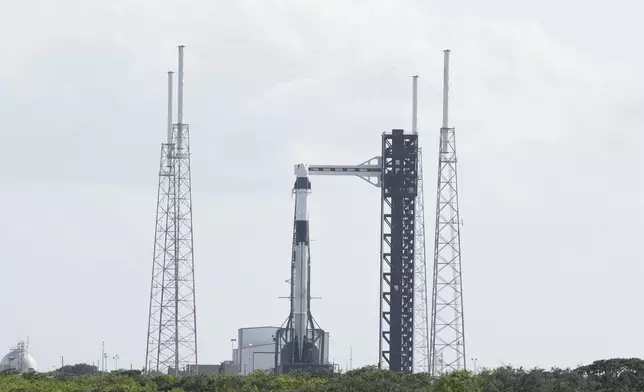
A SpaceX Falcon 9 rocket sits on Launch Complex 40 at the Space Force Station Friday, Sept. 27, 2024, in Cape Canaveral, Fla. Two astronauts are scheduled to begin a mission on Saturday afternoon to the International Space Station. (AP Photo/Chris O'Meara)
A SpaceX Falcon 9 rocket sits on Launch Complex 40 at the Space Force Station Friday, Sept. 27, 2024, in Cape Canaveral, Fla. Two astronauts are scheduled to begin a mission on Saturday afternoon to the International Space Station. (AP Photo/Chris O'Meara)

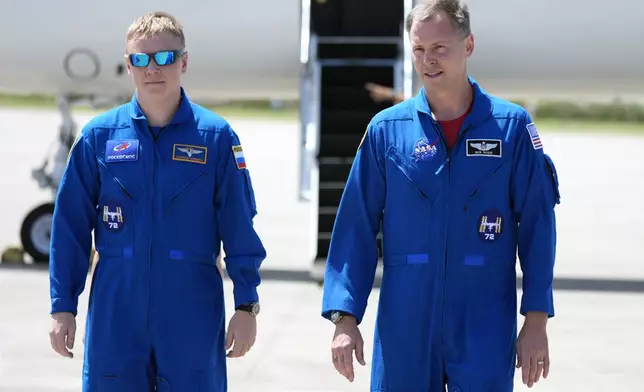
Roscosmos cosmonaut Aleksandr Gorbunov, left, and NASA astronaut Nick Hague arrive at the Kennedy Space Center in Cape Canaveral, Fla., Saturday, Sept. 21, 2024 as they prepare for their mission to the International Space Station. (AP Photo/John Raoux)
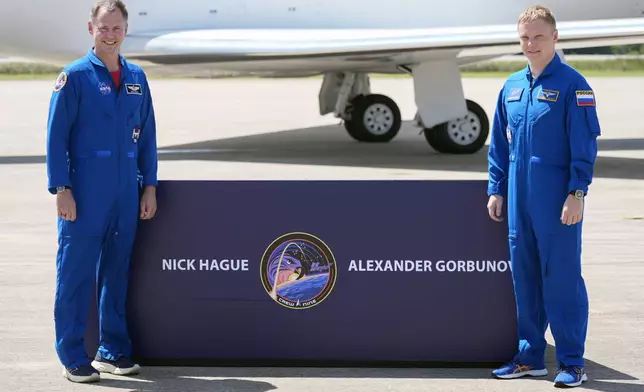
Roscosmos cosmonaut Aleksandr Gorbunov, left, and NASA astronaut Nick Hague arrive at the Kennedy Space Center in Cape Canaveral, Fla., Saturday, Sept. 21, 2024 as they prepare for their mission to the International Space Station. (AP Photo/John Raoux)
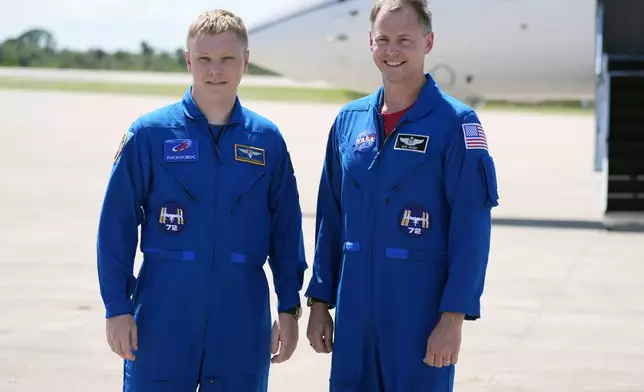
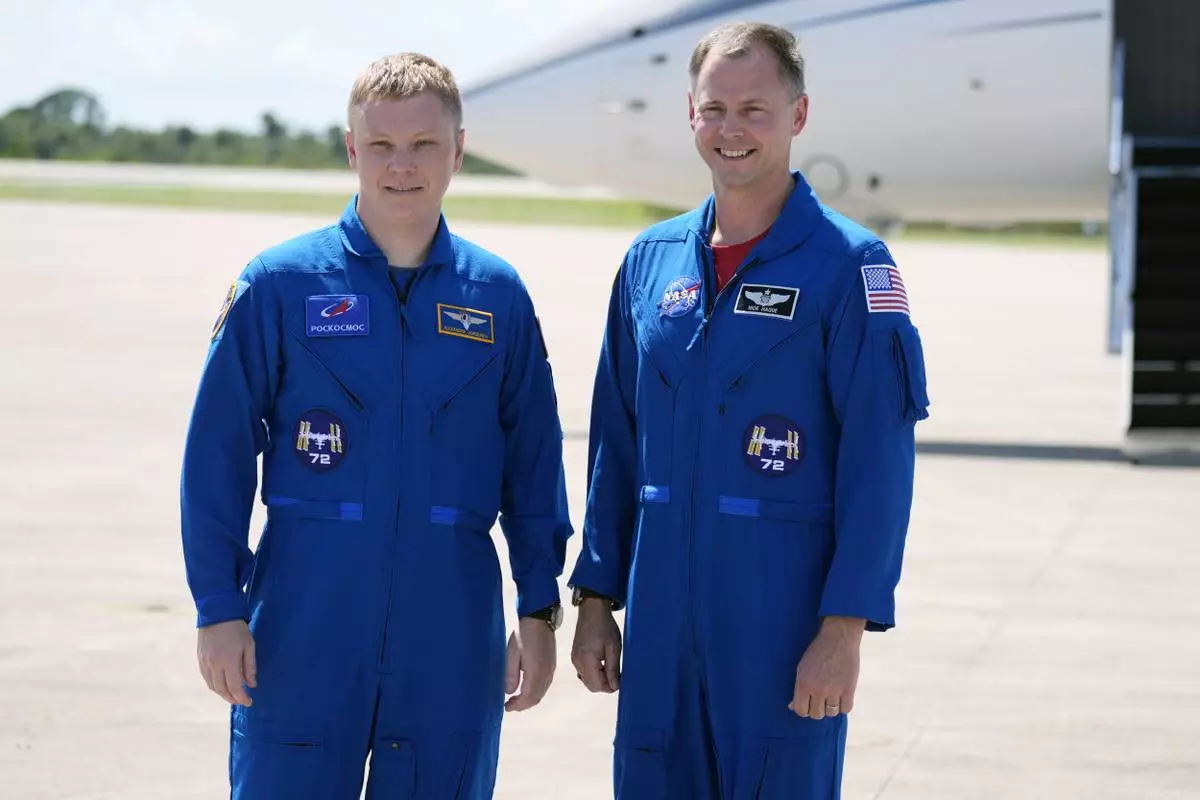
NASA astronaut Nick Hague, left, and Roscosmos cosmonaut Aleksandr Gorbunov pose for a photo after they arrived at the Kennedy Space Center in Cape Canaveral, Fla., Saturday, Sept. 21, 2024 as they prepare for their mission to the International Space Station. (AP Photo/John Raoux)

NASA astronaut Nick Hague, left, and Roscosmos cosmonaut Aleksandr Gorbunov pose for a photo after they arrived at the Kennedy Space Center in Cape Canaveral, Fla., Saturday, Sept. 21, 2024 as they prepare for their mission to the International Space Station. (AP Photo/John Raoux)

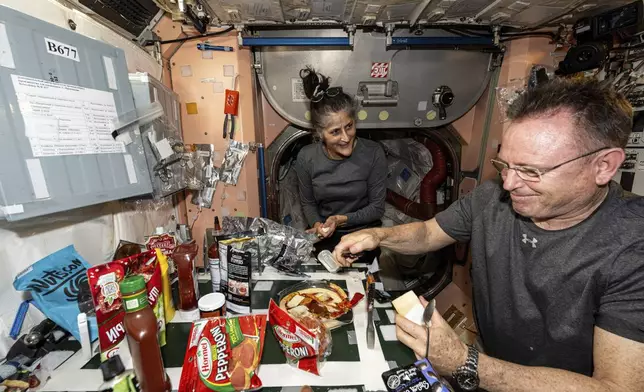
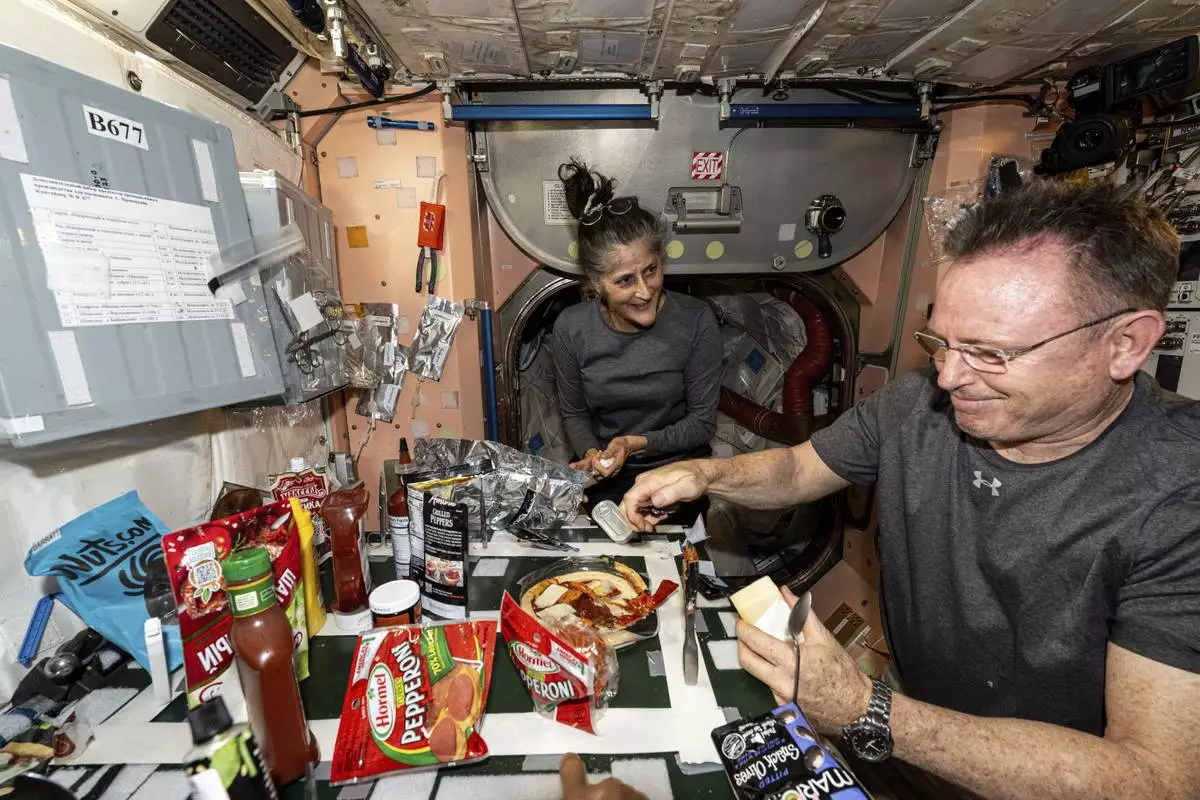
In this image released by NASA, NASA astronauts Suni Williams and Butch Wilmore, both Expedition 71 Flight Engineers, make pizza aboard the International Space Station's galley located inside the Unity module on Sept. 9, 2024. Items are attached to the galley using tape and velcro to keep them from flying away in the microgravity environment. (NASA via AP)
In this image released by NASA, NASA astronauts Suni Williams and Butch Wilmore, both Expedition 71 Flight Engineers, make pizza aboard the International Space Station's galley located inside the Unity module on Sept. 9, 2024. Items are attached to the galley using tape and velcro to keep them from flying away in the microgravity environment. (NASA via AP)

Roscosmos cosmonaut Aleksandr Gorbunov, left, and NASA astronaut Nick Hague pose for a photo after they arrived at the Kennedy Space Center in Cape Canaveral, Fla., Saturday, Sept. 21, 2024 to prepare for their mission to the International Space Station. (AP Photo/John Raoux)
Roscosmos cosmonaut Aleksandr Gorbunov, left, and NASA astronaut Nick Hague pose for a photo after they arrived at the Kennedy Space Center in Cape Canaveral, Fla., Saturday, Sept. 21, 2024 to prepare for their mission to the International Space Station. (AP Photo/John Raoux)

NASA astronaut Nick Hague, left, and Roscosmos cosmonaut Aleksandr Gorbunov leave the Operations and Checkout building for a trip to the launch pad 40 Saturday, Sept. 28, 2024, at the Kennedy Space Center in Cape Canaveral, Fla. (AP Photo/Chris O'Meara)
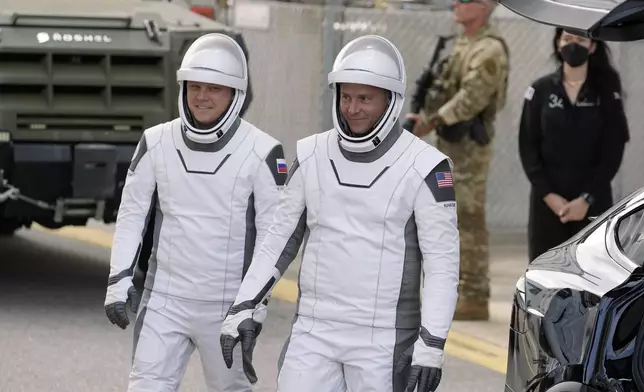
NASA astronaut Nick Hague, left, and Roscosmos cosmonaut Aleksandr Gorbunov leave the Operations and Checkout building for a trip to the launch pad 40 Saturday, Sept. 28, 2024, at the Kennedy Space Center in Cape Canaveral, Fla. (AP Photo/Chris O'Meara)
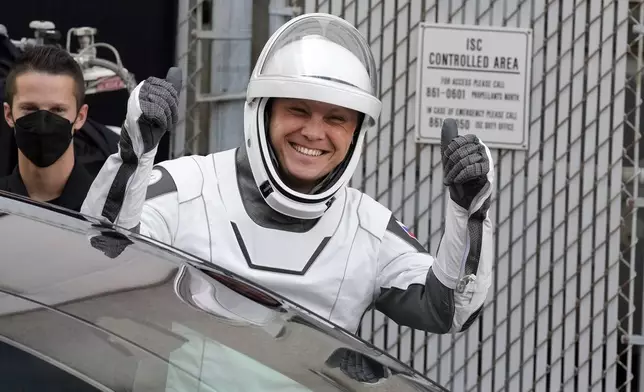
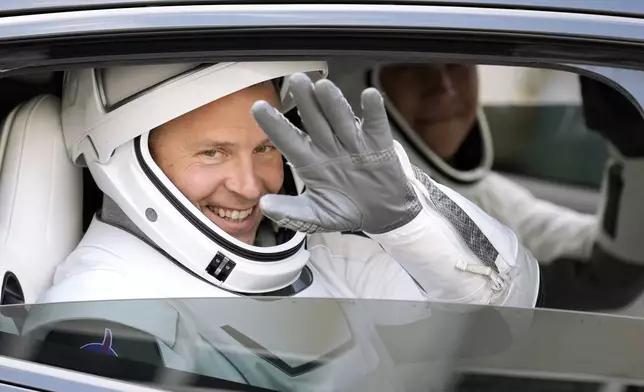
NASA astronaut Nick Hague waves as he leaves the Operations and Checkout building for a trip to the launch pad 40 Saturday, Sept. 28, 2024, at the Kennedy Space Center in Cape Canaveral, Fla. (AP Photo/Chris O'Meara)
NASA astronaut Nick Hague waves as he leaves the Operations and Checkout building for a trip to the launch pad 40 Saturday, Sept. 28, 2024, at the Kennedy Space Center in Cape Canaveral, Fla. (AP Photo/Chris O'Meara)
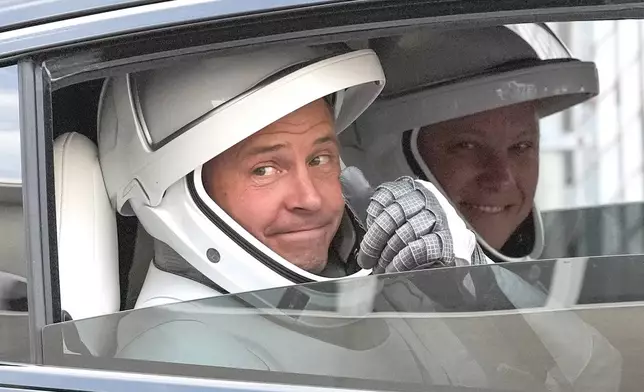
Roscosmos cosmonaut Aleksandr Gorbunov reacts as he leaves the Operations and Checkout building for a trip to the launch pad 40 Saturday, Sept. 28, 2024, at the Kennedy Space Center in Cape Canaveral, Fla. (AP Photo/Chris O'Meara)

Roscosmos cosmonaut Aleksandr Gorbunov reacts as he leaves the Operations and Checkout building for a trip to the launch pad 40 Saturday, Sept. 28, 2024, at the Kennedy Space Center in Cape Canaveral, Fla. (AP Photo/Chris O'Meara)

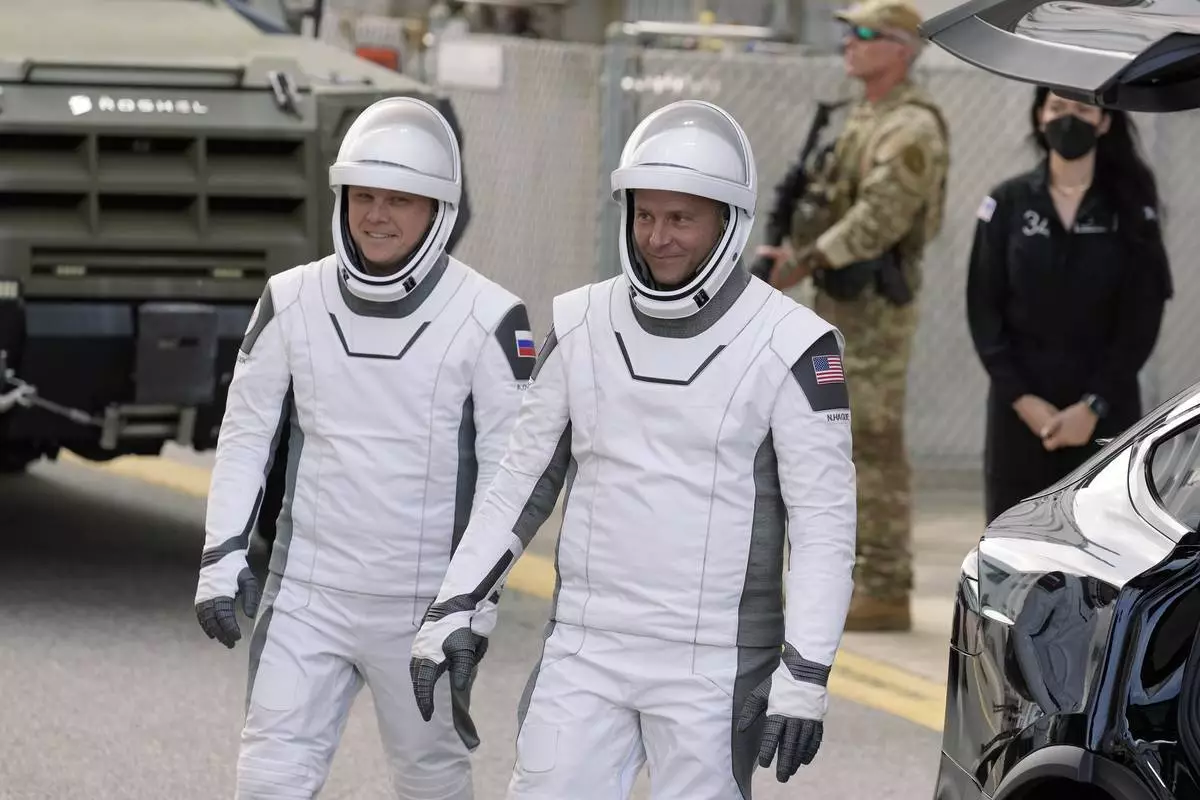
NASA astronaut Nick Hague, right, and Roscosmos cosmonaut Aleksandr Gorbunov leave the Operations and Checkout building for a trip to the launch pad 40 Saturday, Sept. 28, 2024, at the Kennedy Space Center in Cape Canaveral, Fla. (AP Photo/Chris O'Meara)

NASA astronaut Nick Hague, right, and Roscosmos cosmonaut Aleksandr Gorbunov leave the Operations and Checkout building for a trip to the launch pad 40 Saturday, Sept. 28, 2024, at the Kennedy Space Center in Cape Canaveral, Fla. (AP Photo/Chris O'Meara)

NASA astronaut Nick Hague, left, and Roscosmos cosmonaut Aleksandr Gorbunov, left, gives a thumbs up as they leave the Operations and Checkout Building on their way to Launch Complex 40 for a mission to the International Space Station Saturday, Sept. 28, 2024 at Cape Canaveral, Fla., (AP Photo/John Raoux)
NASA astronaut Nick Hague, left, and Roscosmos cosmonaut Aleksandr Gorbunov, left, gives a thumbs up as they leave the Operations and Checkout Building on their way to Launch Complex 40 for a mission to the International Space Station Saturday, Sept. 28, 2024 at Cape Canaveral, Fla., (AP Photo/John Raoux)

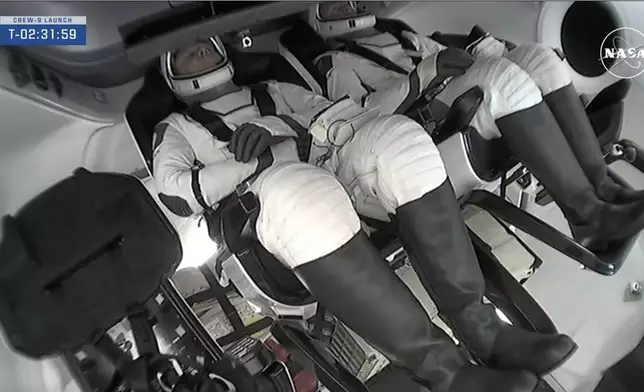
This image provided by NASA shows NASA astronaut Nick Hague and Roscosmos cosmonaut Aleksandr Gorbunov inside the SpaceX capsule Saturday, Sept. 28, 2024, at the Kennedy Space Center in Cape Canaveral, Fla. (NASA via AP)
This image provided by NASA shows NASA astronaut Nick Hague and Roscosmos cosmonaut Aleksandr Gorbunov inside the SpaceX capsule Saturday, Sept. 28, 2024, at the Kennedy Space Center in Cape Canaveral, Fla. (NASA via AP)

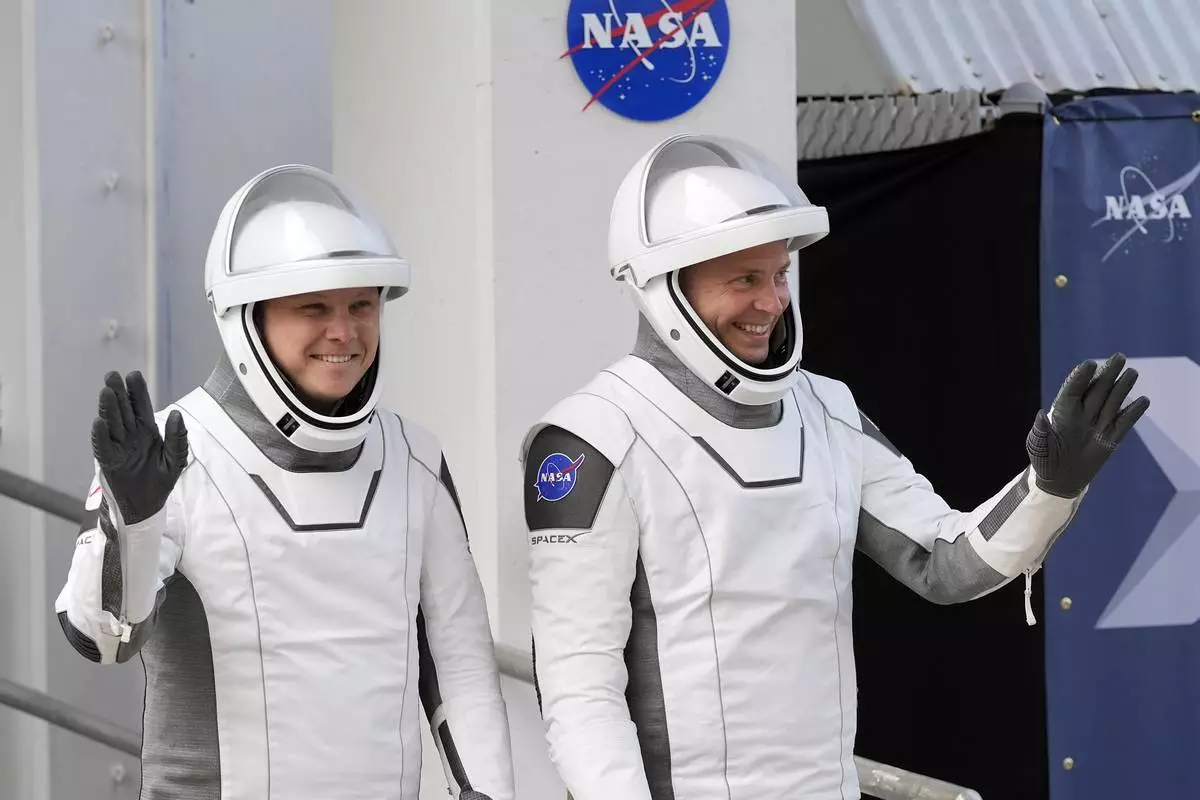
Roscosmos cosmonaut Aleksandr Gorbunov, left, and NASA astronaut Nick Hague wave as they leave the Operations and Checkout Building on their way to Launch Complex 40 for a mission to the International Space Station Saturday, Sept. 28, 2024 at Cape Canaveral, Fla., (AP Photo/John Raoux)

Roscosmos cosmonaut Aleksandr Gorbunov, left, and NASA astronaut Nick Hague wave as they leave the Operations and Checkout Building on their way to Launch Complex 40 for a mission to the International Space Station Saturday, Sept. 28, 2024 at Cape Canaveral, Fla., (AP Photo/John Raoux)

Since NASA rotates space station crews approximately every six months, this newly launched flight with two empty seats reserved for Wilmore and Williams won’t return until late February. Officials said there wasn’t a way to bring them back earlier on SpaceX without interrupting other scheduled missions.

By the time they return, the pair will have logged more than eight months in space. They expected to be gone just a week when they signed up for Boeing’s first astronaut flight that launched in June.

NASA ultimately decided that Boeing’s Starliner was too risky after a cascade of thruster troubles and helium leaks marred its trip to the orbiting complex. The space agency cut two astronauts from this SpaceX launch to make room on the return leg for Wilmore and Williams.

Williams has since been promoted to commander of the space station, which will soon be back to its normal population of seven. Once Hague and Gorbunov arrive this weekend, four astronauts living there since March can leave in their own SpaceX capsule. Their homecoming was delayed a month by Starliner’s turmoil.

Hague noted before the flight that change is the one constant in human spaceflight.

“There’s always something that is changing. Maybe this time it’s been a little more visible to the public,” he said.

Hague was thrust into the commander’s job for the rescue mission based on his experience and handling of a launch emergency six years ago. The Russian rocket failed shortly after liftoff, and the capsule carrying him and a cosmonaut catapulted off the top to safety.

Rookie NASA astronaut Zena Cardman and veteran space flier Stephanie Wilson were pulled from this flight after NASA opted to go with SpaceX to bring the stuck astronauts home. Promised a future space mission, both were at NASA’s Kennedy Space Center, taking part in the launch livestream. Gorbunov remained on the flight under an exchange agreement between NASA and the Russian Space Agency.

“Every crewed launch that I have ever watched has really brought me a lot of emotion. This one today was especially unique,” a teary-eyed Cardman said following the early afternoon liftoff. “It was hard not to watch that rocket lift off without thinking, ‘That’s my rocket and that’s my crew.’ ”

Moments before liftoff, Hague paid tribute to his two colleagues left behind: “Unbreakable. We did it together.” Once in orbit, he called it a ”sweet ride” and thanked everyone who made it possible.

Earlier, Hague acknowledged the challenges of launching with half a crew and returning with two astronauts trained on another spacecraft.

“We’ve got a dynamic challenge ahead of us,” Hague said after arriving from Houston last weekend. “We know each other and we’re professionals and we step up and do what’s asked of us.”

SpaceX has long been the leader in NASA’s commercial crew program, established as the space shuttles were retiring more than a decade ago. SpaceX beat Boeing in delivering astronauts to the space station in 2020 and it’s now up to 10 crew flights for NASA.

Boeing has struggled with a variety of issues over the years, repeating a Starliner test flight with no one on board after the first one veered off course. The Starliner that left Wilmore and Williams in space landed without any issues in the New Mexico desert on Sept. 6, and has since returned to Kennedy Space Center. A week ago, Boeing’s defense and space chief was replaced.

Delayed by Hurricane Helene pounding Florida, the latest SpaceX liftoff marked the first for astronauts from Launch Complex 40 at Cape Canaveral Space Force Station. SpaceX took over the old Titan rocket pad nearly two decades ago and used it for satellite launches, while flying crews from Kennedy’s former Apollo and shuttle pad next door. The company wanted more flexibility as more Falcon rockets soared.

The Associated Press Health and Science Department receives support from the Howard Hughes Medical Institute’s Science and Educational Media Group. The AP is solely responsible for all content.
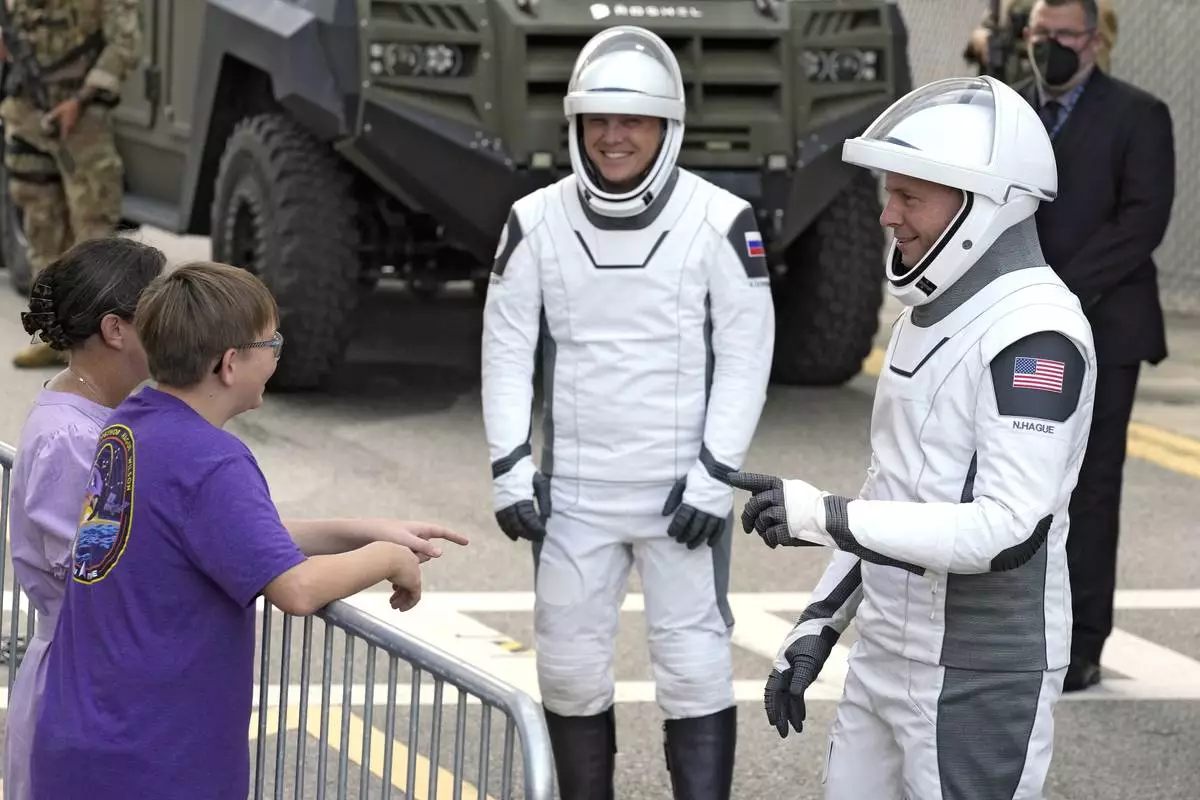
NASA astronaut Nick Hague, right, talks to his family members as Roscosmos cosmonaut Aleksandr Gorbunov looks on after leaving the Operations and Checkout building for a trip to the launch pad 40 Saturday, Sept. 28, 2024, at the Kennedy Space Center in Cape Canaveral, Fla. Two astronauts are beginning a mission to the International Space Station. (AP Photo/Chris O'Meara)
NASA astronaut Nick Hague, right, talks to his family members as Roscosmos cosmonaut Aleksandr Gorbunov looks on after leaving the Operations and Checkout building for a trip to the launch pad 40 Saturday, Sept. 28, 2024, at the Kennedy Space Center in Cape Canaveral, Fla. Two astronauts are beginning a mission to the International Space Station. (AP Photo/Chris O'Meara)

A SpaceX Falcon 9 rocket with a crew of two lifts off from launch pad 40 at the Cape Canaveral Space Force Station Saturday, Sept. 28, 2024 at Cape Canaveral, Fla. (AP Photo/John Raoux)
A SpaceX Falcon 9 rocket with a crew of two lifts off from launch pad 40 at the Cape Canaveral Space Force Station Saturday, Sept. 28, 2024 at Cape Canaveral, Fla. (AP Photo/John Raoux)
A SpaceX Falcon 9 rocket with a crew of two lifts off from launch pad 40 at the Cape Canaveral Space Force Station Saturday, Sept. 28, 2024 at Cape Canaveral, Fla. (AP Photo/John Raoux)
A SpaceX Falcon 9 rocket with a crew of two lifts off from launch pad 40 at the Cape Canaveral Space Force Station Saturday, Sept. 28, 2024 at Cape Canaveral, Fla. (AP Photo/John Raoux)

A SpaceX Falcon 9 rocket with a crew of two lifts off from launch pad 40 at the Cape Canaveral Space Force Station Saturday, Sept. 28, 2024 at Cape Canaveral, Fla. (AP Photo/John Raoux)

A SpaceX Falcon 9 rocket with a crew of two lifts off from launch pad 40 at the Cape Canaveral Space Force Station Saturday, Sept. 28, 2024 at Cape Canaveral, Fla. (AP Photo/John Raoux)

In this image from video provided by NASA, Roscosmos cosmonaut Aleksandr Gorbunov, left, and astronaut Nick Hague travel inside a SpaceX capsule en route to the International Space Station after launching from the Kennedy Space Center in Cape Canaveral, Fla., Saturday, Sept. 28, 2024. (NASA via AP)
In this image from video provided by NASA, Roscosmos cosmonaut Aleksandr Gorbunov, left, and astronaut Nick Hague travel inside a SpaceX capsule en route to the International Space Station after launching from the Kennedy Space Center in Cape Canaveral, Fla., Saturday, Sept. 28, 2024. (NASA via AP)

Roscosmos cosmonaut Aleksandr Gorbunov, left, and NASA astronaut Nick Hague leave the Operations and Checkout Building on their way to Launch Complex 40 for a mission to the International Space Station Saturday, Sept. 28, 2024 at Cape Canaveral, Fla., (AP Photo/John Raoux)
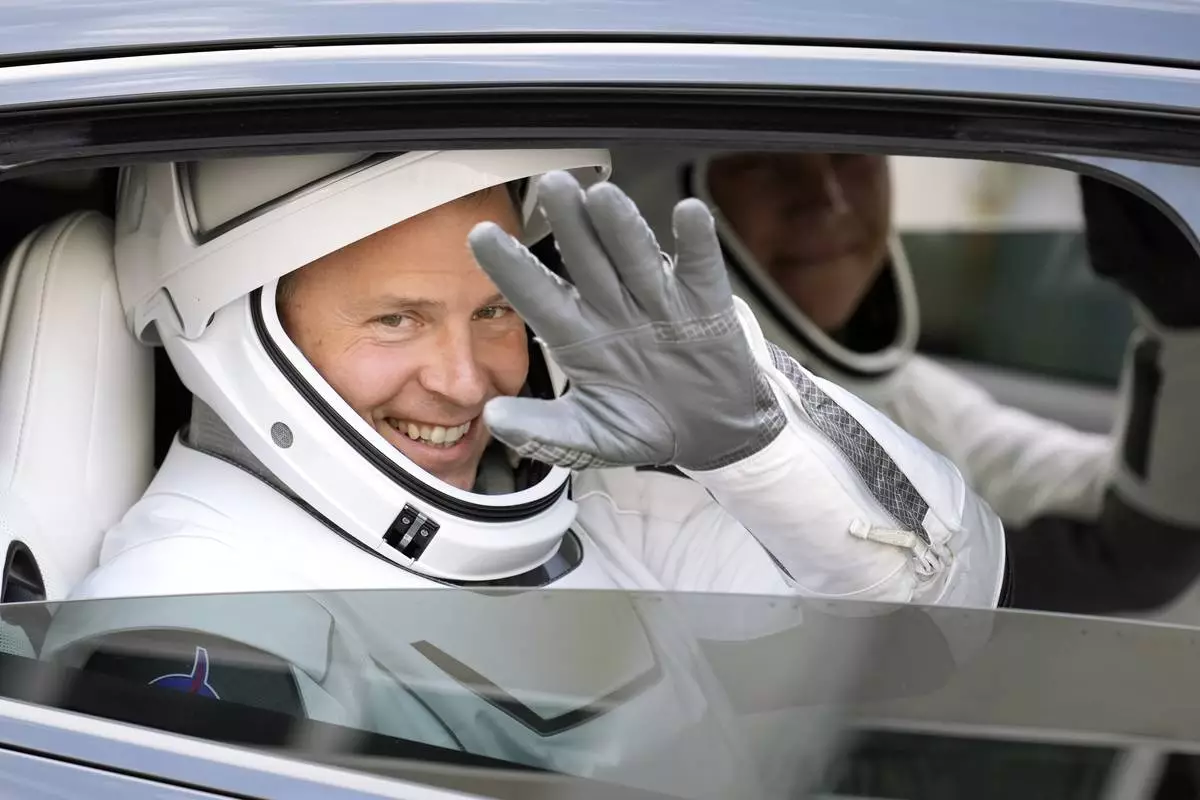
Roscosmos cosmonaut Aleksandr Gorbunov, left, and NASA astronaut Nick Hague leave the Operations and Checkout Building on their way to Launch Complex 40 for a mission to the International Space Station Saturday, Sept. 28, 2024 at Cape Canaveral, Fla., (AP Photo/John Raoux)

NASA astronaut Nick Hague, left, and Roscosmos cosmonaut Aleksandr Gorbunov wave as they leave the Operations and Checkout building for a trip to the launch pad 40 Saturday, Sept. 28, 2024, at the Kennedy Space Center in Cape Canaveral, Fla. Two astronauts are beginning a mission to the International Space Station. (AP Photo/Chris O'Meara)
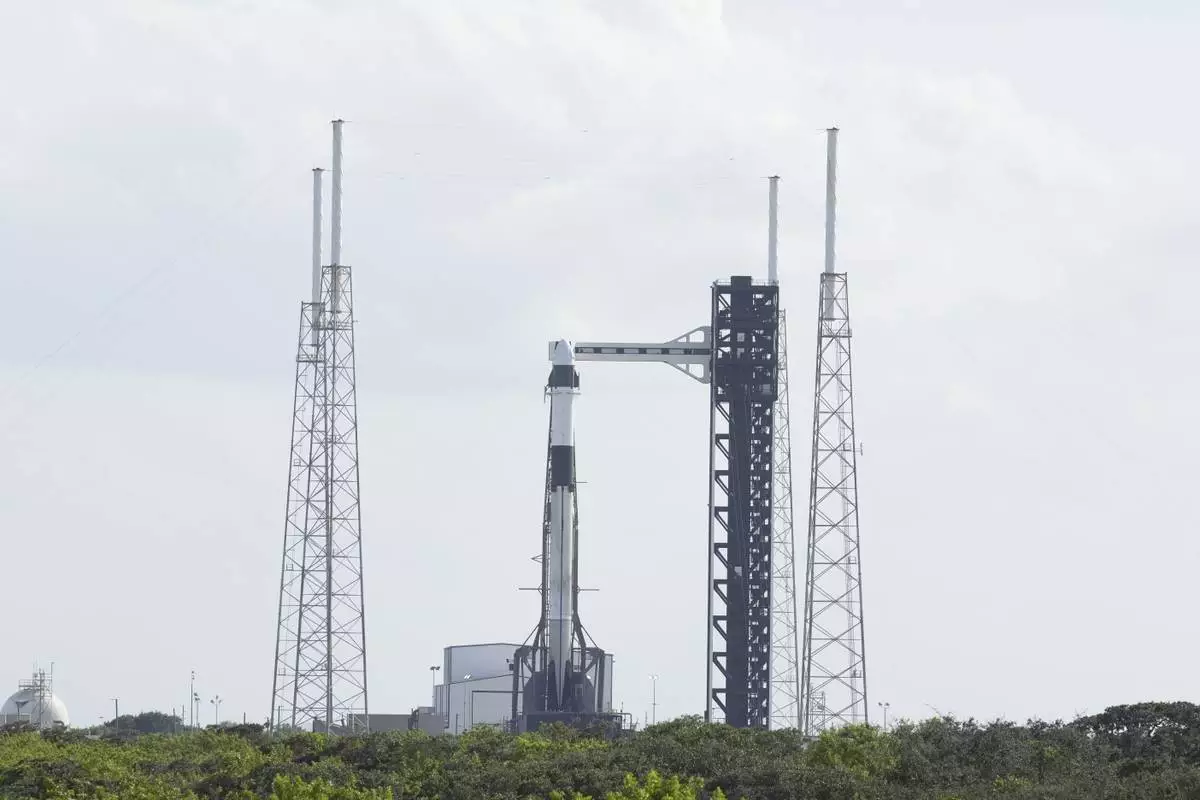
NASA astronaut Nick Hague, left, and Roscosmos cosmonaut Aleksandr Gorbunov wave as they leave the Operations and Checkout building for a trip to the launch pad 40 Saturday, Sept. 28, 2024, at the Kennedy Space Center in Cape Canaveral, Fla. Two astronauts are beginning a mission to the International Space Station. (AP Photo/Chris O'Meara)

A SpaceX Falcon 9 rocket sits on Launch Complex 40 at the Space Force Station Friday, Sept. 27, 2024, in Cape Canaveral, Fla. Two astronauts are scheduled to begin a mission on Saturday afternoon to the International Space Station. (AP Photo/Chris O'Meara)
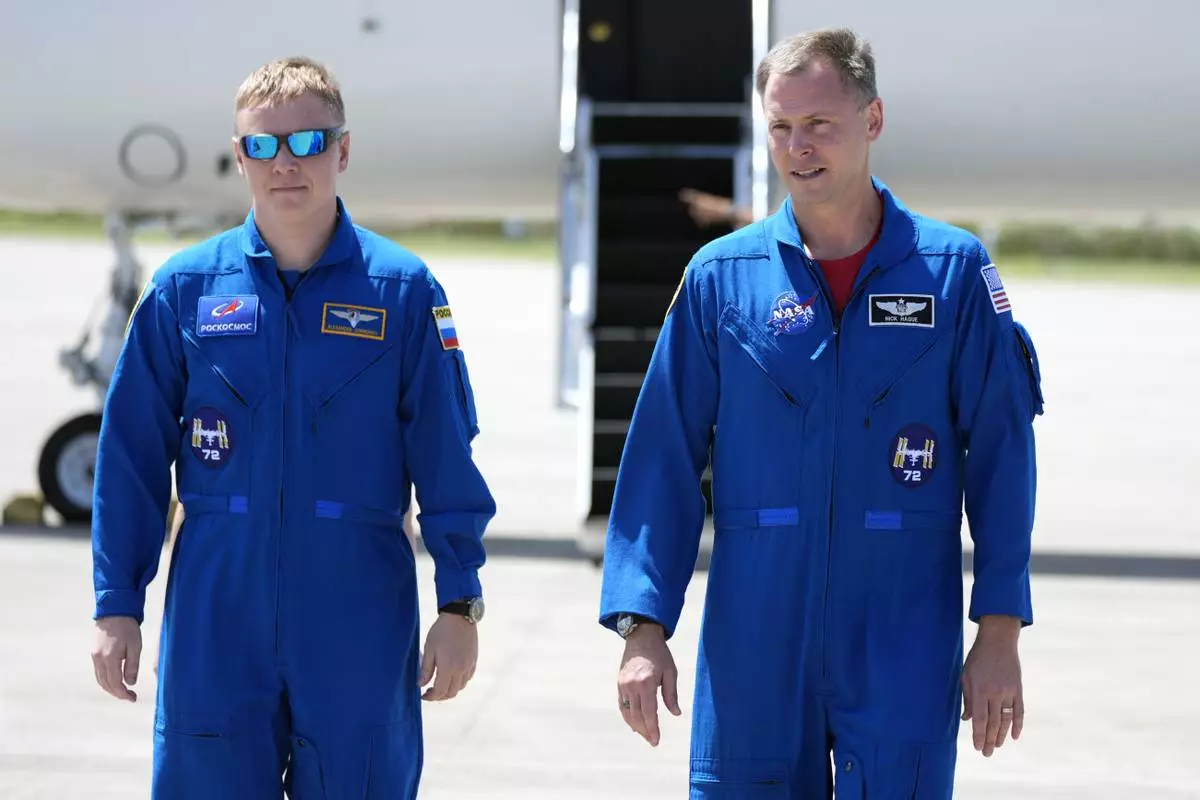
A SpaceX Falcon 9 rocket sits on Launch Complex 40 at the Space Force Station Friday, Sept. 27, 2024, in Cape Canaveral, Fla. Two astronauts are scheduled to begin a mission on Saturday afternoon to the International Space Station. (AP Photo/Chris O'Meara)

Roscosmos cosmonaut Aleksandr Gorbunov, left, and NASA astronaut Nick Hague arrive at the Kennedy Space Center in Cape Canaveral, Fla., Saturday, Sept. 21, 2024 as they prepare for their mission to the International Space Station. (AP Photo/John Raoux)
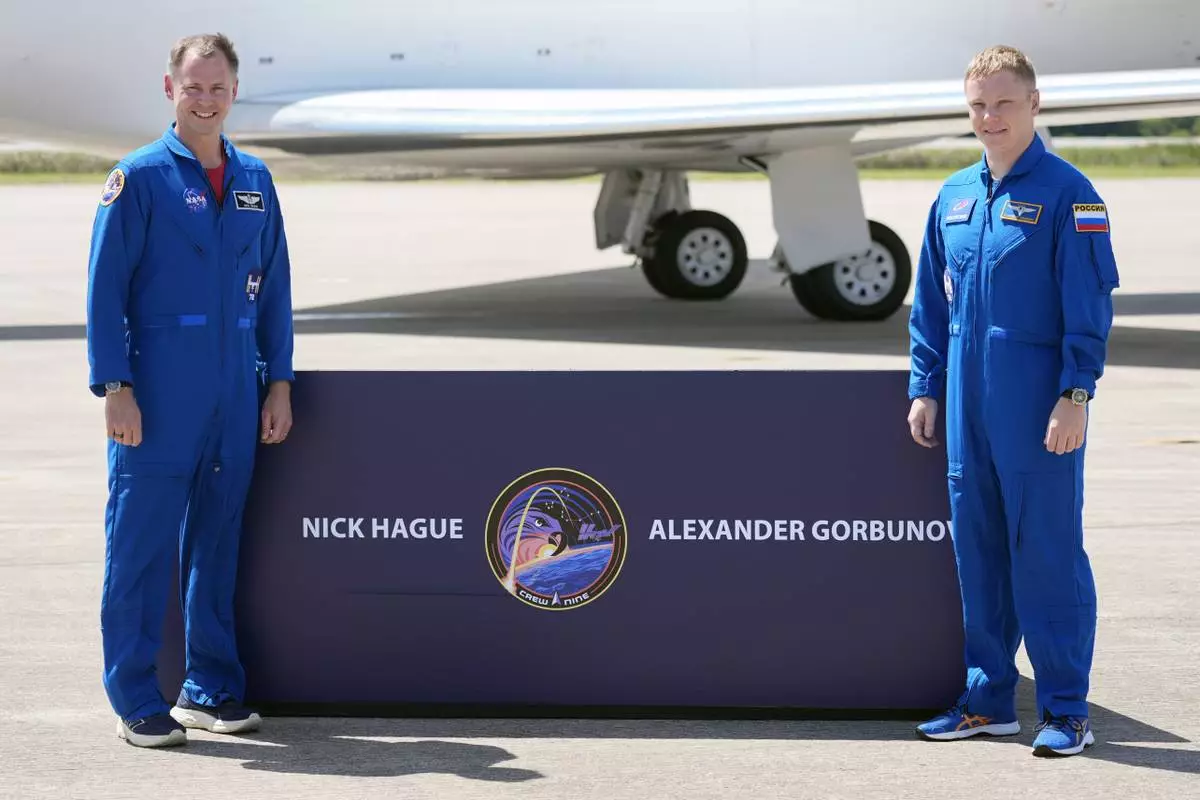
Roscosmos cosmonaut Aleksandr Gorbunov, left, and NASA astronaut Nick Hague arrive at the Kennedy Space Center in Cape Canaveral, Fla., Saturday, Sept. 21, 2024 as they prepare for their mission to the International Space Station. (AP Photo/John Raoux)
NASA astronaut Nick Hague, left, and Roscosmos cosmonaut Aleksandr Gorbunov pose for a photo after they arrived at the Kennedy Space Center in Cape Canaveral, Fla., Saturday, Sept. 21, 2024 as they prepare for their mission to the International Space Station. (AP Photo/John Raoux)

NASA astronaut Nick Hague, left, and Roscosmos cosmonaut Aleksandr Gorbunov pose for a photo after they arrived at the Kennedy Space Center in Cape Canaveral, Fla., Saturday, Sept. 21, 2024 as they prepare for their mission to the International Space Station. (AP Photo/John Raoux)

In this image released by NASA, NASA astronauts Suni Williams and Butch Wilmore, both Expedition 71 Flight Engineers, make pizza aboard the International Space Station's galley located inside the Unity module on Sept. 9, 2024. Items are attached to the galley using tape and velcro to keep them from flying away in the microgravity environment. (NASA via AP)
In this image released by NASA, NASA astronauts Suni Williams and Butch Wilmore, both Expedition 71 Flight Engineers, make pizza aboard the International Space Station's galley located inside the Unity module on Sept. 9, 2024. Items are attached to the galley using tape and velcro to keep them from flying away in the microgravity environment. (NASA via AP)

Roscosmos cosmonaut Aleksandr Gorbunov, left, and NASA astronaut Nick Hague pose for a photo after they arrived at the Kennedy Space Center in Cape Canaveral, Fla., Saturday, Sept. 21, 2024 to prepare for their mission to the International Space Station. (AP Photo/John Raoux)
Roscosmos cosmonaut Aleksandr Gorbunov, left, and NASA astronaut Nick Hague pose for a photo after they arrived at the Kennedy Space Center in Cape Canaveral, Fla., Saturday, Sept. 21, 2024 to prepare for their mission to the International Space Station. (AP Photo/John Raoux)

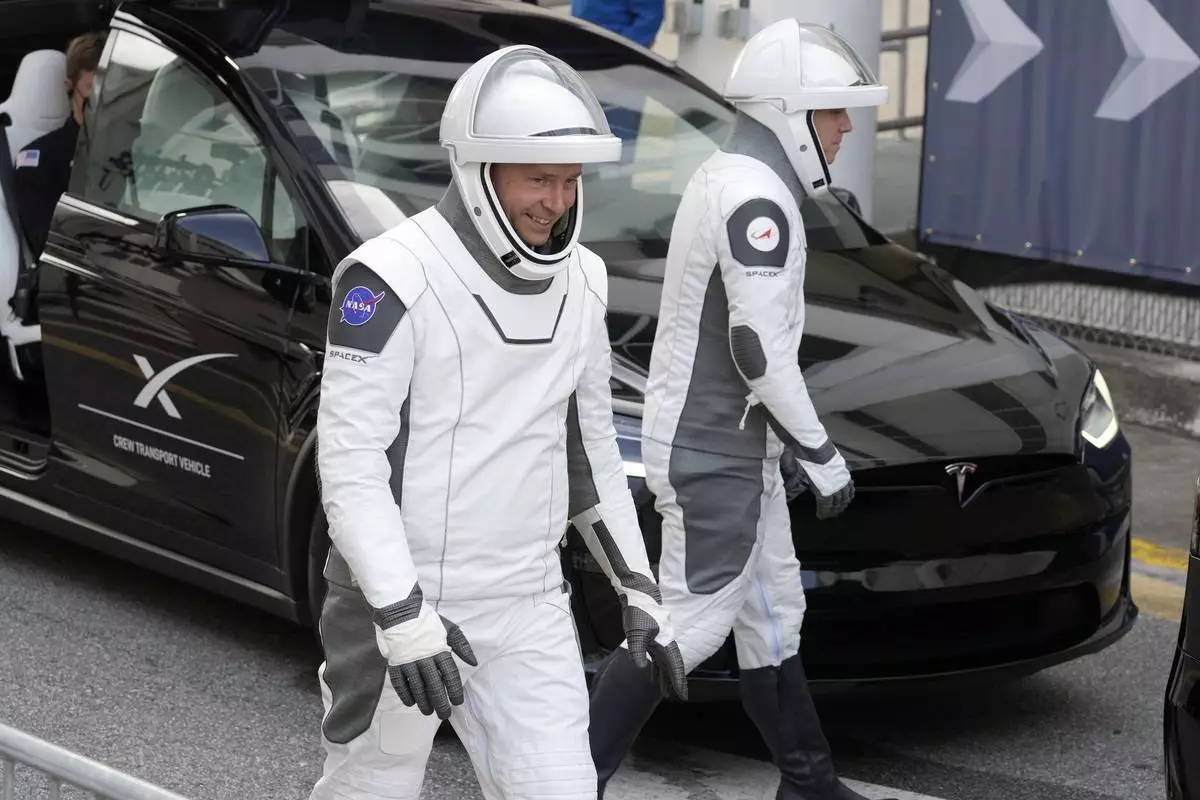
NASA astronaut Nick Hague, left, and Roscosmos cosmonaut Aleksandr Gorbunov leave the Operations and Checkout building for a trip to the launch pad 40 Saturday, Sept. 28, 2024, at the Kennedy Space Center in Cape Canaveral, Fla. (AP Photo/Chris O'Meara)
NASA astronaut Nick Hague, left, and Roscosmos cosmonaut Aleksandr Gorbunov leave the Operations and Checkout building for a trip to the launch pad 40 Saturday, Sept. 28, 2024, at the Kennedy Space Center in Cape Canaveral, Fla. (AP Photo/Chris O'Meara)
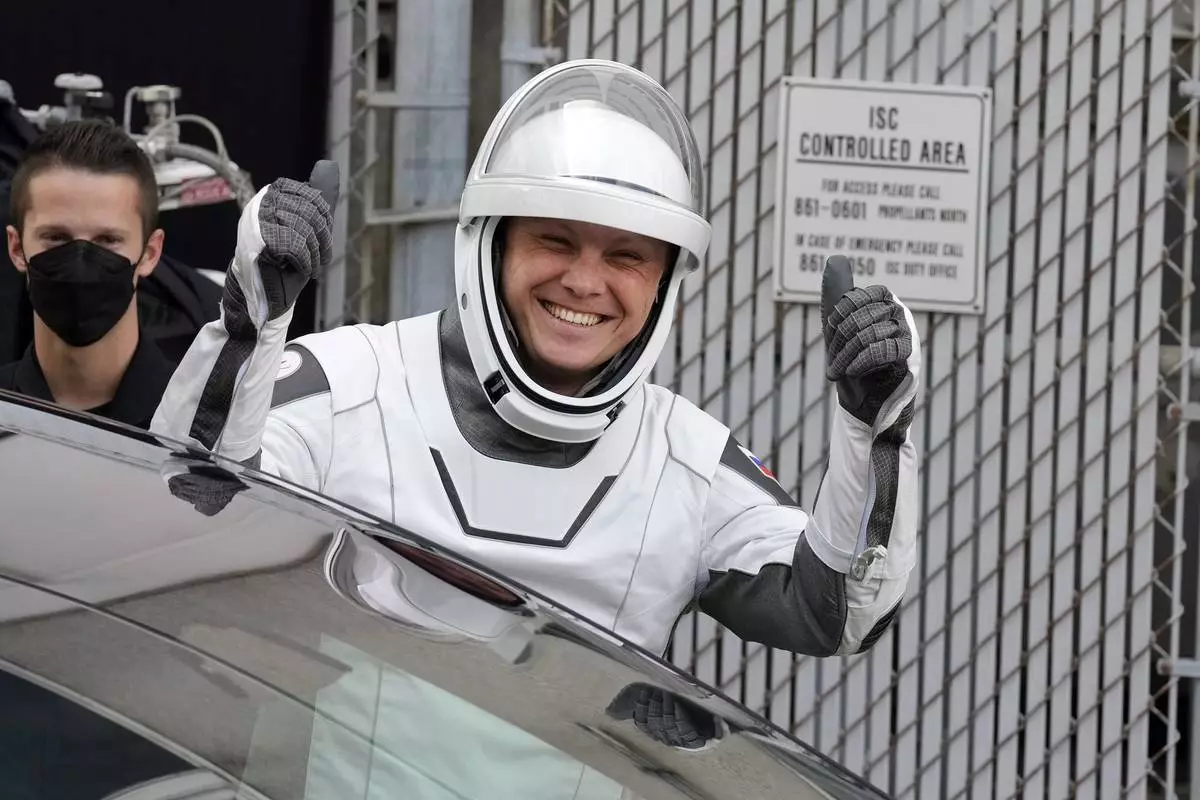
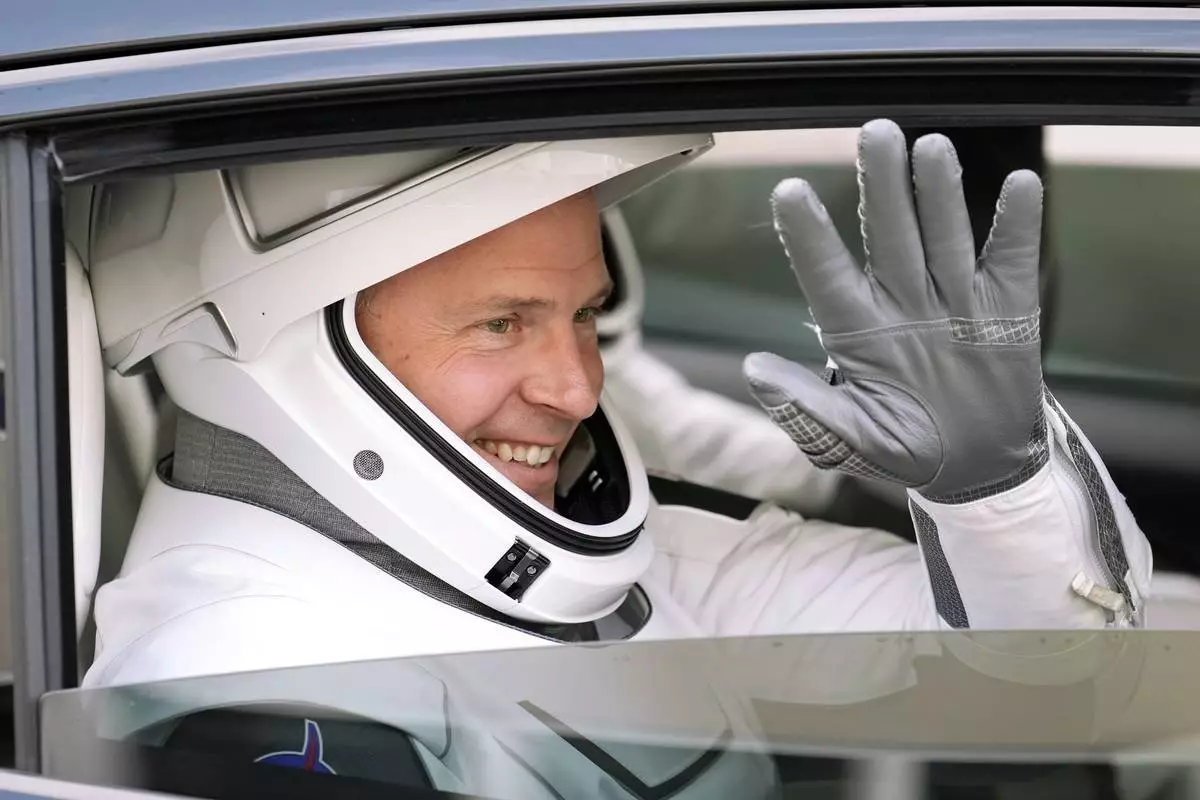
NASA astronaut Nick Hague waves as he leaves the Operations and Checkout building for a trip to the launch pad 40 Saturday, Sept. 28, 2024, at the Kennedy Space Center in Cape Canaveral, Fla. (AP Photo/Chris O'Meara)
NASA astronaut Nick Hague waves as he leaves the Operations and Checkout building for a trip to the launch pad 40 Saturday, Sept. 28, 2024, at the Kennedy Space Center in Cape Canaveral, Fla. (AP Photo/Chris O'Meara)
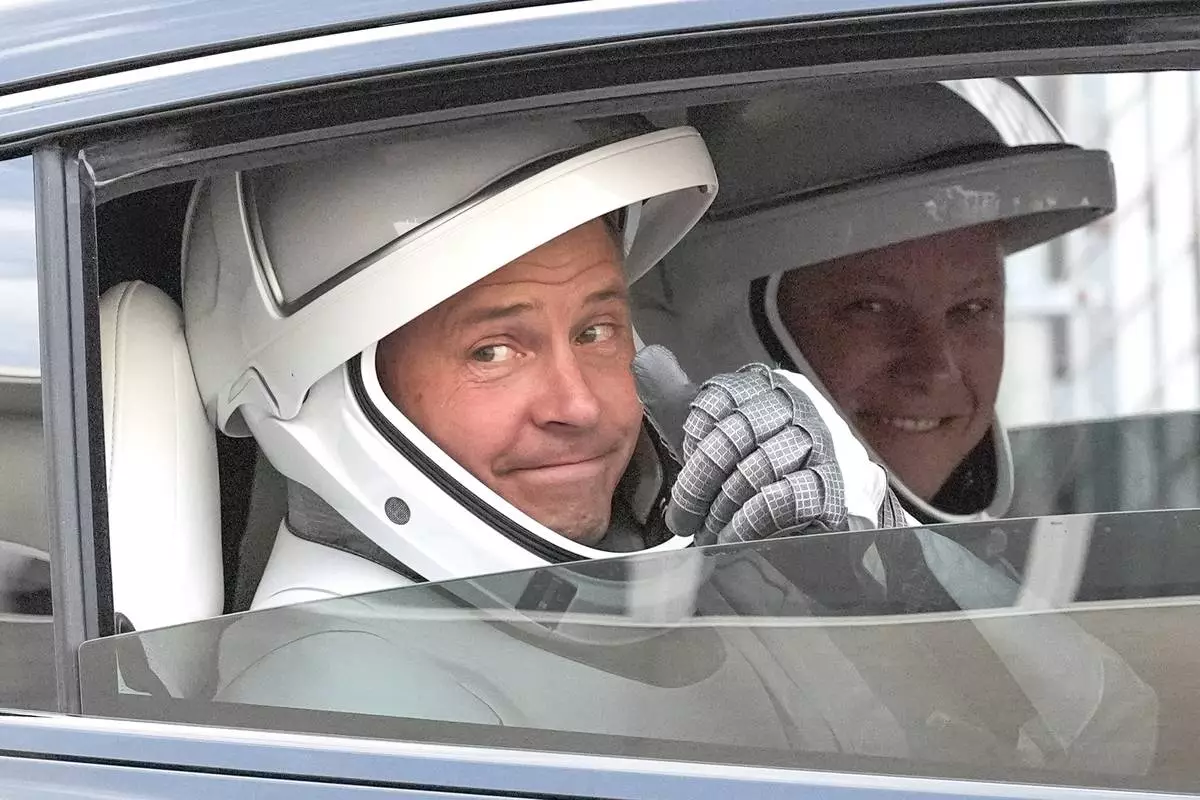
Roscosmos cosmonaut Aleksandr Gorbunov reacts as he leaves the Operations and Checkout building for a trip to the launch pad 40 Saturday, Sept. 28, 2024, at the Kennedy Space Center in Cape Canaveral, Fla. (AP Photo/Chris O'Meara)

Roscosmos cosmonaut Aleksandr Gorbunov reacts as he leaves the Operations and Checkout building for a trip to the launch pad 40 Saturday, Sept. 28, 2024, at the Kennedy Space Center in Cape Canaveral, Fla. (AP Photo/Chris O'Meara)

NASA astronaut Nick Hague, right, and Roscosmos cosmonaut Aleksandr Gorbunov leave the Operations and Checkout building for a trip to the launch pad 40 Saturday, Sept. 28, 2024, at the Kennedy Space Center in Cape Canaveral, Fla. (AP Photo/Chris O'Meara)

NASA astronaut Nick Hague, right, and Roscosmos cosmonaut Aleksandr Gorbunov leave the Operations and Checkout building for a trip to the launch pad 40 Saturday, Sept. 28, 2024, at the Kennedy Space Center in Cape Canaveral, Fla. (AP Photo/Chris O'Meara)

NASA astronaut Nick Hague, left, and Roscosmos cosmonaut Aleksandr Gorbunov, left, gives a thumbs up as they leave the Operations and Checkout Building on their way to Launch Complex 40 for a mission to the International Space Station Saturday, Sept. 28, 2024 at Cape Canaveral, Fla., (AP Photo/John Raoux)
NASA astronaut Nick Hague, left, and Roscosmos cosmonaut Aleksandr Gorbunov, left, gives a thumbs up as they leave the Operations and Checkout Building on their way to Launch Complex 40 for a mission to the International Space Station Saturday, Sept. 28, 2024 at Cape Canaveral, Fla., (AP Photo/John Raoux)

This image provided by NASA shows NASA astronaut Nick Hague and Roscosmos cosmonaut Aleksandr Gorbunov inside the SpaceX capsule Saturday, Sept. 28, 2024, at the Kennedy Space Center in Cape Canaveral, Fla. (NASA via AP)
This image provided by NASA shows NASA astronaut Nick Hague and Roscosmos cosmonaut Aleksandr Gorbunov inside the SpaceX capsule Saturday, Sept. 28, 2024, at the Kennedy Space Center in Cape Canaveral, Fla. (NASA via AP)

Roscosmos cosmonaut Aleksandr Gorbunov, left, and NASA astronaut Nick Hague wave as they leave the Operations and Checkout Building on their way to Launch Complex 40 for a mission to the International Space Station Saturday, Sept. 28, 2024 at Cape Canaveral, Fla., (AP Photo/John Raoux)
Roscosmos cosmonaut Aleksandr Gorbunov, left, and NASA astronaut Nick Hague wave as they leave the Operations and Checkout Building on their way to Launch Complex 40 for a mission to the International Space Station Saturday, Sept. 28, 2024 at Cape Canaveral, Fla., (AP Photo/John Raoux)
CAPE CANAVERAL, Fla. (AP) — NASA said Tuesday it will now target a March launch of its new moon rocket after running into exasperating fuel leaks during a make-or-break test a day earlier.

The space agency said in a statement that the launch delay will “allow teams to review data and conduct a second wet dress rehearsal” before the flight test.

The leaks — reminiscent of the rocket's delayed debut three years ago — sprang just a couple hours into the daylong fueling operation Monday at Kennedy Space Center and called into question how soon astronauts could take off.

NASA said the four astronauts tasked for the flight will be moved out of their nearly two-week quarantine. NASA added they will enter quarantine again “about two weeks” before the next launch window for the trip around the moon.

The agency gave no indication of an official launch target in March, saying teams need to first “fully review data from the test, mitigate each issue, and return to testing.”

Launch controllers Monday began loading the 322-foot (98-meter) rocket with super-cold hydrogen and oxygen at midday. More than 700,000 gallons (2.6 million liters) had to flow into the tanks and remain on board for several hours, mimicking the final stages of an actual countdown.

But excessive hydrogen quickly built up near the bottom of the rocket. Hydrogen loading was halted at least twice as the launch team scrambled to work around the problem using techniques developed during the previous Space Launch System countdown in 2022. That first test flight was plagued by hydrogen leaks before finally soaring without a crew.

NASA also noted in its statement that delays were incurred in close-out operations during the test as well as recurring audio dropout issues for ground crew communications.

The four astronauts assigned to the mission — three Americans and one Canadian — monitored the critical dress rehearsal from nearly 1,000 miles (1,600 kilometers) away in Houston, home to the Johnson Space Center.

The space agency only has a few days in any given month to launch the rocket, and the extreme cold already had shortened February’s launch window by two days.

Running behind because of the bitter cold snap, the countdown clocks began ticking Saturday night, giving launch controllers the chance to go through all the motions and deal with any lingering rocket problems. The clocks were set to stop a half-minute before reaching zero, just before engine ignition.

The nearly 10-day mission will send the astronauts past the moon, around the mysterious far side and then straight back to Earth, with the goal of testing the capsule's life support and other vital systems. The crew will not go into lunar orbit or attempt to land.

NASA last sent astronauts to the moon during the 1960s and 1970s Apollo program. The new Artemis program aims for a more sustained lunar presence, with Wiseman’s crew setting the stage for future moon landings by other astronauts.

The Associated Press Health and Science Department receives support from the Howard Hughes Medical Institute’s Department of Science Education and the Robert Wood Johnson Foundation. The AP is solely responsible for all content.

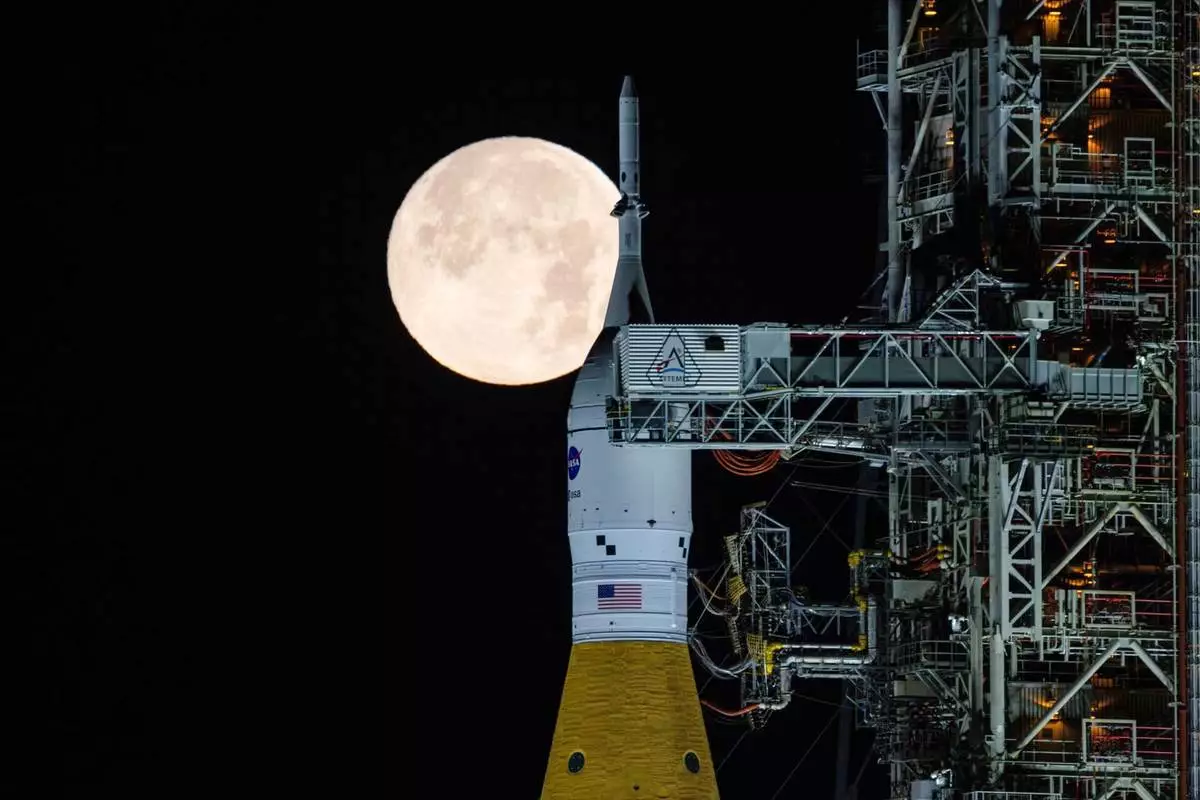
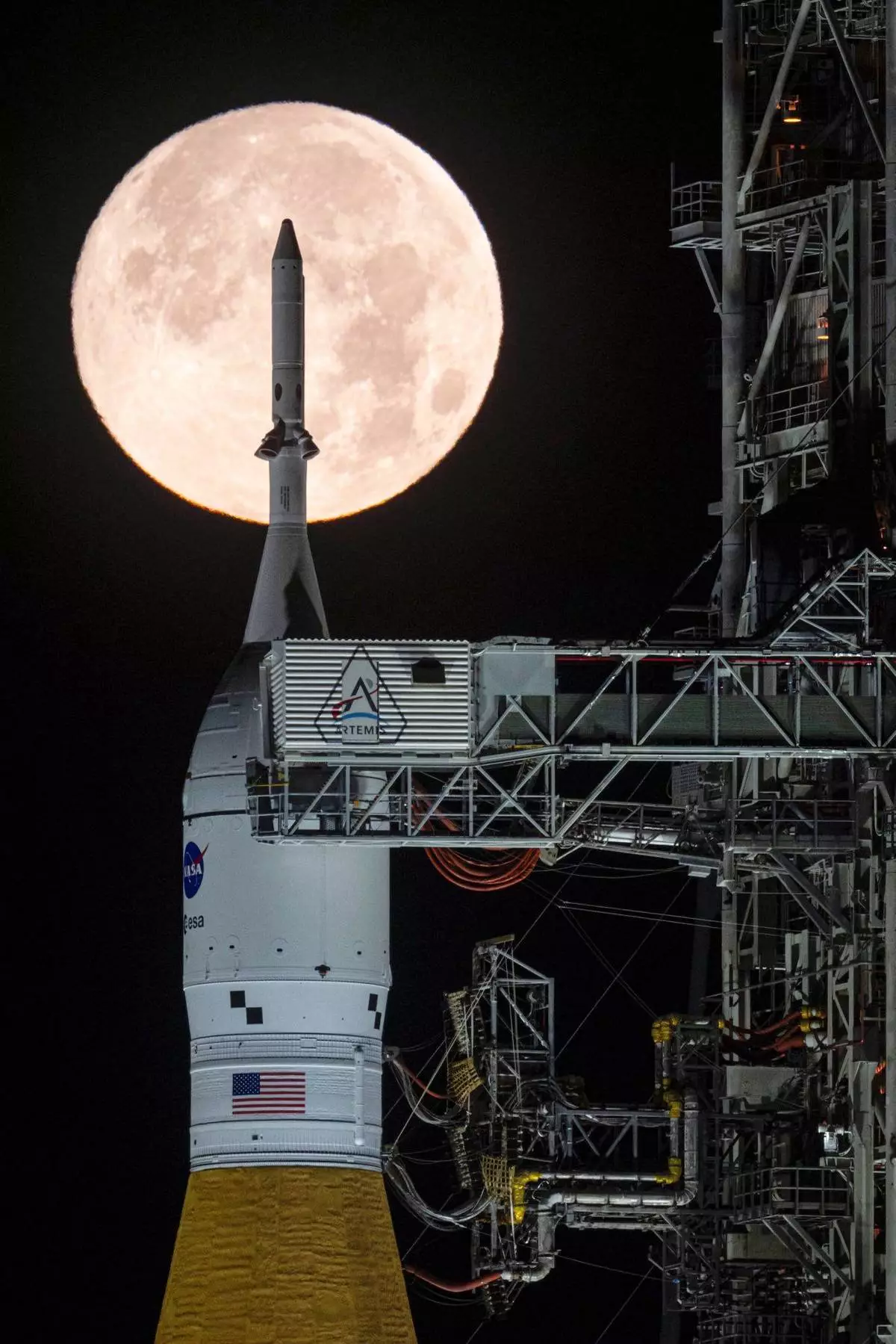
A full moon is seen shining over NASA’s SLS (Space Launch System) and Orion spacecraft, atop the mobile launcher in the early hours of Sunday, Feb. 1, 2026, at NASA’s Kennedy Space Center in Florida. (Sam Lott/NASA via AP)

A full moon is seen shining over NASA’s SLS (Space Launch System) and Orion spacecraft, atop the mobile launcher in the early hours of Sunday, Feb. 1, 2026, at NASA’s Kennedy Space Center in Florida. (Sam Lott/NASA via AP)

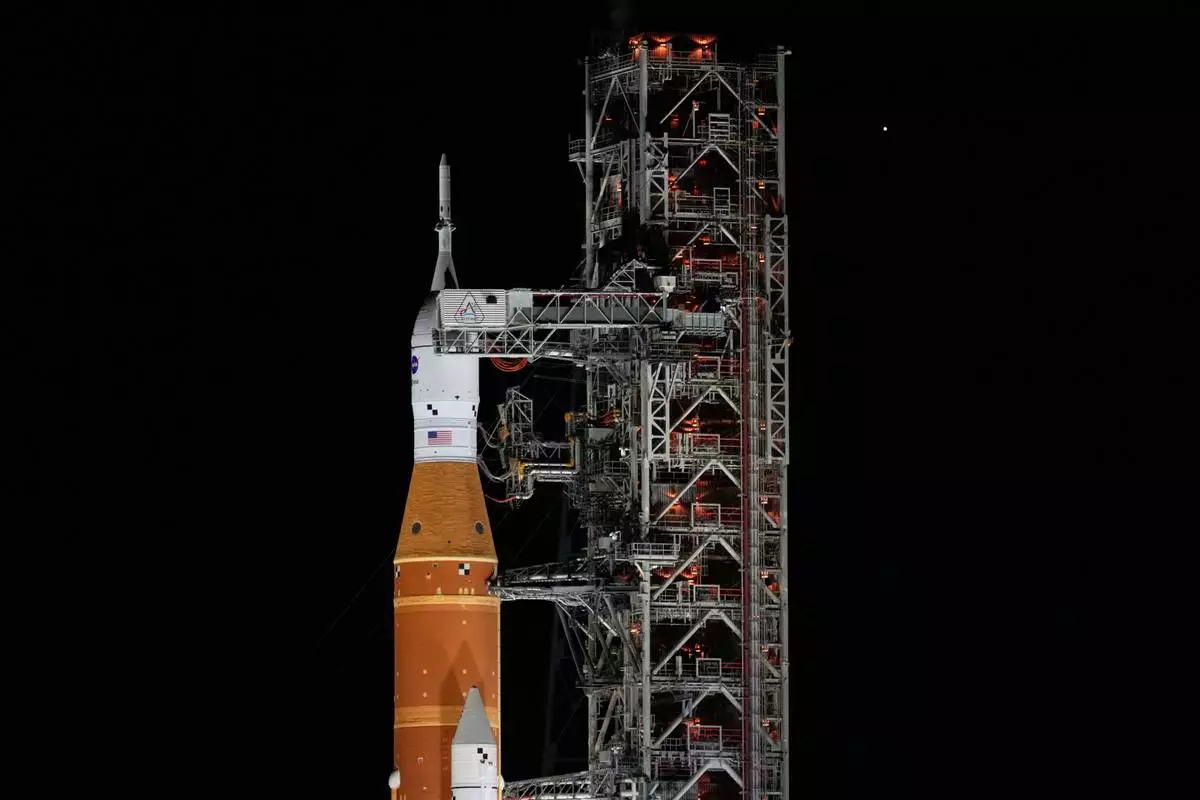
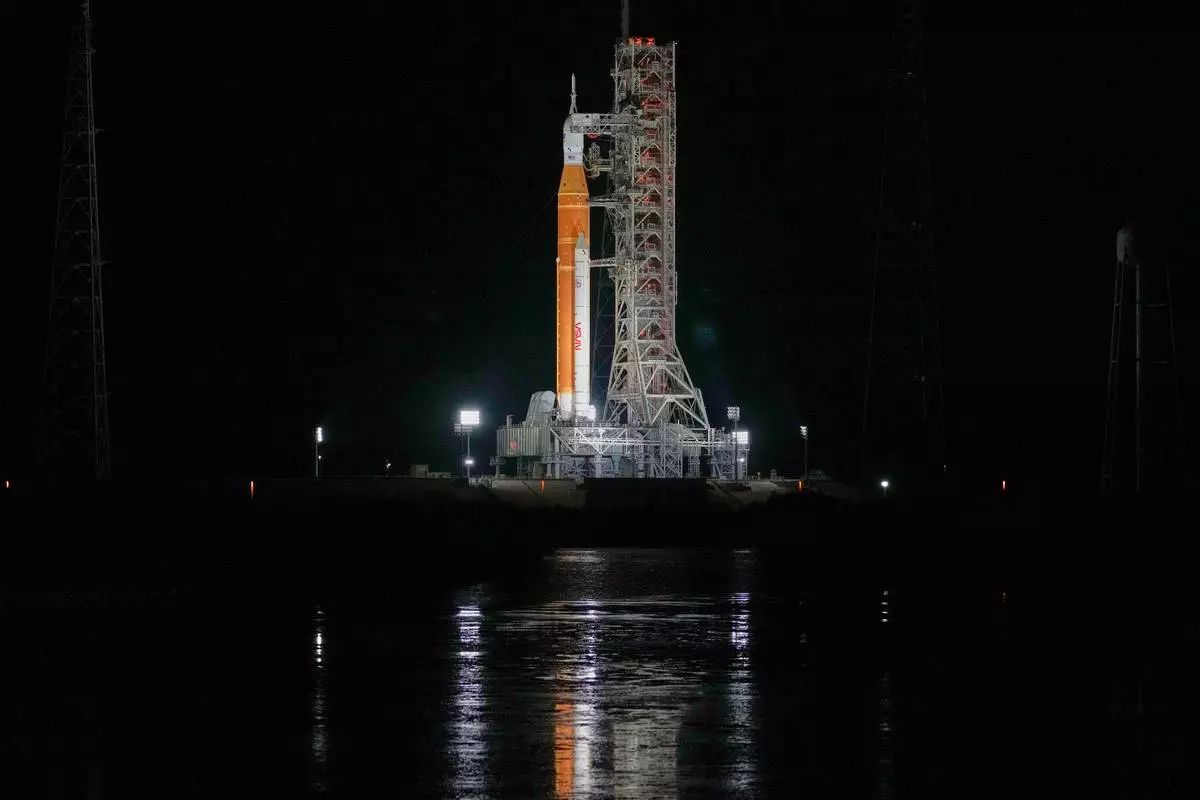
The NASA Artemis II SLS (Space Launch System) rocket with the Orion spacecraft is seen at Launch Complex 39B at the Kennedy Space Center, Sunday, Feb. 1, 2026, in Cape Canaveral, Fla. (AP Photo/John Raoux)

The NASA Artemis II SLS (Space Launch System) rocket with the Orion spacecraft is seen at Launch Complex 39B at the Kennedy Space Center, Sunday, Feb. 1, 2026, in Cape Canaveral, Fla. (AP Photo/John Raoux)

The NASA Artemis II SLS (Space Launch System) rocket with the Orion spacecraft is seen at Launch Complex 39B at the Kennedy Space Center, Sunday, Feb. 1, 2026, in Cape Canaveral, Fla. (AP Photo/John Raoux)

The NASA Artemis II SLS (Space Launch System) rocket with the Orion spacecraft is seen at Launch Complex 39B at the Kennedy Space Center, Sunday, Feb. 1, 2026, in Cape Canaveral, Fla. (AP Photo/John Raoux)

A full moon is seen shining over NASA’s SLS (Space Launch System) and Orion spacecraft, atop the mobile launcher in the early hours of Sunday, Feb. 1, 2026, at NASA’s Kennedy Space Center in Florida. (Sam Lott/NASA via AP)

A full moon is seen shining over NASA’s SLS (Space Launch System) and Orion spacecraft, atop the mobile launcher in the early hours of Sunday, Feb. 1, 2026, at NASA’s Kennedy Space Center in Florida. (Sam Lott/NASA via AP)

Recommended Articles