Skip to Content Facebook Feature Image

Russia fires 450 drones and 70 missiles at Ukraine, a day before US-brokered talks

News

Russia fires 450 drones and 70 missiles at Ukraine, a day before US-brokered talks
News

News

Russia fires 450 drones and 70 missiles at Ukraine, a day before US-brokered talks

2026-02-03 19:08 Last Updated At:19:10

KYIV, Ukraine (AP) — Russia fired around 450 long-range drones and 70 missiles of various types at Ukraine in a major attack overnight, Ukrainian President Volodymyr Zelenskyy said Tuesday.

The barrage came as NATO Secretary-General Mark Rutte visited Kyiv in a show of support and a day before Russia and Ukraine were due to attend U.S.-brokered talks in Abu Dhabi, United Arab Emirates, on ending the all-out war, which Russia launched nearly four years ago.

More Images
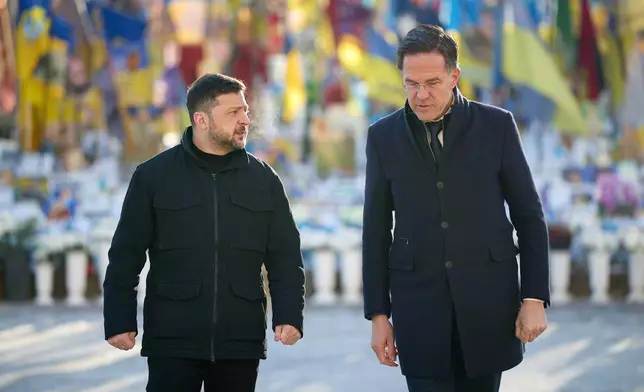
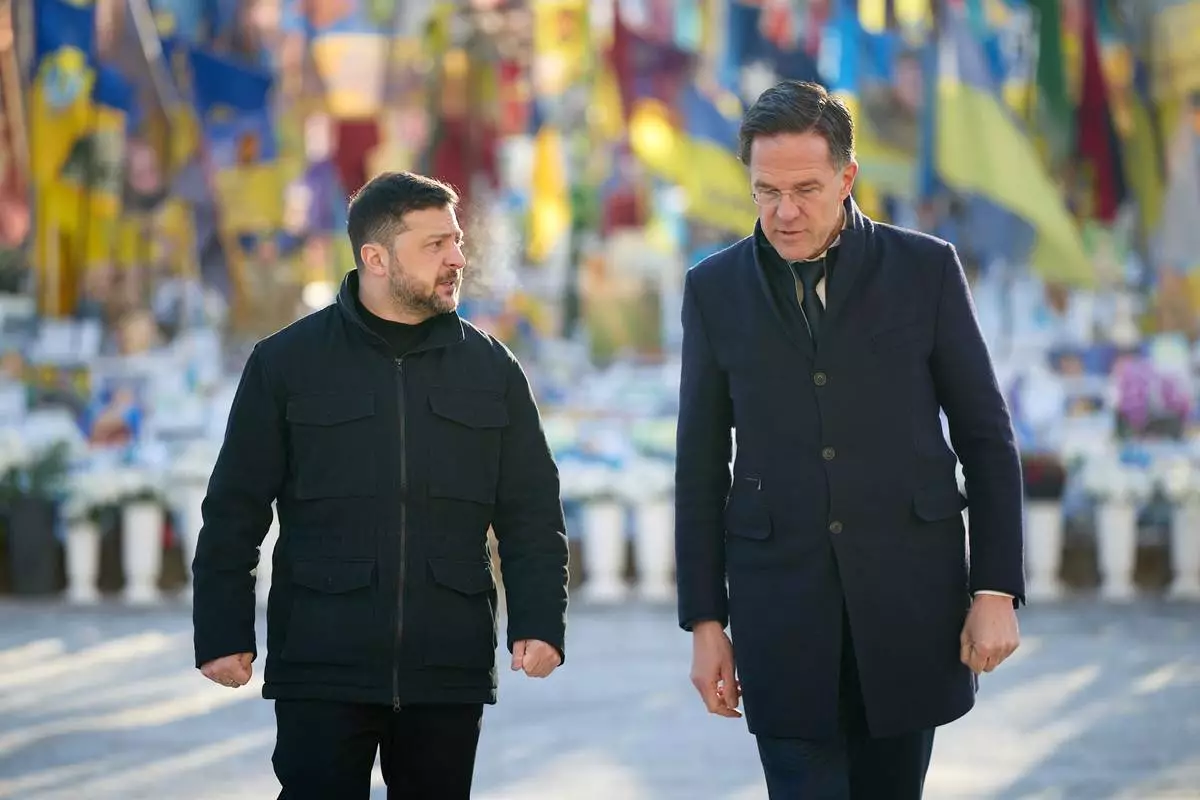
In this photo provided by the Ukrainian Presidential Press Office, Ukrainian President Volodymyr Zelenskyy, left, and NATO Secretary General Mark Rutte attend a commemorative ceremony at the memorial of fallen Ukrainian soldiers at Independence Square in Kyiv, Ukraine, Tuesday, Feb. 3, 2026. (Ukrainian Presidential Press Office via AP)
In this photo provided by the Ukrainian Presidential Press Office, Ukrainian President Volodymyr Zelenskyy, left, and NATO Secretary General Mark Rutte attend a commemorative ceremony at the memorial of fallen Ukrainian soldiers at Independence Square in Kyiv, Ukraine, Tuesday, Feb. 3, 2026. (Ukrainian Presidential Press Office via AP)

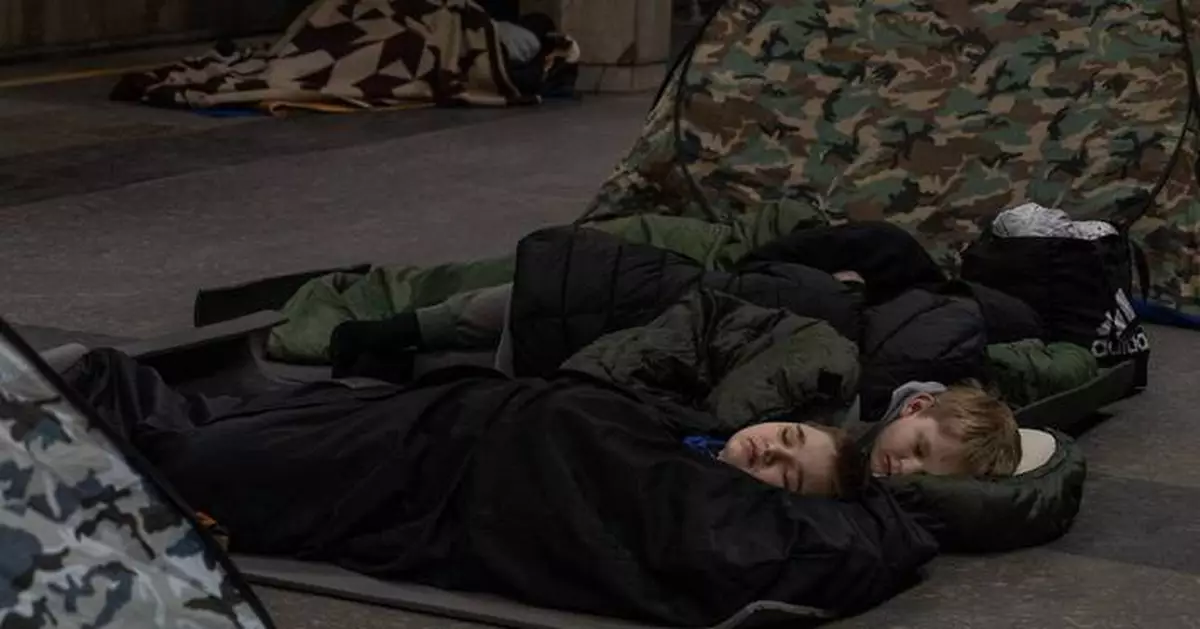
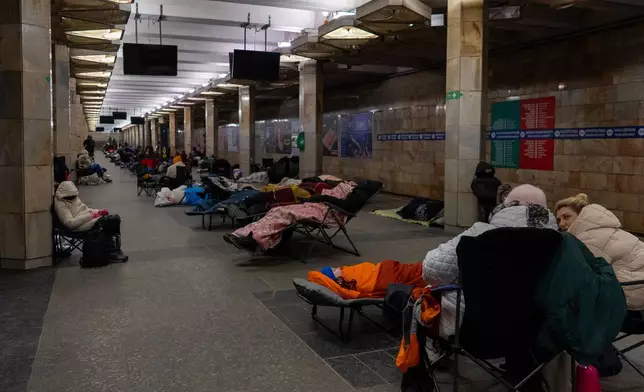
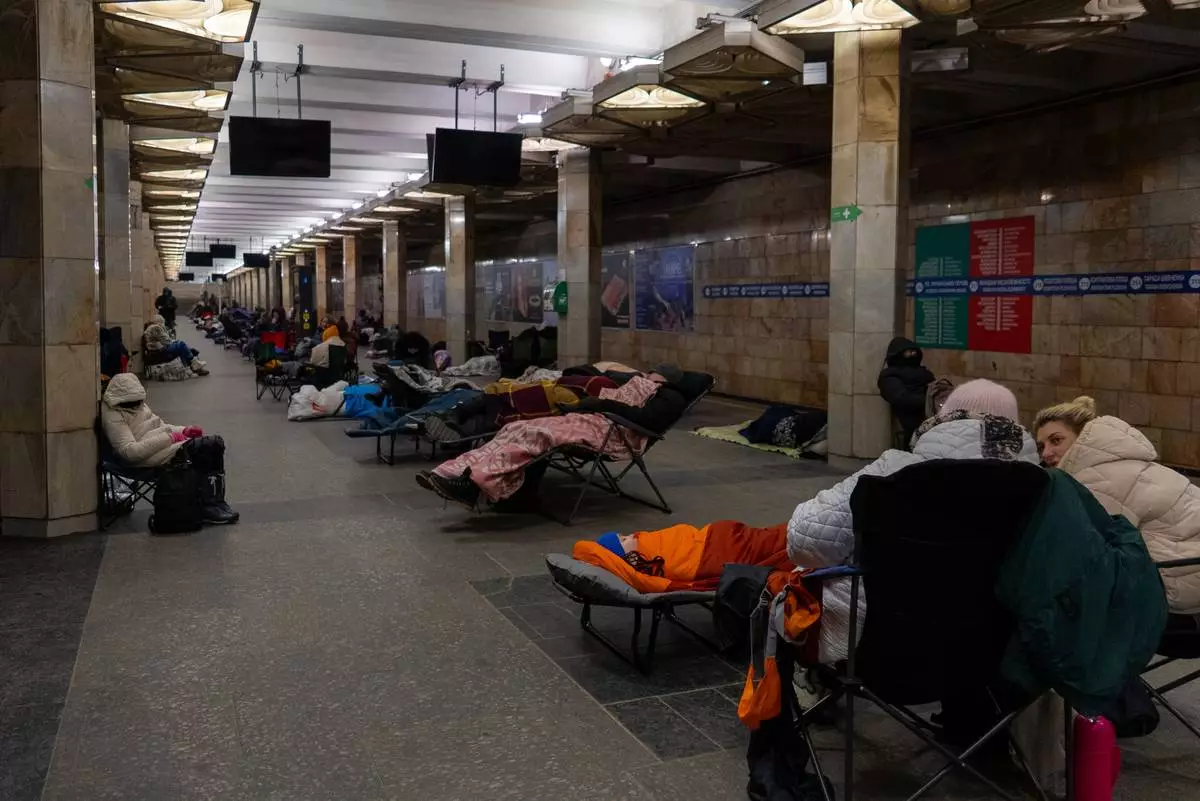
People take shelter in a metro station, being used as a bomb shelter, during a Russian drones attack in Kyiv, Ukraine, Tuesday, Feb. 3, 2026. (AP Photo/Alex Babenko)
People take shelter in a metro station, being used as a bomb shelter, during a Russian drones attack in Kyiv, Ukraine, Tuesday, Feb. 3, 2026. (AP Photo/Alex Babenko)

People take shelter in a metro station, being used as a bomb shelter, during a Russian drones attack in Kyiv, Ukraine, Tuesday, Feb. 3, 2026. (AP Photo/Alex Babenko)

People take shelter in a metro station, being used as a bomb shelter, during a Russian drones attack in Kyiv, Ukraine, Tuesday, Feb. 3, 2026. (AP Photo/Alex Babenko)

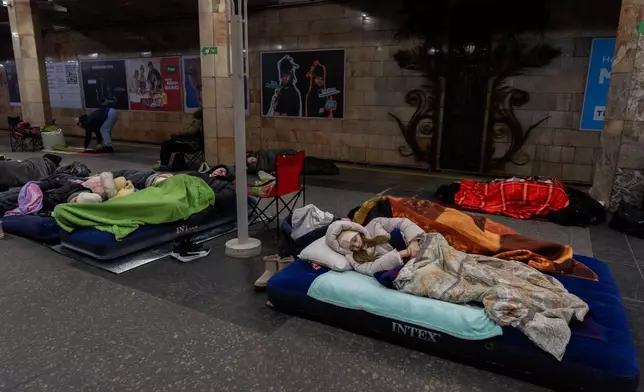
A woman rests in a shelter at a metro station during Russia's massive missile and drone attack in Kyiv, Ukraine, Tuesday, Feb. 3, 2026. (AP Photo/Alex Babenko)
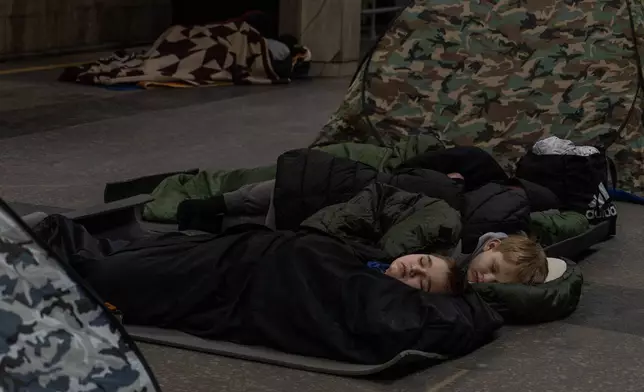
A woman rests in a shelter at a metro station during Russia's massive missile and drone attack in Kyiv, Ukraine, Tuesday, Feb. 3, 2026. (AP Photo/Alex Babenko)

People take shelter in a metro station, being used as a bomb shelter, during a Russian drones attack in Kyiv, Ukraine, Tuesday, Feb. 3, 2026. (AP Photo/Alex Babenko)

People take shelter in a metro station, being used as a bomb shelter, during a Russian drones attack in Kyiv, Ukraine, Tuesday, Feb. 3, 2026. (AP Photo/Alex Babenko)

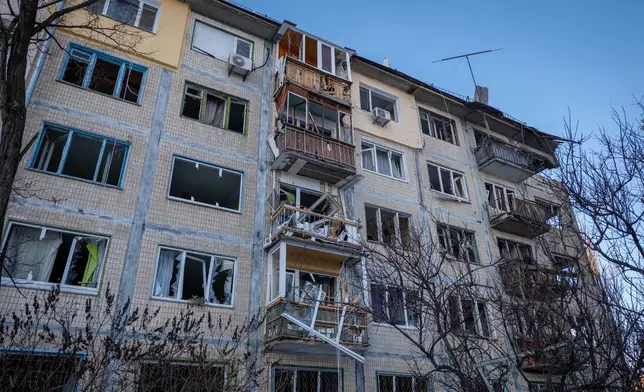
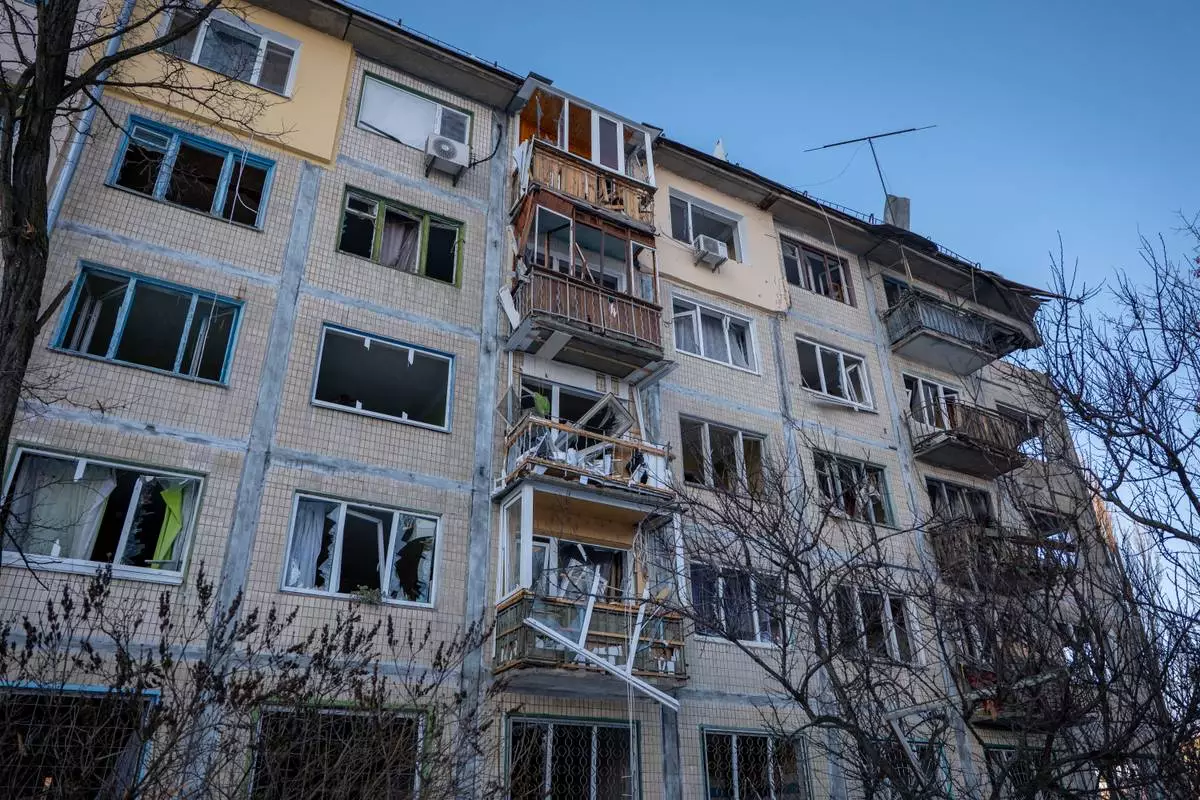
The bombardment of at least five regions of Ukraine specifically took aim at the power grid, Zelenskyy said, as part of Moscow’s ongoing campaign to deny civilians light, heating and running water amid the coldest winter in years. At least 10 people were wounded, officials said.

“Taking advantage of the coldest days of winter to terrorize people is more important to Russia than diplomacy,” Zelenskyy said. Temperatures in Kyiv fell to minus 20 degrees Celsius (minus 4 Fahrenheit) during the night and stood at minus 16 C (minus 3 F) on Tuesday.

He urged allies to send more air defense supplies and bring “maximum pressure” to bear on Russia to end its full-scale invasion, which began on Feb. 24, 2022.

Officials have described recent talks between Moscow and Kyiv delegations as constructive. But after a year of efforts, the Trump administration is still searching for a breakthrough on key issues such as who keeps the Ukrainian land that Russia’s army has occupied, and a comprehensive settlement appears distant. The Abu Dhabi talks were scheduled for Wednesday and Thursday.

Rutte addressed the Ukrainian parliament during his visit and said that countries in the military alliance "are ready to provide support quickly and consistently” as peace efforts drag on.

Since last summer, NATO members have provided 75% of all missiles supplied to the front, and 90% of those used for Ukraine's air defense, he said.

European countries, fearing Moscow's ambitions, see their own future security as being on the line in Ukraine.

“Be assured that NATO stands with Ukraine and is ready to do so for years to come," Rutte said. “Your security is our security. Your peace is our peace. And it must be lasting.”

A Kremlin official said last week that Russia had agreed to halt strikes on Kyiv for a week until Feb. 1 because of the frigid temperatures, following a personal request from U.S. President Donald Trump to Russian President Vladimir Putin. However, the bitter cold is continuing and so are Russia’s aerial attacks.

Russia has tried to wear down Ukrainians’ appetite for the fight by creating hardship for the civilian population living in dark, freezing homes.

It has tried to wreck Ukraine’s electricity network, targeting substations, transformers, turbines and generators at power plants. Ukraine’s largest private power company, DTEK, said that the overnight attack hit its thermal power plants in the ninth major assault since October.

In Kyiv, officials said that five people were wounded in the strikes that damaged and set fire to residential buildings, a kindergarten and a gas station in various parts of the capital, according to the State Emergency Service.

By early morning, 1,170 apartment buildings in the capital were without heating, Kyiv Mayor Vitali Klitschko said. That set back desperate repair operations that had restored power to all but 80 apartment buildings, he said.

Russia also struck Ukraine’s northeastern Kharkiv region, where injuries were reported, and the southern Odesa region.

The attack also damaged the Hall of Fame at the National Museum of the History of Ukraine in the Second World War, at the foot of the Motherland Monument in Kyiv, Ukrainian Culture Minister Tetiana Berezhna said.

“It is symbolic and cynical at the same time: the aggressor state strikes a place of memory about the fight against aggression in the 20th century, repeating crimes in the 21st,” Berezhna said.

Follow AP’s coverage of the war in Ukraine at https://apnews.com/hub/russia-ukraine

In this photo provided by the Ukrainian Presidential Press Office, Ukrainian President Volodymyr Zelenskyy, left, and NATO Secretary General Mark Rutte attend a commemorative ceremony at the memorial of fallen Ukrainian soldiers at Independence Square in Kyiv, Ukraine, Tuesday, Feb. 3, 2026. (Ukrainian Presidential Press Office via AP)
In this photo provided by the Ukrainian Presidential Press Office, Ukrainian President Volodymyr Zelenskyy, left, and NATO Secretary General Mark Rutte attend a commemorative ceremony at the memorial of fallen Ukrainian soldiers at Independence Square in Kyiv, Ukraine, Tuesday, Feb. 3, 2026. (Ukrainian Presidential Press Office via AP)

People take shelter in a metro station, being used as a bomb shelter, during a Russian drones attack in Kyiv, Ukraine, Tuesday, Feb. 3, 2026. (AP Photo/Alex Babenko)
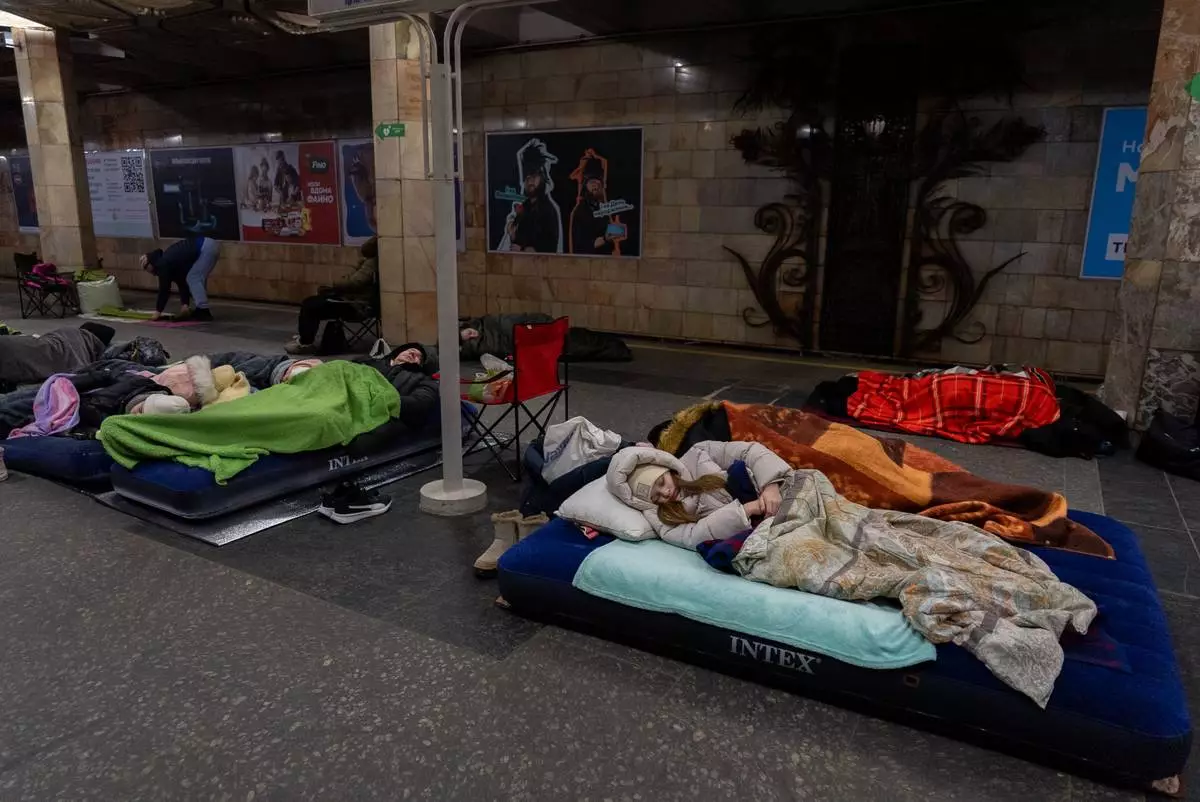
People take shelter in a metro station, being used as a bomb shelter, during a Russian drones attack in Kyiv, Ukraine, Tuesday, Feb. 3, 2026. (AP Photo/Alex Babenko)

People take shelter in a metro station, being used as a bomb shelter, during a Russian drones attack in Kyiv, Ukraine, Tuesday, Feb. 3, 2026. (AP Photo/Alex Babenko)

People take shelter in a metro station, being used as a bomb shelter, during a Russian drones attack in Kyiv, Ukraine, Tuesday, Feb. 3, 2026. (AP Photo/Alex Babenko)

A woman rests in a shelter at a metro station during Russia's massive missile and drone attack in Kyiv, Ukraine, Tuesday, Feb. 3, 2026. (AP Photo/Alex Babenko)
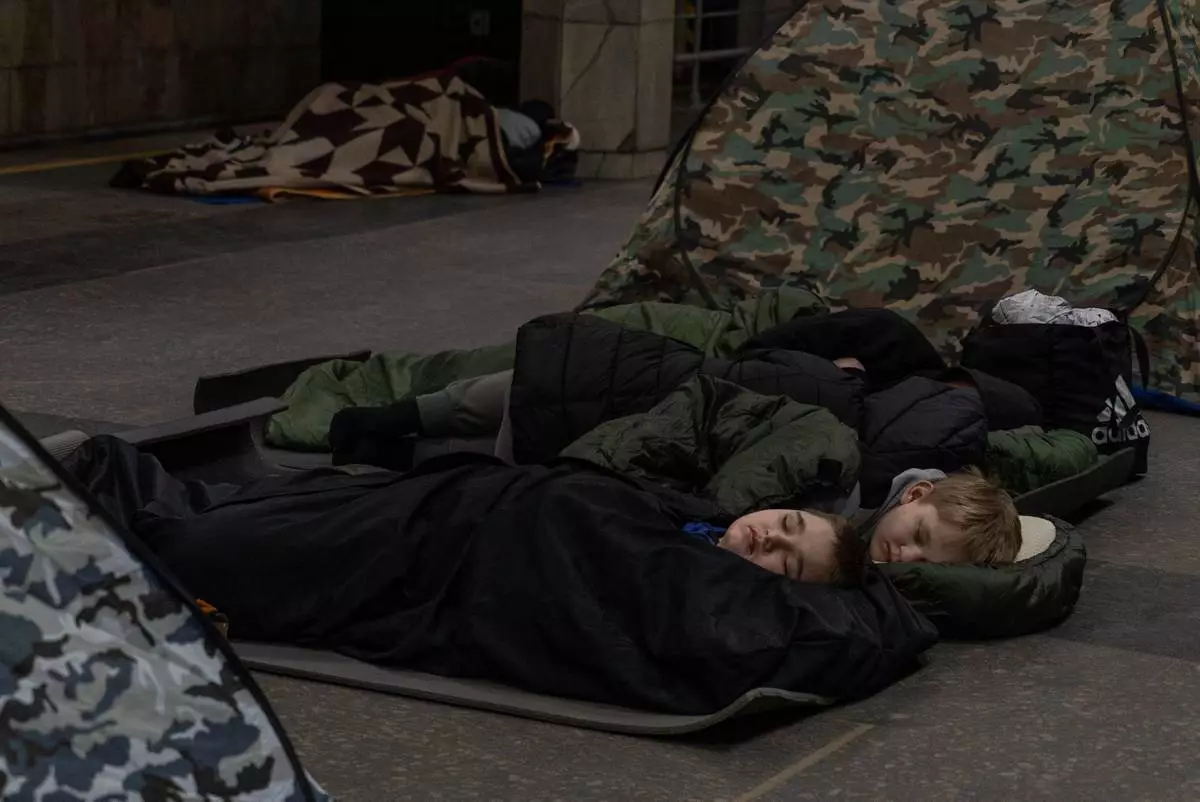
A woman rests in a shelter at a metro station during Russia's massive missile and drone attack in Kyiv, Ukraine, Tuesday, Feb. 3, 2026. (AP Photo/Alex Babenko)

People take shelter in a metro station, being used as a bomb shelter, during a Russian drones attack in Kyiv, Ukraine, Tuesday, Feb. 3, 2026. (AP Photo/Alex Babenko)


People take shelter in a metro station, being used as a bomb shelter, during a Russian drones attack in Kyiv, Ukraine, Tuesday, Feb. 3, 2026. (AP Photo/Alex Babenko)

DUBAI, United Arab Emirates (AP) — Iran's president said Tuesday he instructed the country’s foreign minister to “pursue fair and equitable negotiations” with the United States, the first clear sign from Tehran it wants to try to negotiate as tensions remain high with Washington after the Mideast country's bloody crackdown on nationwide protests last month.

The announcement marked a major turn for reformist President Masoud Pezeshkian, who broadly had warned Iranians for weeks that the turmoil in his country had gone beyond his control. It also signals that the president received support from Iran's Supreme Leader Ayatollah Ali Khamenei for talks that the 86-year-old cleric previously had dismissed.

Turkey had been working behind the scenes to make the talks happen there later this week as U.S. Mideast envoy Steve Witkoff is traveling in the region. Foreign ministers from Oman, Pakistan, Qatar, Saudi Arabia and the United Arab Emirates have also been invited to attend the talks, if they happen, according to a regional official who spoke on condition of anonymity as they did not have permission to speak to journalists.

But whether Iran and the U.S. can reach an agreement remains to be seen, particularly as President Donald Trump now has included Iran's nuclear program in a list of demands from Tehran in any talks. Trump ordered the bombing of three Iranian nuclear sites during the 12-day war Israel launched against Iran in June.

Writing on X, Pezeshkian said in English and Farsi that the decision came after “requests from friendly governments in the region to respond to the proposal by the President of the United States for negotiations.”

“I have instructed my Minister of Foreign Affairs, provided that a suitable environment exists — one free from threats and unreasonable expectations — to pursue fair and equitable negotiations, guided by the principles of dignity, prudence, and expediency,” he said.

The U.S. has yet to acknowledge the talks will take place. A semiofficial news agency in Iran on Monday reported — then later deleted without explanation — that Pezeshkian had issued such an order to Foreign Minister Abbas Araghchi, who held multiple rounds of talks with Witkoff before the 12-day war.

Late Monday, the pan-Arab satellite channel Al Mayadeen, which is politically allied with the Iranian-backed Lebanese militant group Hezbollah, aired an interview with Ali Shamkhani, a top Khamenei adviser on security.

Shamkhani, who now sits on the country’s Supreme National Security Council and who in the 1980s led Iran's navy, wore a naval uniform as he spoke.

He suggested if the talks happened, they would be indirect at the beginning, then moving to direct talks if a deal appeared to be attainable. Direct talks with the U.S. long have been a highly charged political issue within Iran's theocracy, with reformists like Pezeshkian pushing for them and hard-liners dismissing them.

The talks would solely focus on nuclear issues, he added.

Asked about whether Russia could take Iran's enriched uranium like it did in Tehran's 2015 nuclear deal with world powers, Shamkhani dismissed the idea, saying there was “no reason” to do so. Kremlin spokesperson Dmitry Peskov on Monday said Russia had “long offered these services as a possible option that would alleviate certain irritants for a number of countries.”

“Iran does not seek nuclear weapons, will not seek a nuclear weapon and will never stockpile nuclear weapons, but the other side must pay a price in return for this," he said.

Iran had been enriching uranium up to 60% purity, a short, technical step away from weapons-grade levels. The International Atomic Energy Agency had said Iran was the only country in the world to enrich to that level that wasn't armed with the bomb.

Iran has been refusing requests by the IAEA to inspect the sites bombed in the June war.

“The quantity of enriched uranium remains unknown, because part of the stockpile is under rubble, and there is no initiative yet to extract it, as it is extremely dangerous," Shamkhani said.

Witkoff is expected to meet Prime Minister Benjamin Netanyahu and other Israeli security officials on Tuesday, according to a White House official who was not authorized to comment publicly about the talks and spoke on condition of anonymity.

While in Israel, Witkoff will meet with the head of the Mossad intelligence service and the Israeli military's chief of staff, according to another official who was not authorized to speak to the media and spoke on condition of anonymity.

Israel is expected to ask that any agreement with Iran include removing enriched uranium from the country, stopping the enrichment of uranium, limiting the creation of ballistic missiles and ending support for Tehran's proxies.

However, Shakhani in his interview rejected giving up uranium enrichment — a major obstacle in earlier talks with the U.S. In November, Araghchi said Iran was doing no enrichment in the country because of the U.S. bombing of the nuclear sites.

Witkoff later will travel to Abu Dhabi, the UAE capital, later in the week for Russia-Ukraine talks, the official said.

“We have talks going on with Iran, we’ll see how it all works out,” Trump told reporters in the Oval Office on Monday. Asked what his threshold was for military action against Iran, he declined to elaborate.

“I’d like to see a deal negotiated,” Trump said. “Right now, we’re talking to them, we’re talking to Iran, and if we could work something out, that’d be great. And if we can’t, probably bad things would happen.”

Mike Pompeo, a hard-liner on Iran who served as CIA director and secretary of state in Trump's first term, said it was “unimaginable that there can be a deal.”

“I think they may come away with some set of understandings,” Pompeo said at Dubai's World Governments Summit. "But to think that there’s a long-term solution that actually provides stability and peace to this region while the ayatollah is still in power is something I pray for but find unimaginable.”

Associated Press writers Melanie Lidman in Jerusalem, Suzan Fraser in Ankara, Turkey, and Aamer Madhani, Matthew Lee and Konstantin Toropin in Washington contributed to this report.

FILE - Masoud Pezeshkian, the President of Iran, attends the United Nations General Assembly at United Nations headquarters, on Sept. 25, 2025. (AP Photo/Angelina Katsanis, File)

FILE - Masoud Pezeshkian, the President of Iran, attends the United Nations General Assembly at United Nations headquarters, on Sept. 25, 2025. (AP Photo/Angelina Katsanis, File)

Recommended Articles