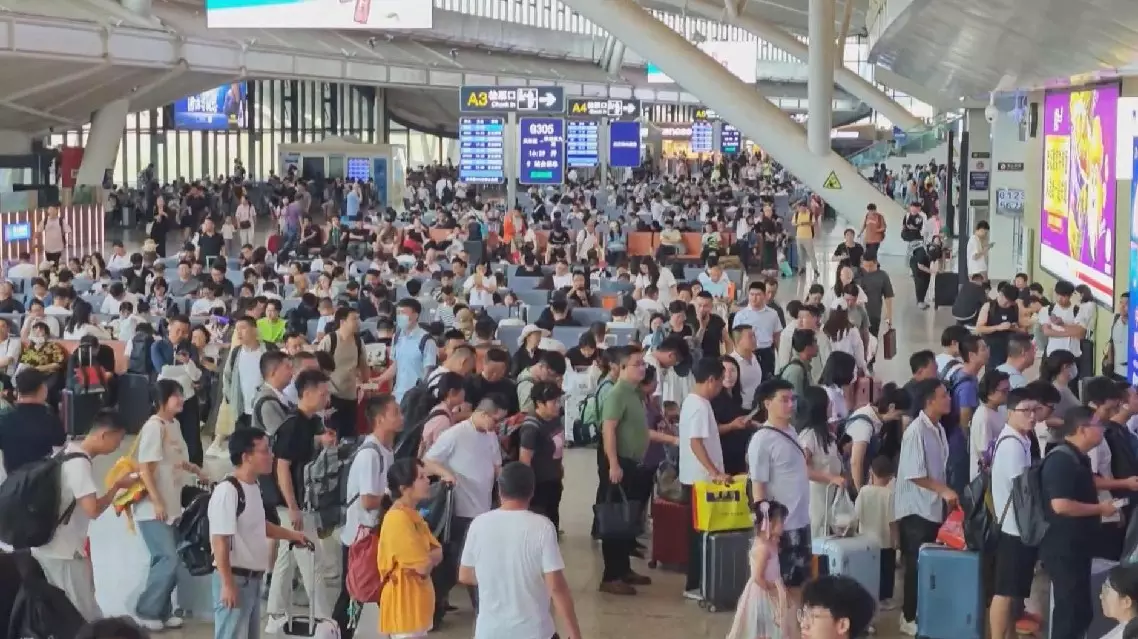
China's transport sector is expected to handle 1.94 billion passenger trips nationwide during the week-long National Day holiday starting from Oct 1.
The peak of passenger departures is expected on Oct 1, and the returning passenger flow is expected to increase gradually from Oct 5.
On Monday, the day before the holiday, China's railway network is expected to handle 17.5 million passenger trips and has added 1,566 additional trains.
Railway staff have been making special preparations to ensure safety during the travel rush.
"We have weaved traditional Chinese ropes of five colors, namely red, yellow, blue, green and purple, to stand for the passengers who need our help, including the old, the young, the sick, the disabled and the pregnant. In this way, the railway staff can be clear about those passengers' needs and difficulties, so as to serve them better," said Xiao Rui, a conductor on the Mudanjiang passenger railway line in northeast China.
On the country's highways, daily traffic is expected to reach about 61 million vehicles during the holiday. Flows are expected to grow from 16:00 on Monday and peak between 19:00 to midnight.
The civil aviation sector is expected to embrace the travel peak on Monday evening until Tuesday. Popular destinations for fliers include the cities of Chengdu in southeast China, Shanghai in east China, Guangzhou in the country's south, and tropical Sanya on the island province of Hainan.
The two civil airports in Beijing are expected to handle more than 2.3 million passengers with more than 14,599 flights during the holiday.
The country's water transport system is expected to handle more than 1 million passenger trips during the holiday, mainly for touring and family reunions.
China expects 1.94 billion passenger trips in National Day holiday travel rush
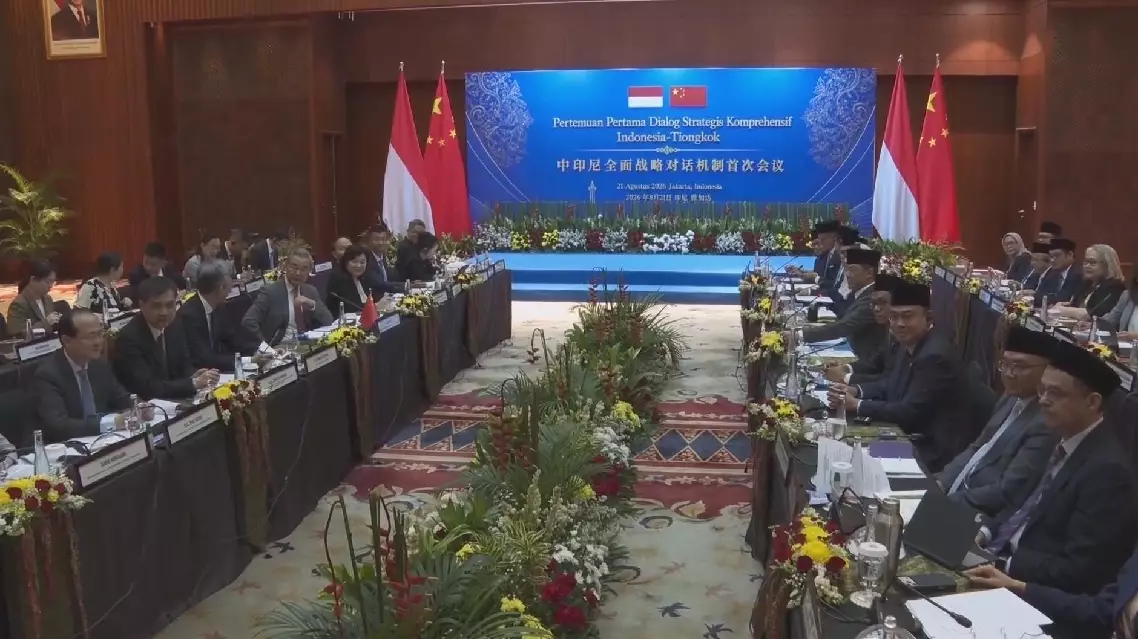
Chinese Foreign Minister Wang Yi on Friday called on China and Indonesia to strengthen all-round cooperation and pool greater development synergy to jointly tackle risks and challenges.
Wang, also a member of the Political Bureau of the Communist Party of China Central Committee, made the remarks while co-chairing the first Conference of China-Indonesia Comprehensive Strategic Dialogue Mechanism with Indonesian Foreign Minister Sugiono in Jakarta.
Noting that the current international situation is marked by growing turbulence and uncertainty, with unilateralism and hegemonic practices seriously impacting global security and development, Wang said it is timely for China and Indonesia, as major developing countries, to strengthen strategic communication and deepen strategic cooperation, which carries important and far-reaching significance beyond bilateral relations.
Wang said China has always placed Indonesia in an important position in its diplomacy, particularly its neighborhood diplomacy, and is ready to work with Indonesia to enhance mutual understanding and support.
Stressing that the conference marks an important milestone in bilateral relations, Sugiono said China's development has brought enormous opportunities to the world, particularly neighboring countries such as Indonesia.
He said Indonesia and China share closely intertwined interests and stressed the importance of strengthening coordination with China for mutual benefit as Indonesia advances its development strategies.
Sugiono added that Indonesia firmly adheres to the one-China policy and supports China's cause of reunification.
The two sides also agreed to uphold strategic autonomy and firmly support each other's core interests. They also decided to launch the formulation of the China-Indonesia Five-year Action Plan (2027-2031).
Both sides agreed that deepening cooperation in energy and mineral resources serves their common interests, and expressed readiness to jointly build a comprehensive, open and green partnership in energy and mineral resources.
Indonesia spoke highly of the contributions made by Chinese companies to local development, noting that the success of Chinese companies is also a success for Indonesia. It expressed readiness to provide Chinese companies with a fair, transparent and friendly business environment.
The two sides also pledged to expand cooperation in areas such as artificial intelligence and poverty reduction. They agreed to restart cooperation in fishing, accelerate maritime cooperation and push forward joint development.
They agreed to fully and effectively implement the Declaration on the Conduct of Parties in the South China Sea and work toward the early conclusion of the Code of Conduct in the South China Sea.
Both sides agreed to hold the second meeting of the dialogue mechanism in China next year.
Chinese FM calls for stronger all-round cooperation with Indonesia to tackle risks, challenges