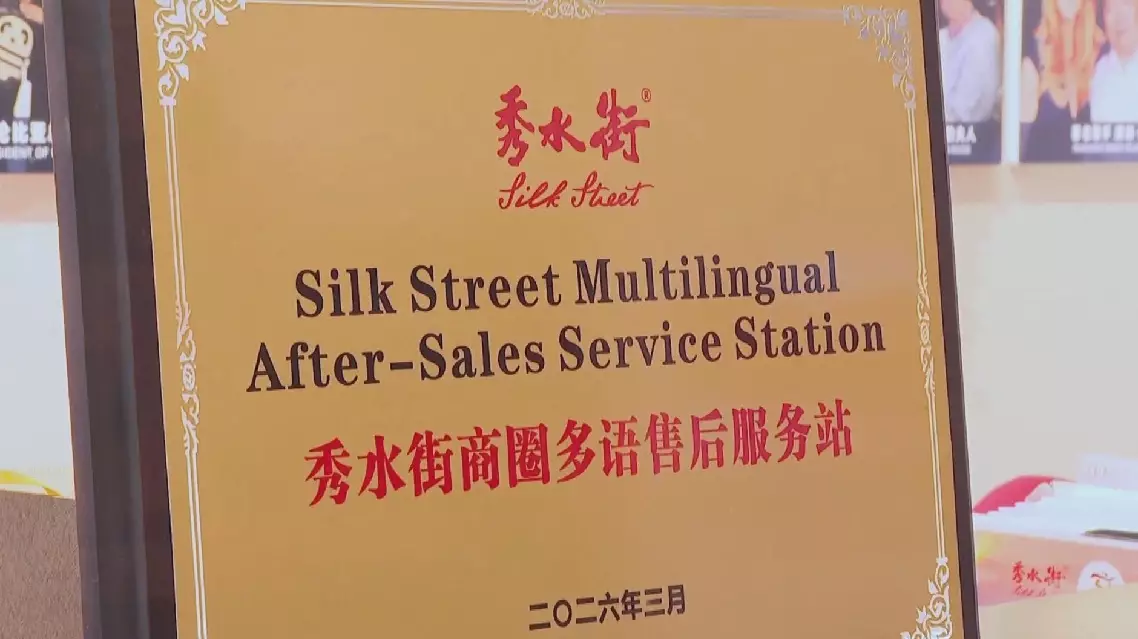
Beijing has quickened the development of a multilingual service system with its first multilingual after-sales service station now in operation to upgrade service offerings as holiday spending and inbound tourism are climbing.
The station was officially launched in March this year at the Silk Street shopping mall in Chaoyang District. It provides comprehensive services for foreign shoppers and businesses involved in international commerce, including consultation, complaint handling and dispute settlement, all available in multiple languages.
Thanks to favorable inbound tourism policies and a holiday travel surge, the number of foreign visitors to the mall soared more than fivefold year on year on the first day of the May Day holiday on Friday.
"I was studying here in 2017 and there's a really big change that happened to the Silk Market. And I think it was more organized. There was like more choices and the fabrics also are beautiful. And also the quality of things are getting better and better," said Salmi, a consumer.
As one of the more than 20 standardized consumer rights protection service stations already established in Chaoyang District, the Silk Street has received an average of more than 50 inbound tourist groups daily since March.
"So far, we have placed automated vending screens in 10 languages within our mall. In cases where machines cannot meet the demands, we have one-on-one manual services to resolve problems," said Dong Qing, head of commercial management at the Silk Street.
Looking ahead, Beijing plans to build a citywide, convenient and efficient service network for foreign-related consumer rights protection, shifting from "post-incident handling" to "full-process service" in consumer rights protection.
Beijing updates multilingual service for travelers