China's efforts to foster a global community with a shared future have garnered international attention over the past years, reflected by the rising popularity of the Institute of South-South Cooperation and Development in Beijing.
Initiated by Chinese President Xi Jinping, the Institute opened in April 2016 at Peking University as part of China's commitment to push forward South-South cooperation and enhance the common prosperity of developing countries.
Wasina Nititawan, PhD student at the institute and advisor to the Secretary General of the Palang Pracharath Party of Thailand, visited China 20 years ago, when she didn't know much about the country. Last May, she got a chance to visit China again, when she witnessed the huge development in cities including Suzhou, Nanjing and Beijing.
"I'm so surprised, and highly admire the Chinese modernization with 1.4 billion people. This is a miracle for me," she said.
Through study and interaction at the institute, students gain a deep understanding of China's development experience while also bringing their own countries' practices into the classroom.
"The courses that I've taken at Peking University so far really encouraged me to think in a new way. I see new possibilities. And the courses here, what they are like is that the course work is combined between theory and practice. After I graduate from PKU, I would like to advance Thailand's national development policy with my policy-making work with the Palang Pracharath Party," said Nititawan.
The institute currently has more than 400 students from over 70 developing countries. Upon returning to their home countries, many of these graduates assume influential roles in governments, international organizations and non-governmental organizations, in which they contribute positively to policy-making and development initiatives.
Nancy Abdelghany was graduated from the institute in 2021. Now she is working for the Egyptian Ministry of Industry as a senior researcher.
"It's really very nice experience and it built up on my professional career and my personal experience. It gives me the strength and build me a lot of capabilities to build up in my new career and in my new position," Abdelghany said.
Since 2021, President Xi has proposed three global initiatives: the Global Development Initiative, the Global Security Initiative and the Global Civilization Initiative. These initiatives have helped form a solid foundation and practical pathway for promoting the building of a community with a shared future. Among them, the Global Development Initiative aims to speed up the implementation of the UN 2030 Agenda for Sustainable Development.
Proposed by President Xi in 2013, the Belt and Road Initiative or the BRI, is a testament to China's commitment to peaceful development. As of 2023, more than 150 countries and over 30 international organizations signed BRI cooperation documents.
"We hope the whole world knows that you cannot submerge the friendship between China and Africa, generally, and all developing countries. We need to unite to ensure that we maximize the happiness of human beings and reduce the suffering," said Mbita Chintundya Chitala, former Zambian Deputy Minister of Finance.
"In the future, we need a strong cooperation between developing countries. And we can use this network to further our work development work in the long run," said Nititawan.
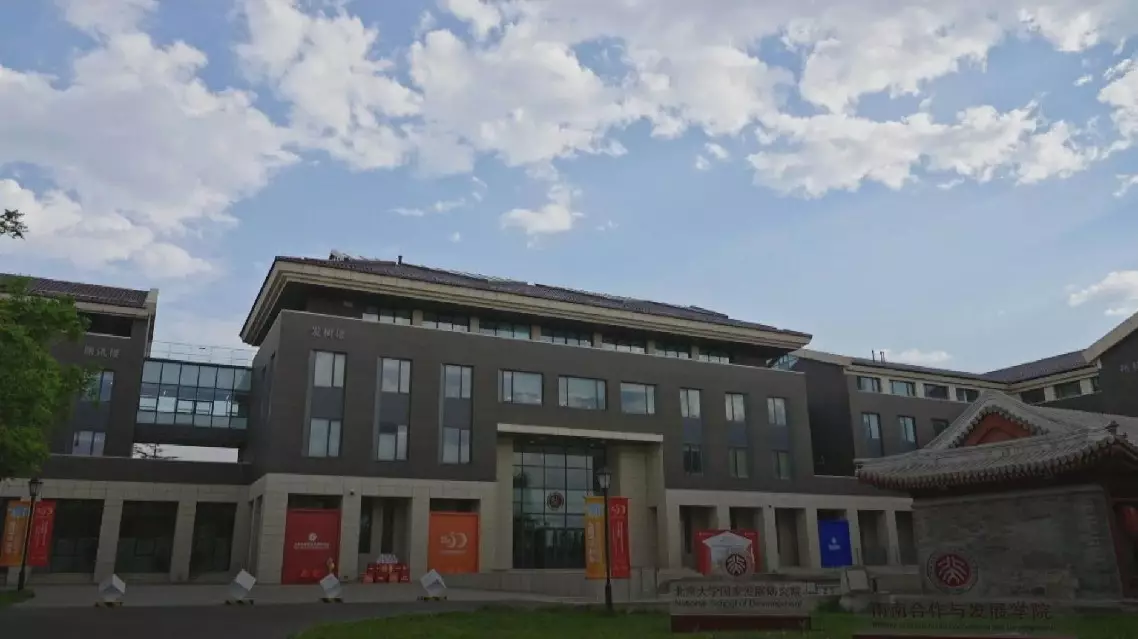
Institute reflects China's dedication to building community with shared future