A "green scarf" to prevent desertification in the Taklimakan Desert in northwest China's Xinjiang Uygur Autonomous Region is expected to be completed by the end of this year. Over the past 40 years, a green belt spanning 2,761 kilometers has been established around China's largest desert, the Taklimakan Desert, aptly referred to as the "green scarf". The initiative leverages the country's Three-North Shelterbelt Forest Program (TSFP), so named because it carries out forestation in the north, northeast and northwest regions.
Currently, out of the remaining 285 kilometers of tasks combating desertification, 155 kilometers have been completed in the desert, achieving a completion rate of more than 54 percent. It is expected to complete the final flourish of the "green scarf" by the end of the year.
China has been exploring ways to combat desertification for decades and launched the TSFP in 1978. At present, the large-scale afforestation project, often called the "Great Green Wall" has entered a critical phase.
Since August last year, the country has launched three major battles against desertification under the TSFP, with the project in the Hexi Corridor-Taklimakan Desert region being one of them.
Practices such as planting desert shelter forests and building sand-control barriers have been successfully implemented there.
"Engineering sand control has meant building this straw checkerboard sand barrier. As you can see, both sides of the road are entirely covered with these straw checkerboard sand barriers, which stabilize all the sand and keep the road clear," said Abbas Eysa, head of sand control station in Qiemo County, Bayingolin Mongol Autonomous Prefecture.
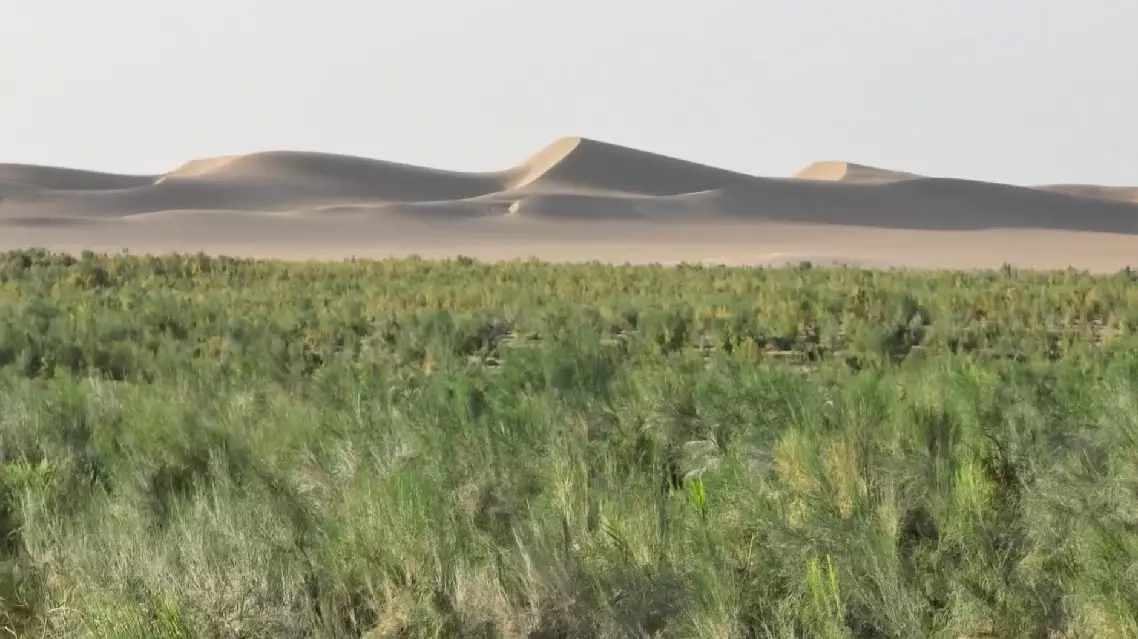
"Green scarf" for fixing sand in China's largest desert to be completed by end of 2024
National political advisers from the Hong Kong Special Administrative Region (HKSAR) and the Macao Special Administrative Region (Macao SAR) said on Wednesday that the two regions can further leverage their unique advantages to support the nation's opening-up and strengthen its links with global trade and investment networks.
Highlighting the strategic importance of the two regions, Charles M. Choy, a member of the 14th CPPCC National Committee from the Macao SAR emphasized that the dual-access nature of the two regions remains a cornerstone for international engagement.
"Both SARs combine deep access to the mainland with internationally familiar legal and financial systems. Hong Kong continues to function as a major global financial center, facilitating capital flows, RMB internationalization, and global investment into China. Macao, on the other hand, plays a very distinctive role as a bridge between China and Portuguese-speaking countries, and increasingly as a platform for diversified cooperation beyond tourism and gaming internationally. China continues to signal its commitment to opening up and improving the business environment. For international businesses, this is not a moment to wait and see, it is a moment to engage strategically and thoughtfully," he said.
Clarence Chun Kit Ling, a member of the 14th CPPCC National Committee from the HK SAR, noted the specific logistical and trade frameworks that define Hong Kong's contribution to the national strategy.
"Expanding the trade network. Leveraging the unique advantages of Hong Kong as a free port, we will deepen trade exchanges and practical cooperation with countries and regions along the Belt and Road Initiative. We will vigorously foster emerging trade forms such as cross-border e-commerce and trade in services, continuously enhance the diversification and internationalization of trade development, and promote Hong Kong as an important hub for the country to connect with the global trade network," he said.
The 14th National Committee of the CPPCC, China's top political advisory body, concluded its annual session on Wednesday with a call in its work to pool wisdom and strength to ensure a strong start to the 15th Five-Year Plan period (2026-2030).
During the session that ran from March 4 to 11, the national political advisors discussed the government work report, the draft outline of the 15th Five-Year Plan and other reports, and reviewed the work report of the Standing Committee of the CPPCC National Committee, the report on how the proposals from political advisors have been handled since the previous annual session and other documents, achieving fruitful results.

CPPCC members from Hong Kong, Macao highlight SARs' role in connecting nation with global markets
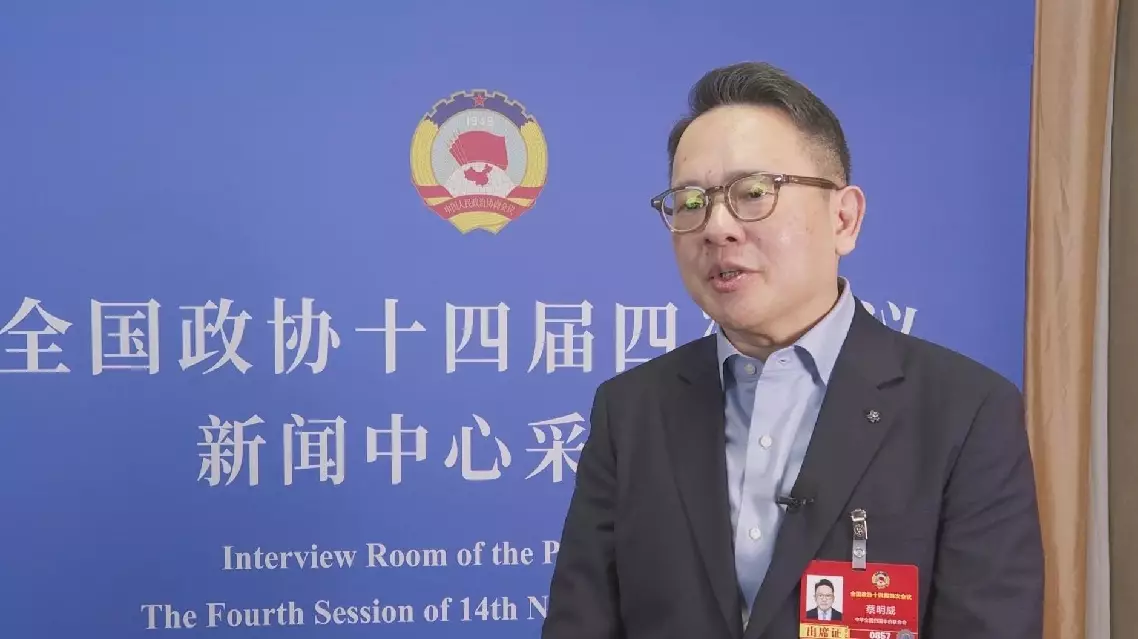
CPPCC members from Hong Kong, Macao highlight SARs' role in connecting nation with global markets