Skip to Content Facebook Feature Image

Japan's Kojima, with its proud Jeans Street, draws fans of vintage, deep-blue denim

ENT

Japan's Kojima, with its proud Jeans Street, draws fans of vintage, deep-blue denim
ENT

ENT

Japan's Kojima, with its proud Jeans Street, draws fans of vintage, deep-blue denim

2024-10-02 12:44 Last Updated At:12:51

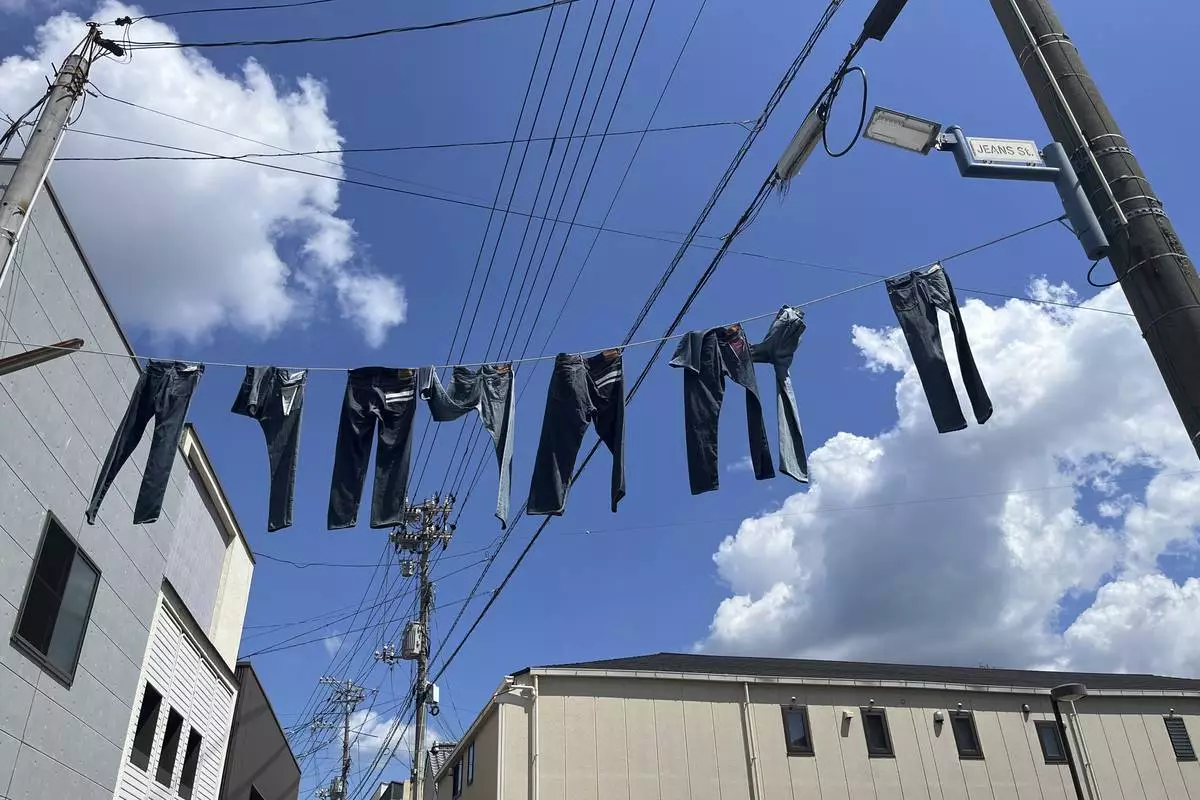
KOJIMA, Japan (AP) — Denim, that All-American fabric, is all about being Japanese in the town of Kojima, where the main road is named Jeans Street, with real pairs of pants flapping like flags overhead.

Some would call this spot in southwestern seaside Okayama Prefecture a mecca of jeans, where fans from around the world make pilgrimage. The soda vending machines at the train station are plastered with the image of jeans. The roads are painted blue, with the lines at the edges pink and white, the trademark of Kojima jeans’ seams.

More Images
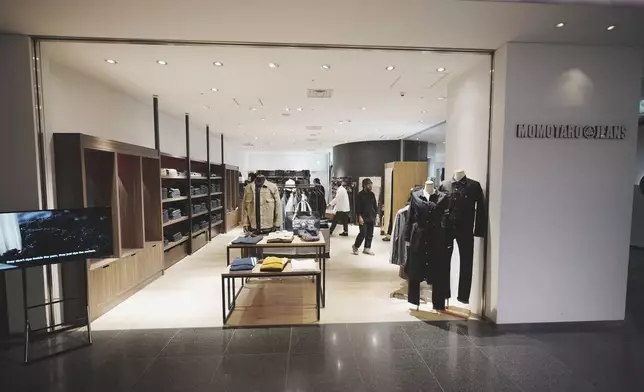
The Momotaro Jeans shop is pictured in Tokyo, on Sept. 18, 2024. (AP Photo/Eugene Hoshiko)
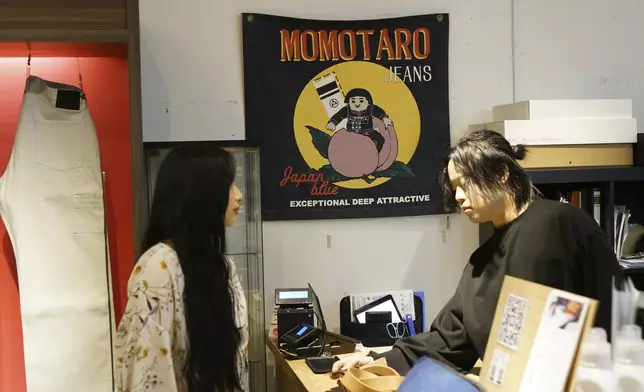
The Momotaro Jeans shop is pictured in Tokyo, on Sept. 18, 2024. (AP Photo/Eugene Hoshiko)

Shop clarks work at Momotaro Jeans shop in Tokyo, on Sept. 18, 2024. (AP Photo/Eugene Hoshiko)
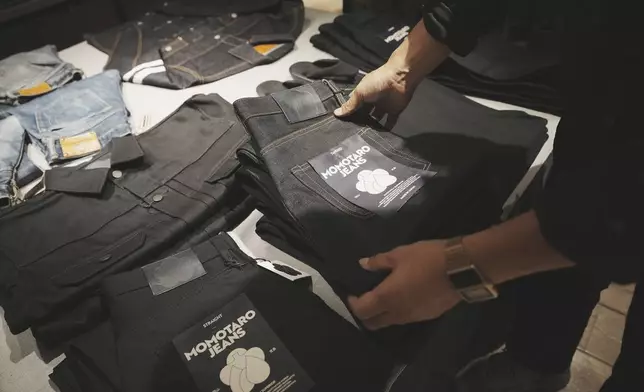
Shop clarks work at Momotaro Jeans shop in Tokyo, on Sept. 18, 2024. (AP Photo/Eugene Hoshiko)

Shop clerk Yuta Akagi displays the jeans at Momotaro Jeans shop in Tokyo, on Sept. 18, 2024. (AP Photo/Eugene Hoshiko)
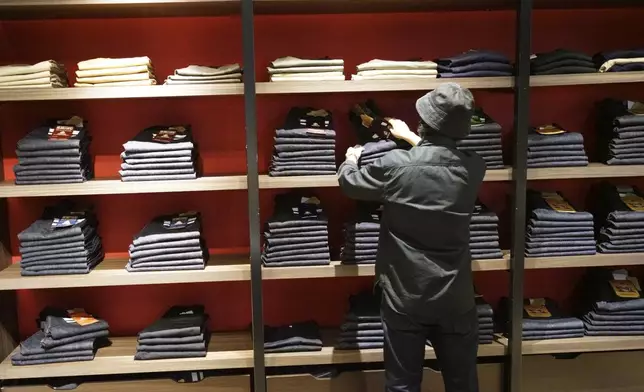
Shop clerk Yuta Akagi displays the jeans at Momotaro Jeans shop in Tokyo, on Sept. 18, 2024. (AP Photo/Eugene Hoshiko)
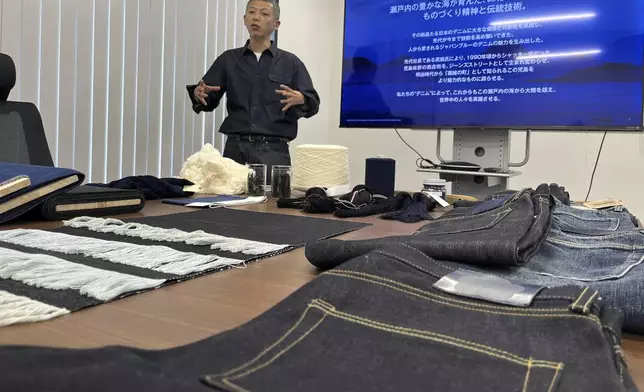
Shop clerk Yuta Akagi displays the jeans at Momotaro Jeans shop in Tokyo, on Sept. 18, 2024. (AP Photo/Eugene Hoshiko)

Shop clerk Yuta Akagi displays the jeans at Momotaro Jeans shop in Tokyo, on Sept. 18, 2024. (AP Photo/Eugene Hoshiko)

Japan Blue Co. President and Chief Operating Officer Masataka Suzuki shows some of the jeans products from Momotaro Jeans at headquarters in Kojima, southwestern Japan. Taken Sept. 4, 2024. (AP Photo/Yuri Kageyama)
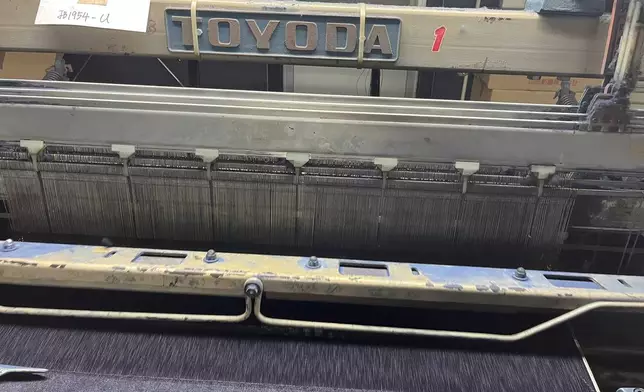
Japan Blue Co. President and Chief Operating Officer Masataka Suzuki shows some of the jeans products from Momotaro Jeans at headquarters in Kojima, southwestern Japan. Taken Sept. 4, 2024. (AP Photo/Yuri Kageyama)

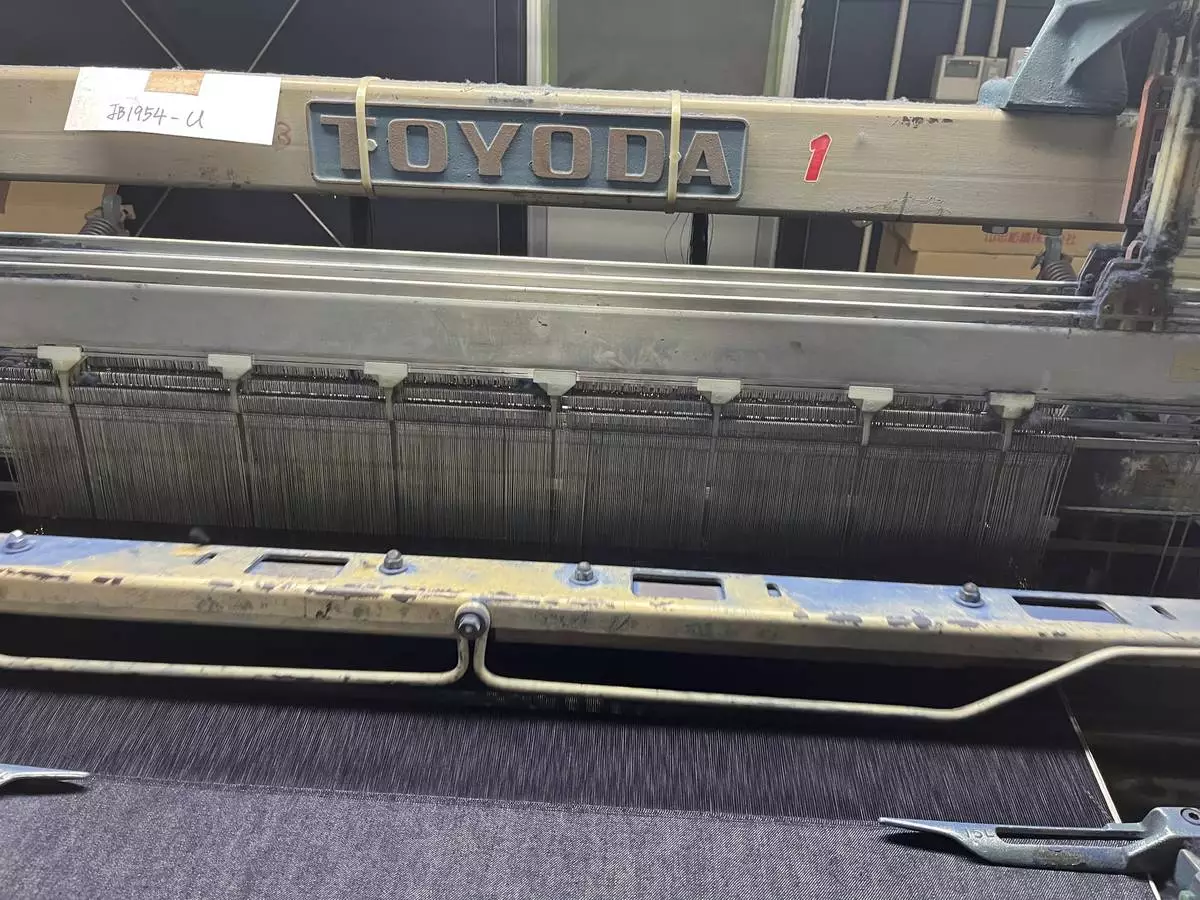
This shows a closeup of the vintage looms that weave the denim in Kojima, Okayama prefecture, Japan, on Sept. 4, 2024. (AP Photo/Yuri Kageyama)
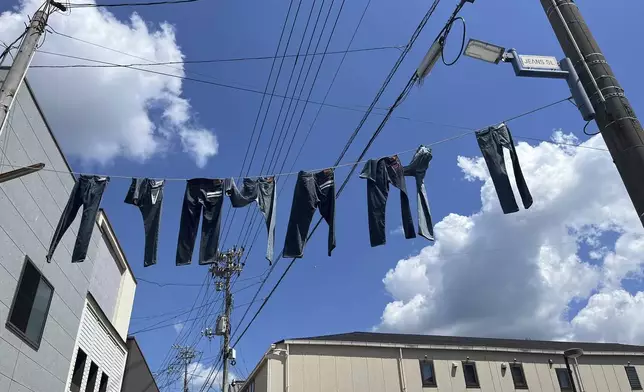
This shows a closeup of the vintage looms that weave the denim in Kojima, Okayama prefecture, Japan, on Sept. 4, 2024. (AP Photo/Yuri Kageyama)

Pairs of jeans flap over Jeans Street in Kojima, Okayama prefecture, Japan, on Sept. 4, 2024. (AP Photo/Yuri Kageyama)
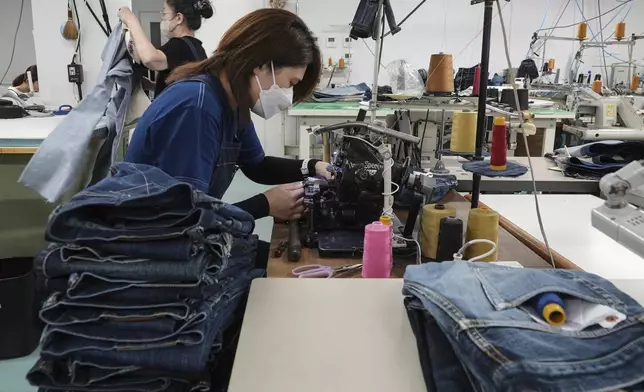
Pairs of jeans flap over Jeans Street in Kojima, Okayama prefecture, Japan, on Sept. 4, 2024. (AP Photo/Yuri Kageyama)

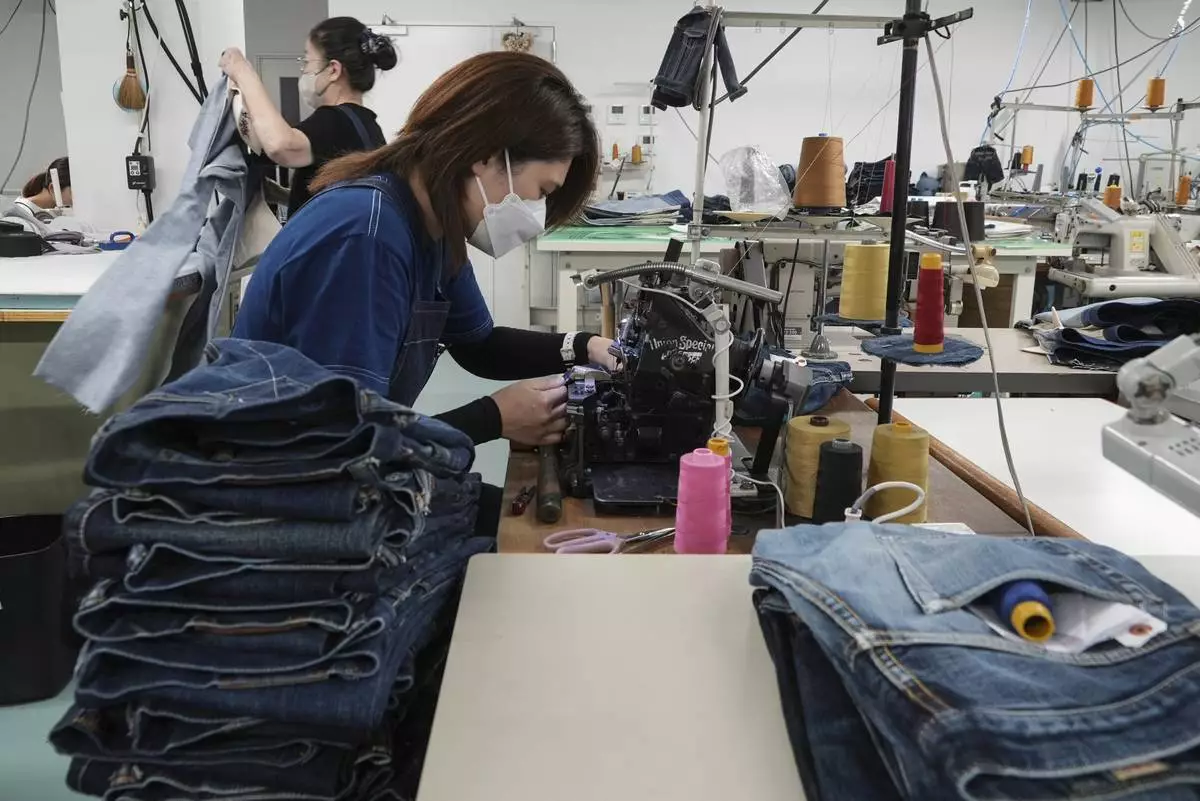
A seamstress works on denim trousers at Momotaro Jeans using a vintage sewing machine in Kojima, Okayama prefecture, western Japan, on Sept. 4, 2024. (AP Photo/Ayaka McGill)
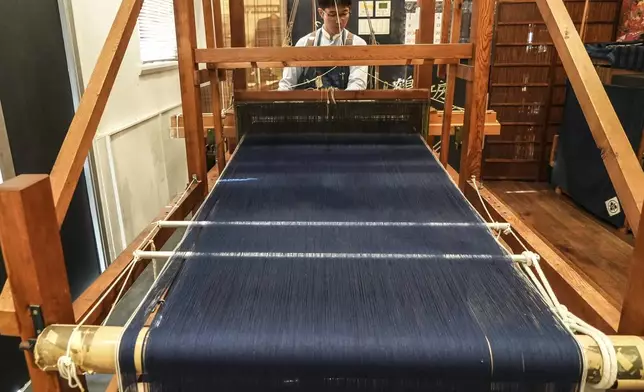
A seamstress works on denim trousers at Momotaro Jeans using a vintage sewing machine in Kojima, Okayama prefecture, western Japan, on Sept. 4, 2024. (AP Photo/Ayaka McGill)

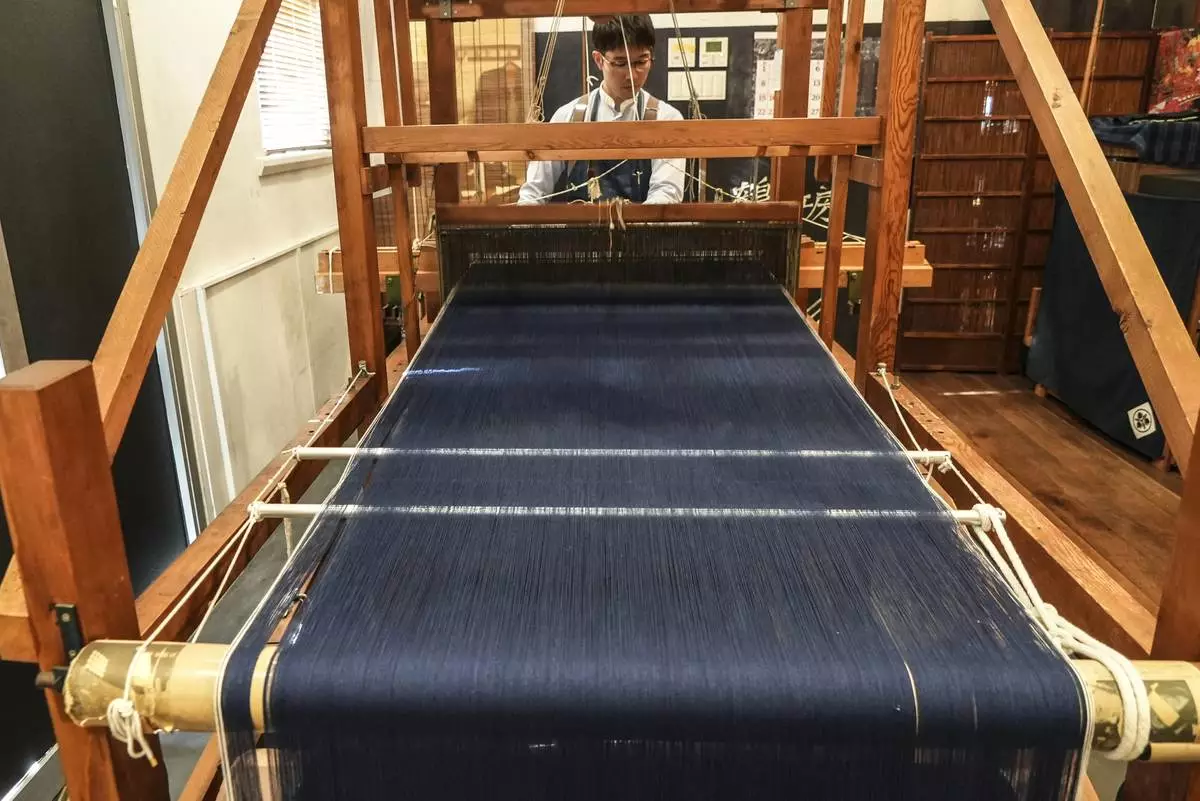
A weaver operates a handloom at Momotaro Jeans in Kojima, Okayama prefecture, western Japan, on Sept. 4, 2024. (AP Photo/Ayaka McGill)
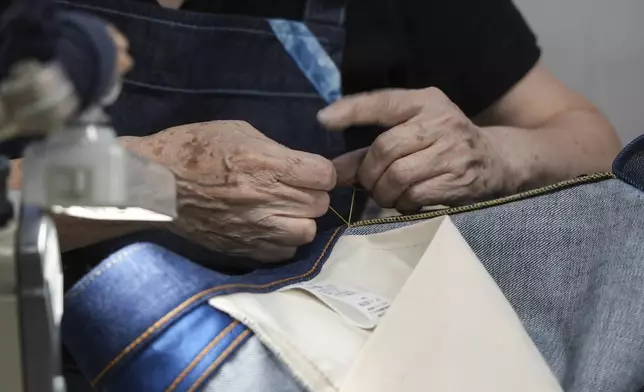
A weaver operates a handloom at Momotaro Jeans in Kojima, Okayama prefecture, western Japan, on Sept. 4, 2024. (AP Photo/Ayaka McGill)

Naomi Takebayashi, a seamstress at Momotaro Jeans, hand-stiches a pair of jeans in Kojima, Okayama prefecture, western Japan, on Sept. 4, 2024. (AP Photo/Ayaka McGill)
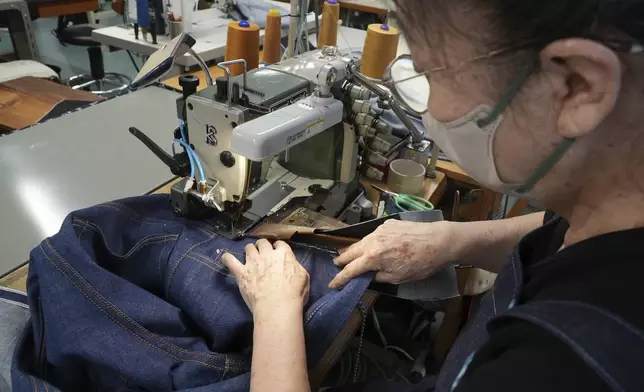
Naomi Takebayashi, a seamstress at Momotaro Jeans, hand-stiches a pair of jeans in Kojima, Okayama prefecture, western Japan, on Sept. 4, 2024. (AP Photo/Ayaka McGill)
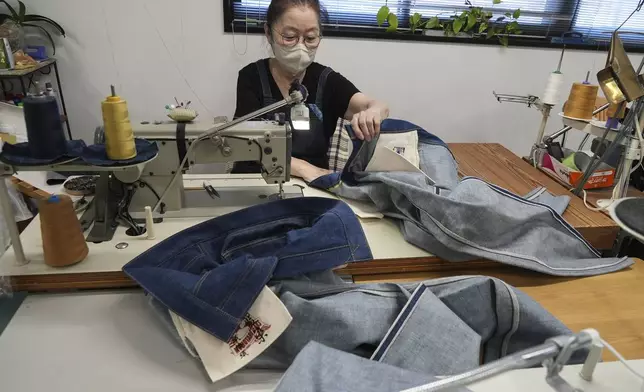
Naomi Takebayashi, a seamstress at Momotaro Jeans, sewing a pair of jeans in Kojima, Okayama prefecture, western Japan, on Sept. 4, 2024. (AP Photo/Ayaka McGill)

Naomi Takebayashi, a seamstress at Momotaro Jeans, sewing a pair of jeans in Kojima, Okayama prefecture, western Japan, on Sept. 4, 2024. (AP Photo/Ayaka McGill)

Naomi Takebayashi, a seamstress at Momotaro Jeans, works on pairs of jeans in Kojima, Okayama prefecture, western Japan, on Sept. 4, 2024. (AP Photo/Ayaka McGill)
Naomi Takebayashi, a seamstress at Momotaro Jeans, works on pairs of jeans in Kojima, Okayama prefecture, western Japan, on Sept. 4, 2024. (AP Photo/Ayaka McGill)

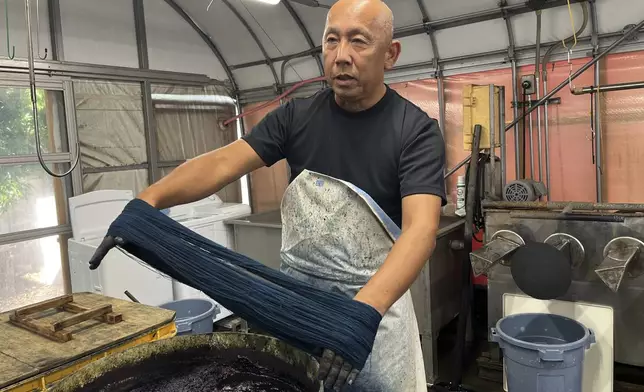
Dyeing craftsman Yoshiharu Okamoto shows how he dyes the threads in indigo for denim at Momotaro Jeans in Kojima, Okayama prefecture, Japan, on Sept. 4, 2024. (AP Photo/Yuri Kageyama)
Dyeing craftsman Yoshiharu Okamoto shows how he dyes the threads in indigo for denim at Momotaro Jeans in Kojima, Okayama prefecture, Japan, on Sept. 4, 2024. (AP Photo/Yuri Kageyama)

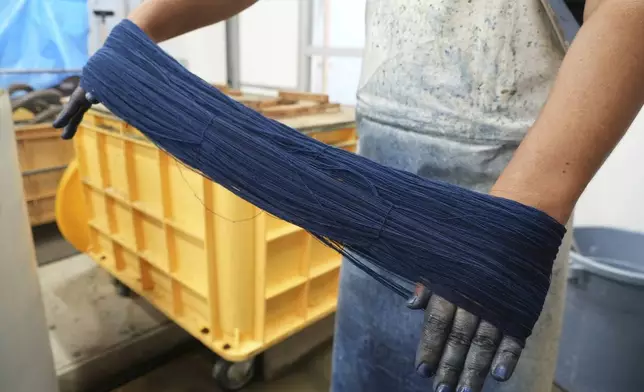
A dyer at Momotaro Jeans shows dyed yarn in Kojima, Okayama prefecture, western Japan, on Sept. 4, 2024. (AP Photo/Ayaka McGill)
A dyer at Momotaro Jeans shows dyed yarn in Kojima, Okayama prefecture, western Japan, on Sept. 4, 2024. (AP Photo/Ayaka McGill)

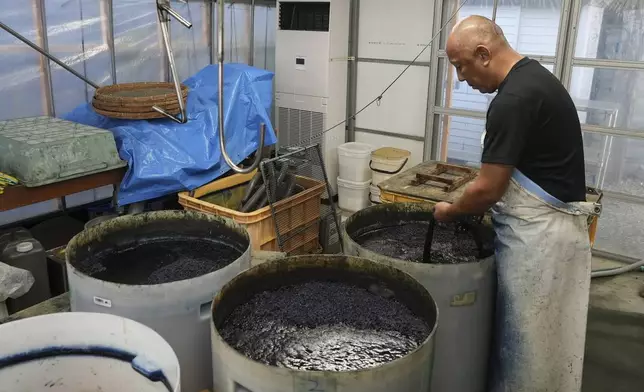
Yoshiharu Okamoto, a dyer at Momotaro Jeans, demonstrates dyeing yarn in indigo for making denim in Kojima, Okayama prefecture, western Japan, on Sept. 4, 2024. (AP Photo/Ayaka McGill)
Yoshiharu Okamoto, a dyer at Momotaro Jeans, demonstrates dyeing yarn in indigo for making denim in Kojima, Okayama prefecture, western Japan, on Sept. 4, 2024. (AP Photo/Ayaka McGill)

Weaver Shigeru Uchida and his colleague inspect vintage loom machines at Momotaro Jeans in Kojima, Okayama prefecture, western Japan, on Sept. 4, 2024. (AP Photo/Ayaka McGill)
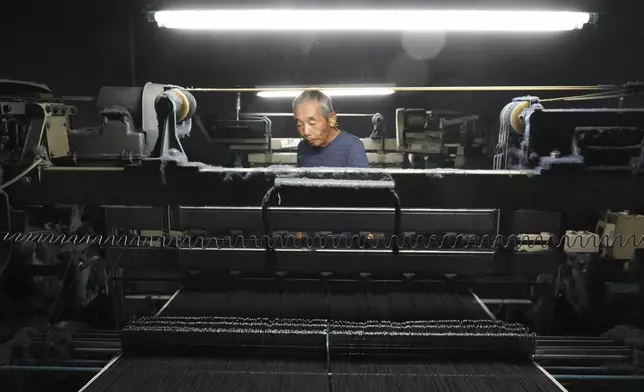
Weaver Shigeru Uchida and his colleague inspect vintage loom machines at Momotaro Jeans in Kojima, Okayama prefecture, western Japan, on Sept. 4, 2024. (AP Photo/Ayaka McGill)

Shigeru Uchida, a weaver at Momotaro Jean, examines a vintage loom machine in Kojima, Okayama prefecture, western Japan, on Sept. 4, 2024. (AP Photo/Ayaka McGill)
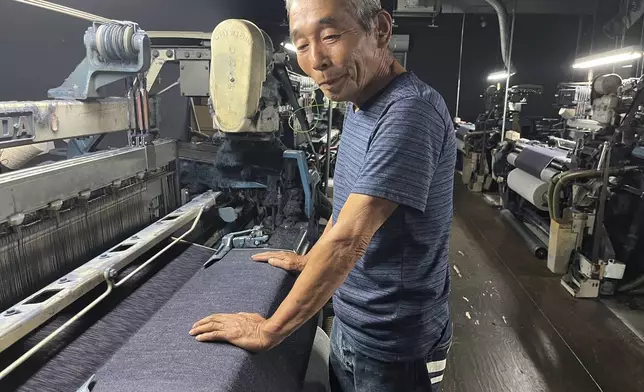
Shigeru Uchida, a weaver at Momotaro Jean, examines a vintage loom machine in Kojima, Okayama prefecture, western Japan, on Sept. 4, 2024. (AP Photo/Ayaka McGill)

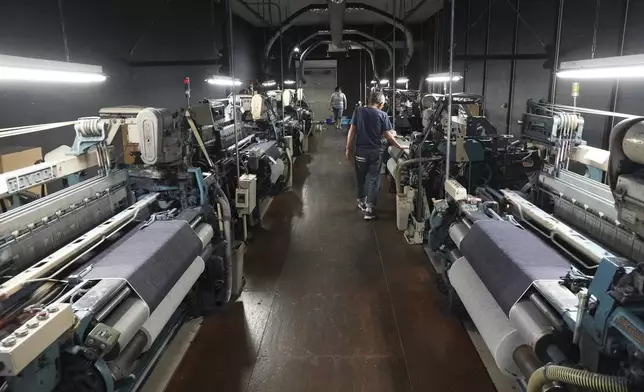
Weaving craftsman Shigeru Uchida examines the evenness of the fabric being woven by the old power looms at Momotaro Jeans in Kojima, Okayama prefecture, Japan, on Sept. 4, 2024. (AP Photo/Yuri Kageyama)
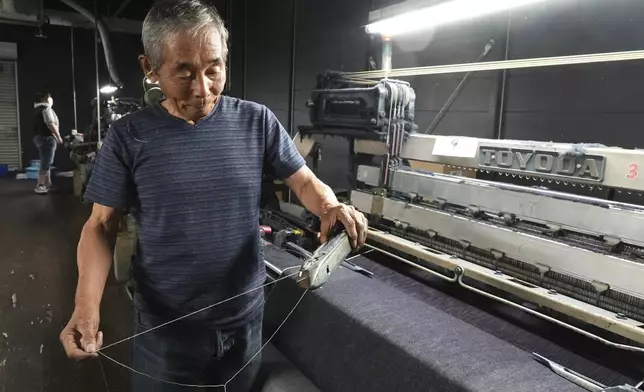
Weaving craftsman Shigeru Uchida examines the evenness of the fabric being woven by the old power looms at Momotaro Jeans in Kojima, Okayama prefecture, Japan, on Sept. 4, 2024. (AP Photo/Yuri Kageyama)

Shigeru Uchida, a weaver at Momotaro Jeans, holds a wooden shuttle next to a vintage loom machine in Kojima, Okayama prefecture, Japan, on Sept. 4, 2024. (AP Photo/Ayaka McGill)

Shigeru Uchida, a weaver at Momotaro Jeans, holds a wooden shuttle next to a vintage loom machine in Kojima, Okayama prefecture, Japan, on Sept. 4, 2024. (AP Photo/Ayaka McGill)

With some 40 jeans manufacturers and stores, including denim-themed cafes, the area draws about 100,000 visitors a year, according to the Japan National Tourism Organization.

Japanese jeans tend to be high-end, dark and durable. Although a tiny part of the global jeans market, they have carved out a niche with a reputation for craftsmanship. Kojima gave birth to popular brands like Big John, with roots dating to the 1940s, and now supplies international fashion brands, including Gucci.

“The Japanese industry has established a way of looking at denim from a much more connoisseurship and collecting approach” than a mass marketing one, says Emma McClendon, assistant professor of fashion studies at St. John’s University in New York.

In Kojima, you might be in for a disappointment if you expect the glamour of a fashion center. Jeans Street is quaint and uncrowded. Each company in the region is relatively small, hiring about 100 people.

What you will find are people taking pride in “monozukuri,” or “making things,” connoting a devoted, laborious attention to detail. It’s an ethic entrenched throughout Japan, from big carmakers to the local tofu store.

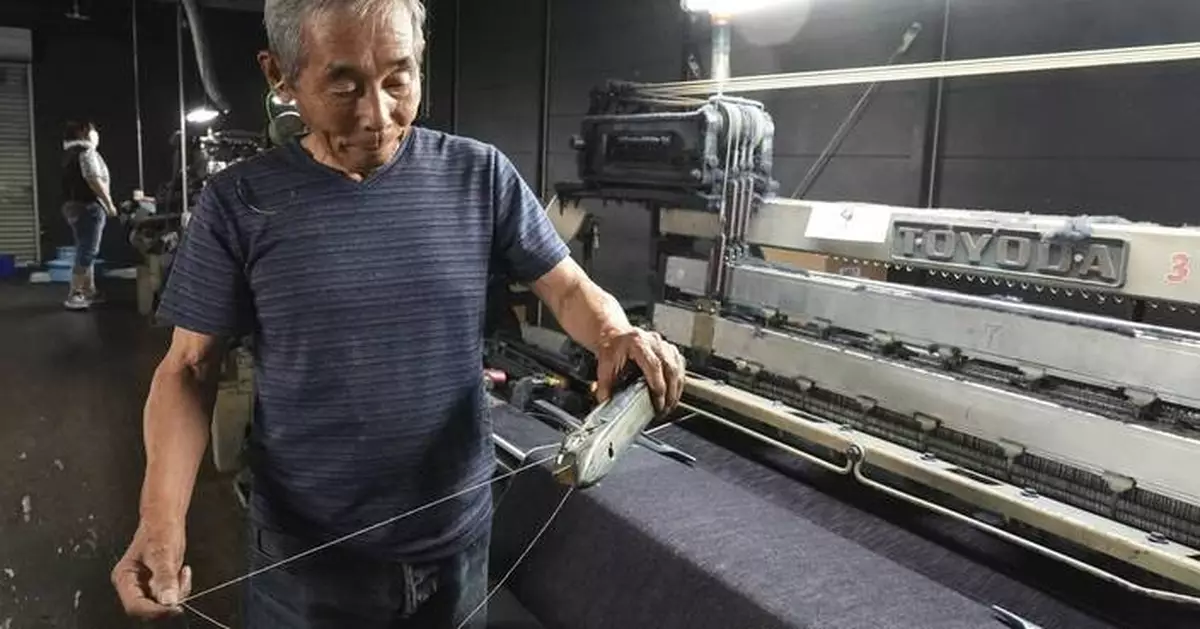
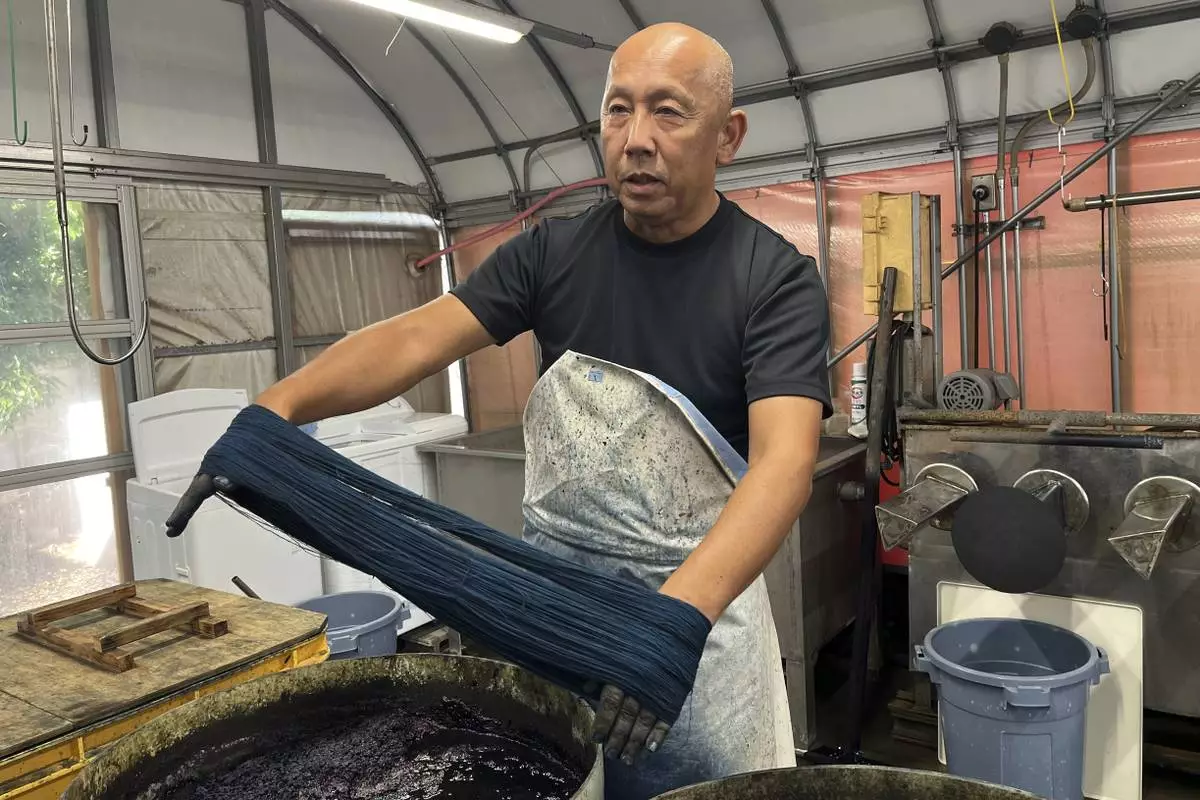
“More like making a kimono” is the way Yoshiharu Okamoto, a dyeing craftsman at Kojima-based manufacturer Momotaro Jeans, puts it.

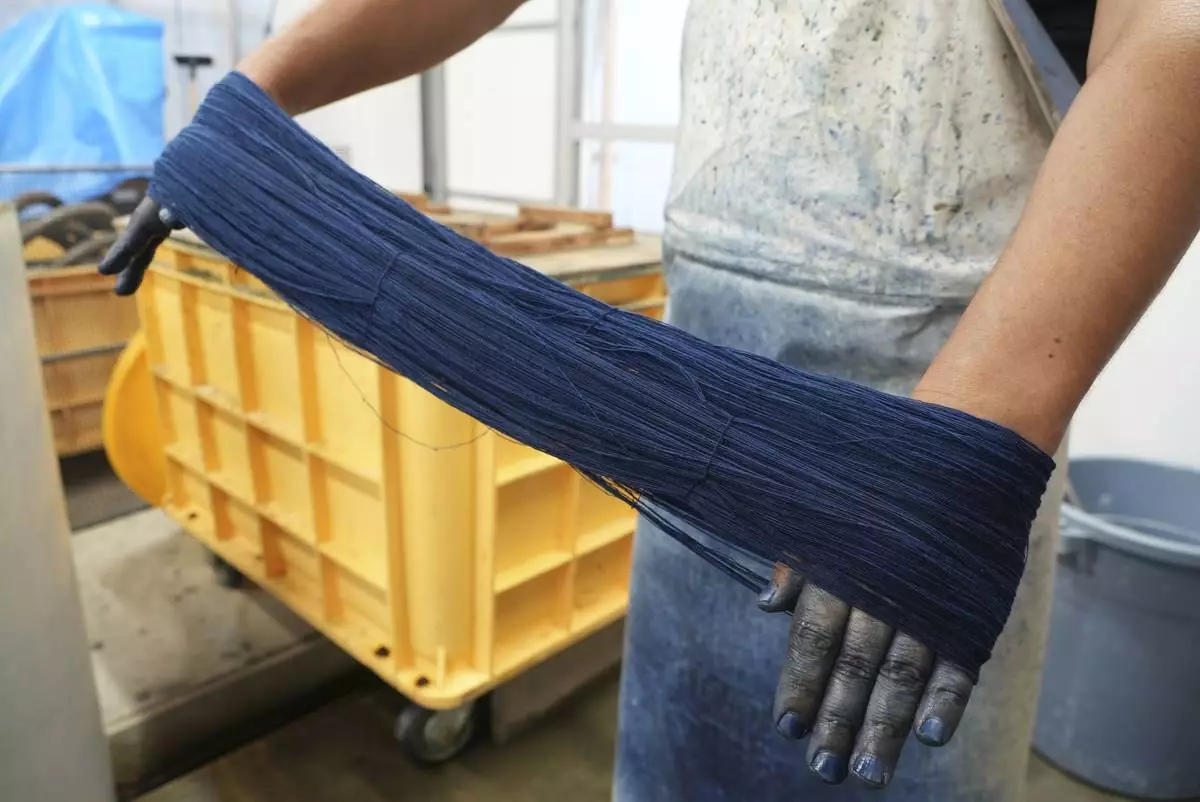
His hands and nails are tinged blue from dipping threads of Zimbabwean cotton into a big pail of dye.

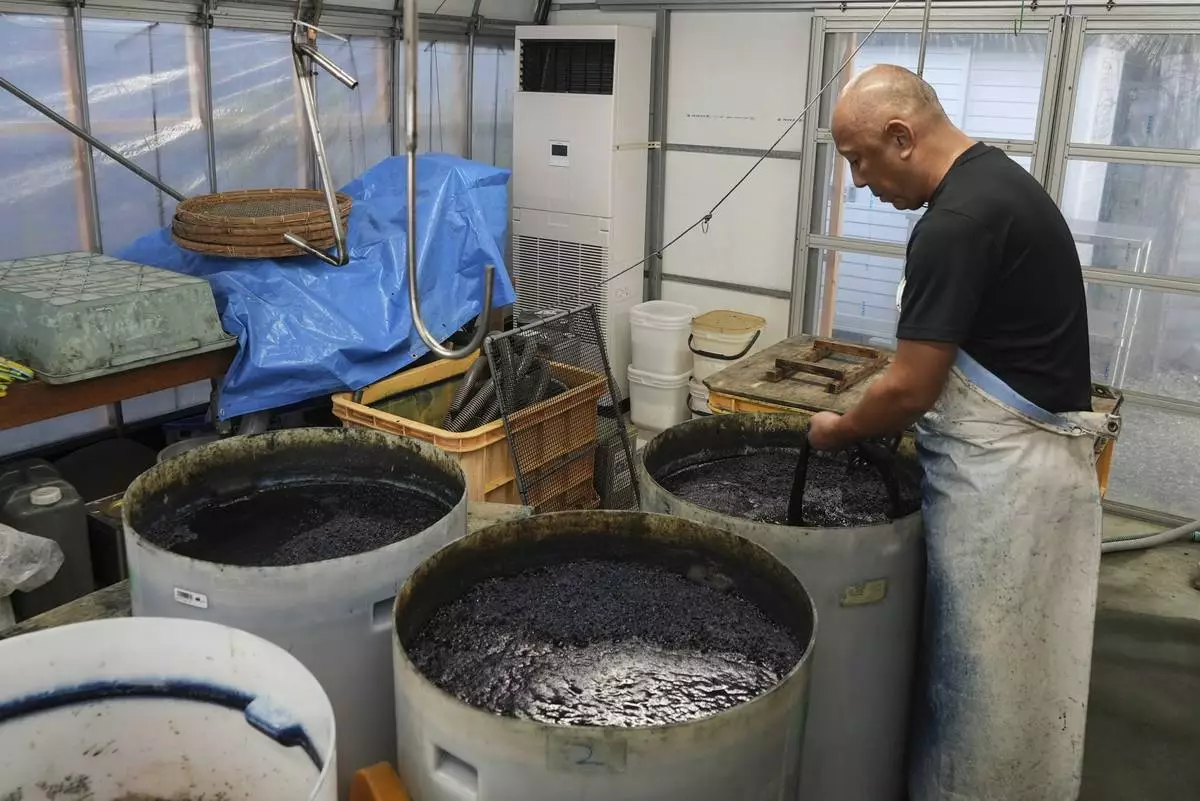
He knows by smell and feel the right state of the indigo, which he compares to a living thing. He swears it’s a 365-days-a-year job, as the dye has to be checked and mixed every day.

“It’s not that easy to get this special color,” Okamoto told The Associated Press during a recent tour of the production facilities. “It’s my life.”

The dark indigo hue of Made-in-Japan denim, much of it hailing from Kojima, is so distinctive it has earned the name “Japan blue,” also known as “tokuno blue,” which translates to “especially concentrated blue.”

Jeans made here aren’t cheap, ranging in price from a relatively affordable 33,000 yen ($230) per pair to those made by top craftsmen, which go for 200,000 yen ($1,400) or more.

Thomas Stege Bojer, founder of Denimhunters, an online site devoted to denim, says Japanese brands use “raw denim” that ages well and lasts a long time. He echoed the “ slow clothing” movement that has arisen in reaction to cheaper, mass-produced clothes.

“We just make too many clothes. The cycle is too fast, I think, and we need to slow down,” Bojer said from his home near Copenhagen, Denmark, where the walls are decorated with jeans.

As McClendon, the fashion professor, put it, the Japanese industry is "shifting the conversation around jeans to be about heritage elements, about educating consumers on historical details as a form of quality.”

Momotaro Jeans, for instance, come with a lifetime warranty: Tears and other problems get fixed for free, within reason. Japan Blue Co., which runs Momotaro, a brand that debuted in 2006, said annual sales totaled about 1.6 billion yen ($11 million) for the latest year. About 40% of sales come from outside Japan.

Like craftsman Okamoto, Shigeru Uchida, a loom specialist, and Naomi Takebayashi, who works at a sewing machine, believe they have special skills they must guard and hand to the next generation. They spoke while leading a group of younger sewers.

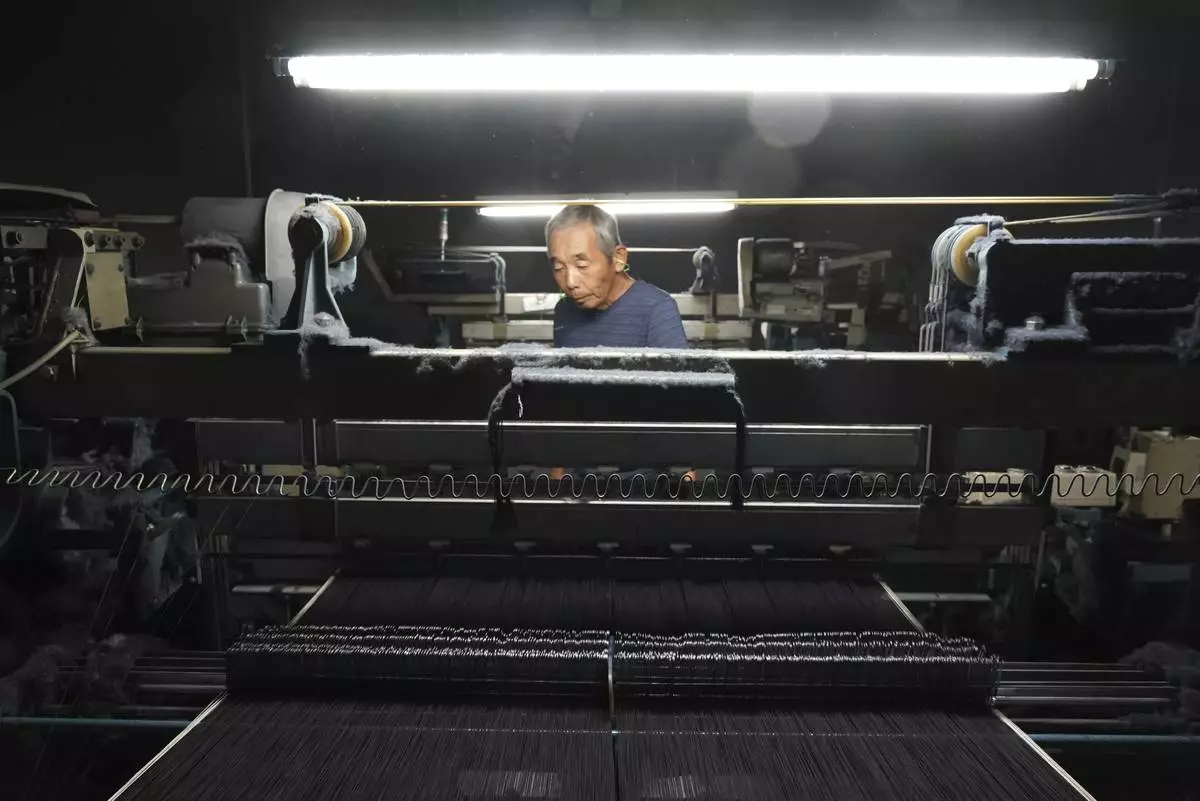
The two say they have a special relationship with their machines. They listen to the machines' sounds to make daily adjustments.

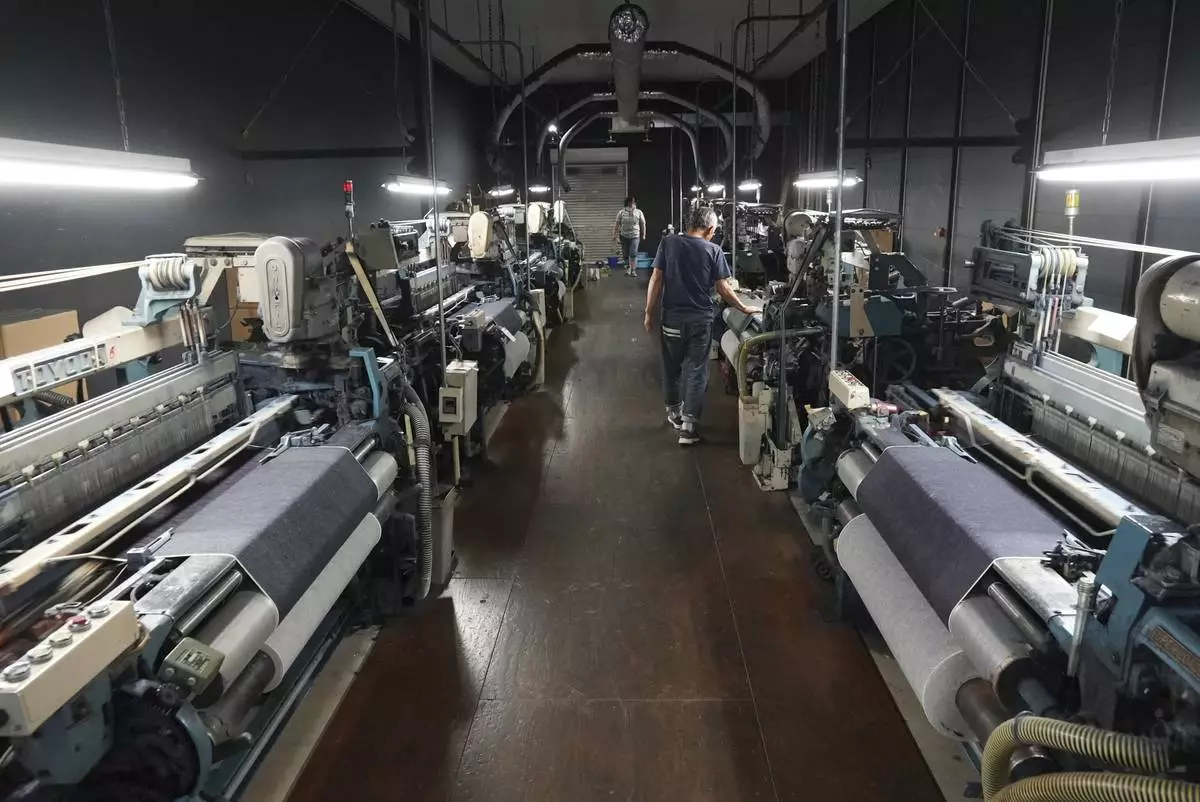
The clattering power looms are vintage Toyodas, from the weaving company that preceded automaker Toyota. Spare parts are hard to find. There is one loom operated by hand, used for products that the company says boast a unique texture.

Masataka Suzuki, president and chief operating officer at Japan Blue, says the industrial history of the region is a source of strength, centered around sewing heavy fabrics, including military clothes and obi sashes for kimonos, as well as the cotton and indigo-dyeing native to the area.

That’s why the jeans are for life, Suzuki said, fading and creasing, depending on how they’re worn and how the wearer lives.

“We want to create a product that is a testament to a person’s life,” he said.

Yuri Kageyama is on X: https://x.com/yurikageyama
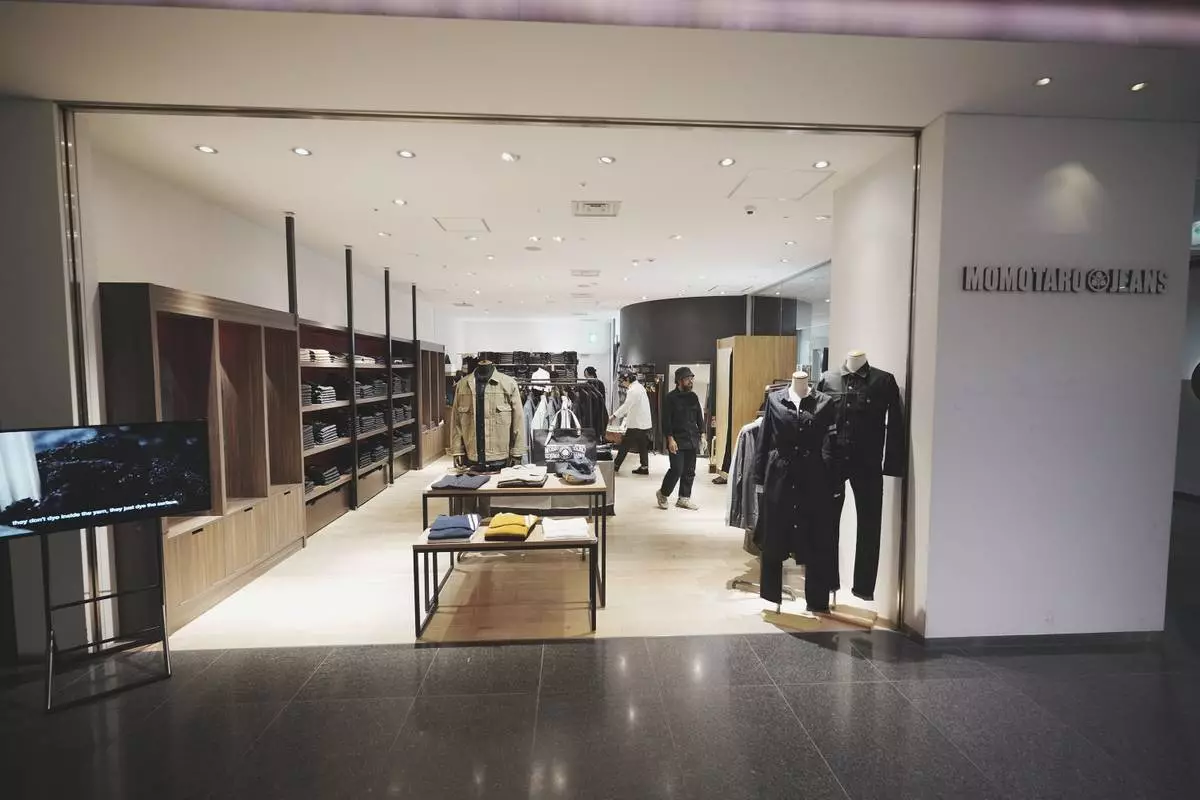
The Momotaro Jeans shop is pictured in Tokyo, on Sept. 18, 2024. (AP Photo/Eugene Hoshiko)
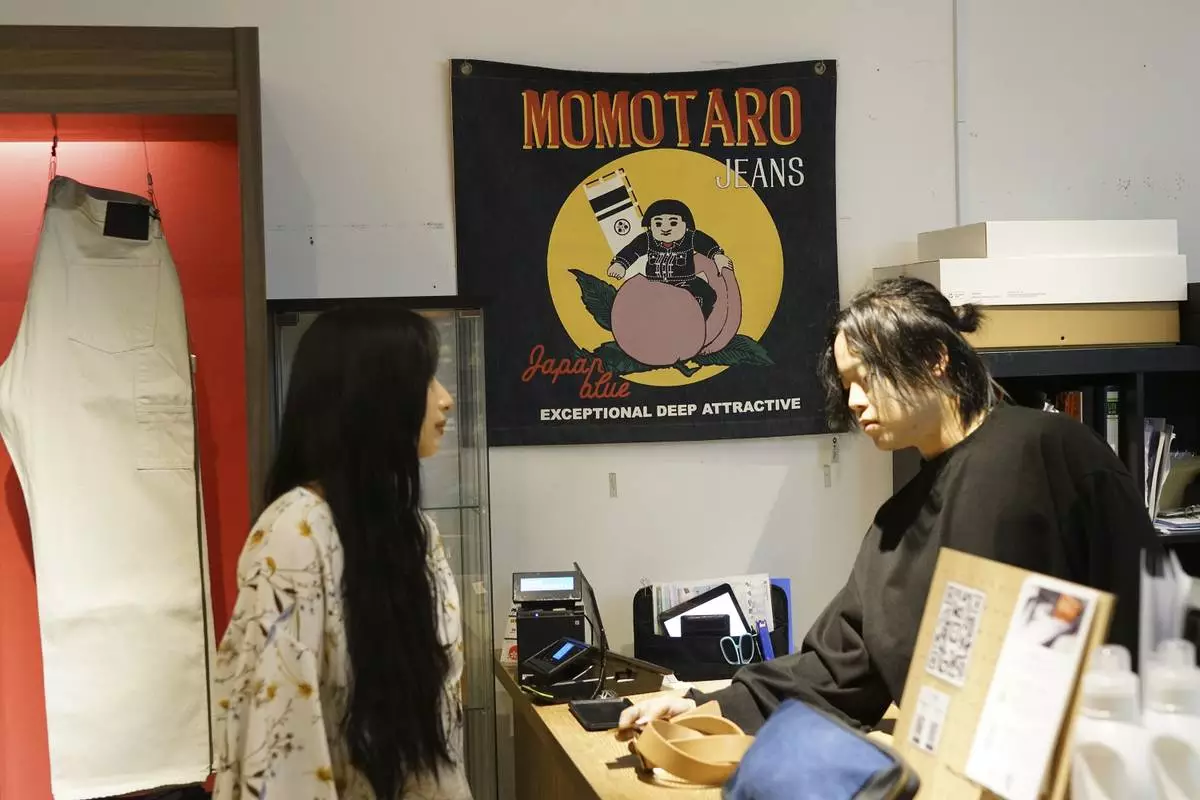
The Momotaro Jeans shop is pictured in Tokyo, on Sept. 18, 2024. (AP Photo/Eugene Hoshiko)

Shop clarks work at Momotaro Jeans shop in Tokyo, on Sept. 18, 2024. (AP Photo/Eugene Hoshiko)
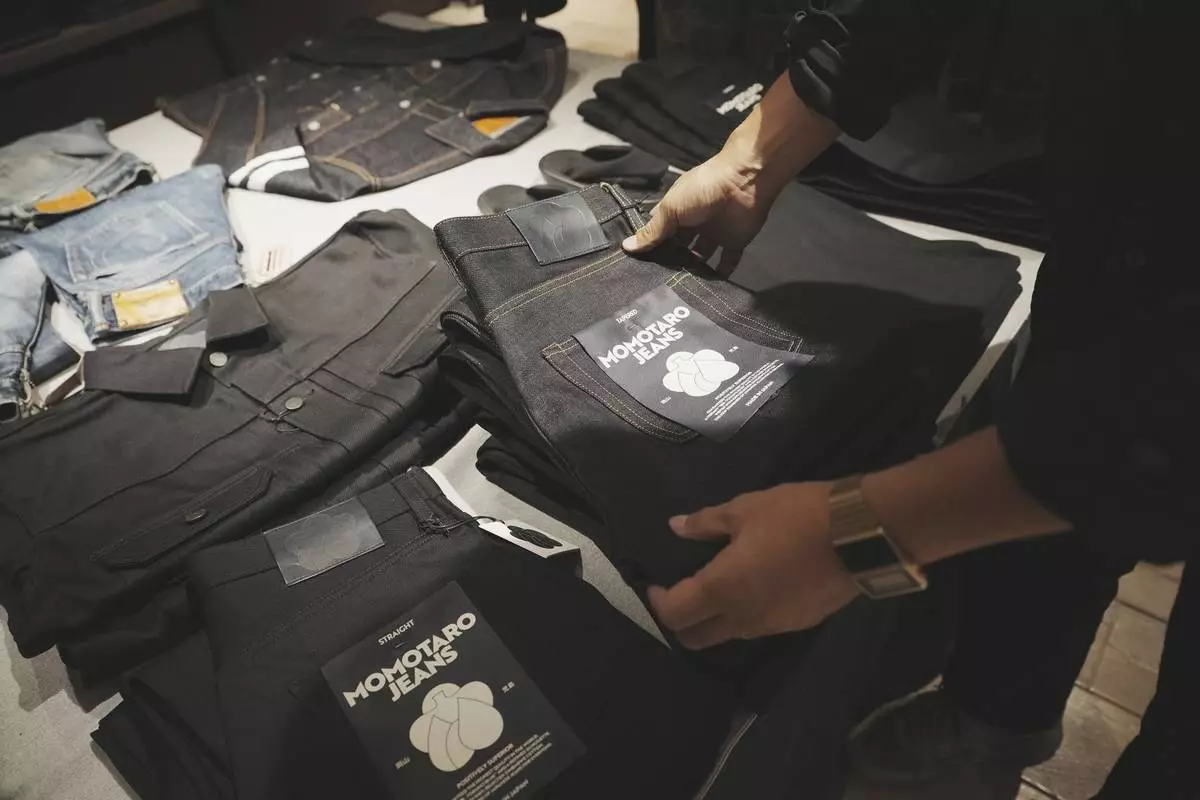
Shop clarks work at Momotaro Jeans shop in Tokyo, on Sept. 18, 2024. (AP Photo/Eugene Hoshiko)

Shop clerk Yuta Akagi displays the jeans at Momotaro Jeans shop in Tokyo, on Sept. 18, 2024. (AP Photo/Eugene Hoshiko)
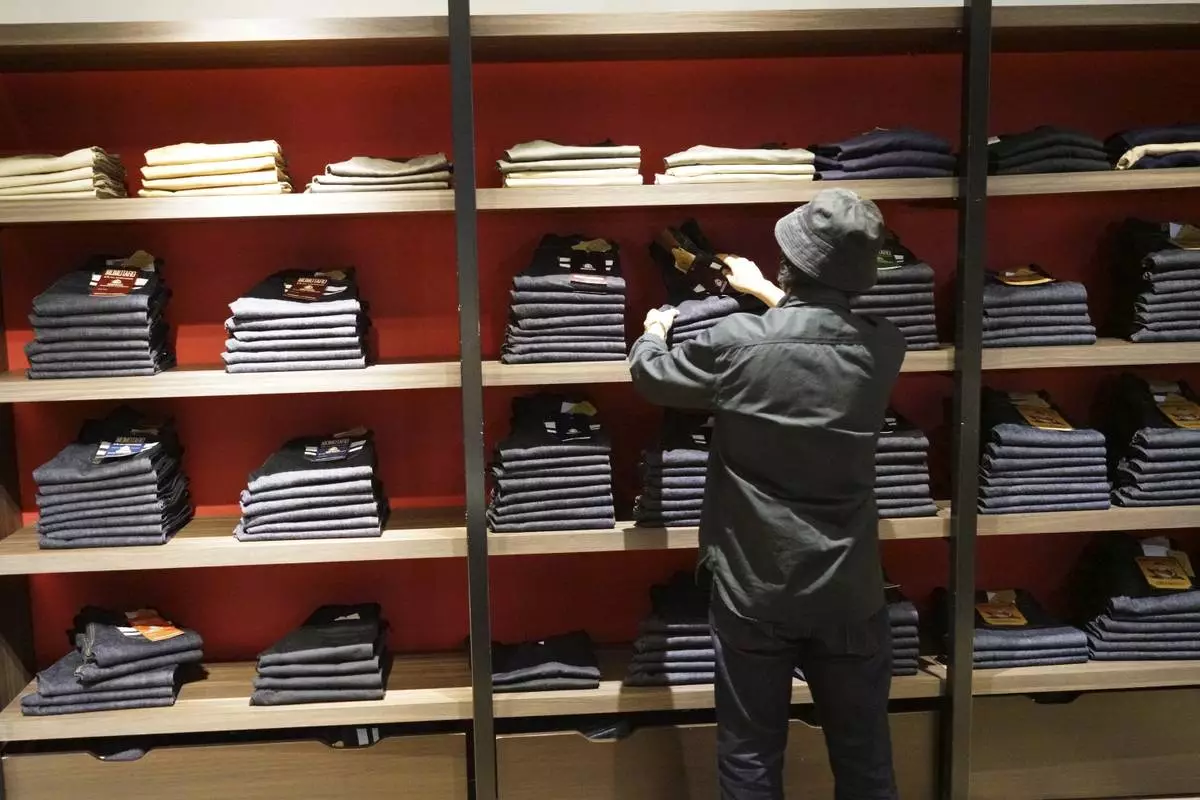
Shop clerk Yuta Akagi displays the jeans at Momotaro Jeans shop in Tokyo, on Sept. 18, 2024. (AP Photo/Eugene Hoshiko)
Shop clerk Yuta Akagi displays the jeans at Momotaro Jeans shop in Tokyo, on Sept. 18, 2024. (AP Photo/Eugene Hoshiko)

Shop clerk Yuta Akagi displays the jeans at Momotaro Jeans shop in Tokyo, on Sept. 18, 2024. (AP Photo/Eugene Hoshiko)

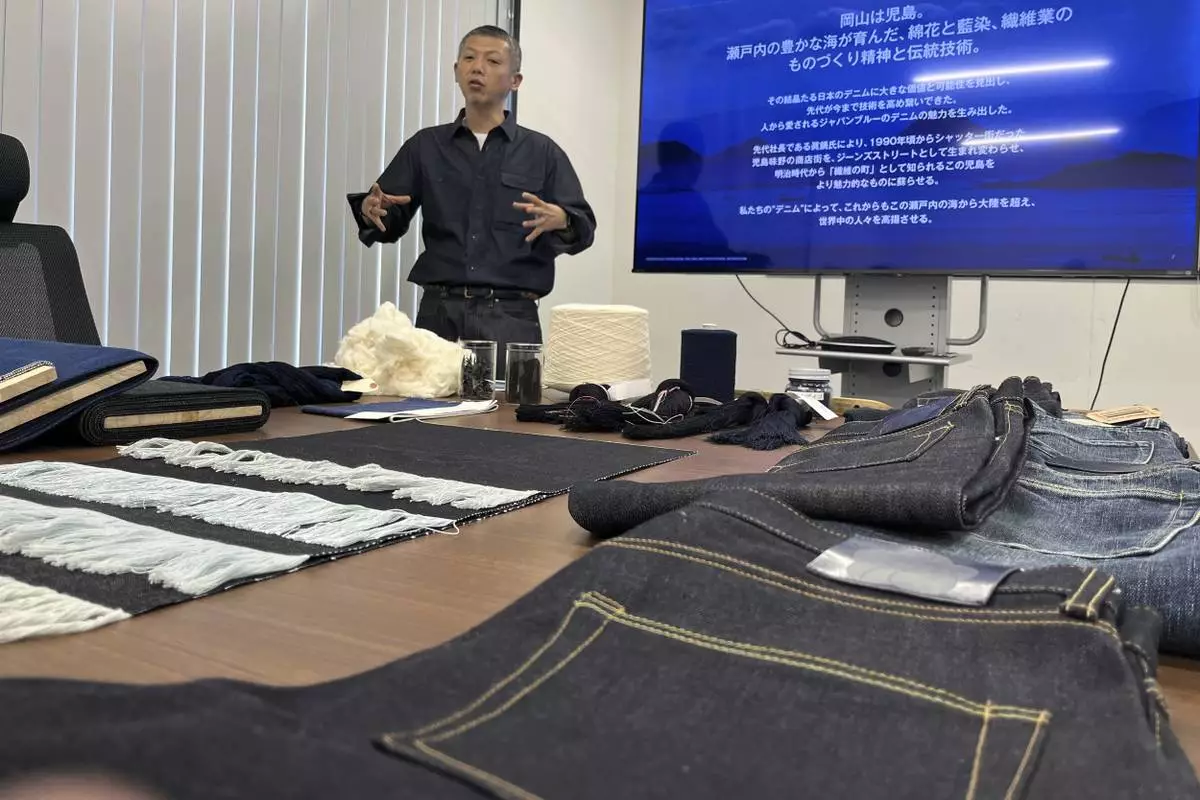
Japan Blue Co. President and Chief Operating Officer Masataka Suzuki shows some of the jeans products from Momotaro Jeans at headquarters in Kojima, southwestern Japan. Taken Sept. 4, 2024. (AP Photo/Yuri Kageyama)
Japan Blue Co. President and Chief Operating Officer Masataka Suzuki shows some of the jeans products from Momotaro Jeans at headquarters in Kojima, southwestern Japan. Taken Sept. 4, 2024. (AP Photo/Yuri Kageyama)

This shows a closeup of the vintage looms that weave the denim in Kojima, Okayama prefecture, Japan, on Sept. 4, 2024. (AP Photo/Yuri Kageyama)
This shows a closeup of the vintage looms that weave the denim in Kojima, Okayama prefecture, Japan, on Sept. 4, 2024. (AP Photo/Yuri Kageyama)

Pairs of jeans flap over Jeans Street in Kojima, Okayama prefecture, Japan, on Sept. 4, 2024. (AP Photo/Yuri Kageyama)
Pairs of jeans flap over Jeans Street in Kojima, Okayama prefecture, Japan, on Sept. 4, 2024. (AP Photo/Yuri Kageyama)

A seamstress works on denim trousers at Momotaro Jeans using a vintage sewing machine in Kojima, Okayama prefecture, western Japan, on Sept. 4, 2024. (AP Photo/Ayaka McGill)
A seamstress works on denim trousers at Momotaro Jeans using a vintage sewing machine in Kojima, Okayama prefecture, western Japan, on Sept. 4, 2024. (AP Photo/Ayaka McGill)

A weaver operates a handloom at Momotaro Jeans in Kojima, Okayama prefecture, western Japan, on Sept. 4, 2024. (AP Photo/Ayaka McGill)
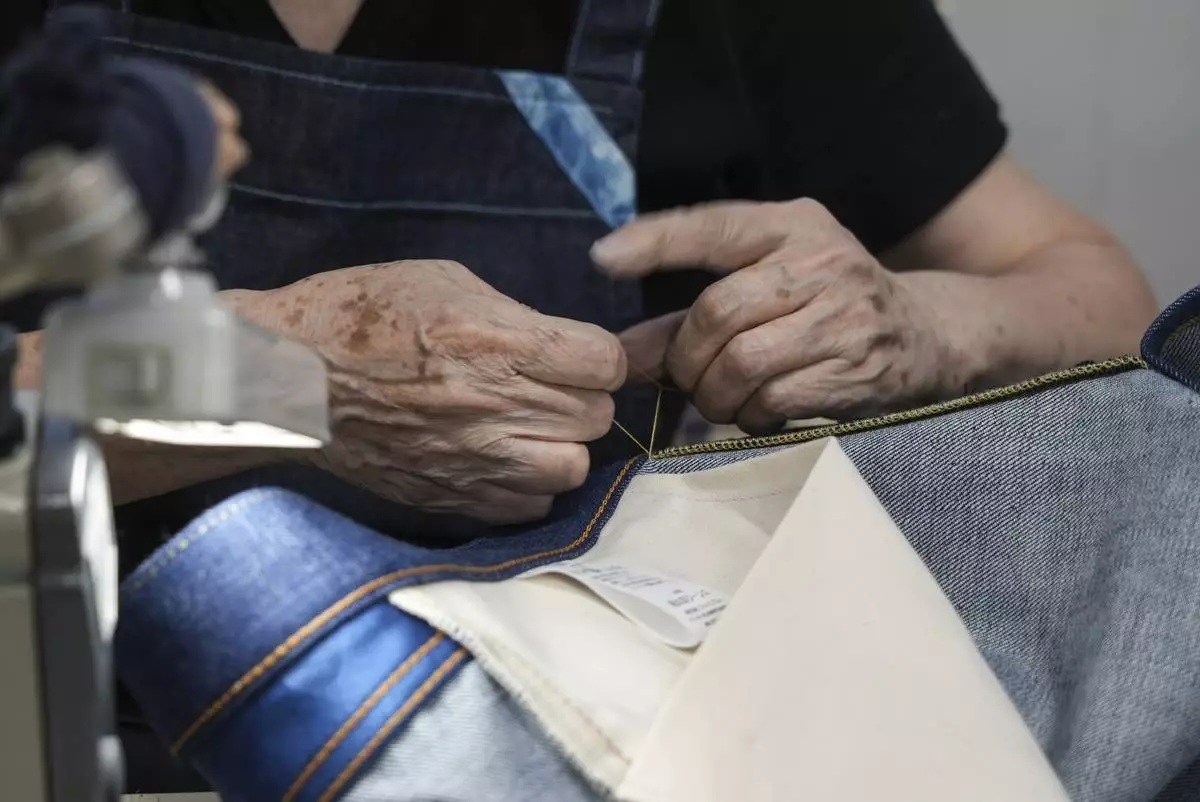
A weaver operates a handloom at Momotaro Jeans in Kojima, Okayama prefecture, western Japan, on Sept. 4, 2024. (AP Photo/Ayaka McGill)

Naomi Takebayashi, a seamstress at Momotaro Jeans, hand-stiches a pair of jeans in Kojima, Okayama prefecture, western Japan, on Sept. 4, 2024. (AP Photo/Ayaka McGill)
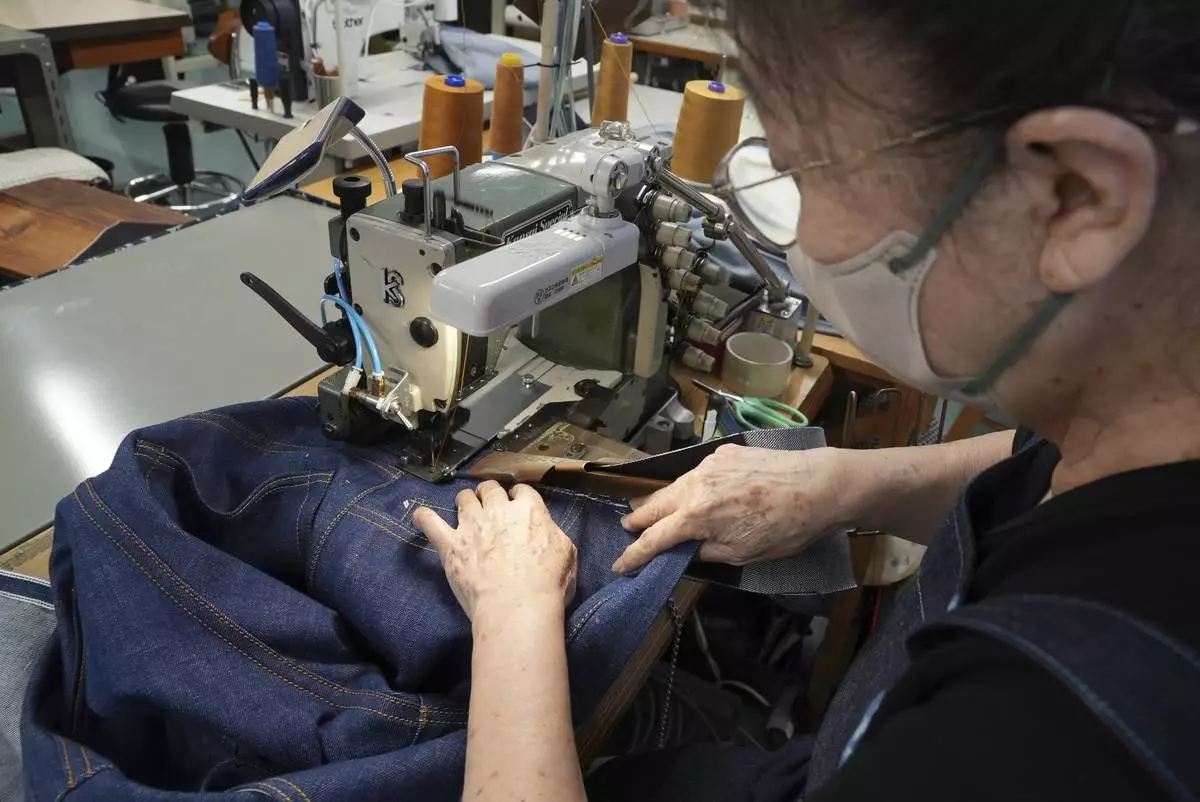
Naomi Takebayashi, a seamstress at Momotaro Jeans, hand-stiches a pair of jeans in Kojima, Okayama prefecture, western Japan, on Sept. 4, 2024. (AP Photo/Ayaka McGill)
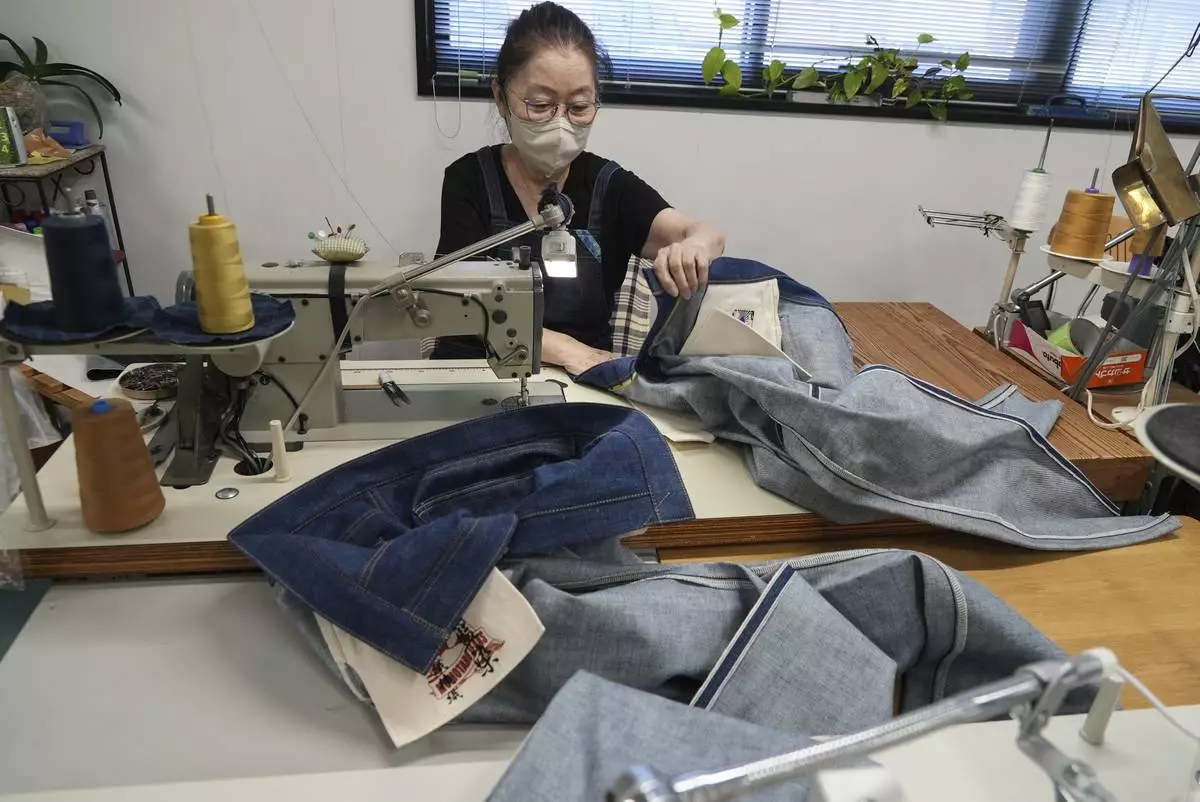
Naomi Takebayashi, a seamstress at Momotaro Jeans, sewing a pair of jeans in Kojima, Okayama prefecture, western Japan, on Sept. 4, 2024. (AP Photo/Ayaka McGill)

Naomi Takebayashi, a seamstress at Momotaro Jeans, sewing a pair of jeans in Kojima, Okayama prefecture, western Japan, on Sept. 4, 2024. (AP Photo/Ayaka McGill)

Naomi Takebayashi, a seamstress at Momotaro Jeans, works on pairs of jeans in Kojima, Okayama prefecture, western Japan, on Sept. 4, 2024. (AP Photo/Ayaka McGill)
Naomi Takebayashi, a seamstress at Momotaro Jeans, works on pairs of jeans in Kojima, Okayama prefecture, western Japan, on Sept. 4, 2024. (AP Photo/Ayaka McGill)

Dyeing craftsman Yoshiharu Okamoto shows how he dyes the threads in indigo for denim at Momotaro Jeans in Kojima, Okayama prefecture, Japan, on Sept. 4, 2024. (AP Photo/Yuri Kageyama)
Dyeing craftsman Yoshiharu Okamoto shows how he dyes the threads in indigo for denim at Momotaro Jeans in Kojima, Okayama prefecture, Japan, on Sept. 4, 2024. (AP Photo/Yuri Kageyama)

A dyer at Momotaro Jeans shows dyed yarn in Kojima, Okayama prefecture, western Japan, on Sept. 4, 2024. (AP Photo/Ayaka McGill)
A dyer at Momotaro Jeans shows dyed yarn in Kojima, Okayama prefecture, western Japan, on Sept. 4, 2024. (AP Photo/Ayaka McGill)

Yoshiharu Okamoto, a dyer at Momotaro Jeans, demonstrates dyeing yarn in indigo for making denim in Kojima, Okayama prefecture, western Japan, on Sept. 4, 2024. (AP Photo/Ayaka McGill)
Yoshiharu Okamoto, a dyer at Momotaro Jeans, demonstrates dyeing yarn in indigo for making denim in Kojima, Okayama prefecture, western Japan, on Sept. 4, 2024. (AP Photo/Ayaka McGill)

Weaver Shigeru Uchida and his colleague inspect vintage loom machines at Momotaro Jeans in Kojima, Okayama prefecture, western Japan, on Sept. 4, 2024. (AP Photo/Ayaka McGill)
Weaver Shigeru Uchida and his colleague inspect vintage loom machines at Momotaro Jeans in Kojima, Okayama prefecture, western Japan, on Sept. 4, 2024. (AP Photo/Ayaka McGill)

Shigeru Uchida, a weaver at Momotaro Jean, examines a vintage loom machine in Kojima, Okayama prefecture, western Japan, on Sept. 4, 2024. (AP Photo/Ayaka McGill)
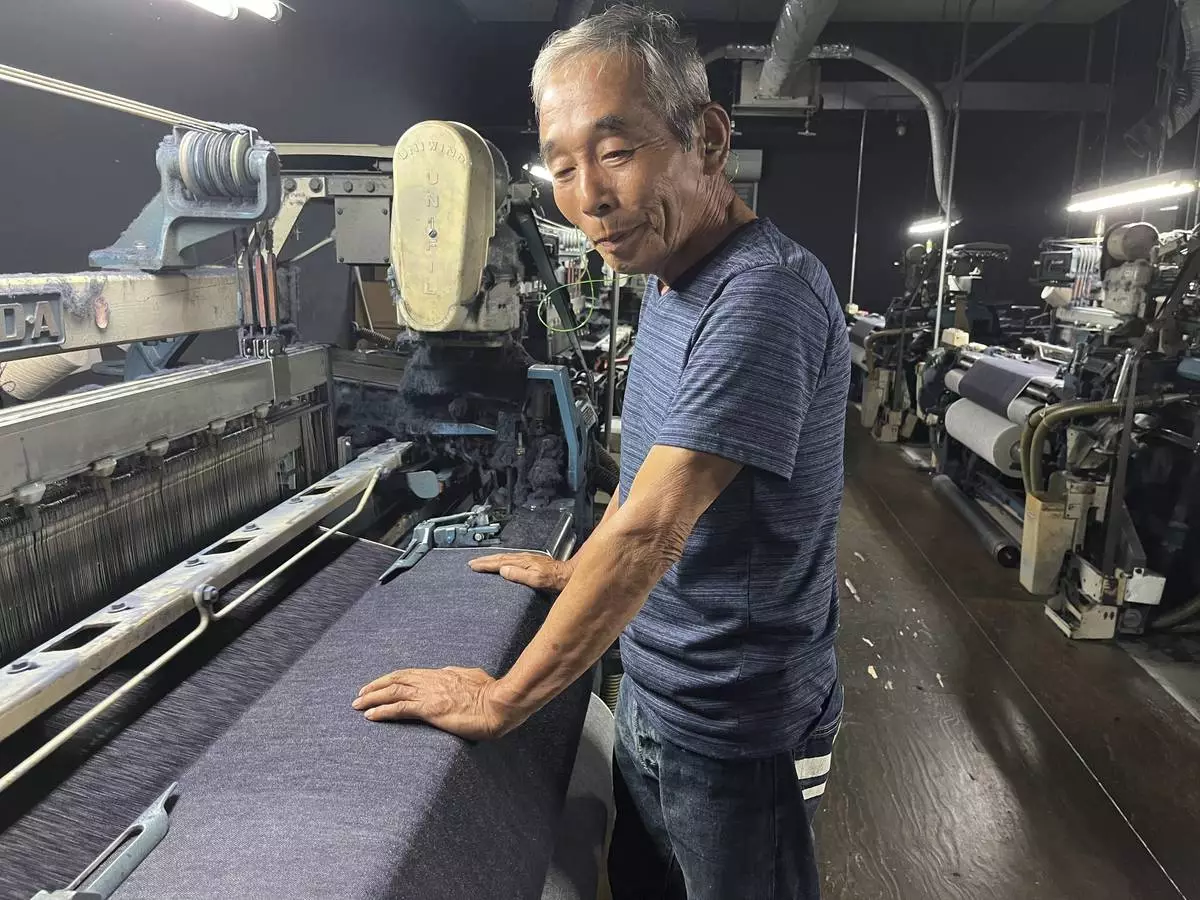
Shigeru Uchida, a weaver at Momotaro Jean, examines a vintage loom machine in Kojima, Okayama prefecture, western Japan, on Sept. 4, 2024. (AP Photo/Ayaka McGill)

Weaving craftsman Shigeru Uchida examines the evenness of the fabric being woven by the old power looms at Momotaro Jeans in Kojima, Okayama prefecture, Japan, on Sept. 4, 2024. (AP Photo/Yuri Kageyama)
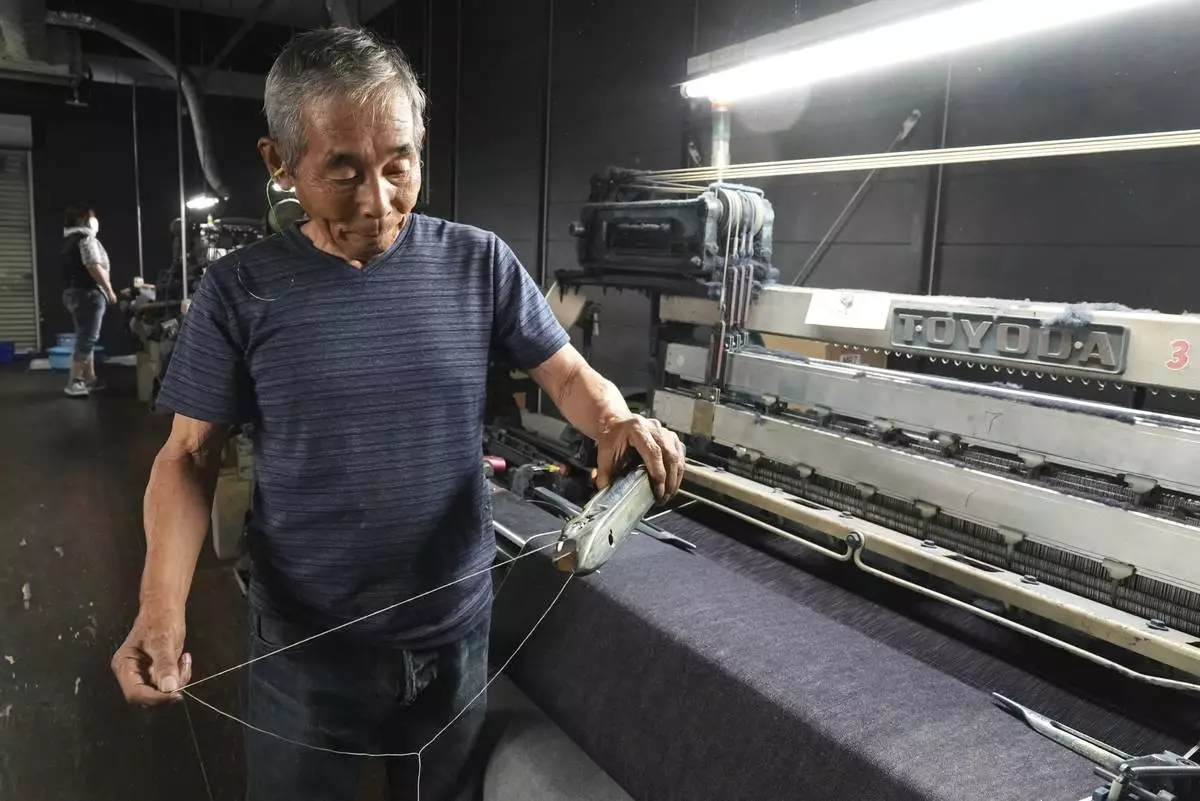
Weaving craftsman Shigeru Uchida examines the evenness of the fabric being woven by the old power looms at Momotaro Jeans in Kojima, Okayama prefecture, Japan, on Sept. 4, 2024. (AP Photo/Yuri Kageyama)

Shigeru Uchida, a weaver at Momotaro Jeans, holds a wooden shuttle next to a vintage loom machine in Kojima, Okayama prefecture, Japan, on Sept. 4, 2024. (AP Photo/Ayaka McGill)


Shigeru Uchida, a weaver at Momotaro Jeans, holds a wooden shuttle next to a vintage loom machine in Kojima, Okayama prefecture, Japan, on Sept. 4, 2024. (AP Photo/Ayaka McGill)

DUBAI, United Arab Emirates (AP) — U.S. President Donald Trump said Iran wants to negotiate with Washington after his threat to strike the Islamic Republic over its bloody crackdown on protesters, a move coming as activists said Monday the death toll in the nationwide demonstrations rose to at least 544.

Iran had no immediate reaction to the news, which came after the foreign minister of Oman — long an interlocutor between Washington and Tehran — traveled to Iran this weekend. It also remains unclear just what Iran could promise, particularly as Trump has set strict demands over its nuclear program and its ballistic missile arsenal, which Tehran insists is crucial for its national defense.

Meanwhile Monday, Iran called for pro-government demonstrators to head to the streets in support of the theocracy, a show of force after days of protests directly challenging the rule of 86-year-old Supreme Leader Ayatollah Ali Khamenei. Iranian state television aired chants from the crowd, who shouted “Death to America!” and “Death to Israel!”

Trump and his national security team have been weighing a range of potential responses against Iran including cyberattacks and direct strikes by the U.S. or Israel, according to two people familiar with internal White House discussions who were not authorized to comment publicly and spoke on condition of anonymity.

“The military is looking at it, and we’re looking at some very strong options,” Trump told reporters on Air Force One on Sunday night. Asked about Iran’s threats of retaliation, he said: “If they do that, we will hit them at levels that they’ve never been hit before.”

Trump said that his administration was in talks to set up a meeting with Tehran, but cautioned that he may have to act first as reports of the death toll in Iran mount and the government continues to arrest protesters.

“I think they’re tired of being beat up by the United States,” Trump said. “Iran wants to negotiate.”

He added: “The meeting is being set up, but we may have to act because of what’s happening before the meeting. But a meeting is being set up. Iran called, they want to negotiate.”

Iran through country's parliamentary speaker warned Sunday that the U.S. military and Israel would be “legitimate targets” if America uses force to protect demonstrators.

More than 10,600 people also have been detained over the two weeks of protests, said the U.S.-based Human Rights Activists News Agency, which has been accurate in previous unrest in recent years and gave the death toll. It relies on supporters in Iran crosschecking information. It said 496 of the dead were protesters and 48 were with security forces.

With the internet down in Iran and phone lines cut off, gauging the demonstrations from abroad has grown more difficult. The Associated Press has been unable to independently assess the toll. Iran’s government has not offered overall casualty figures.

Those abroad fear the information blackout is emboldening hard-liners within Iran’s security services to launch a bloody crackdown. Protesters flooded the streets in the country’s capital and its second-largest city on Saturday night into Sunday morning. Online videos purported to show more demonstrations Sunday night into Monday, with a Tehran official acknowledging them in state media.

In Tehran, a witness told the AP that the streets of the capital empty at the sunset call to prayers each night. By the Isha, or nighttime prayer, the streets are deserted.

Part of that stems from the fear of getting caught in the crackdown. Police sent the public a text message that warned: “Given the presence of terrorist groups and armed individuals in some gatherings last night and their plans to cause death, and the firm decision to not tolerate any appeasement and to deal decisively with the rioters, families are strongly advised to take care of their youth and teenagers.”

Another text, which claimed to come from the intelligence arm of the paramilitary Revolutionary Guard, also directly warned people not to take part in demonstrations.

“Dear parents, in view of the enemy’s plan to increase the level of naked violence and the decision to kill people, ... refrain from being on the streets and gathering in places involved in violence, and inform your children about the consequences of cooperating with terrorist mercenaries, which is an example of treason against the country,” the text warned.

The witness spoke to the AP on condition of anonymity due to the ongoing crackdown.

The demonstrations began Dec. 28 over the collapse of the Iranian rial currency, which trades at over 1.4 million to $1, as the country’s economy is squeezed by international sanctions in part levied over its nuclear program. The protests intensified and grew into calls directly challenging Iran’s theocracy.

Nikhinson reported from aboard Air Force One.

In this frame grab from video obtained by the AP outside Iran, a masked demonstrator holds a picture of Iran's Crown Prince Reza Pahlavi during a protest in Tehran, Iran, Friday, January. 9, 2026. (UGC via AP)

In this frame grab from video obtained by the AP outside Iran, a masked demonstrator holds a picture of Iran's Crown Prince Reza Pahlavi during a protest in Tehran, Iran, Friday, January. 9, 2026. (UGC via AP)

In this frame grab from footage circulating on social media from Iran shows protesters taking to the streets despite an intensifying crackdown as the Islamic Republic remains cut off from the rest of the world in Tehran, Iran, Friday, Jan. 9, 2026.(UGC via AP)

In this frame grab from footage circulating on social media from Iran shows protesters taking to the streets despite an intensifying crackdown as the Islamic Republic remains cut off from the rest of the world in Tehran, Iran, Friday, Jan. 9, 2026.(UGC via AP)

In this frame grab from footage circulating on social media from Iran showed protesters once again taking to the streets of Tehran despite an intensifying crackdown as the Islamic Republic remains cut off from the rest of the world in Tehran, Iran, Saturday Jan. 10, 2026. (UGC via AP)

In this frame grab from footage circulating on social media from Iran showed protesters once again taking to the streets of Tehran despite an intensifying crackdown as the Islamic Republic remains cut off from the rest of the world in Tehran, Iran, Saturday Jan. 10, 2026. (UGC via AP)

Recommended Articles