China's education system, which is now the largest and arguably the most robust in the world, has evolved dramatically over the past 75 years, facing numerous challenges while achieving remarkable results.
Gaokao, the national college entrance exam, exemplifies this evolution, with over 13.4 million students taking the exam this year, setting new records. With a maximum possible score of 750 points, the Gaokao marks a final academic effort after 12 years of dedicated study.
Seventy-five years ago, in stark contrast, literacy was a distant dream for many. In 1949, 80 percent of China's then 540 million population was illiterate.
The fight against illiteracy began in the 1950s, transforming China's education landscape.
Classrooms were established across the country, with three major literacy campaigns teaching nearly 30 million people to read and write within a decade.
By 1965, around 100 million had gained literacy.
Beyond basic literacy, strengthening education for youth became a priority. The introduction of the Compulsory Education Law in 1986 ensured all school-age children received nine years of free education: six years of primary and three years of secondary school. However, challenges such as access to quality education persisted, especially in less-developed regions.
Since 1989, Project Hope has built nearly 21,000 primary schools, benefiting over 6.9 million rural children; and education spending has increased annually, reaching nearly 6.5 trillion yuan (approximately 900 billion U.S. dollars) in 2023. By 2001, China had largely achieved its goal of nine-year compulsory education, with nationwide coverage being realized a decade later, by 2011.
In recent years, the focus has shifted to improving education quality. The "Modernization of China's Education: 2035" initiative, launched in 2019, aims to position China as a global education powerhouse. Digital education is reshaping the landscape, with AI and big data tailoring learning experiences and innovative courses reaching remote areas to bridge the urban-rural education gap.
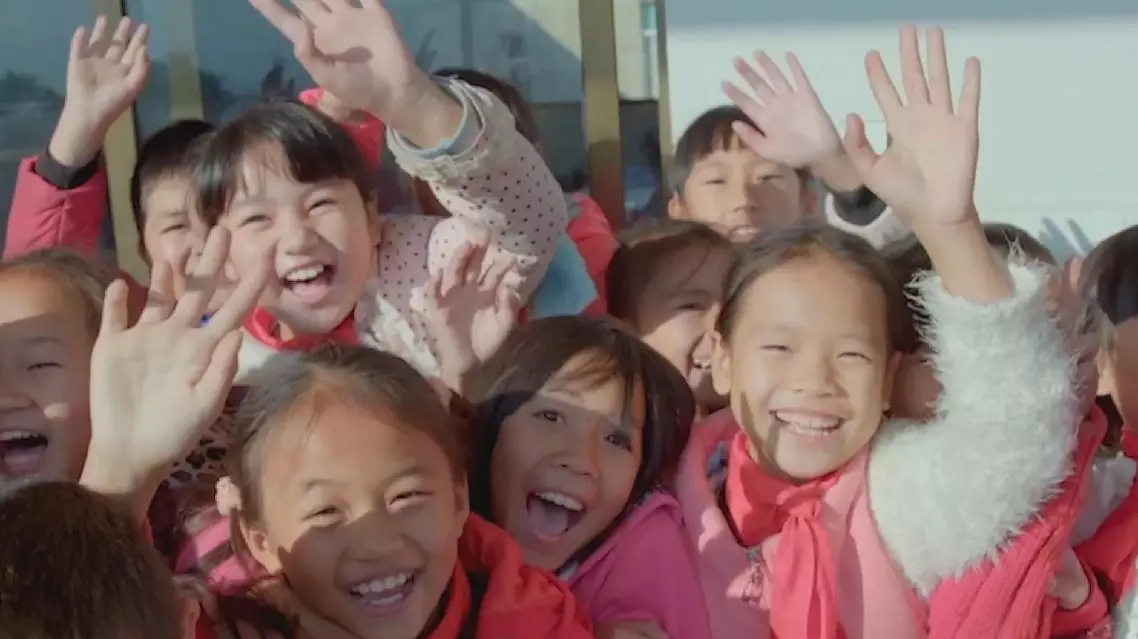
"We now see children in the mountains, sitting in classrooms surrounded by green hills, playing the piano, dancing, singing songs, and learning the same lessons as city children in real-time," said Zhang Guimei, principal of the Lijiang Huaping High School for Girls.
From its initial push against illiteracy to today's advanced virtual classrooms, China's education journey has laid a solid foundation for social and economic growth. Talent cultivation remains a global challenge; however, step by step, China is advancing towards its vision of becoming a global education powerhouse by 2035.
China makes great leaps in education over 75 years